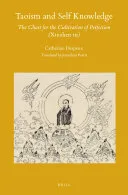
Taoism and Self Knowledge
 83
83

Taoism and Self Knowledge
Catherine Despeux’s study of the “Chart for the Cultivation of Perfection” offers a rigorous and scholarly approach to Taoist Internal Alchemy. The strength of the book lies in its detailed analysis of the "Chart's" pictographic and symbolic representations of the body, providing a visual language often absent in more generalized texts. Despeux's tracing of the text’s transmission among Quanzhen groups during the Qing dynasty is particularly illuminating, revealing the evolution of these practices. A potential limitation for some readers might be the highly academic tone; it prioritizes textual exegesis over experiential guidance. However, the section detailing the nomenclature of body parts in Internal Alchemy, explaining how organs like the kidneys are understood as 'Water' palaces, is exceptionally clear and offers a concrete entry point into the text's complex symbolism. This work serves as an indispensable resource for those seeking a deep, academic understanding of a specific and influential Taoist alchemical text.
📝 Description
83
Catherine Despeux's 2018 study examines the "Chart for the Cultivation of Perfection," a key text in Internal Alchemy.
Catherine Despeux's "Taoism and Self Knowledge" provides a scholarly analysis of the "Chart for the Cultivation of Perfection," a central document in the tradition of Internal Alchemy. The book meticulously breaks down the symbolic imagery of the human body as it appears in early Taoist thought, creating a visual and conceptual guide for those studying the practice. Despeux follows the "Chart's" spread through different Quanzhen schools during the Qing dynasty, noting textual differences and their significance.
This work is intended for dedicated students of Taoism, especially those interested in its esoteric and alchemical aspects. Researchers of Chinese religions, comparative mysticism, and the history of science will find value in its close examination of source materials and iconography. It also serves practitioners of Internal Alchemy who seek a deeper grasp of core texts and their symbolic language.
This book situates itself within the rich tradition of Taoist Internal Alchemy, a practice focused on transforming the body's energies for spiritual development. It specifically addresses the "Chart for the Cultivation of Perfection," a visual and textual aid for cultivators. By detailing the alchemical interpretation of bodily organs and meridians, the book connects physical processes to spiritual goals. It highlights the circulation of 'qi', the balance of Yin and Yang, and the transmutation of 'jing', all central concepts in this esoteric lineage.
💡 Why Read This Book?
• Gain a precise understanding of the symbolic body in Taoist Internal Alchemy, moving beyond generic spiritual concepts to grasp the specific 'Chart for the Cultivation of Perfection' as analyzed by Despeux. • Explore the historical transmission of alchemical texts by examining how the "Chart" was passed down through Quanzhen groups during the Qing dynasty, offering concrete historical context. • Decipher the specialized nomenclature of body parts within Internal Alchemy, learning how terms like 'cinnabar fields' are employed in the alchemical framework presented in the text.
⭐ Reader Reviews
Honest opinions from readers who have explored this book.
❓ Frequently Asked Questions
What is the 'Chart for the Cultivation of Perfection'?
The 'Chart for the Cultivation of Perfection' is a key Internal Alchemical text studied by Catherine Despeux. It uses symbolic and pictographic representations of the body to explain the process of spiritual cultivation and transformation within Taoism.
What is Internal Alchemy in Taoism?
Internal Alchemy (Neidan) is a Taoist practice that uses the body's own energies and substances (like qi, jing, and shen) as the basis for spiritual transformation, rather than external substances like in some forms of external alchemy.
Who were the Quanzhen groups?
The Quanzhen ('Complete Perfection') Order is one of the major schools of Taoism, particularly influential during the Yuan and Qing dynasties. They emphasized monasticism, celibacy, and the cultivation of internal alchemy.
What is the significance of pictographic and symbolic representation in Taoism?
In Taoist traditions, particularly in Internal Alchemy, pictographic and symbolic representations are crucial for conveying complex spiritual and energetic concepts related to the body, cosmology, and the path to immortality or enlightenment.
When was Catherine Despeux's book first published?
Catherine Despeux's 'Taoism and Self Knowledge' was first published on November 26, 2018, making it a contemporary scholarly contribution to the study of Taoist esoteric traditions.
What is the primary focus of Despeux's analysis in this book?
The primary focus is the detailed analysis of the Internal Alchemical text 'Chart for the Cultivation of Perfection,' examining its symbolic language, body-related iconography, and its transmission within Qing dynasty Quanzhen groups.
🔮 Key Themes & Symbolism
Body as Alchemical Vessel
The work illuminates the Taoist conception of the human body not merely as a biological entity, but as a microcosm and a sophisticated vessel for alchemical transformation. Despeux details how specific organs and energetic pathways are understood as sites for the refinement of vital essence (jing) into spirit (shen), a core tenet of Internal Alchemy explored through the 'Chart for the Cultivation of Perfection'.
Symbolic and Pictographic Language
Central to the book is the deciphering of the rich symbolic and pictographic language used in Internal Alchemical texts like the 'Chart.' Despeux analyzes how abstract concepts of energy, consciousness, and cosmic principles are visually represented, offering insights into a unique form of esoteric communication that transcends literal description.
Textual Transmission and Schools
The book traces the historical lineage and transmission of the 'Chart' among specific Taoist groups, particularly the Quanzhen Order during the Qing dynasty. This historical dimension highlights the practical dissemination of esoteric knowledge and how different versions of texts emerged and were interpreted by distinct communities.
Nomenclature of Internal Alchemy
Despeux provides a detailed breakdown of the specialized vocabulary used in Internal Alchemy to describe the principal parts of the body. This glossary of terms reveals how anatomical elements are re-contextualized within an alchemical framework, assigning them specific energetic and spiritual functions crucial for cultivation.
💬 Memorable Quotes
Direct passages from the work, attributed to the author.
“The principal parts of the body and their nomenclature in Internal Alchemy”
— This phrase signifies the book's focus on understanding the body through a specialized alchemical lexicon, where anatomical terms take on deeper energetic and spiritual meanings essential for the practice of Internal Alchemy.
“Analysis of pictographic and symbolic representation of the body in early Taoism”
— This highlights the book's methodological approach, emphasizing the visual and symbolic dimensions of Taoist texts as key to unlocking their esoteric teachings about the human form and its potential.
“Transmission among Quanzhen groups in the Qing dynasty”
— This points to the historical and lineage-based context of the 'Chart for the Cultivation of Perfection,' illustrating how esoteric knowledge was preserved and adapted by specific schools over time.
“Internal Alchemical text "Chart for the Cultivation of Perfection"”
— This identifies the core textual subject of Despeux's study, framing the book as a deep dive into a specific, influential document within the esoteric Taoist tradition of Neidan.
“The spir”
— This likely refers to the 'spiraling' or cyclical processes inherent in Internal Alchemy, such as the circulation of qi, which are often depicted visually and symbolically in texts like the 'Chart.'
🌙 Esoteric Significance
Tradition
This work is firmly rooted in the Taoist tradition, specifically its esoteric branch of Internal Alchemy (Neidan). It departs from purely philosophical or ritualistic interpretations by focusing on the somatic and energetic practices aimed at transforming the practitioner's being. Despeux's analysis aligns with scholarly efforts to map the complex internal range of Taoist cultivation, placing the "Chart for the Cultivation of Perfection" within a lineage of texts seeking spiritual immortality or profound self-realization through the body.
Symbolism
The book emphasizes the profound symbolism embedded within the "Chart for the Cultivation of Perfection." Key motifs include the human body itself, re-imagined as a cosmic map with energetic centers (like the Dantian, or 'cinnabar fields') and pathways. Symbols related to elemental correspondences (Water, Fire, etc.) and the transformation of vital substances (Jing, Qi, Shen) are crucial for understanding the alchemical processes of refinement and spiritual integration described.
Modern Relevance
Contemporary practitioners and scholars of Chinese esoteric traditions find Despeux's work invaluable. It provides a critical textual and historical foundation for understanding modern adaptations of Internal Alchemy and Qigong. Thinkers and practitioners who engage with embodied spirituality, comparative mysticism, and the history of consciousness may draw upon its detailed exploration of how ancient Taoist traditions conceptualized and cultivated inner transformation.
👥 Who Should Read This Book
• Students of Taoism and Chinese Religions: Those seeking a deep, scholarly dive into the esoteric dimensions of Taoism, particularly Internal Alchemy, will benefit from Despeux's textual analysis and historical tracing. • Practitioners of Internal Alchemy and Qigong: Individuals engaged in somatic and energetic cultivation can gain a more profound theoretical and symbolic understanding of the practices through the book's detailed examination of the "Chart." • Scholars of Comparative Mysticism and Esotericism: Researchers interested in cross-cultural explorations of spiritual transformation and the symbolic representation of the body in esoteric traditions will find valuable comparative material.
📜 Historical Context
Catherine Despeux's "Taoism and Self Knowledge," published in 2018, engages with the rich scholarly tradition surrounding Taoist Internal Alchemy, a practice that gained significant momentum during the Song dynasty and continued to evolve through the Ming and Qing dynasties (1644-1912). The "Chart for the Cultivation of Perfection" itself is a product of this lineage, its transmission particularly studied within Quanzhen (Complete Perfection) groups. This era was marked by a sophisticated integration of philosophical Taoism with alchemical practices, often presented through complex symbolic diagrams and commentaries. While schools like the Longmen (Dragon Gate) branch of Quanzhen were prominent, Despeux's work provides a focused lens on the specific textual and iconographic traditions associated with the "Chart." Her meticulous research builds upon, and sometimes refines, earlier Western scholarship that began to systematically analyze these esoteric texts, contributing to a more nuanced understanding of their historical development and diverse interpretations.
📔 Journal Prompts
The nomenclature of principal body parts in Internal Alchemy as presented in the "Chart."
Pictographic representations of the body in early Taoism: what do they convey?
The transmission of the "Chart for the Cultivation of Perfection" within Quanzhen groups.
How does the concept of the body as an alchemical vessel inform your understanding of self-cultivation?
The symbolic language of Internal Alchemy: what are its core elements?
🗂️ Glossary
Internal Alchemy (Neidan)
A Taoist system of spiritual cultivation that uses the practitioner's own body, mind, and spirit as the 'furnace and cauldron' to refine vital energies (Jing, Qi, Shen) for the purpose of achieving spiritual enlightenment or immortality.
Chart for the Cultivation of Perfection
A significant Internal Alchemical text that uses symbolic and pictographic representations of the human body to illustrate the stages and principles of spiritual transformation within the Taoist tradition.
Quanzhen Order
A major school of Taoism, prominent during the Yuan and Qing dynasties, emphasizing monasticism, celibacy, and the practice of Internal Alchemy for spiritual development.
Qi
Vital energy or life force that permeates the universe and the human body. In Internal Alchemy, it is cultivated and circulated to achieve spiritual and physical transformation.
Jing
Essence, often understood as primordial sexual energy or a fundamental vital substance. In Internal Alchemy, Jing is cultivated and transformed into Qi.
Shen
Spirit or consciousness. In Internal Alchemy, Shen is the highest refined energy, often the ultimate goal of cultivation, representing a state of elevated awareness or spiritual realization.
Dantian
Literally 'cinnabar field,' these are considered centers of Qi storage and transformation within the body in Taoist practices, typically located in the lower abdomen, chest, and head.