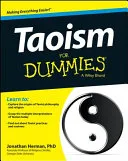
Taoism For Dummies
 76
76

Taoism For Dummies
Jonathan Herman's "Taoism For Dummies" tackles the considerable challenge of introducing a multifaceted tradition to an audience likely steeped in Western paradigms. The book succeeds admirably in laying out the historical progression of Taoism, from its Chou Dynasty origins to its contemporary presence. Herman's explanation of Wu Wei, the principle of "non-action" or "effortless action," is particularly lucid, offering a concept that can initially seem paradoxical. However, while the book is thorough in its historical and conceptual overview, it occasionally struggles to convey the deeper, experiential dimensions that practitioners often associate with Taoist cultivation. The "for Dummies" format, while ensuring accessibility, can sometimes flatten the subtle nuances of practices like Qigong or meditation, which are integral to many forms of religious Taoism. For readers seeking a comprehensive and clear introduction to Taoist philosophy and history, this work is a solid resource; for those looking for a guide to immediate personal practice, supplementary material might be necessary. It provides a commendable, albeit introductory, map to a vast spiritual landscape.
📝 Description
76
Jonathan Herman's 'Taoism For Dummies' breaks down ancient Chinese philosophy for modern readers.
Published in 2007, Jonathan Herman's 'Taoism For Dummies' aims to make the principles of Taoism understandable to those new to Eastern thought. The book begins with Taoism's origins in China's Chou Dynasty, a period of intellectual growth. It moves past simple history to explain the core ideas that have shaped Taoist thinking for centuries. Herman wants to make concepts that often seem complex feel approachable for anyone unfamiliar with Eastern spiritual paths.
The guide is written for people with no previous experience of Taoism, regardless of their background in Western religions or secular viewpoints. The author breaks down difficult ideas into smaller parts. This makes the book a good starting point for anyone interested in Lao Tzu's teachings or the practice of religious Taoism, which has a large following in China. It offers a clear entry for Westerners looking for trustworthy information on the subject.
Central to 'Taoism For Dummies' are explanations of key Taoist ideas. The book covers principles like Wu Wei (non-action), Yin and Yang, and the Tao itself. It shows how these ideas connect to both philosophical thought and religious practice. Readers get a look into a worldview focused on balance, living in harmony with nature, and acting without strain.
This book addresses Taoism, a tradition originating in ancient China during the Chou Dynasty. It focuses on core tenets like Wu Wei and the Tao, aiming to clarify concepts that have historically been viewed as esoteric. By explaining these principles in an accessible manner, Herman's work positions Taoism as a living tradition that emphasizes balance and harmony with nature, making it understandable for those outside its traditional cultural context.
💡 Why Read This Book?
• Gain a foundational understanding of Wu Wei, the Taoist principle of effortless action, as explained in the text's exploration of Lao Tzu's philosophy. • Grasp the historical development of Taoism, tracing its roots back to China's Chou Dynasty and its subsequent evolution. • Comprehend the symbolic interplay of Yin and Yang, a core concept detailed within the book's sections on Taoist cosmology.
⭐ Reader Reviews
Honest opinions from readers who have explored this book.
❓ Frequently Asked Questions
When did Taoism originate according to the book?
The book "Taoism For Dummies" states that Taoism has its origins in China's Chou Dynasty, a period of significant intellectual and philosophical development.
What is the significance of the Tao Te Ching mentioned in the book?
The Tao Te Ching is presented as the second most translated book globally, attributed to Lao Tzu, and is a foundational text for understanding Taoist philosophy and its core concepts.
How many people practice religious Taoism today, as per the book?
According to "Taoism For Dummies," religious Taoism is experiencing growth, with adherents numbering in the hundreds of millions, particularly in China.
What is the concept of 'Wu Wei' explained in the book?
Wu Wei, as detailed in the book, refers to the principle of 'non-action' or 'effortless action,' emphasizing acting in harmony with the natural flow of the Tao.
Does the book cover the symbolism of Yin and Yang?
Yes, "Taoism For Dummies" covers the fundamental concept of Yin and Yang, explaining its role as complementary, interconnected forces in Taoist cosmology and philosophy.
Is this book suitable for someone with no prior knowledge of Taoism?
Absolutely. The book is explicitly designed for beginners, regardless of their background or faith, aiming to provide comprehensive and accessible information on Taoism.
🔮 Key Themes & Symbolism
The Principle of Wu Wei
Herman's "Taoism For Dummies" dedicates significant attention to Wu Wei, often translated as "non-action" or "effortless action." This core concept suggests acting in accordance with the natural flow of the universe, rather than through force or resistance. The book explores how this principle, central to Lao Tzu's philosophy, applies not only to personal conduct but also to governance and understanding the natural world. It challenges the Western emphasis on constant activity, proposing a path of subtle, aligned engagement that leads to greater effectiveness and harmony.
Yin and Yang Dynamics
A fundamental aspect of Taoist thought, the interplay of Yin and Yang, is thoroughly explained. The book illustrates these as complementary, opposing forces present in all things—darkness and light, passive and active, feminine and masculine. Understanding this dynamic is presented as crucial for comprehending the Taoist worldview, which seeks balance and harmony through the recognition and integration of these dualities. The work uses relatable examples to demonstrate how this principle manifests in nature and human experience.
The Nature of the Tao
The book attempts to clarify the concept of the Tao, often described as the ineffable, fundamental principle underlying reality. Herman presents the Tao not as a deity but as the natural order, the way of the universe that is both the source and the sustainer of all existence. While acknowledging its mysterious nature, the text provides frameworks for understanding its influence through observation of the natural world and through the practice of living in accordance with its flow, as advocated in texts originating from the Chou Dynasty period.
Historical and Religious Evolution
"Taoism For Dummies" situates Taoism within its rich historical and religious context, tracing its development from ancient Chinese dynasties. It addresses both philosophical Taoism, exemplified by the Tao Te Ching, and religious Taoism, with its deities, rituals, and monastic traditions. The book highlights the evolution of these streams, noting the vast number of adherents in modern China and the challenges and opportunities of Taoism's spread to Western audiences, offering a comprehensive overview of its journey through centuries.
💬 Memorable Quotes
Direct passages from the work, attributed to the author.
“The Tao Te Ching is the second most translated book in the world.”
— This fact underscores the profound and widespread influence of Lao Tzu's foundational text, highlighting its enduring appeal and importance across cultures and centuries. It suggests a universal resonance within its philosophical and spiritual teachings.
“Religious Taoism is on the rise in China, where adherents currently number in the hundreds of millions.”
— This highlights the dynamic and growing nature of Taoist practice today, indicating that it remains a vibrant and significant spiritual force for a substantial portion of the global population, particularly within its country of origin.
“Taoism's origins trace back to China's Chou Dynasty.”
— Pinpointing the historical genesis of Taoism to the Chou Dynasty provides a crucial anchor for understanding its development, situating its foundational philosophical and spiritual ideas within a specific, influential era of Chinese history.
“Taoism For Dummies provides comprehensive coverage of Taoism's underlying quietist principles.”
— This indicates the book's focus on a key characteristic of Taoist philosophy: a preference for stillness, non-interference, and natural spontaneity over forceful action and rigid structure.
“There remains a remarkable lack of reliable information about Taoism for curious Westerners.”
— This observation articulates the book's primary purpose: to bridge a perceived knowledge gap and offer accessible, dependable insights into Taoist traditions for an international audience unfamiliar with its intricacies.
🌙 Esoteric Significance
Tradition
While Taoism itself is a major world religion and philosophy, "Taoism For Dummies" engages with its esoteric dimensions by presenting concepts often found in Western esoteric traditions, such as the focus on natural law, inner cultivation, and the pursuit of harmony. It bridges the gap between philosophical Taoism and the more mystical or alchemical aspects that have historically been part of its lineage, without necessarily aligning strictly with a single Western esoteric school like Hermeticism or Kabbalah. Its value lies in making these principles comprehensible to a broad audience, acting as a gateway to deeper study.
Symbolism
The book prominently features the symbolism of the Yin and Yang, representing the fundamental duality and complementarity of all things in the universe. It also implicitly touches upon the symbolism of the Tao itself—the unnamable, the Way—which serves as the ultimate principle of existence. While not exploring obscure Taoist iconography, it explains these core symbols as keys to understanding the Taoist worldview, emphasizing balance, cyclical change, and the interconnectedness of seemingly opposing forces.
Modern Relevance
Contemporary thinkers and practitioners of mindfulness, holistic health, and comparative religion often draw upon Taoist principles, even if indirectly. The emphasis on Wu Wei (effortless action) and living in harmony with nature resonates strongly with modern ecological awareness and stress-reduction techniques. Schools focusing on traditional Chinese medicine, Qigong, and Tai Chi also find their roots in these philosophical underpinnings. Herman's book makes these foundational ideas accessible, allowing modern individuals to explore paths toward greater balance and natural living.
👥 Who Should Read This Book
• Beginners to Eastern philosophy and religion seeking a clear, structured introduction to Taoist concepts like the Tao, Yin/Yang, and Wu Wei. • Individuals interested in comparative religious studies who need a reliable overview of Taoism's historical development and core tenets. • Those curious about practices such as Tai Chi or Qigong and wanting to understand the philosophical framework from which they emerge.
📜 Historical Context
Published in 2013, Jonathan Herman's "Taoism For Dummies" arrived at a time when interest in Eastern philosophies and practices continued to grow in the West, yet reliable introductory resources remained somewhat scattered. The book situates Taoism's origins firmly within China's Chou Dynasty (1046–256 BCE), a period that also saw the flourishing of Confucianism and Legalism, offering a vital counterpoint to more socially oriented philosophies. While Western scholars had been studying Taoism for decades, with figures like Arthur Waley producing influential translations of the Tao Te Ching in the mid-20th century, a truly accessible guide for the general public was still needed. The book's approach, designed for the layperson, contrasts with more academic analyses but serves the purpose of broad dissemination. Its publication predates some of the more recent waves of popular interest in mindfulness and Eastern spirituality, positioning it as a foundational text for a new generation of seekers.
📔 Journal Prompts
The concept of Wu Wei as effortless action, and its application outside of Chinese Chou Dynasty contexts.
Reflecting on personal experiences of Yin and Yang dynamics in daily life.
The Tao as an unnamable, fundamental principle; how this contrasts with other spiritual concepts.
Lao Tzu's influence on global thought, as indicated by the Tao Te Ching's translation statistics.
The relationship between philosophical Taoism and religious Taoism as presented in the text.
🗂️ Glossary
Tao
The fundamental, ineffable principle of the universe in Taoism; the natural order and the Way of existence. It is considered the source and sustainer of all things.
Wu Wei
A core Taoist concept, often translated as "non-action" or "effortless action." It signifies acting in harmony with the natural flow of the Tao, without force or undue effort.
Yin
In Taoist philosophy, Yin represents the passive, dark, feminine, and receptive aspect of reality, complementary to Yang.
Yang
In Taoist philosophy, Yang represents the active, light, masculine, and assertive aspect of reality, complementary to Yin.
Chou Dynasty
An ancient Chinese dynasty (1046–256 BCE) during which many foundational Chinese philosophies, including early Taoist thought, are believed to have emerged and developed.
Tao Te Ching
A classic Chinese text traditionally attributed to Lao Tzu, considered a foundational scripture of Taoism, exploring the nature of the Tao and principles of virtuous living.
Lao Tzu
The legendary ancient Chinese philosopher credited with writing the Tao Te Ching and considered a central figure in the origins of Taoism.