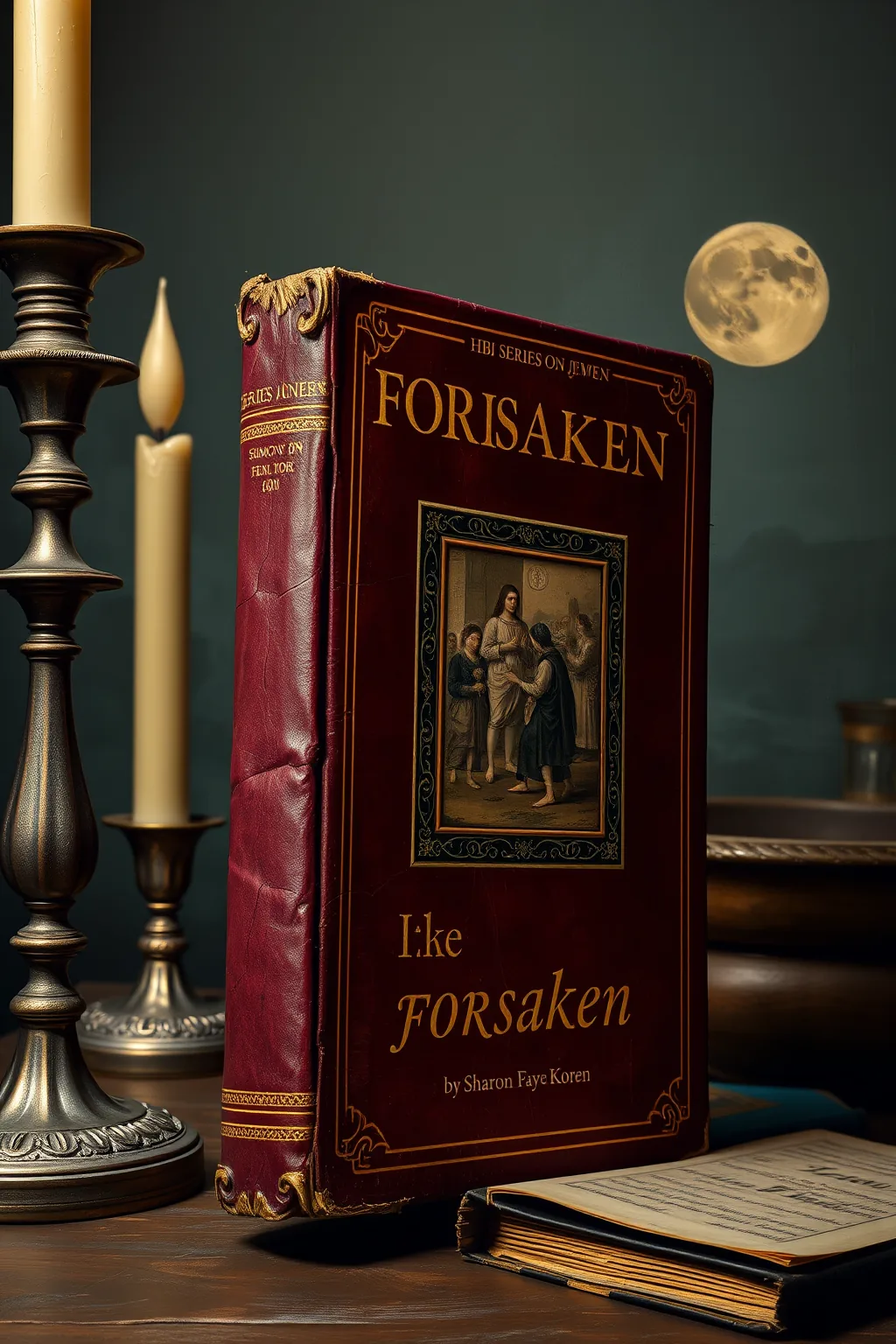
Hbi Series on Jewish Women : Forsaken
 61
61

Hbi Series on Jewish Women : Forsaken



Sophia Crane (Associate Editor) — 'Forsaken' by Sharon Faye Koren is a luminous exploration of the feminine essence within Kabbalistic lore. Koren's scholarship is both rigorous and deeply intuitive, coaxing forth potent insights from age-old texts. She masterfully deciphers the symbolic language that speaks of the Shekhinah's veiled presence and her intricate dance with the masculine divine. This work offers a much-needed re-centering of feminine power and wisdom within esoteric Jewish traditions. Essential for students of Kabbalah, seekers of sacred feminine archetypes, and anyone yearning for a more holistic understanding of the Divine.
📝 Description
61
Sharon Faye Koren's 'Forsaken' examines the feminine principle in Kabbalah, published in 2006.
Sharon Faye Koren's 'Forsaken' investigates the role of the feminine within Jewish mysticism, specifically Kabbalah. The book analyzes the symbolic language found in texts like the Zohar to shed light on divine manifestation as it relates to feminine aspects. Koren's work moves beyond simple historical accounts, aiming to guide readers toward deeper spiritual insight and personal change.
The book evokes a sense of ancient solemnity and poignant beauty. It addresses themes such as exile, eventual redemption, and the constant presence of the Shekhinah, the feminine aspect of the divine. 'Forsaken' is for individuals interested in the hidden dimensions of Jewish thought, particularly those drawn to Kabbalah's influence on contemporary spirituality.
This book engages with the Kabbalistic tradition, a branch of Jewish mysticism focused on understanding the divine nature and creation. Kabbalah uses symbolic interpretation of scripture and mystical contemplation to achieve spiritual knowledge. 'Forsaken' specifically addresses the often underemphasized feminine aspects within this complex symbolic system, drawing on key texts and concepts to illuminate a particular dimension of Kabbalistic thought.
💡 Why Read This Book?
Uncover the veiled feminine power at the heart of Kabbalah. 'Forsaken' offers profound esoteric insights into the Shekhinah, divine exile, and redemption through Sharon Faye Koren's evocative prose. Ideal for seekers of hidden wisdom, scholars of Jewish mysticism, and practitioners seeking a deeper connection to the sacred feminine within ancient traditions. Embark on a transformative journey of spiritual discovery.
⭐ Reader Reviews
Honest opinions from readers who have explored this book.
❓ Frequently Asked Questions
What is the primary focus of 'Forsaken'?
'Forsaken' primarily focuses on the feminine aspects of Kabbalistic thought, exploring the concept of the Shekhinah, divine exile, and the esoteric symbolism associated with these themes within Jewish mysticism.
Is this book suitable for beginners in Kabbalah?
While it delves into complex esoteric concepts, Sharon Faye Koren's accessible writing style makes 'Forsaken' a valuable, albeit challenging, read for dedicated beginners who are eager to explore the deeper layers of Jewish mysticism.
What is the significance of the title 'Forsaken'?
The title 'Forsaken' alludes to the concept of divine exile (Galut) and the perceived absence or 'forsakenness' of the Shekhinah, the feminine aspect of God, which is a central theme explored throughout the book.
Does the book offer practical applications of Kabbalistic principles?
While primarily an exploration of theory and symbolism, the profound insights into divine presence and feminine energy offered in 'Forsaken' can inspire personal spiritual practices and a deeper understanding of one's own inner divine spark.
What is the Hbi Series on Jewish Women?
The Hbi Series on Jewish Women is a collection dedicated to exploring the multifaceted experiences, contributions, and spiritual dimensions of Jewish women throughout history and within various traditions, including mysticism.
🔮 Key Themes & Symbolism
The Shekhinah: Divine Feminine Embodiment
This theme studies the profound concept of the Shekhinah, the feminine aspect of the Divine within Kabbalistic theology. It explores its personification, its relationship with the masculine divine principles (Sefirot), and its symbolic representations throughout Jewish mystical texts. The book illuminates the Shekhinah's journey through exile and her inherent power, offering a nuanced understanding of divine immanence and the feminine soul of God.
Galut: The Mystical Dimension of Exile
Beyond its historical and political connotations, 'Forsaken' examines exile (Galut) as a profound spiritual state within Kabbalah. It explores how the perceived 'forsakenness' of the Shekhinah reflects an inner spiritual state of separation from the divine. The text navigates the esoteric implications of this cosmic exile, hinting at pathways towards reconciliation and the ultimate Messianic redemption of both the physical world and the soul.
Symbolism of the Feminine in Creation
The book intricately combines the symbolic language of Kabbalah to reveal the essential role of the feminine in the act of creation and divine manifestation. It deciphers ancient metaphors and allegories that speak to the nurturing, receptive, and generative aspects of the feminine principle, illustrating how these qualities are integral to the cosmic order and the unfolding of divine will.
💬 Memorable Quotes
Direct passages from the work, attributed to the author.
“In the silence of exile, the soul learns the language of longing.”
— This highlights the spiritual transformative power of exile, suggesting that periods of perceived divine absence can cultivate a deeper yearning and understanding of spiritual connection.
“The broken vessel holds the light of a thousand hidden worlds.”
— This refers to the Kabbalistic concept of the 'shattering of the vessels' (Shevirat HaKelim), suggesting that even in fragmentation and imperfection, divine sparks and potent spiritual energies remain.
“To seek the divine is to seek the lost feminine.”
— This aphorism underscores the integral connection between seeking the Divine and reclaiming or recognizing the vital role of the feminine principle within spiritual understanding.
“Her tears are the dew that nourishes the roots of creation.”
— This poetic line illustrates the Shekhinah's role as a source of divine sustenance and renewal, even in her sorrow or perceived absence, vital for the ongoing creation of the world.
💡 Key Ideas
Editorial paraphrase of the work's core concepts — not direct quotes.
Her presence, though veiled, permeates the very fabric of existence.
This quote speaks to the subtle yet omnipresent nature of the Shekhinah, the Divine Feminine, emphasizing her pervasive influence even when not overtly manifest.
🌙 Esoteric Significance
Tradition
This work is deeply rooted in the Kabbalistic tradition, particularly drawing from the Lurianic Kabbalah and the Zohar. It engages with core Kabbalistic concepts such as the Sefirot, divine exile (Galut), the nature of the Shekhinah, and the esoteric meaning of creation. The book aims to unlock the hidden, mystical layers of these traditions for a contemporary audience seeking spiritual depth.
Symbolism
The symbolism within 'Forsaken' is rich and multi-layered, focusing on the feminine archetypes and divine emanations. Key symbols include the Shekhinah as the Divine Presence, the broken vessels representing cosmic fragmentation, and the concept of exile as a spiritual journey. The book interprets these symbols not just as abstract concepts but as potent keys to understanding the divine-human relationship and the unfolding of spiritual reality.
Modern Relevance
In an era grappling with questions of gender, divinity, and spiritual wholeness, 'Forsaken' offers profound resonance. It provides a framework for understanding the sacred feminine within a patriarchal religious context, empowering readers to connect with these often-suppressed aspects of the divine. The book’s exploration of exile and longing speaks to contemporary feelings of disconnection and offers a path towards spiritual reintegration and a more balanced, holistic understanding of the sacred.
👥 Who Should Read This Book
This book is essential for students and scholars of Kabbalah and Jewish mysticism seeking a deeper understanding of the feminine divine. It will deeply resonate with seekers of sacred feminine wisdom and those exploring esoteric spirituality. Practitioners of contemplative traditions looking for rich symbolic language and profound theological insights will find 'Forsaken' useful. Beginners to Kabbalah may find it challenging but immensely rewarding with dedicated study, offering a unique entry point into its profound depths.
📜 Historical Context
Published within the context of renewed interest in Kabbalah and Jewish women's studies, 'Forsaken' emerges from a lineage of scholars and mystics who sought to illuminate the often-marginalized feminine aspects of Jewish tradition. Its themes resonate with post-Holocaust theological reflections on exile and redemption, as well as the burgeoning feminist re-interpretations of religious texts. The Hbi Series itself aims to provide a platform for diverse voices within Jewish scholarship, and 'Forsaken' stands as a proof of this mission, offering a unique esoteric perspective within this broader academic and spiritual landscape.
📔 Journal Prompts
Reflect on the concept of 'divine exile' in your own life. When have you felt a sense of spiritual 'forsakenness,' and what did you learn from it?
How does the idea of the Shekhinah as a nurturing and immanent divine presence challenge or expand your understanding of God?
Explore a personal symbol of feminine power or wisdom. How does this symbol connect to your spiritual journey?
Consider the idea of 'broken vessels' in your own experiences. Where do you find divine sparks or light amidst imperfection?
Write a prayer or meditation addressed to the Shekhinah, acknowledging her presence and influence in your life.
🗂️ Glossary
Shekhinah
The Hebrew term for the Divine Presence, often personified as the feminine aspect of God within Kabbalistic thought. It represents God's immanence and dwelling among creation.
Galut
Hebrew for 'exile.' In Kabbalah, it refers not only to the historical exile of the Jewish people but also to a state of cosmic separation from the divine, particularly the perceived exile of the Shekhinah.
Sefirot
The ten divine emanations or attributes described in Kabbalah, through which God creates and sustains the universe. They form a mystical tree of life.
Zohar
The foundational work of Kabbalistic literature, a mystical commentary on the Torah, written in Aramaic. It is rich in symbolism and esoteric interpretation.
Shevirat HaKelim
Literally 'shattering of the vessels.' A central concept in Lurianic Kabbalah describing the cosmic cataclysm where the vessels designed to contain divine light shattered, scattering divine sparks throughout creation.
This book appears in 1 collection
🔮 Readers Also Liked
Browse all →








More by Sharon Faye Koren
All books →
From the “Kabbalah” Collection
View all →








More Free Kabbalah & Jewish Mysticism Books
View all →