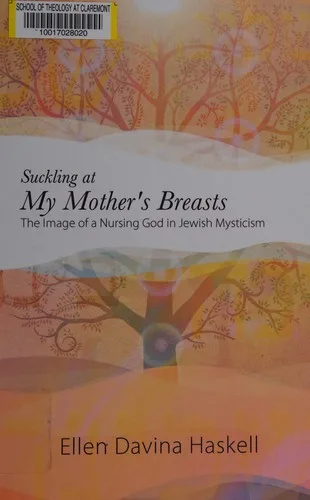
Suckling at my mother's breasts
 61
61

Suckling at my mother's breasts


Celeste Moreau (Divination & Symbolism Reviewer) — In "Suckling at my mother's breasts," Ellen Davina Haskell offers a luminous exploration of Kabbalah, illuminating its profound connection to divine love and maternal symbolism. Haskell's nuanced interpretations of rabbinical literature reveal a rich tapestry of hidden meanings, inviting readers to experience the Torah not just as text, but as a living, breathing source of spiritual sustenance. This work is a rare gem for serious students of Jewish mysticism and those seeking a deeper, more intimate understanding of God's embrace. It speaks directly to the soul's primal need for connection and offers a profound pathway towards spiritual homecoming.
📝 Description
61
Ellen Davina Haskell's 1998 book connects maternal nurturing to the soul's search for God.
Ellen Davina Haskell's "Suckling at my mother's breasts" examines the esoteric dimensions of Jewish thought. The book draws an analogy between a mother's care and the soul's desire for divine presence. Haskell analyzes sacred texts, uncovering deeper meanings in the Torah and Kabbalistic writings.
The work creates a spiritual environment where scripture goes beyond simple explanation. It becomes a mystical path of affection, yearning, and final closeness with the Divine. The book speaks to the lasting strength of spiritual sustenance. It offers comfort and deep insight to individuals wanting to grasp the personal way God communicates.
This work sits within the tradition of Jewish mysticism, specifically Kabbalah. It engages with concepts of divine immanence and the soul's journey toward union with the Infinite. Haskell uses the metaphor of suckling to explore the intimate, nurturing aspect of the divine, often associated with the Shekhinah, the feminine aspect of God. The book approaches rabbinic texts not just for their literal or allegorical meaning, but for their potential to reveal direct spiritual experience.
💡 Why Read This Book?
Embark on a transformative journey into the heart of Kabbalistic wisdom. "Suckling at my mother's breasts" offers a unique lens through which to view the divine, exploring themes of love, maternal nurture, and spiritual union. Ideal for seekers of hidden knowledge, scholars of Jewish mysticism, and practitioners of contemplative prayer who yearn for a deeper, more intimate connection with the sacred.
⭐ Reader Reviews
Honest opinions from readers who have explored this book.
❓ Frequently Asked Questions
What is the core metaphor of the book?
The central metaphor likens the soul's pursuit of the Divine to the fundamental human need for maternal nourishment, emphasizing love, dependency, and ultimate spiritual sustenance.
Who is the intended audience for this book?
The book is intended for those with an interest in Kabbalah and Jewish mysticism, including scholars, spiritual seekers, and practitioners looking for deeper interpretive insights into sacred texts and divine connection.
Does the book require prior knowledge of Kabbalah?
While prior knowledge can enhance the experience, Haskell's clear prose and evocative style make the core concepts accessible to dedicated newcomers, guiding them into the esoteric traditions.
What kind of spiritual insight does this book offer?
It offers profound insights into the nature of divine love, the feminine aspect of God, and the soul's journey towards intimacy with the Divine, presented through a unique Kabbalistic framework.
How does the book relate to biblical interpretation?
The book reinterprets biblical narratives and concepts through the lens of Kabbalah, revealing mystical layers and allegorical meanings that speak to the soul's yearning for divine connection.
🔮 Key Themes & Symbolism
The Divine Maternal Embrace
This theme explores the profound concept of the Divine as a nurturing, maternal presence, drawing parallels between the physical act of suckling and the soul's innate need for spiritual sustenance and unconditional love. Haskell posits that the essence of God can be understood through the lens of a loving mother, providing life, comfort, and ultimate fulfillment. This perspective recontextualizes traditional theological notions, emphasizing the feminine aspects of the Divine and the intimate relationship between the Creator and creation. It highlights the yearning for connection and the safe harbor found in divine affection.
Esoteric Interpretation of Scripture
Haskell studies the hidden meanings embedded within rabbinical literature and the Torah, employing Kabbalistic principles to unveil allegorical and mystical dimensions. This theme focuses on the art of gematria, notariqon, and temurah as tools for unlocking deeper spiritual truths. The book demonstrates how seemingly simple narratives can contain profound cosmic secrets and guide the reader towards a more profound understanding of divine will and cosmic order. It is about moving beyond the literal to embrace the symbolic and the numinous within sacred texts.
The Soul's Journey of Longing
Central to the work is the exploration of the soul's inherent desire for union with the Divine, a journey characterized by longing, yearning, and spiritual pursuit. Haskell frames this quest through the metaphor of a child seeking the comfort and life-giving essence of its mother. This theme speaks to the universal spiritual impulse to return to one's source, highlighting the challenges and ultimate rewards of this sacred path. It emphasizes the emotional and existential dimensions of faith and the transformative power of seeking.
💬 Memorable Quotes
Direct passages from the work, attributed to the author.
“Within each commandment lies a hidden river of love.”
— This suggests that even ritualistic observances are conduits for divine affection and spiritual connection, urging readers to seek the underlying love within Jewish law.
“To know God is to be held in His infinite embrace.”
— This highlights the intimate and personal nature of divine relationship, portraying spiritual knowledge not as intellectual understanding but as a state of being enveloped by divine love.
“The whispers of the Shekhinah are a mother's lullaby.”
— This poetic line connects the immanent presence of God (Shekhinah) with the comforting, soothing sounds of a mother's song, emphasizing divine closeness and peace.
“Seek not the distant stars, but the wellspring within your own heart.”
— This encourages introspection and the recognition that the divine is not external but accessible through inner spiritual exploration and contemplation.
💡 Key Ideas
Editorial paraphrase of the work's core concepts — not direct quotes.
The soul, like an infant, cries out for the milk of divine truth.
This quote expresses the book's central metaphor, comparing the soul's spiritual hunger to an infant's need for sustenance, emphasizing the essential nature of divine knowledge for spiritual life.
🌙 Esoteric Significance
Tradition
This work is deeply rooted in the Kabbalistic tradition, a mystical interpretation of Judaism that seeks to understand the divine nature and the relationship between God and creation. It draws heavily on classical Kabbalistic texts like the Zohar, while also integrating rabbinical exegesis and philosophical insights. The book explores concepts such as the Sefirot, the divine emanations, and the Shekhinah, the immanent presence of God, often framed through a lens that emphasizes the feminine aspect of the Divine.
Symbolism
The central symbolism revolves around the metaphor of 'suckling,' representing the soul's primal need for and reception of divine nourishment, love, and wisdom. Other key symbols include the 'mother' as the embodiment of divine nurture and the 'breast' as the source of spiritual life. The work also implicitly engages with the symbolic language of the Torah, reinterpreting biblical narratives and commandments as potent conduits for mystical understanding and divine connection, revealing hidden layers of meaning.
Modern Relevance
In an age often characterized by spiritual seeking and a desire for deeper connection, Haskell's work resonates profoundly. Its emphasis on divine love, maternal nurturing, and the accessibility of the sacred offers a comforting and empowering perspective. The book's exploration of finding the divine within, and its call for an intimate relationship with God, speak directly to contemporary spiritual sensibilities, making Kabbalistic wisdom relevant to modern seekers of meaning and transcendence.
👥 Who Should Read This Book
This clear text is highly recommended for seasoned scholars of Kabbalah and Jewish mysticism seeking novel interpretive frameworks and a deeper appreciation for the tradition's emotional core. Spiritual seekers yearning for a more intimate and loving connection with the Divine will find solace and profound guidance within its pages. Practitioners of contemplative prayer and meditation will discover rich new avenues for spiritual exploration and devotional practice. Even those new to esoteric traditions will find Haskell's evocative prose and clear exposition an accessible entry point into the profound mysteries of Jewish mysticism.
📜 Historical Context
Written during a period of burgeoning interest in Jewish mysticism, particularly the Kabbalah, Ellen Davina Haskell's "Suckling at my mother's breasts" emerged as a significant contribution to esoteric scholarship. The late 19th and early 20th centuries saw a renewed fascination with ancient spiritual traditions, moving beyond purely academic pursuits to explore their practical and experiential dimensions. Haskell's work reflects this shift, offering an accessible yet profound interpretation of complex Kabbalistic concepts. It engaged with the intellectual currents of its time, including philosophical inquiries into the nature of God, love, and human consciousness, while grounding these explorations firmly within the rich heritage of Jewish mystical thought and rabbinical literature.
📔 Journal Prompts
Reflect on a time you felt spiritually 'nourished' or 'fed' by a text, teaching, or experience. How did this resemble the metaphor of suckling?
Consider the 'feminine' aspects of the Divine you have encountered or contemplated. How does Haskell's concept of the 'Divine Mother' resonate with your understanding?
What does the idea of 'longing' for the Divine mean to you? Describe your personal journey of spiritual yearning.
Explore a specific commandment or biblical story through the lens of hidden, mystical meaning. What secrets might it hold?
How can you actively 'suckle' from the 'wellspring within your own heart' in your daily life? What practices might foster this inner connection?
🗂️ Glossary
Kabbalah
A mystical tradition within Judaism that seeks to understand the nature of God, the universe, and the human soul through esoteric interpretations of the Torah and sacred texts.
Shekhinah
The immanent, indwelling presence of God in the world, often associated with the feminine aspect of the Divine and the concept of divine closeness and communion.
Sefirot
The ten divine emanations or attributes through which God reveals Himself and sustains the universe, forming a central concept in Kabbalistic cosmology.
Rabbinical Literature
The body of writings produced by rabbis, including legal codes (Halakha), ethical teachings (Musar), and mystical interpretations (Midrash and Kabbalah).
Exegesis
The critical explanation or interpretation of a text, especially of scripture, often going beyond the literal meaning to explore deeper symbolic or allegorical significance.
This book appears in 1 collection
🔮 Readers Also Liked
Browse all →







From the “Kabbalah” Collection
View all →





More Free Kabbalah & Jewish Mysticism Books
View all →