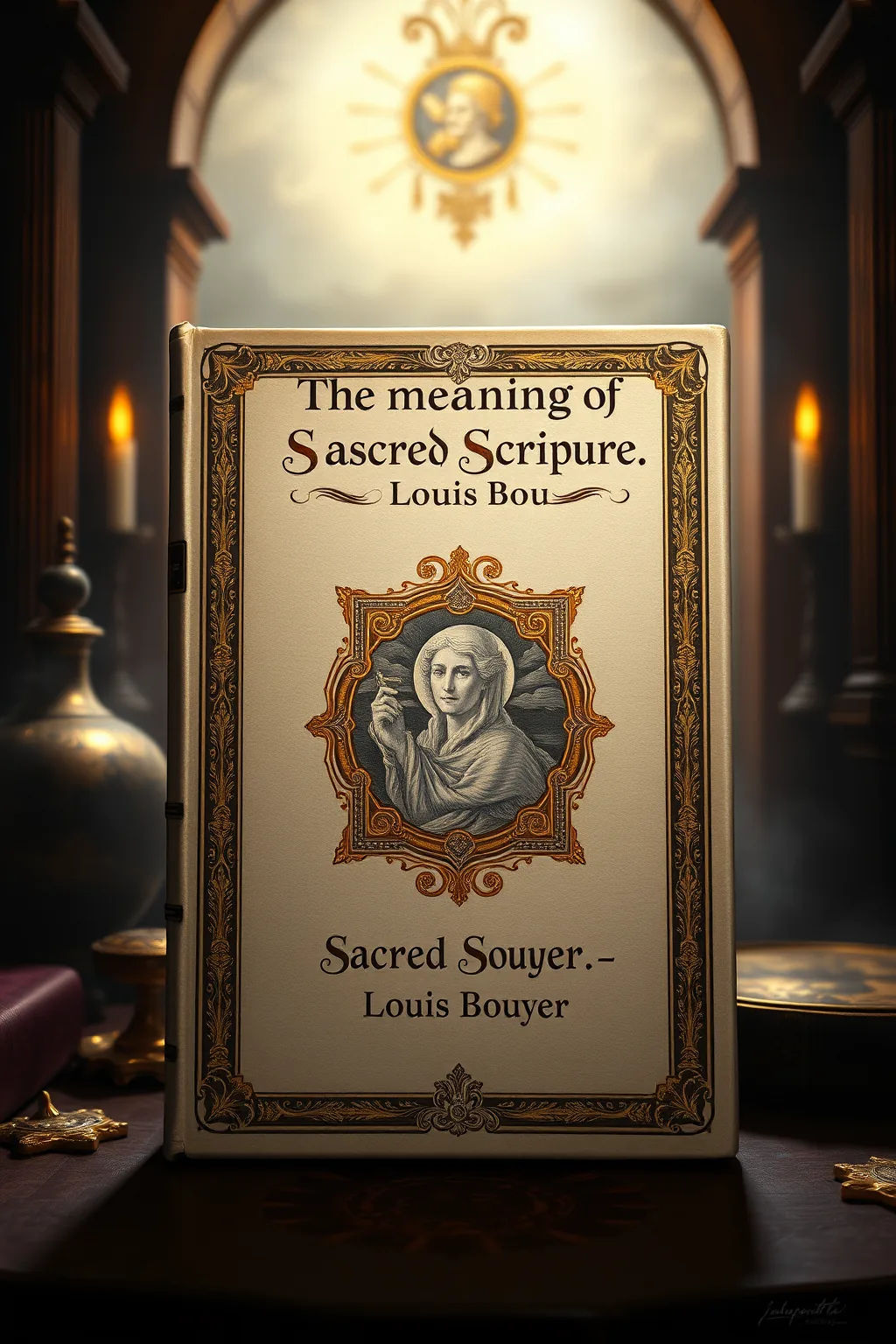
The meaning of Sacred Scripture
 63
63

The meaning of Sacred Scripture


Marcus Thorne, Esoteric Sciences Reviewer: Louis Bouyer's 'The Meaning of Sacred Scripture' is a tour de force for the serious student of sacred texts. Moving beyond conventional exegesis, Bouyer unearths the profound mystical and Kabbalistic underpinnings that inform biblical narrative and doctrine. His exploration of scriptural authority and inspiration is particularly illuminating, framing the Bible as a dynamic conduit of divine consciousness rather than a fixed dogma. This work is indispensable for those seeking to understand the esoteric dimensions of Judeo-Christian tradition, offering a sophisticated yet accessible pathway into its deeper spiritual significance. Highly recommended for scholars and dedicated practitioners alike.
📝 Description
63
Louis Bouyer's 1960 'The Meaning of Sacred Scripture' examines how the Bible functions as a living revelation.
In 'The Meaning of Sacred Scripture,' Louis Bouyer moves beyond simple historical or literary readings of the Bible. He proposes that scripture is best understood as a dynamic spiritual structure, a channel for divine communication. Bouyer argues that the text reveals layers of meaning tied to symbolic language, numerical patterns, and mystical traditions. This approach connects the human search for knowledge with its divine origin.
The book presents scripture not as a fixed document but as a source of transformative insight. It suggests that through careful interpretation, readers can uncover profound truths about existence and the divine presence within. Bouyer's work is for those seeking a less conventional, more mystical understanding of their faith. It provides a method for recognizing the enduring patterns embedded in the biblical text.
This work engages with a tradition that views sacred texts as containing hidden, spiritual dimensions beyond their literal sense. It aligns with approaches that find deeper meaning in scriptural structure, numerology, and symbolism, often drawing parallels to mystical or gnostic traditions. Bouyer's analysis seeks to reveal the Bible not just as a historical record but as a living conduit for spiritual understanding, resonating with those interested in the contemplative or mystical apprehension of religious truth.
💡 Why Read This Book?
Embark on a transformative journey into the heart of scripture, uncovering layers of hidden meaning and mystical symbolism. 'The Meaning of Sacred Scripture' offers a profound reinterpretation, revealing the Bible as a living source of esoteric wisdom. Ideal for seekers, scholars, and practitioners of Kabbalah and Jewish mysticism yearning for a deeper, more spiritual understanding of divine revelation.
⭐ Reader Reviews
Honest opinions from readers who have explored this book.
❓ Frequently Asked Questions
What is the primary focus of Bouyer's approach to scripture?
Bouyer's approach centers on the mystical and symbolic dimensions of sacred scripture, viewing it as a conduit for divine revelation and hidden wisdom, deeply influenced by Kabbalistic thought.
How does this book relate to Kabbalah?
The book integrates Kabbalistic principles and interpretations, demonstrating how these esoteric Jewish traditions offer unique insights into the deeper, symbolic meanings embedded within biblical texts.
Who is the intended audience for this work?
This book is intended for readers with a serious interest in theology, biblical studies, and esoteric traditions, particularly those seeking a more mystical and symbolic understanding of scripture.
Does this book offer practical guidance for spiritual practice?
While not a direct manual, the book provides intellectual and spiritual frameworks that can profoundly inform and deepen a reader's personal spiritual practice and engagement with sacred texts.
What makes 'The Meaning of Sacred Scripture' unique among biblical studies?
Its uniqueness lies in its bold synthesis of traditional biblical criticism with esoteric and Kabbalistic interpretations, revealing a richer, multi-layered spiritual significance often overlooked in conventional studies.
🔮 Key Themes & Symbolism
The Bible as a Living Spiritual Organism
Bouyer challenges the notion of the Bible as a static historical document, instead portraying it as a vibrant, divinely animated entity. He explores how scriptural narratives and laws are imbued with a dynamic spiritual life, capable of continuous revelation and transformation for the receptive reader. This perspective invites a profound engagement, where the text itself becomes a partner in the seeker's spiritual journey, unfolding its secrets through prayer, contemplation, and the application of esoteric principles.
Kabbalistic Keys to Scriptural Interpretation
This theme looks at the profound influence of Kabbalistic thought on understanding the Bible. Bouyer illustrates how the intricate symbolic systems, numerological correspondences, and mystical allegories inherent in Kabbalah serve as essential keys to unlocking deeper, often hidden, meanings within biblical passages. He demonstrates how these esoteric frameworks reveal the divine architecture and cosmic order reflected in the sacred texts, transforming biblical study into an exploration of profound spiritual realities and the divine emanations.
Authority and Inspiration Beyond the Literal
Bouyer re-examines the concepts of biblical authority and inspiration, positing that true authority extends far beyond literal interpretation or historical accuracy. He argues that divine inspiration manifests in multiple layers of meaning, accessible through spiritual insight and esoteric understanding. This perspective elevates the Bible from a mere source of doctrine to a profound repository of soul-awakening wisdom, where the authority lies in its capacity to guide the soul towards divine consciousness and self-realization.
💬 Memorable Quotes
Direct passages from the work, attributed to the author.
“The Word of God is not a dead letter, but a living spirit.”
— This highlights the dynamic, spiritual essence of scripture, emphasizing its active role in guiding and transforming the believer, rather than being a static historical record.
“Within the veil of the literal lies the unveiled truth.”
— This suggests that the surface meaning of scripture conceals deeper, esoteric truths, accessible through spiritual insight and specialized interpretive methods.
“Symbolism is the divine language of the soul.”
— This emphasizes the profound connection between symbolic representation and spiritual understanding, positioning symbols as the primary means by which the divine communicates with the inner self.
“The authority of scripture is found in its power to illuminate the divine within.”
— This redefines scriptural authority, shifting focus from external validation to its internal transformative capacity, its power to awaken the reader's own divine spark.
“To read the Bible is to enter a cosmic dialogue.”
— This evocative phrase suggests that engaging with scripture is not a passive act but an active participation in an ongoing, profound conversation between humanity and the divine.
🌙 Esoteric Significance
Tradition
This work is deeply rooted in the Western Esoteric Tradition, particularly drawing from Christian Kabbalah and its historical engagement with Jewish mystical thought. It bridges the gap between traditional exegesis and the Gnostic and Hermetic impulses that seek hidden knowledge within sacred texts. Bouyer's approach reflects the efforts of Renaissance mystics and later theologians who saw the Bible as a body of symbolic meaning, intended to guide the soul towards higher consciousness and divine union.
Symbolism
Bouyer masterfully deciphers the symbolic language of scripture, treating biblical figures, events, and laws as vehicles for profound spiritual truths. He highlights how numbers, names, and narrative structures carry layers of meaning, akin to the gematria and other interpretive methods found in Kabbalah. The symbolism here is not merely decorative but serves as a direct pathway to understanding the divine order, the nature of creation, and the human soul’s journey towards spiritual realization.
Modern Relevance
In an age often characterized by spiritual fragmentation and a search for deeper meaning, Bouyer's work offers a vital bridge. It provides a sophisticated framework for understanding sacred texts not just as historical or moral guides, but as potent tools for spiritual transformation. For contemporary seekers disillusioned with purely materialistic worldviews, 'The Meaning of Sacred Scripture' presents a compelling argument for the enduring relevance of mystical interpretation, empowering individuals to find profound spiritual resonance in ancient texts and reconnect with the divine within.
👥 Who Should Read This Book
This profound exploration is a must-read for theologians and biblical scholars seeking to expand their interpretive horizons beyond conventional criticism. It is essential for students and practitioners of Kabbalah and Jewish mysticism who wish to see its principles illuminated within the Christian scriptural tradition. Furthermore, any spiritual seeker yearning for a deeper, more mystical engagement with the Bible, who feels a pull towards understanding its hidden dimensions and symbolic language, will find immense value and guidance within these pages. Beginners will find an accessible yet rigorous introduction to esoteric biblical interpretation, while advanced practitioners will discover rich new avenues for contemplation.
📜 Historical Context
Published in an era grappling with the rise of scientific rationalism and critical biblical scholarship, Louis Bouyer's 'The Meaning of Sacred Scripture' emerged as a powerful counterpoint, seeking to reclaim the spiritual and mystical dimensions of faith. The mid-20th century saw various theological movements, including Neo-Orthodoxy and existentialist interpretations, but Bouyer’s work carved a unique niche by deliberately engaging with esoteric traditions, particularly Kabbalah, to offer a more holistic and profound understanding of the Bible. This was a time when many scholars were dissecting scripture through purely historical-critical lenses, risking the loss of its transcendent power. Bouyer’s synthesis aimed to demonstrate that the deepest meanings of the sacred text were not incompatible with intellectual rigor but were, in fact, illuminated by it, especially when viewed through the lens of enduring mystical traditions.
📔 Journal Prompts
Reflect on a biblical passage that has always resonated with you. How might a Kabbalistic interpretation reveal deeper layers of meaning?
Consider the concept of 'divine inspiration' as presented by Bouyer. How does this differ from your previous understanding, and what implications does it have for your faith?
Identify a recurring symbol or motif in scripture (e.g., light, water, a specific number). Explore its potential esoteric significance in your own spiritual journey.
How can the 'living spirit' of scripture be actively engaged in your daily life, beyond mere reading?
What does it mean to you to perceive the Bible as a 'cosmic dialogue'? How can you foster a more active participation in this dialogue?
🗂️ Glossary
Gnosis
A Greek term meaning 'knowledge,' often referring to a special, intuitive, or spiritual knowledge that leads to salvation or enlightenment, central to many esoteric traditions.
Exegesis
Critical explanation or interpretation of a text, especially of the Bible. Bouyer moves beyond purely historical-critical exegesis to a more spiritual and symbolic approach.
Kabbalah
A complex system of Jewish mysticism that explores the divine nature, the creation of the universe, and the relationship between God and humanity through symbolic interpretation of the Torah.
Emanation
In mystical cosmology, the process by which the divine or spiritual reality brings forth the created universe, often depicted as a flowing or radiating from a single source.
Symbolic Language
A mode of expression that uses symbols (objects, figures, signs) to represent abstract ideas or spiritual realities, often conveying deeper meanings than literal language.
This book appears in 1 collection
🔮 Readers Also Liked
Browse all →







More by Louis Bouyer
All books →
From the “Kabbalah” Collection
View all →





More Free Kabbalah & Jewish Mysticism Books
View all →