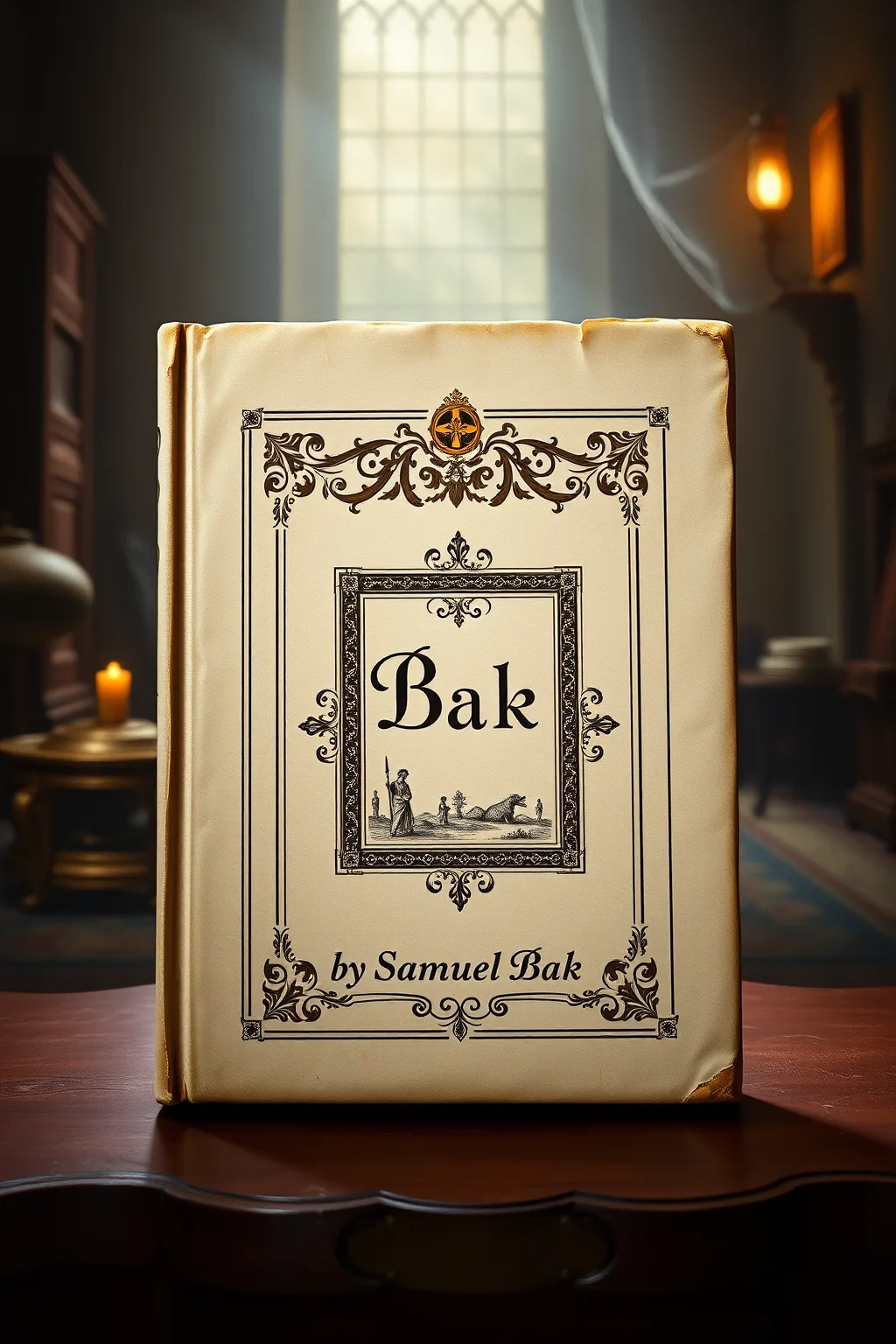
Bak
 62
62

Bak


Evander Ashcroft, Alchemy & Hermeticism Editor: 'Bak' is a revelation, a masterful exploration of an artist whose visual lexicon is deeply steeped in the esoteric currents of Kabbalah and Jewish mysticism. Bak's paintings are not mere depictions but profound meditations on cosmic order, fractured realities, and the perennial quest for wholeness. The book brilliantly unpacks the layered symbolism, revealing how the artist transmutes personal and collective suffering into potent visual prophecies. Its strength lies in its ability to bridge the gap between visual art and mystical contemplation, offering profound insights for seekers of hidden truths and scholars of symbolic language. This is an essential volume for anyone interested in the alchemical nature of creation and the spiritual resonance found within masterful artistic expression.
📝 Description
62
Samuel Bak's 2001 book 'Bak' examines his art through Jewish mysticism.
This book presents the visual work of Samuel Bak, connecting his canvases to Kabbalistic wisdom and Jewish mystical traditions. It traces the artist's output, showing how potent symbolism addresses fundamental questions about existence. The paintings address creation, destruction, change, and the human response to historical trauma.
The collection invites contemplation of archetypal forces, the geometry within forms, and the creative process in art. It is for those interested in art, spirituality, and the deeper aspects of life. Bak's art provides a view on human experience through the lens of ancient sacred ideas. The book is a visual study that encourages personal thought and spiritual insight.
Samuel Bak's artwork draws heavily from Jewish mystical traditions, particularly the Kabbalah. This esoteric framework informs his visual language, imbuing his creations with layers of meaning related to creation, divine presence, and the structures of the cosmos. The book positions Bak's art as a conduit for understanding these concepts, showing how his imagery reflects ideas of transformation and the hidden order within apparent chaos, often in response to historical events.
💡 Why Read This Book?
Uncover the profound Kabbalistic symbolism embedded within Samuel Bak's evocative artwork. This book offers a unique lens into Jewish mysticism through the visual medium, revealing hidden layers of meaning and spiritual resonance. Ideal for art enthusiasts, spiritual seekers, and scholars of esoteric traditions seeking to deepen their understanding of art as a conduit for divine revelation and personal transformation.
⭐ Reader Reviews
Honest opinions from readers who have explored this book.
❓ Frequently Asked Questions
What is the primary esoteric tradition explored in 'Bak'?
The primary esoteric tradition explored is Kabbalah and Jewish Mysticism, with a particular focus on how these ancient concepts are visually interpreted and expressed through Samuel Bak's art.
Are the interviews in the book focused on mystical themes?
Yes, the interviews delve into the artist's personal philosophies, artistic process, and the underlying spiritual and mystical inspirations that inform his powerful imagery, often referencing Kabbalistic ideas.
How does the book connect painting with esoteric knowledge?
The book illustrates how Bak employs universal symbols and allegorical narratives, drawing parallels between the creative act of painting and the esoteric processes of spiritual development and cosmic understanding.
What kind of symbolism can one expect to find?
Readers can anticipate encountering rich symbolism related to creation, the Tree of Life, divine emanations, fractured reality, and the enduring human spirit, often expressed through motifs like fruit, architectural elements, and allegorical figures.
Is this book suitable for beginners in mysticism?
Absolutely. While offering depth for seasoned practitioners, the book's accessible language and visually driven approach make it an excellent entry point for those new to Kabbalah and Jewish mysticism, presented through the engaging medium of art.
🔮 Key Themes & Symbolism
The Kabbalistic Canvas: Divine Emanations and Fractured Worlds
This theme looks at how Samuel Bak’s artistic output serves as a visual exegesis of Kabbalistic principles. It examines the representation of Sefirot (divine emanations) and their interplay with concepts of cosmic order and disruption. The paintings often depict worlds in a state of flux, reflecting the Kabbalistic understanding of spiritual realms and their connection to the material plane, inviting viewers to contemplate the ongoing dance between creation and entropy as seen through an ancient esoteric lens.
Fruitful Symbolism: Metaphors for Creation and Transformation
The recurring motif of fruit in Bak’s work is explored as a potent symbol of fertility, abundance, and the cyclical nature of life, death, and rebirth, deeply resonant with Kabbalistic ideas of growth and divine providence. This theme investigates how these seemingly simple organic forms are imbued with profound spiritual significance, representing the fruits of spiritual labor, the potential for transformation, and the hidden sweetness of divine knowledge waiting to be harvested by the seeker. It connects the terrestrial with the celestial through visual allegory.
The Artist as Alchemist: Transmuting Trauma into Sacred Art
This section addresses the alchemical nature of Bak’s creative process, particularly his ability to transmute profound personal and collective historical traumas into powerful works of art that carry a spiritual weight. It explores how the artist acts as a modern-day alchemist, transforming the lead of suffering into the gold of wisdom and resilience. The paintings become vessels for catharsis and spiritual renewal, offering a profound proof of the enduring human spirit and the potential for beauty and meaning to emerge even from the darkest of experiences, echoing esoteric paths of purification and enlightenment.
💬 Memorable Quotes
Direct passages from the work, attributed to the author.
“The canvas is where the unseen becomes visible, where the divine whispers.”
— Here, Bak likens the act of painting to a form of divine revelation, a space where abstract spiritual concepts and the ineffable nature of God can be perceived through visual form, like a whispered secret.
“Each line is a prayer, each color a meditation.”
— This highlights the deliberate and spiritual intention behind every element of his artwork, framing his artistic process as a devotional practice akin to prayer and contemplative meditation.
“I paint the traces of the soul.”
— This suggests Bak's work looks at the deep, often subconscious, resonance of the human spirit, capturing the lingering impressions and spiritual vibrations that define our inner existence.
“Art is the bridge between sorrow and understanding.”
— This expresses the transformative power of Bak's art, positing it as a vital connection that helps individuals navigate profound emotional pain by leading them toward deeper insight and spiritual comprehension.
💡 Key Ideas
Editorial paraphrase of the work's core concepts — not direct quotes.
My paintings are a proof of memory, a visual prayer.
This quote suggests Bak's art is deeply rooted in remembrance and serves a sacred purpose, akin to a spiritual invocation, transforming personal and collective history into a form of devotion.
🌙 Esoteric Significance
Tradition
The esoteric significance of Samuel Bak's work is deeply rooted in Kabbalah, the mystical tradition of Judaism. His art acts as a visual manifestation of Kabbalistic concepts such as the Sefirot (divine emanations), the nature of creation, the concept of *Tikkun* (rectification), and the interplay between the divine and the fragmented human experience. Bak’s paintings often explore the philosophical implications of these ancient texts, translating abstract spiritual ideas into tangible, albeit symbolic, imagery, offering a visual pathway into the profound mysteries of existence as understood within this rich esoteric framework.
Symbolism
Bak's oeuvre is replete with potent symbols that resonate with Kabbalistic and alchemical traditions. Motifs like fragmented architecture, recurring figures in masks or uniforms, and the symbolic use of fruit are imbued with layers of meaning. These symbols often represent the brokenness of the world, the search for divine order amidst chaos, the process of spiritual transformation, and the enduring human quest for wholeness. The deliberate arrangement and juxtaposition of these elements create a visual language that speaks directly to the subconscious, inviting contemplation on archetypal forces, the nature of reality, and the hidden connections within the universe.
Modern Relevance
In a world grappling with division, trauma, and existential questions, Samuel Bak's art offers profound contemporary relevance through its esoteric lens. His visual explorations of resilience, memory, and the search for meaning provide solace and insight for modern seekers. The Kabbalistic framework within his work offers timeless wisdom applicable to understanding personal and collective challenges, promoting introspection and spiritual growth. As a bridge between ancient mysticism and contemporary artistic expression, Bak's art encourages a deeper engagement with the unseen forces that shape our lives, fostering a sense of interconnectedness and hope in an often-disorienting modern landscape.
👥 Who Should Read This Book
This book is indispensable for seekers of esoteric wisdom, particularly those drawn to Kabbalah and Jewish mysticism, who wish to explore these traditions through the powerful medium of art. Art historians and critics interested in contemporary symbolic language will find a rich subject for analysis. Practicing artists seeking inspiration for incorporating spiritual themes into their work will discover a profound example. Furthermore, individuals who have experienced historical trauma or are engaged in personal journeys of healing and self-discovery will resonate deeply with Bak's evocative explorations of memory, resilience, and the enduring human spirit.
📜 Historical Context
Samuel Bak's artistic journey unfolds against the backdrop of the 20th and 21st centuries, a period marked by unprecedented global upheaval, including the Holocaust and its enduring aftermath, and the complex socio-political range of Israel. His early exposure to the horrors of war and displacement in his youth deeply imprinted his visual language with themes of memory, loss, and resilience. This context is crucial for understanding the profound allegorical depth of his work, which often transcends specific historical events to touch upon universal human experiences. His artistic development, influenced by both Russian and Israeli art scenes, has allowed him to synthesize diverse aesthetic traditions while maintaining a fiercely personal and spiritually charged vision. The era's intellectual and spiritual currents, including a resurgence of interest in Kabbalah and Jewish mysticism, provide fertile ground for interpreting the esoteric dimensions of his oeuvre.
📔 Journal Prompts
Reflect on a recurring symbol in Bak's work and its personal resonance with your own life journey.
Consider how Bak's artistic process might be seen as an alchemical transformation of personal or collective pain into meaning.
Explore the concept of 'brokenness' as depicted by Bak. How does this relate to your own understanding of spiritual or personal fragmentation and healing?
Write about a time you felt a connection to something unseen or divine, and how this experience might be visually represented.
How does viewing Bak's art challenge or deepen your understanding of creation and destruction in the universe?
🗂️ Glossary
Kabbalah
A body of Jewish mystical teachings that explores the nature of God, the creation of the universe, and the relationship between the divine and the human through esoteric interpretation of scripture and symbolic language.
Sefirot
The ten divine emanations or attributes of God as described in Kabbalistic cosmology, often depicted as a Tree of Life, representing the stages of divine manifestation and the structure of reality.
Tikkun
A central concept in Kabbalah, meaning 'rectification' or 'restoration.' It refers to the process of mending the brokenness in the universe and the human soul, often through ethical actions and spiritual practices.
Alchemical Transformation
In esoteric contexts, the process of spiritual purification and perfection, analogous to the alchemical pursuit of turning base metals into gold, representing the transmutation of the lower self into a higher, enlightened state.
Archetype
A universal, archaic symbol, image, or theme that is part of the collective unconscious, representing fundamental human experiences and patterns of behavior, often found in mythology and art.
This book appears in 1 collection
🔮 Readers Also Liked
Browse all →







More by Samuel Bak
All books →From the “Kabbalah” Collection
View all →






More Free Kabbalah & Jewish Mysticism Books
View all →