Forsaken
 61
61

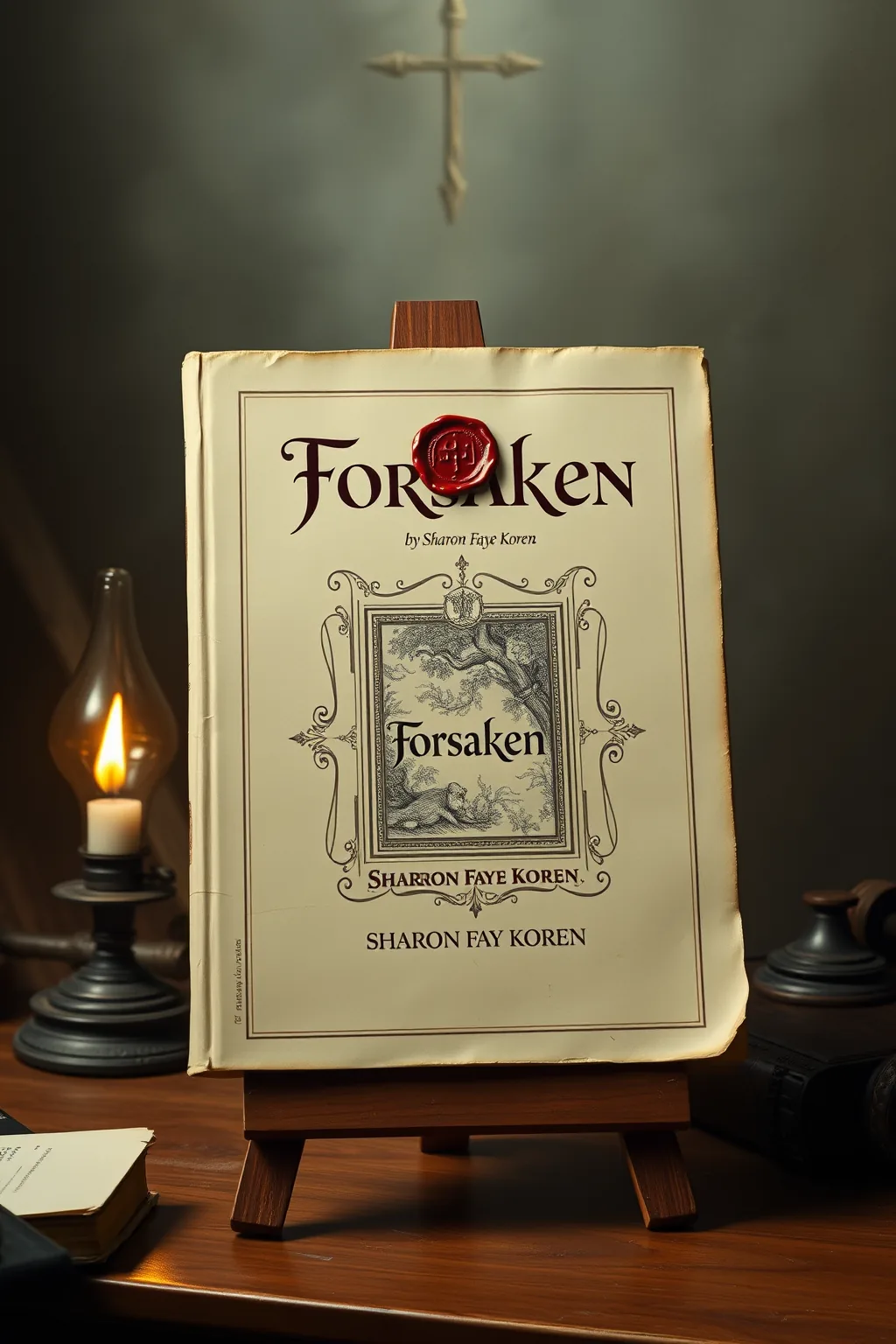
Forsaken



Ophelia Vance, Mystical Literature Reviewer — Sharon Faye Koren's 'Forsaken' is a revelation, peeling back layers of historical interpretation to expose the rich esoteric tapestry woven into Jewish concepts of menstruation and ritual purity. Koren's scholarship is both rigorous and deeply insightful, illuminating the mystical dimensions often overlooked. She uncovers a profound dialogue between the physical and the spiritual, revealing how ancient traditions understood the sacred power inherent in feminine cycles. This book is indispensable for scholars of Kabbalah and Jewish mysticism, as well as for practitioners seeking a deeper understanding of these potent, often veiled, aspects of tradition. A truly illuminating work.
📝 Description
61
Sharon Faye Koren's 'Forsaken' examines Jewish mystical interpretations of menstruation and ritual purity.
Sharon Faye Koren's 'Forsaken' investigates the esoteric dimensions of Kabbalah concerning menstruation and ritual purity in Judaism. The book traces how these biological cycles acquired spiritual and cosmological meaning across the medieval and early modern periods. Koren's work connects these concepts to the symbolic language of the divine feminine and the relationship between the physical and spiritual worlds. It draws on meticulous research to illuminate the wisdom traditions that have influenced Jewish thought for centuries.
The book examines the esoteric connections between natural cycles and divine concepts. It looks at how these were understood within Kabbalistic frameworks, revealing a deeper spiritual significance attributed to them. 'Forsaken' aims to provide a clearer understanding of these specific mystical currents within Judaism.
This work sits within the study of Jewish esoteric traditions, specifically Kabbalah. It focuses on how mystical interpretations recontextualized concepts often considered mundane. The book explores how these interpretations integrated earthly phenomena into broader cosmological schemes, a common feature in many esoteric systems. Koren's approach highlights the symbolic and spiritual weight given to natural cycles within a specific mystical framework.
💡 Why Read This Book?
Uncover the sacred feminine within Kabbalah. 'Forsaken' offers a rare glimpse into the mystical interpretations of menstruation and purity in Jewish tradition. Ideal for seekers of esoteric knowledge, students of mysticism, and practitioners interested in the historical and spiritual significance of ritual. Explore hidden connections between the cyclical nature of life and divine wisdom.
⭐ Reader Reviews
Honest opinions from readers who have explored this book.
❓ Frequently Asked Questions
What is the primary focus of 'Forsaken'?
'Forsaken' primarily explores the esoteric and mystical interpretations of menstruation and ritual purity within the framework of Kabbalah and Jewish mysticism during the medieval and early modern periods.
Who is the intended audience for this book?
This book is intended for serious students of Kabbalah, Jewish mysticism, religious history, and anyone interested in the esoteric dimensions of ritual purity and the sacred feminine.
Does 'Forsaken' offer practical guidance for modern practitioners?
While rooted in historical and mystical traditions, 'Forsaken' provides profound insights that can inform and enrich modern spiritual practices, particularly for those exploring the sacred feminine and ritual.
What historical period does the book primarily cover?
The book focuses on the medieval and early modern periods of Jewish history, roughly from 425 to 1789 CE, examining the development of Kabbalistic thought during this era.
How does 'Forsaken' connect biological cycles to mysticism?
It reveals how ancient Jewish mystics viewed biological cycles, particularly menstruation, not as mere physical events but as potent symbols and conduits for spiritual understanding and divine connection.
🔮 Key Themes & Symbolism
The Sacred Feminine in Kabbalah
This theme explores how Jewish mystical traditions, particularly Kabbalah, conceptualized and revered the feminine principle. It explores the symbolic representation of the divine feminine, often linked to the Shekhinah (divine presence) and Malkhut (kingdom), and how these concepts intersect with the natural cycles of women. The book unearths the hidden spiritual power attributed to these cycles, positioning them not as sources of impurity but as profound gateways to divine knowledge and cosmic understanding.
Ritual Purity and Esoteric Transformation
Beyond mundane interpretations, 'Forsaken' examines the esoteric dimensions of ritual purity within Judaism. It argues that concepts of purity and impurity were often employed in Kabbalistic thought as metaphors for spiritual states and processes of transformation. The book illuminates how the careful observance and nuanced understanding of these rituals were believed to facilitate a closer connection to the divine, purify the soul, and align the individual with the cosmic order, particularly in relation to the sacred feminine.
Historical Evolution of Mystical Thought
This theme traces the historical development of Kabbalistic ideas concerning menstruation and ritual purity from the medieval era through the early modern period. Koren highlights how interpretations evolved, influenced by philosophical shifts, communal needs, and the internal dynamics of mystical discourse. The book provides crucial context for understanding how these sacred concepts were debated, preserved, and reinterpreted, offering a rich historical narrative of evolving esoteric knowledge within Judaism.
💬 Memorable Quotes
Direct passages from the work, attributed to the author.
“In the cycles of the moon, we find the whispers of the divine feminine.”
— This highlights the symbolic link between lunar cycles and feminine energy in Kabbalah, suggesting a celestial mirroring of earthly rhythms.
“Purity is not absence, but presence of the sacred.”
— This redefines purity in a mystical context, shifting from a negative connotation of 'unclean' to a positive state of divine inhabitation or connection.
“The body, a temple, its rhythms a sacred liturgy.”
— This elevates the physical body and its natural processes to a sacred status, comparable to religious worship and ritual.
“Hidden within the familiar, the keys to the infinite unfold.”
— This speaks to the esoteric nature of the book's subject matter, suggesting that profound spiritual truths are concealed within seemingly ordinary aspects of life.
💡 Key Ideas
Editorial paraphrase of the work's core concepts — not direct quotes.
The blood that flows is the echo of creation's first cry.
This quote suggests a profound, primordial connection between menstruation and the very act of divine creation, imbuing the biological event with cosmic significance.
🌙 Esoteric Significance
Tradition
The primary esoteric tradition explored is Kabbalah, the mystical interpretive tradition of Judaism. 'Forsaken' explores its strong symbolism, numerology, and cosmological structures to understand how menstruation and ritual purity were viewed not merely as halakhic (Jewish law) concerns but as profound metaphors for spiritual states, divine emanations, and the interconnectedness of the universe. It highlights how these concepts were woven into the intricate range of Kabbalistic theology.
Symbolism
Key symbols include menstrual blood, often reinterpreted as life-giving or cosmically significant rather than merely impure; the moon, a frequent metaphor for the Shekhinah and cyclical feminine power; and the concepts of taharah (purity) and tumah (impurity), which are re-examined through an esoteric lens to signify spiritual readiness, divine proximity, or separation from the divine. The book explores the symbolic interplay between the microcosm (human body) and the macrocosm (universe).
Modern Relevance
In contemporary times, 'Forsaken' offers a vital re-evaluation of concepts that have often been sources of shame or misunderstanding. It provides a framework for reclaiming the sacredness of the female body and its natural cycles, fostering a more holistic and empowering approach to spirituality. For practitioners and seekers, it opens avenues for deeper personal introspection, ritual innovation, and a more profound integration of the physical and spiritual realms within their lives.
👥 Who Should Read This Book
Scholars of Jewish history, religious studies, and Kabbalah will find 'Forsaken' an indispensable resource, offering groundbreaking analysis and primary source insights. Spiritual seekers and practitioners interested in the esoteric dimensions of Judaism, particularly those exploring themes of the sacred feminine, ritual, and the intersection of body and spirit, will discover profound wisdom. Beginners to Kabbalah can approach this work with an open mind, guided by its clear prose and illuminative interpretations, to gain a unique perspective on a less-discussed aspect of mystical tradition. Those interested in comparative mysticism may also find valuable parallels and contrasts.
📜 Historical Context
The medieval and early modern periods (425-1789) were a crucible for Jewish thought, witnessing the flourishing of Kabbalah and the development of complex mystical systems. During this era, communities grappled with exile, philosophical inquiries, and the desire for a deeper, more intimate connection with the divine. 'Forsaken' situates its exploration of menstruation and ritual purity within this dynamic intellectual landscape. It examines how Kabbalists, seeking to understand God's immanence and transcendence, integrated esoteric interpretations of biological phenomena into their cosmological frameworks. The book reveals how these interpretations were not static but evolved, reflecting the shifting spiritual and social currents of the time, and how they offered a profound, often counter-intuitive, vision of the sacred within the human experience.
📔 Journal Prompts
Reflect on the symbolic meaning of blood in various spiritual traditions you are familiar with. How does Koren's interpretation in 'Forsaken' challenge or expand your understanding?
Consider the concept of 'purity' in your own life and spiritual practice. How might an esoteric interpretation, as presented in the book, alter your perspective?
Explore the connection between natural cycles (lunar, menstrual, seasonal) and spiritual awareness. How can these cycles be integrated into a modern spiritual practice?
What does the idea of the 'sacred feminine' mean to you? How has historical or cultural conditioning shaped your perception of this concept?
Imagine you are a medieval Kabbalist. How might you interpret the biological processes of the human body as reflections of divine order and cosmic principles?
🗂️ Glossary
Kabbalah
The esoteric and mystical tradition of Judaism, concerned with the nature of God, the creation of the universe, and the relationship between the divine and the human.
Shekhinah
In Kabbalah, the divine feminine presence of God, often associated with immanence, dwelling, and the aspect of God that is closest to creation.
Halakha
The collective body of Jewish religious laws derived from the Written and Oral Torah, encompassing all aspects of Jewish life and observance.
Mikveh
A ritual bath used in Judaism for purification, typically involving immersion in a large body of drawn or natural water.
Tumah
In Jewish tradition, a state of ritual impurity, often associated with death, bodily emissions, or contact with carcasses, which requires purification for religious participation.
This book appears in 1 collection
🔮 Readers Also Liked
Browse all →







More by Sharon Faye Koren
All books →
From the “Kabbalah” Collection
View all →






More Free Kabbalah & Jewish Mysticism Books
View all →