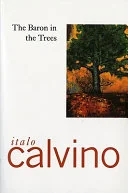
The Baron in the Trees
 73
73

The Baron in the Trees
Calvino's "The Baron in the Trees" is less a fantastical fable and more a meticulously constructed allegory of principled dissent. The premise—a young nobleman, Cosimo, climbing a tree at age 12 and never descending—is immediately arresting, a bold statement against the suffocating conventions of 18th-century Italian aristocracy. What elevates the novel beyond a mere quirky anecdote is Calvino's prose, which renders Cosimo's arboreal existence with an almost scientific precision, detailing the logistics of living amongst the leaves, from foraging to social interaction. A particular strength lies in how Cosimo’s elevated perspective informs his engagement with the world below, allowing him to participate in the French Revolution from his leafy perch. The primary limitation, however, is the occasional emotional distance; Cosimo, despite his profound commitment, can sometimes feel like an intellectual construct rather than a fully fleshed character. Yet, the sheer imaginative force and the novel's persistent, quiet hum of rebellion make it a singular achievement. It is a novel that champions an uncompromised existence, finding the universal in the uniquely specific.
📝 Description
73
In 1767, Italo Calvino's Cosimo Piovasco di Rondò climbed a tree, never to descend.
The Baron in the Trees, first published in Italy in 1957, recounts the peculiar decision of a young Italian nobleman, Cosimo Piovasco di Rondò. At the age of twelve, after a dispute over eating snails, he climbs a tree in his family's estate and vows to spend his life there. This act of defiance shapes his entire existence, transforming the branches into his home, his study, and his domain.
Cosimo's arboreal life is not one of isolation but of active engagement with the world. From his elevated perch, he participates in the events of the Age of Enlightenment, corresponds with thinkers like Voltaire, fights bandits, and even falls in love. His physical separation from the earth becomes a unique vantage point, allowing him to observe and influence human affairs with a detachment that paradoxically deepens his connection to humanity. The novel explores themes of individuality, freedom, and the search for authentic existence through Cosimo's radical commitment to his chosen path.
While not explicitly occult, the novel engages with themes that resonate with esoteric thought, particularly the idea of achieving a higher perspective through physical and mental separation from mundane concerns. Cosimo's arboreal existence can be seen as a metaphor for spiritual detachment, a common practice in various mystical traditions aimed at gaining deeper insight into the nature of reality and the self. His commitment to an unconventional way of life, lived according to internal principles rather than external pressures, mirrors the alchemical or yogic pursuit of transformation through radical discipline and altered states of being.
💡 Why Read This Book?
• You will learn how to conceptualize radical self-determination by examining Cosimo's lifelong commitment to his arboreal existence, a choice made in 1767 that redefined his relationship with society. • You will gain a new perspective on the interplay between physical isolation and intellectual engagement, observing how Cosimo's life in the trees allowed him to participate in historical events like the Napoleonic Wars. • You will feel the power of maintaining an unconventional worldview, understanding how Cosimo's decision to live in the trees became a potent symbol of personal freedom against societal pressures.
⭐ Reader Reviews
Honest opinions from readers who have explored this book.
❓ Frequently Asked Questions
What is the core philosophical idea behind "The Baron in the Trees"?
The core idea is radical individualism and self-imposed exile as a means to maintain integrity and engage with the world on one's own terms. Cosimo's decision to live in trees exemplifies a rejection of societal norms to pursue an authentic, albeit unconventional, existence.
What historical period does "The Baron in the Trees" depict?
The novel is set during the 18th century in Italy, specifically beginning in 1767. This era, the Age of Enlightenment, provides a backdrop against which Cosimo's non-conformist actions become particularly striking.
Is "The Baron in the Trees" a fantasy novel?
While it features an extraordinary premise, "The Baron in the Trees" is primarily a work of philosophical fiction or magical realism. It uses an fantastical element to explore realistic themes of freedom, society, and individual choice.
What is the significance of Cosimo's arboreal life?
Cosimo's life in the trees symbolizes a deliberate detachment from societal constraints, allowing him a unique perspective on human affairs. It represents his commitment to living by his own rules and finding his own truth.
Who is the author of "The Baron in the Trees"?
The author is Italo Calvino, a renowned Italian writer celebrated for his experimental narrative techniques and imaginative explorations of complex themes. The book was first published in 1957.
Does the book offer any commentary on the Enlightenment?
Yes, the book implicitly comments on the Enlightenment by contrasting the era's emphasis on reason and progress with Cosimo's deeply personal, almost romantic, rebellion against established order.
🔮 Key Themes & Symbolism
Radical Individualism
Cosimo's decision to ascend the trees at age twelve and remain there throughout his life is the ultimate act of radical individualism. This choice, made in 1767, signifies a profound rejection of familial duty and societal expectations. His arboreal existence becomes a deliberate experiment in living authentically, demonstrating that true freedom can be found in self-imposed limitations and unique perspectives. The narrative explores how one can remain deeply connected to humanity and its affairs while physically removed from conventional society.
Nature as Sanctuary and Laboratory
The trees serve a dual purpose for Cosimo: a sanctuary from the stifling norms of his aristocratic upbringing and a vast laboratory for a life lived differently. From his elevated perch, he studies botany, observes human behavior, and even engages in intellectual and political discourse. His connection to the natural world is not one of passive observation but active participation, highlighting a symbiotic relationship where nature provides the framework for his unique existence and intellectual growth.
The Philosophy of Detachment
Cosimo's life in the trees represents a form of philosophical detachment, a deliberate distancing from the mundane and the expected. This separation allows him a clearer, more objective view of the world and its inhabitants. His perspective from above enables him to critique societal structures and human follies without being fully consumed by them. This detachment is not an escape but a strategic positioning for a more engaged, albeit unconventional, form of participation in life.
The Reimagining of Social Order
Through Cosimo's arboreal kingdom, Calvino subtly critiques the rigid social hierarchies of 18th-century Europe. Cosimo, despite his noble birth, chooses a life outside these structures, creating his own order within the natural world. His influence extends even to his estate and the surrounding communities, suggesting that alternative forms of governance and social organization are possible, often stemming from principled, individual action rather than inherited authority.
💬 Memorable Quotes
Direct passages from the work, attributed to the author.
“I have decided to stay up here forever.”
— This declaration, made by a twelve-year-old Cosimo in 1767, expresses the novel's central theme of radical, lifelong commitment to an unconventional path. It signifies a complete break from societal norms and a profound embrace of personal autonomy.
“From then on, Cosimo never set foot on the ground again.”
— This simple statement underscores the unwavering nature of Cosimo's decision. It highlights his absolute dedication to his chosen lifestyle, transforming the act of staying in the trees from a childish whim into a defining principle of his existence.
“He lived among the branches, and this was his life.”
— This phrase emphasizes the complete integration of Cosimo into his arboreal environment. His life in the trees is not a temporary state but his enduring reality, a evidence of his successful adaptation and unwavering commitment to his unique existence.
“He saw the world from a different height.”
— This highlights the metaphorical and literal shift in perspective Cosimo gains. His physical elevation provides him with a unique vantage point from which to observe, understand, and interact with the world and its inhabitants.
“He found all his happiness in the trees.”
— This suggests that Cosimo's unconventional choice led him to a state of contentment and fulfillment. It posits that true happiness can be found outside societal definitions, through a life lived in accordance with one's deepest convictions.
🌙 Esoteric Significance
Tradition
While not explicitly aligned with a single esoteric lineage, "The Baron in the Trees" draws upon archetypal themes found in Hermeticism and Gnosticism, particularly the concept of separating oneself from the material world to attain a higher understanding. Cosimo’s voluntary exile carries the Hermetic ideal of "as above, so below," but inverted – by ascending physically, he seeks a purer, more detached form of knowledge and being, akin to a Gnostic's withdrawal from the flawed material realm to seek divine truth.
Symbolism
The most potent symbol is the **tree** itself, representing not just nature but a structured, elevated plane of existence—a bridge between earth and sky, the material and the spiritual. Cosimo's **arboreal kingdom** symbolizes a self-created order, a microcosm of society governed by his personal principles, distinct from the chaotic, conventional world below. The **ground** represents the fallen state, the mundane reality of societal expectations and limitations from which Cosimo seeks liberation.
Modern Relevance
Contemporary thinkers interested in ecological spirituality, voluntary simplicity, and radical self-sufficiency find resonance in Cosimo's life. His model of living apart yet connected speaks to modern critiques of consumerism and urban alienation. Practices focused on mindfulness and finding one's 'true path' can draw inspiration from Cosimo's unwavering commitment to his unique mode of being, demonstrating that a profound engagement with life is possible outside conventional structures.
👥 Who Should Read This Book
• Aspiring practitioners of nature-based philosophies seeking to understand the symbolic potential of living in close communion with the natural world, as exemplified by Cosimo's life in the trees. • Readers interested in comparative literature and philosophical allegories who wish to explore mid-20th-century Italian fiction and its engagement with themes of individualism and societal critique. • Individuals undergoing periods of personal transition or questioning societal norms, who might find inspiration in Cosimo's radical act of self-determination and his ability to construct a meaningful life outside conventional frameworks.
📜 Historical Context
Italo Calvino's "The Baron in the Trees," first published in 1957, emerged during a period of significant intellectual ferment in post-war Italy and Europe. While set in the 18th century, the novel engages with mid-20th-century anxieties about conformity, individualism, and the role of the intellectual in society. The post-war era saw a resurgence of existentialist thought, which emphasized individual freedom and responsibility, a theme resonating strongly with Cosimo's radical choice. Calvino himself was part of the Neo-realist movement initially, but "The Baron in the Trees" exemplifies his later move towards more allegorical and fantastical modes of storytelling, a departure from strict social realism. Contemporaries like Jorge Luis Borges were exploring labyrinthine narratives and philosophical puzzles, though Calvino’s focus remained more grounded in the humanistic and the natural. The novel was part of a broader European literary trend of questioning established norms and exploring alternative ways of perceiving reality, often drawing on myth and folklore.
📔 Journal Prompts
Cosimo's lifelong arboreal existence, initiated in 1767.
The concept of 'living apart' as a form of engagement.
The symbolic meaning of the trees in Cosimo's life.
The tension between societal expectations and personal conviction.
Reimagining one's personal 'kingdom' outside conventional structures.
🗂️ Glossary
Arboreal Existence
A life lived primarily within trees, as adopted by Cosimo. It signifies a deliberate choice to separate oneself from ground-level society and live in nature.
Noble Defiance
Cosimo's act of climbing into the trees and refusing to descend is a form of defiance against his aristocratic family and the societal norms they represent.
Self-Imposed Exile
The state of living separate from society by one's own choice, rather than through external banishment. Cosimo's life in the trees is a prime example.
Enlightenment Context
The historical and intellectual backdrop of the 18th century, characterized by reason, science, and a questioning of tradition, against which Cosimo's actions stand out.
Perspective from Above
The unique viewpoint and understanding gained by Cosimo due to his elevated position in the trees, allowing him to observe and comment on the world below.
Natural Order
The inherent structure and principles governing the natural world, which Cosimo embraces and integrates into his unique way of life.
Principle of Non-Descent
Cosimo's fundamental rule of never touching the ground again after the age of twelve, representing his unwavering commitment to his chosen path.
This book appears in 1 collection
🔮 Readers Also Liked
Browse all →







From the “Enlightenment” Collection
View all →





More Free Occult Philosophy Books
View all →