EGYPTIAN MYSTERIES VOL 2
 74
74

EGYPTIAN MYSTERIES VOL 2
Muata Ashby's "Egyptian Mysteries Vol. 2" functions as a vital lexicon for anyone engaging with the intricacies of Ancient Egyptian divine principles, the Neteru. Ashby’s strength lies in his ability to present the Neteru not just as historical figures but as active cosmic forces and pedagogical tools within the Shetaut Neter tradition. His interpretation of Neteru as metaphors for universal principles, rather than simple deities, offers a valuable esoteric lens. A limitation, however, is the sheer density of information, which, while comprehensive, can be overwhelming for newcomers to the subject. The detailed breakdown of figures like Ra, Osiris, and Isis, explaining their multifaceted roles and symbolic connections, is particularly commendable. The work serves as a robust reference, though it demands dedicated study. Ashby's rigorous approach to explaining the "elemental" nature of the Neteru provides a solid foundation for deeper esoteric study.
📝 Description
74
Muata Ashby's 2006 "Egyptian Mysteries Vol. 2" details the Neteru of Ancient Egypt.
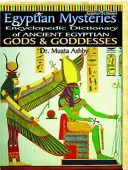
This volume, "Egyptian Mysteries Vol. 2: Dictionary of Gods and Goddesses," by Muata Ashby, examines the Neteru, the divine beings central to Ancient Egyptian religion, known to practitioners as Shetaut Neter. Ashby moves past simple interpretations of deities, viewing them as complex concepts that embody cosmic principles and serve as guides for spiritual understanding. The book intends to offer a thorough reference for comprehending these figures within their original religious and cultural setting. It is for students and practitioners of Ancient Egyptian religion and philosophy, comparative mythology enthusiasts, and those interested in esoteric traditions. The dictionary is particularly useful for scholars of ancient religions and individuals studying African rooted spiritual systems, offering detailed explanations of the Neteru and Kamitic cosmology.
Published in 2006, this work appears during a modern revival of Ancient Egyptian spirituality, often called Kemetism. This movement reconstructs ancient Egyptian religious and philosophical practices using rediscovered texts and hieroglyphic interpretations. Ashby's dictionary contributes to this revival by detailing the Neteru, placing them within Shetaut Neter, and offering an alternative to purely secular or archaeological views of Egyptian religion prevalent in earlier scholarship.
💡 Why Read This Book?
• Gain a nuanced understanding of the Neteru beyond simple deification, as explored in the "Dictionary of Gods and Goddesses" section, appreciating their role as cosmic principles within Shetaut Neter. • Comprehend the interconnectedness of the divine forces in Kamitic cosmology by studying the detailed relationships and symbolic meanings presented, particularly concerning figures like Ra and Nut. • Access a comprehensive reference for esoteric study, enabling deeper engagement with the original teachings of Shetaut Neter as presented by Muata Ashby since its 2006 publication.
⭐ Reader Reviews
Honest opinions from readers who have explored this book.
❓ Frequently Asked Questions
What is the primary focus of "Egyptian Mysteries Vol. 2"?
The book's primary focus is the Neteru, the gods and goddesses of Ancient Egypt (Kamit/Kemet). It presents them as divine principles and vehicles for the teachings of Shetaut Neter, offering a comprehensive dictionary-like exploration.
Who is the author Muata Ashby?
Muata Ashby is a prolific author and teacher specializing in Ancient Egyptian religion and philosophy, particularly the tradition known as Shetaut Neter. He has authored numerous works aiming to revive and interpret these ancient spiritual systems.
What does 'Neteru' mean in the context of this book?
Neteru translates to 'Gods and Goddesses' but in the context of Shetaut Neter, it signifies divine principles, cosmic forces, and metaphorical representations of universal laws, extending beyond the modern concept of deities.
When was 'Egyptian Mysteries Vol. 2' first published?
The book 'Egyptian Mysteries Vol. 2: Dictionary of Gods and Goddesses' was first published on January 1, 2006.
How does this book differ from standard historical accounts of Ancient Egyptian religion?
Unlike purely historical accounts, this book delves into the esoteric and spiritual interpretations of the Neteru, viewing them as integral to a living religious tradition (Shetaut Neter) and cosmic principles, rather than solely historical figures.
What is Shetaut Neter?
Shetaut Neter is the term used by Muata Ashby and others to refer to the Ancient Egyptian-African religion, emphasizing its mystical and esoteric dimensions, and the hidden knowledge ('Shetaut') concerning the divine ('Neter').
🔮 Key Themes & Symbolism
The Neteru as Cosmic Principles
This volume posits that the Neteru, often translated as gods and goddesses, are more accurately understood as fundamental cosmic principles and forces that govern existence. Ashby details how figures like Ra represent the solar principle of creation and sustenance, while Osiris embodies resurrection and the cycle of life and death. This perspective shifts the understanding from anthropomorphic deities to a recognition of divine intelligence immanent in the universe, forming the bedrock of Shetaut Neter's philosophical framework.
Shetaut Neter and Esoteric Knowledge
The work meticulously outlines Shetaut Neter as the path to understanding the hidden mysteries of Ancient Egypt. It frames the study of the Neteru as a means to access profound spiritual wisdom and self-realization. Ashby emphasizes that these divine principles are not external entities but internal potentials to be awakened within the practitioner, aligning with Hermetic principles of 'As Above, So Below'.
Symbolic Representation of the Divine
Ashby studies the strong symbolism associated with each Neter. The book highlights how animal forms, hieroglyphs, and specific iconography are not mere decorative elements but profound visual languages conveying complex theological and philosophical concepts. For instance, the falcon-headed Ra symbolizes divine authority and the all-seeing eye of consciousness, while Isis, with her throne hieroglyph, signifies divine motherhood and magical wisdom.
The Dictionary Format
Structured as a dictionary, the book provides accessible yet detailed entries for numerous Neteru. This format allows readers to explore specific deities or concepts independently while also understanding their interconnectedness within the broader pantheon and cosmology. Each entry serves as a gateway to a deeper understanding of Ancient Egyptian thought and spiritual practice as revived in the modern era.
💬 Memorable Quotes
Direct passages from the work, attributed to the author.
“The Neteru of Kamit are also metaphors, cosmic principles and vehicles for the enlightening teachings of Shetaut Neter.”
— This core statement reframes the understanding of Egyptian deities, moving beyond simplistic worship to a recognition of their function as symbolic representations of universal laws and spiritual guides.
“Neteru means 'Gods and Goddesses'. But the Neterian teaching of Neteru represents more than the usual limited modern day concept of 'divinities' or 'spirits'.”
— This highlights the inadequacy of modern terminology to capture the depth of the Neteru concept in Ancient Egyptian religion, emphasizing their complex nature as principles and forces.
“Actually they are the elemental forces of creation and the vehicles for the divine consciousness.”
— This interpretation emphasizes the foundational role of the Neteru in the creation process and their function as channels through which divine consciousness manifests and can be accessed.
“The Neterian teaching of Neteru represents more than the usual limited modern day concept of 'divinities' or 'spirits'.”
— This indicates that the book aims to provide a richer, more complex understanding of Egyptian divine entities, challenging conventional interpretations often found in Western esoteric or religious studies.
“This book is about the mystery of neteru, the gods and goddesses of Ancient Egypt (Kamit, Kemet).”
— This direct statement sets the stage for an in-depth exploration of the divine figures within the context of Ancient Egyptian (Kamit/Kemet) religious and mystical traditions.
🌙 Esoteric Significance
Tradition
This work is firmly rooted in the modern revival of Ancient Egyptian religion, often termed Kemetism or Shetaut Neter. It draws from Hermetic and Gnostic streams of esoteric thought that seek to understand the divine not just as external gods but as internal principles and cosmic forces. Ashby's approach fits within traditions that emphasize direct experience and mystical understanding of the divine, departing from purely academic or dogmatic religious frameworks.
Symbolism
Key symbols explored include the Ankh, representing life and immortality, and the Eye of Horus (Udjat), symbolizing protection, healing, and royal power. The book elucidates how these symbols, along with representations of specific Neteru like Sekhmet (the lioness goddess of war and healing) or Thoth (ibis-headed god of wisdom), are not merely decorative but are potent keys to understanding cosmic order and divine consciousness.
Modern Relevance
Contemporary practitioners of Kemetism, as well as students of comparative religion and Western esotericism, find Ashby's work invaluable. It provides a structured framework for understanding the complex pantheon and cosmology of Ancient Egypt, informing modern spiritual practices, meditation techniques, and philosophical inquiries into the nature of divinity and consciousness.
👥 Who Should Read This Book
• Students of esoteric traditions seeking a comprehensive dictionary of Ancient Egyptian divine principles, offering detailed insights into the Neteru and their symbolic meanings. • Practitioners of Kemetism or those interested in reviving Ancient Egyptian religion, providing a foundational text for understanding the core deities and cosmology of Shetaut Neter. • Comparative mythology scholars and general readers interested in the deeper, spiritual dimensions of ancient cultures, offering a perspective beyond purely historical or archaeological interpretations.
📜 Historical Context
Published in 2006, Muata Ashby's "Egyptian Mysteries Vol. 2" enters the contemporary range of Kemetism, a modern spiritual movement dedicated to reviving Ancient Egyptian religion. This revival, gaining momentum through the late 20th and early 21st centuries, often contrasts with the more archaeological or Egyptological approaches prevalent in academic circles. Ashby's work aligns with a lineage of esoteric interpretations of Egyptian cosmology, distinct from purely historical analyses. While scholars like Jan Assmann were exploring the theological frameworks of ancient Egypt, Ashby focused on the practical application and esoteric understanding of the Neteru for spiritual practitioners. The book's emphasis on Shetaut Neter positions it within a dialogue with other modern spiritual traditions seeking to reconnect with ancient wisdom, offering a comprehensive guide to the divine pantheon.
📔 Journal Prompts
The complex nature of the Neteru as cosmic principles.
The symbolic language employed in depicting deities like Sekhmet or Thoth.
Personal resonance with the concept of Neteru as internal potentials.
The role of the Ankh and the Udjat in modern esoteric practice.
Understanding the distinction between Neteru and modern concepts of 'gods'.
🗂️ Glossary
Neteru
The term for the gods and goddesses of Ancient Egypt, understood in Shetaut Neter as divine principles, cosmic forces, and manifestations of divine consciousness.
Shetaut Neter
The Ancient Egyptian-African religion, emphasizing its mystical and esoteric teachings ('Shetaut' meaning hidden or mystery, 'Neter' meaning divine).
Kamit/Kemet
The ancient name for Egypt, referring to the fertile land along the Nile, used by practitioners to signify the spiritual and cultural heritage of ancient Egypt.
Ra
The supreme solar deity, often depicted with a falcon head crowned by a sun disk. Represents creation, light, warmth, and the cyclical nature of existence.
Osiris
God of the afterlife, the underworld, and resurrection. Represents the cycle of death and rebirth, judgment, and fertility.
Isis
Goddess of magic, motherhood, healing, and fertility. Wife of Osiris and mother of Horus, she is a central figure of protection and divine wisdom.
Udjat
The Eye of Horus, a powerful symbol of protection, healing, royal power, and good health, often depicted as a stylized falcon's eye.