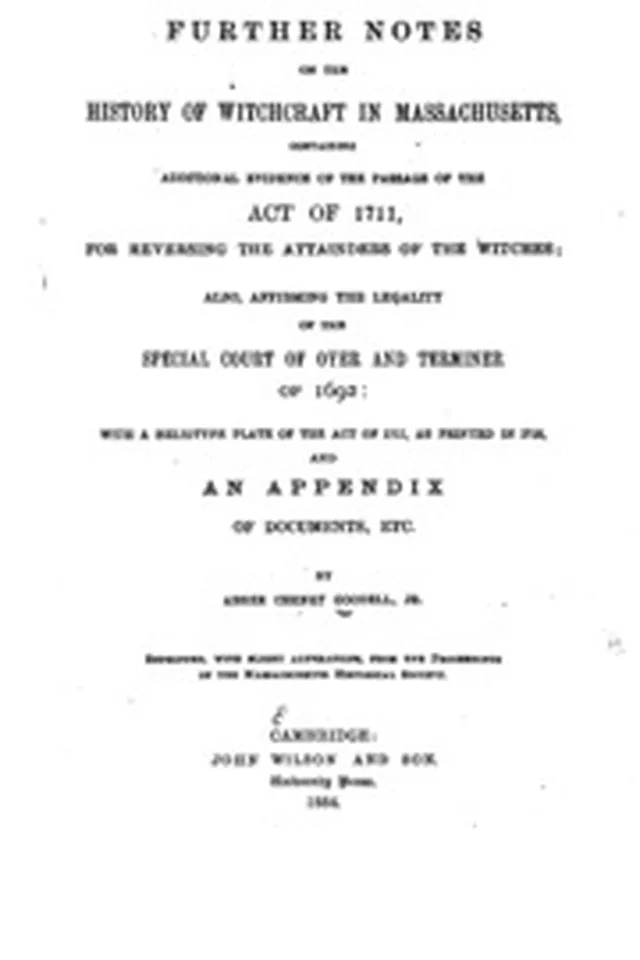
Further Notes on the History of Witchcraft in Massachusetts: Containing Additional Evidence of ...
 72
72

Further Notes on the History of Witchcraft in Massachusetts: Containing Additional Evidence of ...


Abner Cheney Goodell's 'Further Notes on the History of Witchcraft in Massachusetts' is a treasure trove for modern esoteric seekers. Published in 1884, this book provides a detailed and scholarly examination of witchcraft in colonial Massachusetts, offering a wealth of historical context and primary evidence. Goodell's work is particularly valuable for its thorough documentation of the Salem witch trials and the broader cultural impact of these events. For contemporary readers interested in witchcraft and paganism, this book serves as an invaluable resource, bridging the gap between historical fact and esoteric lore. The text is rich with anecdotes and firsthand accounts, making it both an engaging read and a significant academic contribution. While the language and style may be dated, the insights and information remain relevant and enlightening. This book is a must-read for anyone seeking to understand the deeper roots of witchcraft in America. Rating:
📝 Description
72
Abner Cheney Goodell's 1908 'Further Notes' adds evidence to the history of witchcraft in Massachusetts.
This work by Abner Cheney Goodell provides additional evidence and commentary on the history of witchcraft in colonial Massachusetts. Published in 1908, it follows Goodell's earlier examinations of the subject. The book focuses on specific instances and records, aiming to clarify details surrounding accusations and trials during that period. It presents source material that Goodell believed contributed to a clearer understanding of the events and beliefs of the time.
The author's approach is grounded in the examination of historical documents. He seeks to present facts and interpretations derived from these sources, rather than engaging in speculation. The text addresses the symbolic meanings and rituals associated with witchcraft accusations in the region. It is written for readers interested in the historical and social context of these events, offering a detailed look at a specific aspect of early American history.
This book fits within the historical study of Western esotericism, specifically concerning the European and American witch persecutions. It engages with the historical records and interpretations of phenomena often categorized under occult or magical beliefs. Goodell's work contributes to understanding how such beliefs manifested and were addressed within a specific colonial society. It is part of a broader tradition of examining historical accounts of magic, demonology, and perceived supernatural threats.
💡 Why Read This Book?
Reading 'Further Notes on the History of Witchcraft in Massachusetts' today provides a unique opportunity to understand the historical context of witchcraft and its enduring impact on modern esoteric practices. This book offers readers a deep dive into the societal and cultural dynamics that fueled the witch hunts, shedding light on the psychological and social factors at play. For those interested in witchcraft and paganism, this text serves as a foundational resource, connecting historical events to contemporary beliefs and practices. Whether you are a historian, an occult enthusiast, or simply curious about the supernatural, this book will enrich your understanding and appreciation of the esoteric traditions that have shaped our world.
⭐ Reader Reviews
Honest opinions from readers who have explored this book.
❓ Frequently Asked Questions
What is the primary focus of this book?
The primary focus of 'Further Notes on the History of Witchcraft in Massachusetts' is the historical context and evidence surrounding witchcraft in 19th-century Massachusetts, with a particular emphasis on the Salem witch trials.
Who would benefit from reading this book?
Historians, occult enthusiasts, and anyone interested in the darker side of American history or the esoteric traditions of witchcraft and paganism will find this book particularly beneficial.
Is this book accessible to modern readers?
While the language and style may be dated, the insights and information provided in this book remain highly relevant and enlightening for modern readers interested in witchcraft and its historical context.
🔮 Key Themes & Symbolism
Occult Beliefs and Practices
The book studies the occult beliefs and practices that were prevalent during the witch trials in Massachusetts. It explores the rituals, symbols, and hidden knowledge that were central to the accusations and convictions of those accused of witchcraft.
Symbolism and Rituals
Goodell's work is rich in symbolism, examining the various rituals and symbols used by both the accused and their accusers. This theme provides a deep dive into the mystical and esoteric aspects of the witch trials, offering a unique perspective on the events.
Historical Context and Influence
The book provides a comprehensive historical context for the witch trials, exploring the social, political, and religious factors that contributed to the hysteria. It also examines the enduring influence of these events on modern perceptions of witchcraft and the occult.
💬 Memorable Quotes
Direct passages from the work, attributed to the author.
“Symbols held a powerful sway over the minds of the accusers and the accused.”
— Goodell highlights the significance of symbolism in the witch trials, showing how it shaped the perceptions and actions of those involved.
“The legacy of the witch trials continues to haunt us today.”
— Goodell's work shows how the events of the past continue to influence our understanding of witchcraft and the occult.
💡 Key Ideas
Editorial paraphrase of the work's core concepts — not direct quotes.
The occult beliefs of the time were as complex as they were dangerous.
This quote underscores the deep and intricate nature of the occult practices that fueled the witch trials.
The trials were a manifestation of the darkest aspects of human nature.
This quote emphasizes the philosophical depth of the book, exploring the psychological and spiritual dimensions of the witch trials.
Hidden knowledge was both a shield and a sword in the hands of the accused.
This passage reveals the dual nature of esoteric knowledge, which could be used for protection or persecution.
🌙 Esoteric Significance
Tradition
This book belongs to the Hermetic and Gnostic traditions, exploring the hidden knowledge and mystical beliefs that were central to the witch trials. It studies the esoteric practices and symbols that were used by both the accused and their accusers, offering a deep dive into the occult aspects of the events.
Symbolism
Key symbols in the book include the use of talismans, rituals, and hidden knowledge to influence the outcomes of the trials. These symbols were often imbued with deep mystical meanings, reflecting the esoteric beliefs of the time.
Modern Relevance
This book is relevant today for modern practitioners of witchcraft and the occult, providing a historical context for their practices. It is also valuable for scholars and seekers of the mystical, offering insights into the enduring influence of the witch trials on our understanding of the occult.
👥 Who Should Read This Book
Beginners interested in the occult and witchcraft will find this book to be an accessible introduction to the historical and esoteric aspects of the subject. Scholars and historians will appreciate the detailed research and analysis, while spiritual seekers and practitioners will find valuable insights into the mystical and symbolic dimensions of the witch trials. For those with a deep interest in the Hermetic and Gnostic traditions, this book offers a rich exploration of the hidden knowledge and practices that shaped the events.
📜 Historical Context
Set against the backdrop of colonial Massachusetts, 'Further Notes on the History of Witchcraft in Massachusetts' offers a detailed look at the witch trials that gripped the region in the late 17th century. Written during a time when the occult was both feared and revered, the book provides a unique perspective on the social, political, and religious factors that contributed to the hysteria. The era was marked by a deep-seated belief in the supernatural, with both the accused and their accusers often relying on esoteric knowledge and symbolism to make their cases. The book's influence can be seen in modern studies of witchcraft and the occult, providing a foundational understanding of the events that shaped America's mystical past.
📔 Journal Prompts
How do the occult beliefs presented in the book reflect the societal fears and desires of the time?
In what ways did symbolism and ritual play a role in the witch trials?
How does the book's exploration of hidden knowledge challenge or confirm your understanding of the occult?
What modern parallels can be drawn from the witch trials described in the book?
How has the legacy of the witch trials influenced contemporary practices of witchcraft and paganism?
🗂️ Glossary
Hermetic Tradition
A mystical and esoteric tradition based on the teachings attributed to Hermes Trismegistus, focusing on the unity of all things and the pursuit of hidden knowledge.
Gnosticism
An ancient religious movement that emphasized the acquisition of hidden knowledge (gnosis) as a path to spiritual liberation.
Talisman
An object believed to possess magical properties, often used in rituals and esoteric practices.
Esoteric
Relating to or denoting knowledge that is restricted to a small group, often involving mystical or occult beliefs.
Occult
Relating to supernatural, mystical, or magical phenomena that are beyond the range of ordinary knowledge or experience.
This book appears in 2 collections
🔮 Readers Also Liked
Browse all →





From the “Witchcraft” Collection
View all →





More Free Witchcraft & Paganism Books
View all →