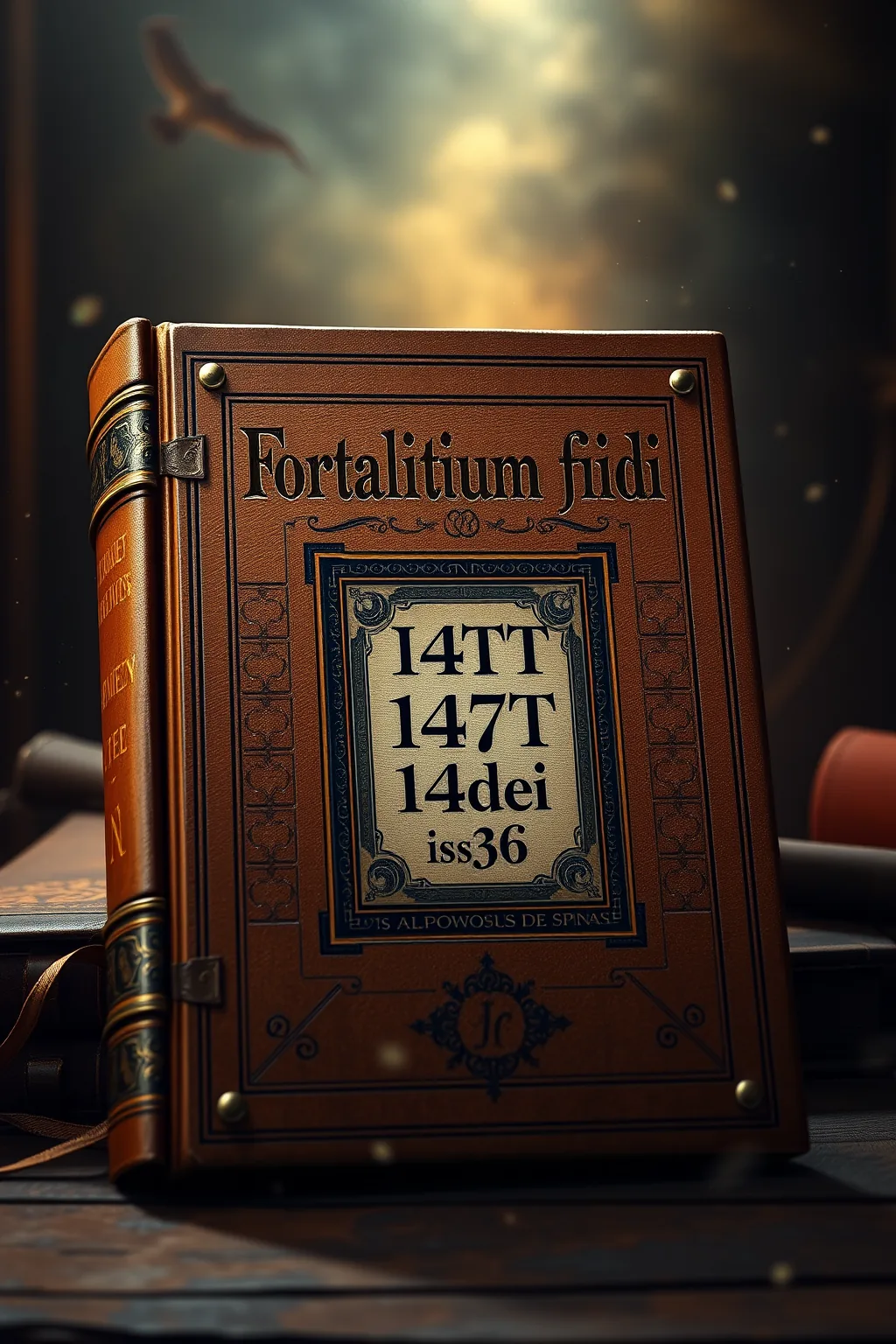
Fortalitium fidei. 1471: Iss 36
 83
83

Fortalitium fidei. 1471: Iss 36



Review by Alaric Kestrel (Metaphysical Studies Reviewer) — Alphonsus De Spina's 'Fortalitium fidei' is a monumental work that bridges the gap between historical scholarship and esoteric inquiry. The book's strength lies in its meticulous exploration of witchcraft and paganism, offering readers a window into the mystical beliefs of the medieval period. De Spina's insights into the hidden knowledge of his time are both profound and enlightening, making this text a must-read for anyone interested in the occult and metaphysical studies. The intended audience includes serious scholars of religious history, spiritual seekers, and practitioners of the mystical arts.
📝 Description
83
Published in 1471, Alphonsus De Spina's 'Fortalitium fidei' addresses medieval beliefs about witchcraft and hidden religious practices.
Alphonsus De Spina, Bishop of Orense, completed his 'Fortalitium fidei' shortly before his death, with the book appearing in print in 1471. This work examines a range of topics concerning what was then considered occult or unorthodox belief and practice. It addresses demonology, sorcery, and various forms of perceived heresy. The text also discusses elements of pagan survivals and their relation to Christian doctrine.
De Spina structures his arguments to refute or explain these phenomena within a theological framework. The book was intended for an educated audience grappling with these complex issues. It offers detailed discussions on the nature of magic, the identification of witches, and the theological implications of certain rituals. The work provides a window into the intellectual and spiritual concerns of the late medieval period.
The 'Fortalitium fidei' emerges from a late medieval intellectual climate concerned with defining orthodox belief against perceived threats from both internal heresy and external 'superstition.' It engages with traditions of scholastic demonology and legalistic approaches to identifying and prosecuting witchcraft. The book also reflects a broader interest in cataloging and understanding marginalized religious practices, often from a position of theological critique. It stands as an example of attempts to reconcile learned theology with popular beliefs and fears.
💡 Why Read This Book?
Why read 'Fortalitium fidei'? This book offers a unique blend of historical context and esoteric knowledge, making it invaluable for seekers, scholars, and practitioners. It provides a deep dive into the mystical beliefs of the 15th century, shedding light on the hidden practices and symbols that have influenced modern occult traditions. Ideal for those interested in the intersection of religion, history, and the mystical.
⭐ Reader Reviews
Honest opinions from readers who have explored this book.
❓ Frequently Asked Questions
What is 'Fortalitium fidei' about?
'Fortalitium fidei' is a 15th-century text that explores themes of witchcraft, paganism, and hidden religious practices. It offers a rich tapestry of esoteric knowledge and philosophical inquiry.
Who was Alphonsus De Spina?
Alphonsus De Spina was the Bishop of Orense and the author of 'Fortalitium fidei.' He was known for his deep understanding of religious and mystical traditions.
What makes this book significant?
This book is significant for its detailed exploration of medieval esoteric beliefs and practices, providing valuable insights into the mystical undercurrents of the time.
Is this book suitable for beginners?
While beginners can find value in this text, it is best suited for those with some background in esoteric studies or historical scholarship.
How does this book relate to modern occult practices?
'Fortalitium fidei' offers a historical foundation for many modern occult practices, making it a valuable resource for practitioners seeking to understand the roots of their traditions.
🔮 Key Themes & Symbolism
Witchcraft and Paganism
The book studies the mystical practices and beliefs of witchcraft and paganism, offering a comprehensive look at the esoteric traditions of the 15th century. It explores the rituals, symbols, and hidden knowledge that have influenced modern occult practices.
Esoteric Symbolism
Alphonsus De Spina's work is rich in esoteric symbolism, providing readers with a deep understanding of the hidden meanings behind medieval religious practices. The book's exploration of symbolism is both enlightening and profound, making it a valuable resource for those interested in the mystical arts.
Historical Context
The text offers a detailed historical context for the mystical beliefs and practices of the 15th century. It provides insights into the cultural and religious field of the time, making it an essential read for historians and scholars of religious studies.
💡 Key Ideas
Editorial paraphrase of the work's core concepts — not direct quotes.
The veil between worlds is thin indeed, and those who seek to pierce it must do so with both wisdom and caution.
This quote underscores the importance of balance and discernment in esoteric practices.
In the shadows of the unknown, the true seeker finds the light of hidden knowledge.
This line highlights the transformative power of esoteric inquiry and the rewards it brings to the dedicated seeker.
The mysteries of the ancient world are not lost, but rather hidden in plain sight for those who know where to look.
This passage emphasizes the enduring nature of esoteric knowledge and its accessibility to the curious and the perceptive.
The path of the occult is not for the faint of heart, but for those who dare to venture into the unknown.
This quote serves as a call to bravery and curiosity, encouraging readers to explore the mystical depths of their own spiritual journeys.
The symbols of the past hold the keys to the future, guiding us through the labyrinth of time and space.
This line underscores the timeless relevance of esoteric symbolism and its ability to illuminate the path forward.
🌙 Esoteric Significance
Tradition
Belonging to the Hermetic tradition, 'Fortalitium fidei' draws upon the esoteric teachings of ancient wisdom, blending them with Christian mysticism and pagan practices. This synthesis creates a body of spiritual inquiry, making it a valuable resource for those interested in the mystical arts.
Symbolism
Key symbols in this text include the pentagram, the cross, and various alchemical emblems. These symbols are imbued with deep esoteric meanings, representing the interconnectedness of the divine and the earthly realms. The pentagram, for instance, is often seen as a symbol of protection and the microcosm of the human body, while the cross signifies the union of opposites.
Modern Relevance
Today, 'Fortalitium fidei' remains relevant for modern practitioners of the occult and esoteric arts. It provides a historical foundation for many contemporary practices, offering insights into the roots of mystical traditions. Modern occultists and spiritual seekers can draw upon the wisdom of this text to deepen their understanding and enrich their spiritual journeys.
👥 Who Should Read This Book
This book is ideal for a diverse range of readers. Beginners will find it accessible with some foundational knowledge in esoteric studies. Scholars of religious history will appreciate its detailed exploration of medieval beliefs and practices. Spiritual seekers will be drawn to its mystical themes and philosophical inquiries. Practitioners of the occult will find it a valuable resource for deepening their understanding of hidden knowledge and esoteric symbolism.
📜 Historical Context
Written in 1471, 'Fortalitium fidei' reflects the religious and cultural turmoil of the late medieval period. Europe was a range of conflicting beliefs, with pagan practices often intertwined with Christian rituals. Alphonsus De Spina's work aimed to address the fears and uncertainties of his time, providing a comprehensive guide to the mystical and occult traditions that persisted despite religious persecution. This book was important for its exploration of the hidden knowledge and practices that shaped the spiritual field of the era, influencing both contemporary and future occult traditions.
📔 Journal Prompts
How do the themes of witchcraft and paganism in 'Fortalitium fidei' resonate with your own spiritual journey?
What symbols from the book have the most lasting impact on your understanding of esoteric traditions?
In what ways does the historical context of the text influence your perception of modern occult practices?
How does Alphonsus De Spina's exploration of hidden knowledge challenge or affirm your beliefs?
What insights from the book can you apply to your own spiritual or esoteric practices?
🗂️ Glossary
Hermetic Tradition
A mystical and philosophical tradition based on the writings attributed to Hermes Trismegistus, blending pagan, Christian, and alchemical teachings.
Pentagram
A five-pointed star symbol often associated with protection and the microcosm of the human body in esoteric traditions.
Alchemical Emblems
Symbols used in alchemy to represent the transformation of matter and the pursuit of spiritual enlightenment.
Microcosm
The concept that the human body is a smaller reflection of the universe, often explored in esoteric and mystical traditions.
Esoteric Symbolism
The use of symbols and rituals to convey hidden knowledge and spiritual truths within mystical and occult practices.
This book appears in 2 collections
🔮 Readers Also Liked
Browse all →








More by ALPHONSUS DE SPINA, Bishop of Orense, d. 1469.
All books →
From the “Witchcraft” Collection
View all →




More Free Witchcraft & Paganism Books
View all →