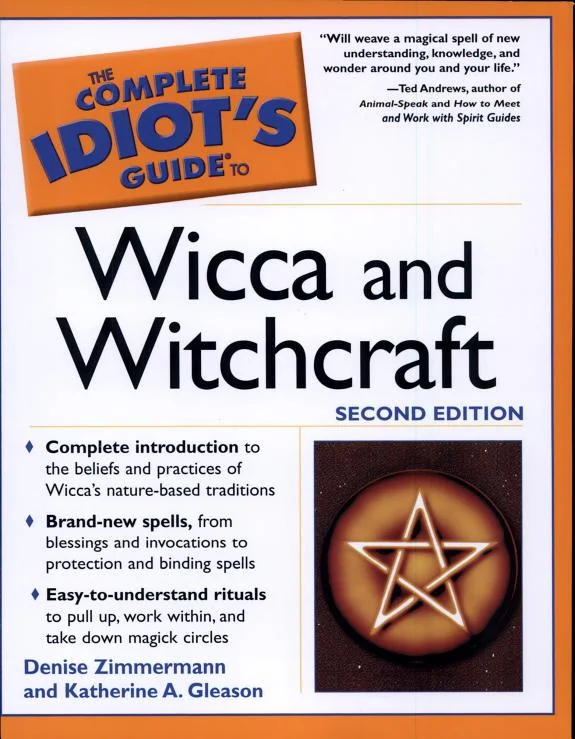
The Complete Idiot's Guide to Wicca and Witchcraft
 79
79

The Complete Idiot's Guide to Wicca and Witchcraft
Denise Zimmerman and Katherine A. Gleason’s revised edition of The Complete Idiot's Guide to Wicca and Witchcraft tackles the challenge of presenting complex spiritual systems to a novice audience with commendable clarity. Its strength lies in its organized approach, breaking down Wiccan theology and witchcraft practices into digestible components. The updated sections on magickal concentration and ethics are particularly useful, offering practical guidance beyond mere theoretical exposition. However, the book occasionally leans towards oversimplification, which, while aiding accessibility, might leave more experienced practitioners wanting deeper philosophical engagement. A passage detailing the construction of a simple charm for prosperity effectively illustrates the book’s method: marrying symbolic components with clear intent. Ultimately, it serves as a solid, if not exhaustive, foundational text for those entering the Craft.
📝 Description
79
Published in 2003, The Complete Idiot's Guide to Wicca and Witchcraft offers a clear introduction to modern Pagan paths.
Denise Zimmerman and Katherine A. Gleason's 2003 guide, The Complete Idiot's Guide to Wicca and Witchcraft, provides a structured entry into modern Wicca and witchcraft. This revised edition includes updated material, such as exercises for developing magickal focus, a deeper look at ethical considerations in witchcraft, and more detail on Wiccan deities and their stories. The authors intended to clarify aspects of these spiritual traditions that are often misunderstood. This book suits individuals new to Wicca and witchcraft seeking an accessible starting point. It is helpful for those curious about Pagan traditions, alternative spiritual paths, or the practical use of magickal ideas. Its direct, step-by-step format works well for independent study, comparative religion students, or anyone wanting to grasp the basic beliefs and common rituals of these contemporary spiritual paths. No prior experience is assumed.
Published in the early 21st century, this book emerged during a period of growing public interest in Paganism and witchcraft. It aimed to organize and explain traditions that had previously circulated in less formal or more specialized texts. The 2003 publication date placed it within a time when online resources and accessible books were making spiritual information more widely available, bringing practices like Wicca into greater public awareness. This guide offered a more systematic approach compared to earlier, foundational texts from the 1970s and 80s.
💡 Why Read This Book?
• Gain practical understanding of the Wheel of the Year, a core concept in Wicca and many witchcraft traditions, allowing you to align personal practice with seasonal cycles. • Learn foundational principles of magickal ethics as presented in the book, fostering a responsible approach to energy work and spellcraft. • Explore the roles of common Wiccan deities, such as the God and Goddess, providing insight into duotheistic frameworks prevalent in many covens and solitary practices.
⭐ Reader Reviews
Honest opinions from readers who have explored this book.
❓ Frequently Asked Questions
What is the primary focus of The Complete Idiot's Guide to Wicca and Witchcraft?
The book focuses on providing a comprehensive and accessible introduction to the core beliefs, practices, and ethics of modern Wicca and witchcraft for beginners.
When was the first edition of this book published?
The first edition of The Complete Idiot's Guide to Wicca and Witchcraft was originally published in 2003.
Does the book cover specific spells and rituals?
Yes, the revised edition includes new spells and recipes, alongside guidance on ritual construction and magickal concentration exercises.
Who are the authors of this guide?
The authors are Denise Zimmerman and Katherine A. Gleason, with Katherine A. Gleason credited for the original 2003 publication.
Is this book suitable for someone with no prior knowledge of witchcraft?
Absolutely. The 'Idiot's Guide' format is designed for absolute beginners, breaking down complex topics into easy-to-understand steps and explanations.
What kind of ethical considerations are discussed?
The guide includes expanded coverage of magickal ethics, addressing principles of responsible witchcraft practice and the potential consequences of one's actions.
🔮 Key Themes & Symbolism
Foundations of Wiccan Belief
The work systematically lays out the fundamental tenets of Wicca, emphasizing the reverence for nature and the divine in both masculine (God) and feminine (Goddess) forms. It explores the concept of the interconnectedness of all life and the belief in immanent divinity, presenting these not as abstract philosophical ideas but as lived spiritual realities. The text introduces the cyclical nature of existence as reflected in the Wheel of the Year, providing a framework for understanding seasonal festivals and personal spiritual development within a natural rhythm.
Principles of Modern Witchcraft
Beyond Wicca, the book addresses broader witchcraft practices, focusing on the practical application of magickal energy. It details the importance of intention, visualization, and the use of symbolic tools like wands, athames, and chalices in spellcasting. The revised edition specifically highlights exercises for enhancing magickal concentration, crucial for effective spell work. Ethical considerations are given significant weight, promoting a responsible approach to wielding magickal forces and respecting free will, often summarized in principles like 'An it harm none, do what ye will'.
The Divine Feminine and Masculine
A central theme is the exploration of the dualistic yet complementary nature of the divine, represented by the Wiccan God and Goddess. This isn't merely symbolic; the book studies the archetypal energies associated with each and how they manifest in the natural world and human experience. Understanding these deities provides a framework for personal growth, ritual work, and a balanced perspective on life's forces. The text encourages practitioners to connect with these energies for guidance and empowerment.
Ritual and Spellcraft
The guide offers practical instructions for constructing and performing rituals, from simple personal ceremonies to more complex coven workings. It explains the purpose of elements like circle casting, invoking elements, and grounding. Spellcraft is presented as a focused application of will and energy, with examples ranging from protection charms to prosperity spells, often incorporating correspondences like herbs, colors, and times. The emphasis remains on personal empowerment and ethical application.
💬 Memorable Quotes
Direct passages from the work, attributed to the author.
“Magickal ethics are paramount; the consequences of your actions ripple outwards.”
— This emphasizes that magickal practice is not divorced from morality. It suggests that intent and action within witchcraft carry significant weight and can affect oneself and the wider world, necessitating careful consideration.
“The Wheel of the Year marks the sacred cycle of life, death, and rebirth.”
— This highlights the cyclical view of time and nature central to Wicca, connecting the turning of the seasons to profound spiritual themes of renewal and transformation.
“Devotion to the God and Goddess offers a balanced connection to the divine.”
— This points to the duotheistic nature of much of Wicca, presenting the complementary archetypes of the divine masculine and feminine as a source of spiritual fulfillment and understanding.
“Concentration is the bedrock upon which effective spellcasting is built.”
— This underscores the importance of mental discipline and focus in magickal work, suggesting that the clarity and strength of one's intention are directly tied to the success of spells.
“Respect for nature is not optional; it is inherent to the Craft.”
— This expresses the deep ecological awareness within Wicca and witchcraft, framing the natural world as sacred and worthy of profound respect and stewardship.
🌙 Esoteric Significance
Tradition
This work situates itself within the broad spectrum of modern Western Esotericism, specifically drawing from Neopagan traditions, most notably Wicca. While not strictly Hermetic or Kabbalistic, it incorporates elements of nature-based spirituality and ceremonial structure common in many esoteric paths. It departs from older, more secretive traditions by aiming for widespread accessibility, democratizing knowledge previously held within smaller groups.
Symbolism
Key symbols include the Pentacle, representing the five elements (Spirit, Earth, Air, Fire, Water) and protection, often worn as an amulet. The Horned God and the Triple Goddess are central divine archetypes, symbolizing wild nature, fertility, death, and rebirth, and the cycles of the moon and womanhood, respectively. The Chalice and Athame are ritual tools representing the feminine and masculine principles, used in consecrating elements and directing energy.
Modern Relevance
Contemporary practitioners of eclectic witchcraft, solitary spiritual seekers, and those interested in feminist theology and eco-spirituality often reference this book as a foundational text. Its clear explanations continue to inform individuals exploring nature-based spirituality, earth-centered rituals, and the integration of magickal practice into daily life in a post-millennial context.
👥 Who Should Read This Book
• Aspiring solitary practitioners seeking a structured introduction to Wiccan beliefs and witchcraft techniques, offering clear guidance on ethics and basic spellcraft. • Students of comparative religion or cultural studies interested in understanding contemporary Pagan movements and their foundational texts. • Individuals curious about nature-based spirituality and ritual, looking for a practical and accessible entry point to seasonal celebrations and elemental magick.
📜 Historical Context
The publication of The Complete Idiot's Guide to Wicca and Witchcraft in 2003 occurred during a period of significant public engagement with Paganism and witchcraft, fueled by increased accessibility of information via the internet and a growing disillusionment with established religious structures. This era saw a wave of introductory texts aiming to explain these traditions for a broader audience, moving beyond the more academic or initiatory works of earlier decades. Unlike the foundational texts of Gerald Gardner or Doreen Valiente which emerged from specific coven contexts, this 2003 guide aimed for a secularly-oriented, DIY approach. It arrived in a landscape already populated by authors like Scott Cunningham, who had previously popularized a gentle, nature-based witchcraft, and provided a more structured, encyclopedic overview that acknowledged the diversity within contemporary Paganism, differentiating itself from the more esoteric or ceremonial magic traditions.
📔 Journal Prompts
The concept of magickal ethics and its application in daily life.
Reflections on the symbolism of the God and Goddess archetypes.
Personal connections to the seasonal changes of the Wheel of the Year.
Developing magickal concentration through dedicated practice.
The role of intent in spellcasting and personal manifestation.
🗂️ Glossary
Wicca
A contemporary Neopagan religion characterized by reverence for nature, the divine in dual masculine and feminine forms (God and Goddess), and the practice of witchcraft.
Witchcraft
A broad term encompassing the practice of magickal arts, often involving nature-based spirituality, spellcasting, and ritual, with diverse traditions and beliefs.
Wheel of the Year
The annual cycle of eight seasonal festivals celebrated in Wicca and some other Pagan traditions, marking solstices, equinoxes, and cross-quarter days.
Deities
In Wicca, typically refers to the Horned God and the Triple Goddess, representing divine masculine and feminine principles and various aspects of nature and life.
Magickal Ethics
A set of principles guiding the responsible and conscientious use of magickal power, often emphasizing non-harm and respect for free will.
Spellcasting
The practice of directing focused intention and energy, often using symbolic tools and correspondences, to effect a desired outcome.
Athame
A ritual dagger, often with a double-edged blade and a black handle, used primarily for directing energy and inscribing symbols, not for cutting.
This book appears in 1 collection
🔮 Readers Also Liked
Browse all →




From the “Paganism” Collection
View all →






More Free Witchcraft & Paganism Books
View all →