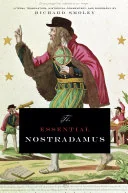
The Essential Nostradamus
 80
80

The Essential Nostradamus
Richard Smoley’s *The Essential Nostradamus* serves as a valuable entry point for those wary of the more sensationalist interpretations of the 16th-century seer. Smoley's commitment to a “singularly reliable translation” offers a cleaner, less cluttered experience of Nostradamus’s notoriously dense quatrains. The inclusion of an afterword connecting the prophecies to the 2012 Mayan calendar phenomenon, while potentially dated now, was a significant point of interest for the book’s original publication, reflecting a specific cultural moment. A notable strength is the straightforward presentation of the text itself, allowing the enigmatic verses to stand largely on their own. However, the work’s primary limitation is its brevity; while “essential” implies curation, it can also feel restrictive, offering little in-depth analysis of the quatrains’ historical context or the broader astrological underpinnings of Nostradamus’s system. For instance, the book touches upon the concept of great conjunctions but doesn’t fully explore their astrological weight in Nostradamus’s worldview. Ultimately, this edition functions best as a primer for direct textual engagement, rather than a comprehensive guide to deciphering the prophecies.
📝 Description
80
Richard Smoley compiled this edition of Nostradamus's prophecies in the 16th century.
This volume presents a focused collection of Michel de Nostredame's prophecies, translated by Richard Smoley. The edition prioritizes a single, dependable translation of the seer's enigmatic four-line poems. It offers a concise yet thorough overview of his predictions, first published in the 1500s.
The work includes an afterword that examines supposed links between Nostradamus's writings and Mayan prophecies concerning the year 2012. It is for those interested in historical prophecy, occult traditions, and deciphering cryptic texts. Students of occult history, amateur diviners, and readers drawn to the cultural influence of prophetic literature will find it appealing. Those who prefer to read Nostradamus's original verses directly, rather than relying on secondary interpretations, will also appreciate this edition. It is suitable for individuals studying apocalyptic narratives or the intersection of different calendrical or prophetic systems, such as the Mayan calendar.
Michel de Nostredame wrote during the European Renaissance and Reformation, a time when astrology and divination were common among educated people. As a physician, Nostradamus worked within this intellectual climate, combining his medical knowledge with astrological and arcane interpretations. His *Propheties*, published in 1555, quickly attracted attention and debate. His work continues a Western tradition of prophecy but is distinct for its quatrain structure and obscure language.
💡 Why Read This Book?
• Understand the foundational prophecies of Nostradamus directly, without excessive commentary, through Smoley’s curated translation, appreciating the original 1555 publication context. • Explore the specific intersection of Nostradamus's quatrains with the 2012 Mayan calendar predictions, a significant cultural focus at the time of the book's first release. • Gain insight into the historical milieu of 16th-century France, where divination and esoteric studies were integrated into intellectual life, as suggested by Nostradamus's own background as a physician.
⭐ Reader Reviews
Honest opinions from readers who have explored this book.
❓ Frequently Asked Questions
What is the primary translation used in The Essential Nostradamus?
The Essential Nostradamus utilizes a 'singularly reliable translation' of Nostradamus's prophecies, aiming for accuracy and clarity over embellished interpretations, as presented by Richard Smoley.
Does the book cover the 2012 prophecies?
Yes, the edition includes a new afterword specifically addressing the perceived connections between Nostradamus's predictions and the Mayan prophecies concerning the year 2012.
Who was Nostradamus?
Nostradamus, born Michel de Nostredame in 1503, was a French astrologer and physician whose book of prophecies, first published in 1555, gained widespread fame for its cryptic quatrains.
What is a quatrain in the context of Nostradamus's work?
A quatrain is a four-line stanza. Nostradamus's prophecies are written as a series of these short, often allegorical and obscure poems, which proponents believe predict future events.
Is this book suitable for beginners interested in Nostradamus?
Yes, as a compact edition focusing on a reliable translation, it is well-suited for beginners seeking a direct introduction to Nostradamus's writings without overwhelming secondary interpretations.
What historical period does Nostradamus's work reflect?
Nostradamus wrote in the 16th century, a period of the Renaissance in Europe marked by intellectual curiosity, religious shifts, and a prevalent acceptance of astrology and divination among scholars.
🔮 Key Themes & Symbolism
Cryptic Prophetic Quatrains
The core of Nostradamus's legacy resides in his quatrains, four-line verses penned in a deliberately obscure French, often laced with anagrams, Greek, Latin, and Provençal. These enigmatic verses are central to *The Essential Nostradamus*, presenting the seer's predictions in their unadorned, albeit challenging, form. The book invites readers to engage directly with these poetic prophecies, which proponents believe foretell events ranging from political upheavals to natural cataclysms, challenging conventional historical and future narratives.
Synchronicity and Calendrical Prophecy
This edition highlights the perceived links between Nostradamus's visions and other significant prophetic systems, most notably the Mayan calendar's focus on the year 2012. The work explores the human fascination with cyclical time, eschatology, and the potential for a convergence of prophecies. It suggests that certain astrological conjunctions or calendrical endpoints might act as focal points for future predictions, prompting contemplation on the nature of time itself and humanity's place within it.
The Seer's Historical Milieu
Michel de Nostredame was a physician and scholar in 16th-century France, a period where esoteric knowledge, astrology, and alchemy were not fringe pursuits but integrated aspects of intellectual life. *The Essential Nostradamus* implicitly grounds the prophecies within this context, suggesting that their obscurity and allegorical nature were partly a product of their time. Understanding this historical backdrop—a blend of Renaissance humanism and medieval occult traditions—is crucial for appreciating the seer's unique contribution to Western esoteric thought.
Interpretation and Ambiguity
A defining characteristic of Nostradamus's work is its inherent ambiguity, which fuels ongoing debate and interpretation centuries later. The quatrains are designed to be multi-layered, allowing for diverse readings and applications to different historical events. This edition, by presenting a focused translation, encourages readers to grapple with this ambiguity themselves, fostering a personal engagement with the text rather than relying solely on established interpretations. The challenge lies in discerning meaning from deliberate obfuscation.
💬 Memorable Quotes
Direct passages from the work, attributed to the author.
“The prophecies of Nostradamus have ignited intense fascination throughout the West since they were first published in the sixteenth century.”
— This statement captures the enduring allure of Nostradamus's work, highlighting its persistent hold on the Western imagination across centuries and cultural shifts, underscoring its status as a significant historical phenomenon.
“These enigmatic quatrains have gained special meaning for many during our current countdown to the year 2012.”
— This highlights a specific cultural moment where Nostradamus's predictions were re-examined through the lens of other millennial prophecies, particularly those associated with the Mayan calendar, demonstrating the fluid and adaptive nature of prophetic interpretation.
“The relationship between Nostradamus's prophecies and the Mayan prophecy”
— This phrase points to a core thematic exploration within the book's supplementary material, suggesting an analysis of how different ancient predictive systems might intersect or comment upon each other, especially concerning eschatological themes.
“A handsome, compact new edition of the singularly reliable translation of the writings of history's most famous seer”
— This describes the physical and editorial intent of the book – to provide an accessible, trustworthy version of Nostradamus's prophecies, emphasizing its utility as a foundational text for serious study.
“now published with a new afterword on Nostradamus and 2012.”
— This indicates a specific editorial update in this edition, focusing on a contemporary (at the time of publication) point of intense interest regarding apocalyptic and prophetic timelines, linking the historical seer to modern concerns.
🌙 Esoteric Significance
Tradition
Nostradamus's work is situated within the Western esoteric tradition, drawing heavily on astrological principles, Hermetic concepts of correspondence, and a lineage of biblical and classical prophecy. While not strictly tied to a single school like Kabbalah or Theosophy (which emerged much later), his methods reflect an era where such disciplines were more fluidly integrated. He represents a bridge between medieval divinatory practices and the more systematized occultism that would develop in subsequent centuries, particularly in his use of astrological charts to inform his predictive verses.
Symbolism
Key symbols in Nostradamus's quatrains often derive from classical mythology, biblical allegory, and astrological imagery. For instance, celestial bodies like the Sun and Moon, or planetary influences, are frequently invoked to denote eras or significant figures. Animals, such as lions or eagles, often represent nations or rulers. The imagery of fire, water, and natural disasters frequently appears, symbolizing periods of great upheaval or purification, reflecting a cosmic drama played out on the human stage.
Modern Relevance
Contemporary esoteric practitioners and historians of prophecy continue to engage with Nostradamus's work. Certain astrologers and occultists reference his quatrains for predictive insights or as examples of symbolic language. Furthermore, his prophecies remain a touchstone in discussions of eschatology, conspiracy theories, and the interpretation of historical patterns. The enduring fascination with his ability to seemingly predict future events ensures his continued relevance in popular culture and niche esoteric circles exploring the nature of foresight and destiny.
👥 Who Should Read This Book
• Students of Western esotericism and divination who wish to examine foundational prophetic texts directly, appreciating the original 16th-century context. • Comparative religion scholars interested in millennialism and end-times prophecies, particularly those exploring the intersection of different calendrical systems like the Mayan calendar. • Readers intrigued by historical cryptography and symbolic language, seeking to engage with a famously obscure but influential body of predictive literature.
📜 Historical Context
Michel de Nostredame, a physician and astrologer, published his *Propheties* in Lyon in 1555, during the high Renaissance in Europe. This era was characterized by a complex interplay of burgeoning humanism, religious reformation, and a continued, albeit shifting, acceptance of occult sciences like astrology and alchemy. While figures like Paracelsus were also active in exploring medical and alchemical theories, Nostradamus’s unique approach—casting prophecies in obscure, allegorical quatrains—set him apart. His work quickly garnered attention, both admiration and suspicion, reflecting a society grappling with change and seeking meaning in celestial and prophetic patterns. The Church notably viewed such predictive arts with caution, though Nostradamus himself maintained a position as physician to royalty, including Henry II of France. His reception was thus mixed, celebrated by some, scrutinized by others, a pattern that has continued for centuries.
📔 Journal Prompts
The cryptic nature of Nostradamus's quatrains and their allegorical layers.
The perceived connection between Nostradamus's predictions and the 2012 Mayan calendar.
The role of astrology and celestial observation in 16th-century prophetic practices.
The enduring fascination with historical prophecy across different cultures and eras.
Nostradamus's background as a physician and its potential influence on his prophetic writings.
🗂️ Glossary
Quatrain
A four-line stanza of poetry. Nostradamus's prophecies are primarily composed of these short, often cryptic verses, which are the subject of extensive interpretation.
Conjunction (Astrological)
An alignment of two or more celestial bodies in the sky as observed from Earth. In astrology, conjunctions are considered significant for their potential influence on earthly events and human affairs.
Eschatology
The branch of theology and philosophy concerned with the study of final events or the ultimate destiny of humanity and the world, often involving themes of apocalypse and salvation.
Divination
The practice of seeking knowledge of the future or the unknown by supernatural means. Nostradamus's work is considered a form of divination through prophecy and astrological interpretation.
Allegory
A story, poem, or picture that can be interpreted to reveal a hidden meaning, typically a moral or political one. Nostradamus's quatrains are often analyzed as allegorical rather than literal predictions.
Renaissance
The period in European history, roughly from the 14th to the 17th century, marked by a revival of classical art, architecture, literature, and learning, alongside significant scientific and cultural developments.
Physician
A medical doctor. Nostradamus was trained and practiced as a physician, a profession that coexisted with and sometimes informed esoteric studies during his era.
This book appears in 1 collection
🔮 Readers Also Liked
Browse all →







From the “Nostradamus” Collection
View all →




More Free Occult Philosophy Books
View all →