Nostradamus
 81
81

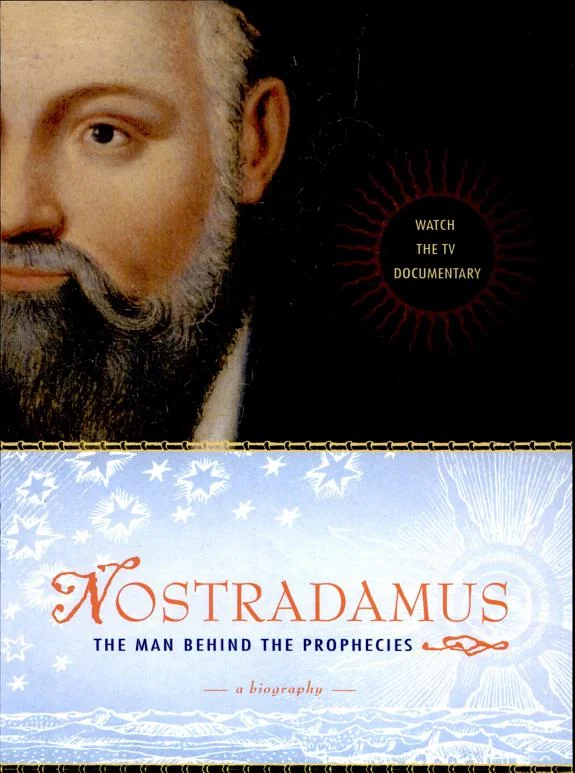
Nostradamus
Ian Wilson's "Nostradamus" attempts a rigorous demystification of the famed seer, grounding his life and work in Renaissance France. Wilson excels at detailing Nostradamus's career as a physician, especially his practical medical interventions during plague epidemics, which offers a refreshing counterpoint to the mystical veneer. A notable strength is Wilson's careful dissection of the "Quatrains," demonstrating how their ambiguity and historical context allow for post-hoc interpretations. However, the book occasionally feels overly cautious, perhaps too eager to dismiss any genuine predictive element, which might leave some readers wanting more exploration of the phenomenon itself. The discussion around his matrimonial matchmaking for François I's court, while interesting, feels somewhat tangential to the core prophetic legacy. Ultimately, Wilson provides a valuable, fact-driven biography that challenges popular notions but may understate the enduring fascination with Nostradamus's predictive claims.
📝 Description
81
Ian Wilson's 2007 biography examines Nostradamus not as a mystic, but as a 16th-century physician.
Ian Wilson's biography of Michel de Nostredame, published in 2007, moves past the popular image of the famous seer. Wilson investigates Nostradamus's career as a physician and apothecary, situating his life within the complex intellectual and religious currents of 16th-century Europe. The book scrutinizes the origins and composition of his "Quatrains," arguing they were products of Renaissance humanism and alchemical traditions, not divine pronouncements.
Wilson contrasts Nostradamus's medical practices, including his alchemical remedies and his work during plague outbreaks, with the medical knowledge of his time. The author analyzes the structure and language of the prophecies, considering their context within an era where astrological interpretation was common, but also a source of potential heresy. This biography aims to understand the man and his writings within their specific historical and intellectual environment.
This biography addresses the tradition of prophecy and divination that permeated the Renaissance. It examines how figures like Nostradamus operated within a world where astrology, alchemy, and occult sciences were intertwined with scholarly pursuits and religious thought. Wilson places Nostradamus's work within this context, analyzing his writings not as isolated predictions but as expressions shaped by contemporary intellectual currents and the need for careful language in a religiously charged era.
💡 Why Read This Book?
• Gain a factual understanding of Nostradamus's life as a Renaissance physician, moving beyond popular myth, by examining his documented medical treatments and personal letters from the early 16th century. • Learn how the "Quatrains" were likely constructed, understanding their linguistic and astrological influences rather than accepting them as direct prophecies, as detailed in Wilson's analysis of their composition. • Appreciate the historical context of prophecy and astrology in 16th-century Europe, understanding why figures like Nostradamus held sway, as explored through the societal and intellectual currents of his era.
⭐ Reader Reviews
Honest opinions from readers who have explored this book.
❓ Frequently Asked Questions
What was Nostradamus's primary profession before becoming known for his prophecies?
Nostradamus was primarily a physician and an apothecary. He practiced medicine throughout plague-ridden regions of France and Italy, developing remedies and offering medical advice based on the humoral theory prevalent at the time.
Did Nostradamus predict specific future events like the World Trade Center attacks?
Ian Wilson's work suggests that predictions of specific modern events are retrospective interpretations. The "Quatrains" are intentionally ambiguous, allowing later generations to align verses with events like the 2001 attacks, rather than indicating prescient knowledge.
What historical period does Ian Wilson's biography of Nostradamus focus on?
The biography primarily focuses on the 16th century, the period of Nostradamus's life (1503-1566) and the publication of his prophecies, particularly the "Quatrains" which began appearing in 1555.
How does Wilson approach the 'Black Plague' in relation to Nostradamus?
Wilson details Nostradamus's personal experiences and documented efforts to combat the plague, examining the alchemical and herbal remedies he prescribed. This highlights Nostradamus's role as a practicing physician during a period of intense medical crisis.
What were the "Quatrains" and how did Nostradamus present them?
The "Quatrains" are collections of four-line poems written in a cryptic, often allegorical style. Nostradamus presented them as prophecies, but Wilson argues they were shaped by his humanist education, astrological knowledge, and a desire for carefully veiled expression.
Were Nostradamus's writings controversial in his time?
Yes, while astrology and prophecy were common, Nostradamus's cryptic verses and their potential interpretations could be seen as dangerous. He took precautions, framing his prophecies within astrological calculations and using obscure language to avoid accusations of heresy.
🔮 Key Themes & Symbolism
The Physician's Craft
Wilson foregrounds Nostradamus's identity as a physician, detailing his medical education and practical application of remedies, particularly during devastating plague outbreaks. This section examines his alchemical and herbal treatments, contrasting them with contemporary medical understanding. It reveals a man engaged with the tangible realities of disease and healing, offering a grounded perspective on his life beyond the prophetic pronouncements. The book explores his documented efforts and the intellectual framework of Renaissance medicine.
The "Quatrains" Unveiled
This theme focuses on the structure, composition, and linguistic nuances of Nostradamus's famous prophecies. Wilson analyzes the influence of humanist scholarship, astrological calculations, and alchemical symbolism on the cryptic verses. The work scrutinizes how the ambiguity of the "Quatrains" facilitated their enduring appeal and diverse interpretations across centuries. It moves past simple prediction to explore the literary and intellectual construction of prophetic text.
Prophecy in the Renaissance
The book situates Nostradamus within the broader cultural range of 16th-century Europe, where astrology, divination, and prophecy held significant sway. It examines the societal role of seers and astrologers, their interactions with political powers, and the intellectual currents that allowed such practices to flourish. Wilson explores the perceived authority of prophetic utterances and the fine line individuals like Nostradamus walked between accepted practice and potential heresy.
Myth vs. Reality
A central theme is the deconstruction of the legend surrounding Nostradamus. Wilson meticulously separates historical facts from centuries of embellishment and misinterpretation. By examining private letters and contemporary accounts, the book aims to present a more accurate portrait of Michel de Nostredame, challenging the popular image of an infallible oracle and focusing on the man within his historical context.
💬 Memorable Quotes
Direct passages from the work, attributed to the author.
“Nostradamus’s remedies for the plague involved a mixture of herbal concoctions and alchemical preparations.”
— This highlights the practical, scientific (by 16th-century standards) aspect of Nostradamus's work. It underscores that his contributions extended beyond cryptic verses to tangible efforts in combating disease during a critical period.
“The Quatrains were structured with intentional ambiguity, drawing from astrological charts and classical texts.”
— This interpretation suggests that the prophecies were not simple visions but carefully crafted literary and intellectual products, designed to be interpreted through specific frameworks, rather than straightforward predictions.
“His ambition extended to arranging advantageous marriages for members of the French court.”
— This reveals Nostradamus's engagement with political and social spheres beyond medicine and prophecy, indicating a broader ambition and influence within the circles of power during his lifetime.
“Wilson argues that later interpretations often retroactively applied events to the Quatrains.”
— This points to the core of Wilson's argument: that the perceived accuracy of Nostradamus's predictions is a result of selective reading and historical coincidence, rather than genuine foresight. It questions the predictive power itself.
“The seer operated within a world fascinated by both humanist scholarship and occult sciences.”
— This contextualizes Nostradamus within the intellectual milieu of the Renaissance, acknowledging the dual currents of rational inquiry and esoteric belief that characterized the era and influenced his work.
🌙 Esoteric Significance
Tradition
Nostradamus's work straddles the line between Renaissance medicine, astrology, and a form of proto-divination influenced by Hermetic and Neoplatonic thought, though not strictly within a formalized esoteric lineage like Kabbalah or Theosophy. His use of astrological charts and alchemical symbolism aligns him with a broader Western esoteric tradition that sought correspondences between the celestial, terrestrial, and spiritual realms.
Symbolism
Key symbols in Nostradamus's "Quatrains" include celestial bodies (sun, moon, planets) representing cosmic influences and fate, animals (lions, eagles) often used as heraldic or symbolic representations of nations or rulers, and alchemical imagery related to transformation and hidden knowledge. These symbols were common in Renaissance symbolism, imbuing his prophecies with layers of meaning.
Modern Relevance
Contemporary interest in Nostradamus persists in circles studying historical prophecy, conspiracy theories, and alternative history. His "Quatrains" are frequently referenced in popular culture and by individuals seeking patterns in world events, influencing modern approaches to predictive techniques and the interpretation of ambiguous texts, albeit often detached from their original Renaissance context.
👥 Who Should Read This Book
• Students of Renaissance history seeking a grounded biography of a famous historical figure, moving beyond popular legend to understand his life as a physician and scholar. • Researchers in the history of esotericism and occultism interested in the practical application of astrology and alchemy in the 16th century, examining the roots of predictive traditions. • Skeptical inquirers interested in the phenomenon of prophecy and divination, looking for critical analysis that separates historical fact from centuries of interpretation and myth-making.
📜 Historical Context
Ian Wilson's biography of Nostradamus emerges from the scholarly range of the early 21st century, which increasingly sought to contextualize esoteric figures within their historical periods. Published in 2007, it follows decades of critical re-evaluation of Renaissance figures and their intellectual pursuits. The era was marked by a growing academic interest in the history of science, medicine, and magic, moving away from purely hagiographic or sensationalist accounts. Contemporaries of Nostradamus included figures like Paracelsus, who also blended medicine with alchemical and mystical ideas, and the humanist scholar Erasmus. While Nostradamus himself was not widely censured during his lifetime, the Catholic Church later placed some of his works on the Index of Prohibited Books, reflecting the era's anxieties about unorthodox interpretations and potential heresy, particularly during the Counter-Reformation.
📔 Journal Prompts
Nostradamus's medical remedies for the plague: Compare their alchemical basis to modern treatments.
The ambiguity of the "Quatrains": How might phrasing influence interpretation across centuries?
Renaissance prophecy: Consider the societal need for prediction in the 16th century.
Michel de Nostredame's matrimonial matchmaking: Reflect on the intersection of personal influence and political maneuvering.
The legacy of Nostradamus: Analyze how historical figures become mythologized over time.
🗂️ Glossary
Quatrains
Four-line stanzas written by Nostradamus, forming the core of his prophetic work. They are known for their cryptic language, astrological references, and historical ambiguity.
Apothecary
A historical term for a person who prepared and sold medicines and drugs. Similar to a pharmacist, they dealt with herbal remedies and other compounds.
Humoral Theory
An ancient medical doctrine positing that the human body is composed of four basic fluids (humors): blood, yellow bile, black bile, and phlegm. Health was believed to depend on the balance of these humors.
Alchemy
An ancient practice combining chemistry, metallurgy, physics, and mysticism. In Nostradamus's time, it was associated with transforming base metals into gold and seeking elixirs for longevity and health.
Humanism
An intellectual movement during the Renaissance that emphasized classical learning, human potential, and secular concerns, often challenging medieval scholastic traditions.
Index Librorum Prohibitorum
The "Index of Forbidden Books," a list of publications deemed heretical or contrary to Catholic doctrine, maintained by the Roman Catholic Church. Some of Nostradamus's works appeared on this list.
Divination
The practice of seeking knowledge of the future or the unknown by supernatural means. Nostradamus's "Quatrains" are often interpreted as a form of divination.
This book appears in 1 collection
🔮 Readers Also Liked
Browse all →








From the “Nostradamus” Collection
View all →







More Free Esoteric History & Biography Books
View all →