Eternal Chalice
 81
81

Eternal Chalice
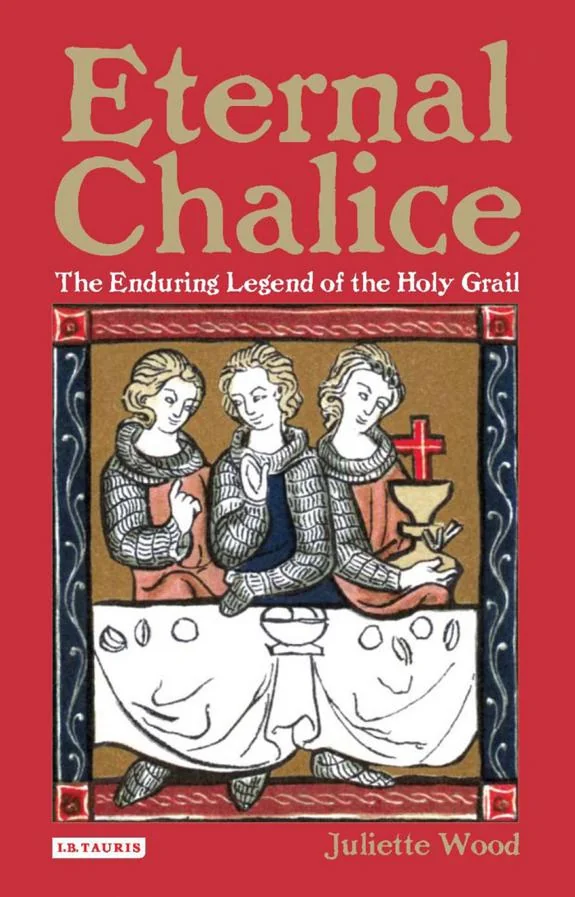
Juliette Wood's *Eternal Chalice* offers a welcome antidote to superficial treatments of the Holy Grail myth. The book excels in its detailed tracing of the Grail's lineage, moving beyond the Arthurian cycle to connect it with early Christian rites and even pre-Christian European symbolism. Wood's analysis of the Grail's adaptation by 20th-century esoteric groups, linking it to figures like Jessie Weston and her controversial *From Ritual to Romance*, is particularly illuminating. However, the book sometimes feels overly dense, with its academic rigor occasionally overshadowing narrative flow. A passage discussing the Grail's potential connection to Celtic cauldrons of plenty, while informative, could have benefited from more direct engagement with the primary sources it references. Despite this, *Eternal Chalice* provides a comprehensive and insightful overview for those seeking the deeper layers of this enduring legend.
📝 Description
81
Juliette Wood's 2008 book examines the Holy Grail's journey through Western culture.
Published in 2008, Juliette Wood's Eternal Chalice analyzes the Holy Grail legend, moving beyond simple folklore to show its persistent influence across literature, religion, and psychology. Wood traces the symbol's adaptation and reinterpretation through various traditions, from medieval romance to modern esoteric thought. The book addresses readers interested in the deep historical and symbolic currents within Western mythology and religious history. It is suitable for scholars of literature, comparative religion, and cultural studies, as well as enthusiasts of Arthurian legend and Grail quest narratives. The work is particularly valuable for those who wish to understand the Grail not merely as a relic but as a powerful archetype.
The Holy Grail myth has been influential since at least the 12th century, with early literary references appearing in Chrétien de Troyes's *Perceval*. By the 15th century, Sir Thomas Malory had firmly integrated the Grail into Arthurian cycles in *Le Morte d'Arthur*. Wood's research places these early developments in a wider historical context, considering how the legend was later revived and recontextualized by movements like Victorian medievalism and occult circles of the late 19th and early 20th centuries.
This book situates the Holy Grail within a long tradition of Western esotericism, where symbols are not static but fluid carriers of meaning. Wood's work connects the Grail to various esoteric currents, including its roots in Celtic lore and its engagement with Gnostic ideas. The analysis also considers how later occultists and thinkers like Carl Jung interpreted the Grail as an archetypal symbol representing a profound psychological quest. It shows how esoteric traditions have consistently sought to understand such potent myths as keys to deeper spiritual and psychological truths, adapting them to contemporary understanding.
💡 Why Read This Book?
• Gain a nuanced understanding of the Grail's evolution from medieval literature to modern esoteric thought, referencing its appearance in Chrétien de Troyes's 12th-century romance. • Explore the symbol's diverse religious and mythological roots, including connections to Celtic traditions and early Christian eucharistic practices, as detailed in the text. • Uncover how the Grail functions as a potent archetype in psychological interpretations, as analyzed through concepts akin to Jungian archetypes within the book.
⭐ Reader Reviews
Honest opinions from readers who have explored this book.
❓ Frequently Asked Questions
When was Juliette Wood's Eternal Chalice first published?
Eternal Chalice by Juliette Wood was first published on June 30, 2008, offering a comprehensive exploration of the Holy Grail legend.
What are the main historical influences on the Grail legend discussed in the book?
The book discusses influences ranging from Celtic mythology and King Arthur's legends to early Christian eucharistic rites and ancient mystery religions.
Does Eternal Chalice link the Grail to psychology or esotericism?
Yes, the work explores connections to Jungian archetypes and various esoteric traditions, examining how these modern interpretations have shaped the legend's meaning.
Who is Juliette Wood?
Juliette Wood is the author of Eternal Chalice, known for her scholarly work on the historical and symbolic dimensions of the Holy Grail legend.
What is the central argument of Eternal Chalice?
The central argument posits the Holy Grail as a highly adaptable symbol whose meaning has shifted across centuries and cultures, embodying diverse spiritual and psychological quests.
Is Eternal Chalice a fictional retelling of the Grail story?
No, Eternal Chalice is a non-fiction scholarly work that analyzes the history, mythology, and symbolism of the Holy Grail legend, rather than retelling it.
🔮 Key Themes & Symbolism
The Grail as Mutable Symbol
The book meticulously details how the concept of the Grail has been reinterpreted throughout history, functioning less as a fixed object and more as a fluid symbol. From its potential roots in Celtic lore and the Arthurian romances of Chrétien de Troyes, to its adoption by esoteric societies seeking spiritual enlightenment, Wood demonstrates the symbol's adaptability. This theme highlights how different eras and belief systems project their own desires and spiritual quests onto the icon of the chalice.
Cross-Cultural Religious Syncretism
Eternal Chalice investigates the fascinating syncretism inherent in the Grail legend, tracing its connections to disparate religious and mythological systems. It explores how the symbol has been linked to the eucharistic rites of Eastern Christianity, ancient mystery religions, and even dualist heresies, suggesting a deep-seated human need to unify sacred concepts. This theme underscores the legend's capacity to absorb and reframe diverse spiritual traditions.
Archetypal Psychology and the Grail
The work examines the Grail's resonance within the framework of modern psychology, particularly through the lens of Jungian archetypes. It presents the Grail quest as a metaphor for the individual's journey toward psychic integration and wholeness. This perspective interprets the chalice not just as a historical or religious artifact, but as a profound symbol of inner attainment and the search for meaning in the collective unconscious.
Esoteric Traditions and the Grail
Wood explores the Grail's adoption and reinterpretation by various esoteric and occult traditions from the late 19th century onwards. This includes its association with secret societies and mystical orders seeking hidden knowledge or spiritual gnosis. The book illuminates how these groups infused the legend with new layers of meaning, often connecting it to Hermeticism, theosophy, and alchemical symbolism.
💬 Memorable Quotes
Direct passages from the work, attributed to the author.
“The Grail's enduring allure lies in its protean nature, allowing it to represent disparate quests for salvation, knowledge, or wholeness.”
— This statement captures the book's central thesis: the Grail is not a static relic but a dynamic symbol whose meaning shifts with the viewer's perspective and historical context.
“From Malory's knights to modern seekers, the chalice has been a focal point for the human yearning towards the divine or the ultimate truth.”
— This highlights the consistent theme of spiritual seeking across different eras, positioning the Grail as a perennial object of desire for those pursuing transcendence.
“Early Christian symbolism, Celtic myths, and Arthurian romance all contribute threads to the complex tie of the Grail legend.”
— This interpretation emphasizes the multi-layered origins of the Grail, suggesting that no single source fully explains its development, but rather a confluence of traditions.
“The legend's adaptability facilitated its absorption into esoteric movements seeking hidden wisdom and mystical experience.”
— This points to the specific way the Grail narrative was embraced by occult and esoteric circles, who saw in it a vehicle for transmitting secret doctrines and achieving altered states of consciousness.
“Interpreting the Grail involves understanding its role not only in historical texts but also as an archetype within the human psyche.”
— This emphasizes the dual nature of the Grail as both a cultural artifact with a traceable history and a potent psychological symbol, as explored through theories like Jung's.
🌙 Esoteric Significance
Tradition
The work engages with the Grail's deep resonance within Western esoteric traditions, particularly those seeking spiritual enlightenment through symbolic interpretation. While not strictly adhering to a single lineage like Hermeticism or Kabbalah, it explores how the Grail legend has been adopted and reinterpreted by various esoteric movements interested in mystical attainment, gnosis, and the hidden meanings within ancient myths. It bridges historical scholarship with the symbolic language favored by Theosophists and later occultists.
Symbolism
Key symbols explored include the chalice itself, often representing the receptive feminine principle, the vessel of transformation, or the receptacle of divine grace. The quest narrative symbolizes the individual's spiritual journey, the arduous path toward self-discovery and enlightenment. Connections are also drawn to the symbolism of blood and resurrection, particularly in relation to early Christian interpretations and their esoteric undertones, and to ancient cauldrons symbolizing abundance and rebirth.
Modern Relevance
Contemporary thinkers and practitioners in fields such as comparative mythology, depth psychology, and neo-paganism continue to draw on the detailed symbolism of the Grail. The archetype of the quest for wholeness and meaning, as embodied by the Grail narrative, remains relevant in modern spiritual seeking. Esoteric circles still utilize the Grail as a potent symbol for spiritual initiation, the pursuit of hidden knowledge, and the integration of the sacred into everyday life.
👥 Who Should Read This Book
• Students of Arthurian literature and medieval studies seeking to understand the broader historical and symbolic context of the Grail legend beyond King Arthur. • Comparative religion scholars interested in the syncretic nature of Western mythology and the evolution of religious symbolism across cultures and time. • Enthusiasts of esoteric traditions and archetypal psychology looking to explore how the Grail functions as a symbol of spiritual quest and inner transformation.
📜 Historical Context
Published in 2008, Juliette Wood's *Eternal Chalice* emerged during a period of renewed academic and popular interest in Arthurian legend and medievalism. The book engages with a long scholarly tradition of Grail studies, notably building upon the work of figures like Jessie L. Weston, whose 1920 book *From Ritual to Romance* controversially linked the Grail to fertility cults and Mithraism. Wood's work also implicitly addresses the legacy of earlier esoteric interpretations, such as those found in the writings of occultists like Eliphas Lévi or movements like the Hermetic Order of the Golden Dawn, who often sought to imbue historical myths with hidden mystical meanings. While the book itself is a scholarly analysis, its publication context reflects a broader cultural fascination with the Grail as a symbol of mystery and spiritual quest, a fascination that has persisted since the Middle Ages and was notably revived in the 19th century by writers like Tennyson and later by artists and thinkers exploring symbolism.
📔 Journal Prompts
The Grail's association with Celtic cauldrons of plenty suggests themes of abundance; how might this symbol manifest in contemporary life?
Consider the Grail as a symbol of sought-after spiritual knowledge; what constitutes 'hidden wisdom' in your personal journey?
The legend's connection to eucharistic rites implies themes of sacrifice and communion; reflect on personal experiences of profound connection.
Analyze the Grail quest as a metaphor for psychological integration; what challenges represent the 'perilous journey' in your own self-discovery?
How does the mutable nature of the Grail symbol, as explored in the book, reflect broader shifts in cultural or spiritual beliefs over time?
🗂️ Glossary
Holy Grail
A legendary object, often depicted as a cup or chalice, central to Arthurian legend and various religious and esoteric traditions, symbolizing spiritual fulfillment or divine grace.
Arthurian Legend
A body of literature and tradition centered around the legendary King Arthur, his knights, and the court of Camelot, including the quest for the Holy Grail.
Eucharistic Rites
Liturgical ceremonies in Christianity commemorating the Last Supper, typically involving the symbolic consumption of bread and wine representing the body and blood of Christ.
Jungian Archetypes
Primordial, universal patterns and images that derive from the collective unconscious and are the psychic counterpart of instinct; the Grail can be seen as representing such an archetype.
Dualist Heresies
Religious beliefs that posit a fundamental opposition or conflict between two ultimate principles, often good and evil, spirit and matter, such as Gnosticism.
Esotericism
Belief systems, practices, and traditions that are concerned with a hidden or inner spiritual reality, often accessible only to initiates or through specialized knowledge.
Chrétien de Troyes
A 12th-century French poet credited with writing the earliest known Arthurian romances, including the unfinished *Perceval, le Conte du Graal*, which introduced the Grail to literature.
This book appears in 1 collection
🔮 Readers Also Liked
Browse all →







From the “Holy Grail” Collection
View all →









More Free Occult Philosophy Books
View all →