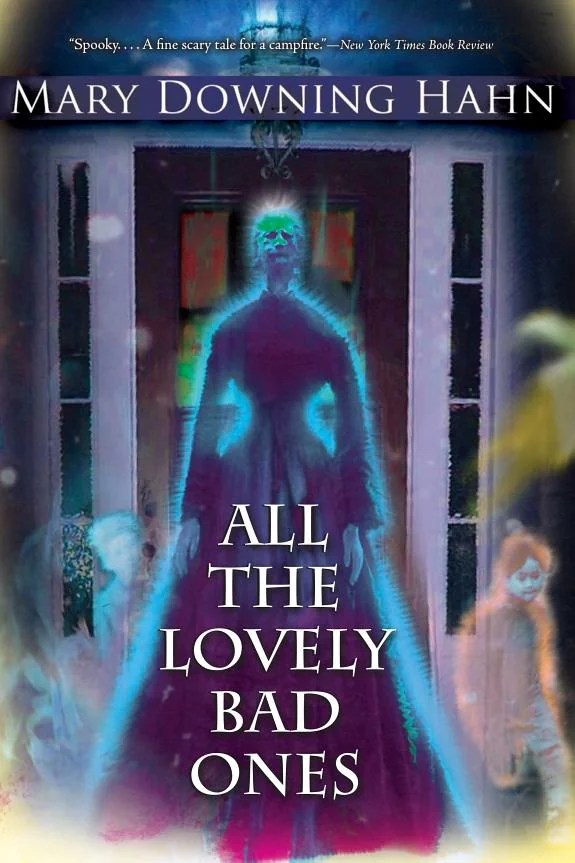
All the Lovely Bad Ones
 71
71

All the Lovely Bad Ones
Mary Downing Hahn has a knack for conjuring atmospheric chills, and "All the Lovely Bad Ones" is no exception. The premise—prankster siblings accidentally unleashing lingering spirits—is immediately engaging, offering a blend of humor and genuine spookiness. The Vermont inn setting provides a classic backdrop for spectral activity, and the author expertly builds suspense as the ghostly manifestations escalate. The dynamic between the siblings, though familiar, drives the narrative effectively. However, the resolution, while neat, feels somewhat abrupt, leaving a few threads of the spirits' backstories feeling underdeveloped. The work explores how youthful exuberance can unintentionally stir dormant energies. Despite this minor quibble, the book delivers a solid supernatural thrill that lingers pleasantly.
📝 Description
71
Mary Downing Hahn's 2009 novel, All the Lovely Bad Ones, begins with a prank that unleashes ghosts.
In Mary Downing Hahn's 2009 novel, "All the Lovely Bad Ones," siblings visiting their grandmother's Vermont inn discover that their pranks have serious supernatural repercussions. Their attempts at humor inadvertently stir up restless spirits tied to the inn's history, leading to a series of increasingly unnerving encounters.
The narrative follows the protagonists as they grapple with the consequences of their mischief. These aren't just childish games; they awaken dormant energies that manifest in frightening ways. The inn becomes a stage for the clash between the living and the lingering past, forcing the young characters to confront the spectral inhabitants and the unresolved issues they represent. The story balances moments of humor with genuine suspense, creating a compelling read for its intended audience.
This novel touches upon the concept of residual hauntings, where past events and emotions imprint themselves onto a location. The "lovely bad ones" can be seen as echoes of unresolved lives or disturbances that persist, creating a nexus where temporalities blur. The inn acts as a focal point, a place where the veil between the living and the spectral is thin, allowing the past to manifest and interact with the present. This echoes themes found in certain folk traditions concerning places with strong historical or emotional resonance.
💡 Why Read This Book?
• Gain an understanding of how playful disruption can awaken dormant energies, as seen when the siblings' pranks stir the ghosts of the Vermont inn. • Experience the unique tension between childhood mischief and the tangible consequences of disturbing the past, particularly concerning the "lovely bad ones." • Appreciate a narrative that uses a historical inn as a setting to explore the persistent influence of past events on the present, as the spirits refuse to "rest in peace."
⭐ Reader Reviews
Honest opinions from readers who have explored this book.
❓ Frequently Asked Questions
What is the primary setting for "All the Lovely Bad Ones"?
The story is set in a grandmother's inn located in Vermont, serving as the backdrop for the siblings' encounters with restless spirits.
Who are the "lovely bad ones" mentioned in the book's title?
The "lovely bad ones" are the young ghosts from the inn's past that the prankster siblings awaken and who refuse to leave.
What is the author's background with ghost stories?
Mary Downing Hahn is a well-established author known for her numerous acclaimed young adult ghost novels, often exploring themes of the supernatural and historical settings.
When was "All the Lovely Bad Ones" first published?
The novel was first published in 2009, placing it within the contemporary young adult literature landscape.
Does the book contain frightening content for younger readers?
While it features ghosts and suspense, the book is generally considered suitable for its target age group, balancing scares with humor and a resolved plot.
What is the core conflict in "All the Lovely Bad Ones"?
The central conflict arises when the protagonists' pranks inadvertently awaken dormant spirits, who then refuse to remain at peace, creating escalating supernatural problems.
🔮 Key Themes & Symbolism
Consequences of Action
The narrative emphasizes that even seemingly harmless pranks can have significant, unforeseen repercussions. The siblings' youthful exuberance directly leads to the awakening of the spectral "lovely bad ones." This theme highlights a core esoteric principle: the interconnectedness of actions and their energetic fallout. The past, once disturbed, asserts its presence, demanding attention and resolution. The inn, as a locus of past events, becomes a stage where these consequences unfold, showing how present actions can stir dormant energies with tangible results.
Lingering Past
The "lovely bad ones" themselves embody the concept of the lingering past – unresolved energies and memories that refuse to dissipate. Their refusal to "rest in peace" signifies that certain psychic imprints can persist indefinitely within a location. The inn serves as a vessel for these spectral presences, suggesting that places can absorb and retain the emotional and energetic residue of past inhabitants and events. This speaks to esoteric ideas of spiritual residue and the potential for places to hold consciousness.
Sibling Dynamics
The relationship between the prankster siblings forms the narrative's engine. Their shared mischief, bickering, and eventual reliance on each other to face the supernatural challenge are central. This dynamic underscores how shared experiences, even chaotic ones, can forge bonds and necessitate cooperation. In an esoteric context, this can be viewed as the interplay of dualistic forces (the siblings) coming together to confront a unified, albeit complex, energetic phenomenon.
The Nature of Ghosts
Hahn presents ghosts not merely as frightening apparitions but as entities tied to specific locations and past experiences. The "lovely bad ones" are portrayed as children, suggesting a connection between innocence, trauma, and persistent spectral forms. This interpretation moves beyond simple hauntings, hinting at the idea that unfinished business or strong emotional imprints can anchor spirits, making them less incorporeal and more like energetic echoes within the environment.
💬 Memorable Quotes
Direct passages from the work, attributed to the author.
“They were the lovely bad ones, and they would not rest in peace.”
— This captures the core paradox of the ghosts: their childlike nature juxtaposed with their disruptive presence. It signifies that unresolved energies, even those tied to youthful spirits, can actively resist peace and continue to influence the present.
“Pranks were her specialty. She was good at them. But this was different.”
— This highlights the shift from casual mischief to serious supernatural consequence. It suggests that certain actions, regardless of intent, can breach energetic boundaries and awaken forces beyond the prankster's control.
“The inn held secrets, and the ghosts were part of them.”
— This interpretation posits the inn not just as a building but as a repository of history and psychic imprints. The ghosts are presented as integral components of this historical and energetic legacy.
“They had woken them up. Now they had to deal with them.”
— This emphasizes the direct responsibility that arises from disturbing dormant spiritual energies. It frames the ensuing events as a necessary process of confronting and resolving the awakened entities.
“Some things, once stirred, never went back to sleep.”
— This is a powerful statement about the permanence of certain energetic awakenings. It implies that confronting the past, especially when it involves spectral presences, can lead to lasting changes and ongoing interactions.
🌙 Esoteric Significance
Tradition
While not explicitly tied to a single esoteric tradition, "All the Lovely Bad Ones" speaks to animistic and spiritualist concepts. It explores the idea that locations can retain energetic imprints and that deceased entities, particularly children, can persist as conscious or semi-conscious presences. This aligns with certain spiritualist beliefs about communication with the departed and the concept of 'etheric residue' found in some occult philosophies, suggesting that consciousness is not extinguished but can linger and interact with the living environment.
Symbolism
The Vermont inn functions as a potent symbol of accumulated history and psychic energy. It represents a threshold between the present and the past, a physical space where temporal boundaries blur. The "lovely bad ones" themselves symbolize unresolved childhood traumas, unfinished business, or simply the persistent energetic traces of young lives cut short. Their refusal to "rest in peace" symbolizes the refusal of the past to be ignored or forgotten, demanding acknowledgment and resolution from the living.
Modern Relevance
The novel's exploration of how present actions can stir dormant energies and the idea of places holding spiritual imprints remain relevant in contemporary discussions around psychogeography and hauntology. Thinkers and artists interested in the lingering effects of history and trauma on physical spaces might find parallels. Furthermore, the concept of spirits as energetic residues speaks to modern interpretations of consciousness that move beyond purely materialist frameworks, offering a narrative lens for exploring phenomena that defy conventional scientific explanation.
👥 Who Should Read This Book
• Young readers aged 9-14 who enjoy thrilling ghost stories with relatable characters and a touch of humor. • Aspiring paranormal investigators or young occultists interested in accessible narratives about hauntings and spectral presences. • Readers seeking engaging stories that explore themes of consequence, responsibility, and the persistent influence of the past on the present.
📜 Historical Context
Mary Downing Hahn's "All the Lovely Bad Ones," published in 2009, entered the young adult literary scene during a period of sustained interest in supernatural fiction. While not directly engaging with specific esoteric movements, the novel taps into enduring themes of hauntings and the persistence of the past, which have roots in Gothic literature dating back to the late 18th century. Hahn's work can be seen as a contemporary iteration of this tradition, offering accessible ghost stories to a new generation. Unlike the more complex philosophical explorations found in early 20th-century Theosophy or the ritualistic focus of Hermetic orders, Hahn's approach is narrative-driven, prioritizing character and plot within a supernatural framework. Her contemporaries in YA supernatural fiction included authors like Suzanne Collins and Stephenie Meyer, though Hahn’s focus remained on classic ghost story elements rather than paranormal romance or dystopian themes. The reception of her work has been consistently positive within its genre, praised for its atmospheric tension and child-friendly scares.
📔 Journal Prompts
The Vermont inn as a locus of past energies. Reflect on a place that feels imbued with history.
The "lovely bad ones" and their refusal to rest. Consider what might keep certain energies tethered.
Sibling dynamics in confronting the unknown. Analyze how shared challenges affect relationships.
The line between mischief and true disturbance. Explore the ethical implications of your actions.
The consequences of awakening dormant forces. Journal about a time your actions had unforeseen results.
🗂️ Glossary
Lovely Bad Ones
The collective term for the young ghosts awakened by the siblings. They are characterized by their mischievous nature, refusal to remain at peace, and connection to the inn's past.
Rest in Peace
A common phrase associated with death, signifying a soul's transition to a state of tranquility. The ghosts' refusal to do so indicates their continued presence and interaction with the living world.
Vermont Inn
The primary setting of the novel, a grandmother's inn in Vermont. It serves as a physical and energetic nexus where past and present intersect, facilitating encounters with the supernatural.
Prankster Siblings
The protagonists, whose playful but disruptive actions inadvertently trigger the main supernatural events of the story, highlighting the theme of unintended consequences.
Spectral Encounters
Interactions with ghosts or spirits. In this novel, these encounters escalate from subtle disturbances to more direct and challenging manifestations.
Unresolved Past
Refers to events, emotions, or lives that have not found closure. The ghosts embody this concept, their continued presence signifying unfinished business.
Haunting
The phenomenon of a spirit or entity making its presence known in a particular location. The novel details the escalating haunting of the Vermont inn.
This book appears in 1 collection
🔮 Readers Also Liked
Browse all →








From the “Apparitions” Collection
View all →

More Free Occult Philosophy Books
View all →