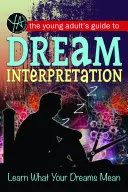
The Young Adult's Guide to Dream Interpretation
 81
81

The Young Adult's Guide to Dream Interpretation
Atlantic Publishing Group Inc's 2015 work, *The Young Adult's Guide to Dream Interpretation*, attempts to demystify a complex subject for a younger audience. Its primary strength lies in its straightforward approach, presenting dream analysis as an approachable skill rather than an arcane art. The book correctly emphasizes the subjective nature of dream symbols, urging readers to consider personal associations over rigid dictionary definitions. However, its brevity and the generalized nature of its advice limit its depth. For instance, the section on recurring dreams, while acknowledging their significance, offers little in the way of advanced techniques for addressing persistent themes beyond basic journaling. The work feels more like an initial primer than a comprehensive manual. Still, for an introductory text, it offers a sensible foundation. The guide is a competent, if unexceptional, entry point for novice dreamers.
📝 Description
81
Published in 2015, The Young Adult's Guide to Dream Interpretation moves beyond simple dream dictionaries.
This 2015 guide introduces young readers to understanding their dreams. It argues that dreams are meaningful messages from the subconscious, not random occurrences. The book emphasizes the personal context and emotional elements of dreams rather than relying on generic symbol meanings.
It is written for beginners and young adults, using clear language and relatable examples. The authors aim to help readers develop self-awareness by making sense of recurring dreams or nightly narratives. The guide focuses on practical methods for recalling and analyzing dreams, encouraging the use of dream journaling to track patterns and gain personal insight.
This book acknowledges the long history of dream interpretation, tracing its roots from ancient Mesopotamian divination to early 20th-century psychological theories by figures like Freud and Jung. It synthesizes these historical approaches into a modern framework for beginners. The guide focuses on the idea that dreams carry personal messages from the subconscious, a concept explored across various esoteric traditions that view dreams as a bridge to inner knowledge.
💡 Why Read This Book?
• You will learn a practical method for recalling your dreams consistently, building a foundation for personal analysis by following the techniques outlined for dream journaling, first introduced in Chapter 2. • You will gain insight into how common dream symbols, such as 'falling' or 'flying,' can be interpreted through the lens of your own life experiences, moving beyond generic definitions. • You will understand the fundamental link between your daily emotional state and the content of your dreams, empowering you to use this connection for self-discovery as detailed in the book's early chapters.
⭐ Reader Reviews
Honest opinions from readers who have explored this book.
❓ Frequently Asked Questions
When was The Young Adult's Guide to Dream Interpretation first published?
The book was first published on March 25, 2015. This publication date places it within the contemporary landscape of self-help and esoteric literature.
What is the main goal of this dream interpretation guide?
The primary goal is to explain the importance of dreams and provide accessible methods for readers to interpret their own dream meanings, encouraging self-awareness.
Is this book suitable for complete beginners to dream analysis?
Yes, the book is specifically designed for young adults and beginners, using clear language and avoiding complex psychological theories common in more advanced texts.
Does the book offer a dream dictionary?
While it discusses common dream symbols, the book emphasizes personal interpretation over a fixed dream dictionary, encouraging readers to find individual meanings.
What practical tools does the book recommend for dream interpretation?
The book strongly recommends dream journaling as a key tool for remembering dreams and identifying patterns, a practice detailed in its initial chapters.
Who are the primary authors or editors of this guide?
The book is credited to Atlantic Publishing Group Inc. It functions as a compilation or editorial work rather than being attributed to a single named author.
🔮 Key Themes & Symbolism
Personal Symbolism
The work emphasizes that dream symbols are not universal constants but are deeply personal. It guides the reader to explore their unique associations with images and events that appear in dreams. This approach moves away from rigid, one-size-fits-all interpretations found in older dream dictionaries, encouraging a more introspective and accurate understanding of one's subconscious messages. The book suggests that a symbol like 'water' might mean different things to different people based on their life experiences and emotional connections.
Dream Recall Techniques
A central theme is the importance of remembering dreams to derive benefit from them. The guide provides practical, actionable techniques designed to improve dream recall. These methods focus on cultivating awareness before sleep, maintaining a consistent journaling practice immediately upon waking, and creating a conducive environment for remembering. By systematically recording dreams, readers can begin to identify recurring patterns and themes that might otherwise be forgotten.
Subconscious Communication
The book frames dreams as a direct line of communication from the subconscious mind. It posits that dreams serve a purpose, offering insights into unresolved issues, hidden desires, fears, and aspects of the self that may be overlooked in waking life. Understanding this dialogue allows individuals to address inner conflicts, gain clarity on their emotional state, and foster psychological integration. The interpretation of these messages is presented as a tool for personal growth.
Waking Life Connection
A crucial concept explored is the direct correlation between one's waking experiences and the content of their dreams. The guide encourages readers to analyze how daily events, emotions, stresses, and relationships manifest symbolically in their dreams. By bridging the gap between the sleeping and waking worlds, individuals can gain a more comprehensive understanding of their psychological landscape and use dream insights to navigate their daily lives more effectively.
💬 Memorable Quotes
Direct passages from the work, attributed to the author.
“Your dreams are a personal language spoken by your subconscious.”
— This highlights the core idea that dream imagery and narratives are unique to the individual dreamer, serving as a private form of communication from the inner self.
“Keep a dream journal to capture fleeting images and emotions.”
— This emphasizes the practical necessity of written record-keeping for dream analysis, stressing the transient nature of dream recall and the importance of immediate documentation.
“Common symbols often carry deeply personal meanings.”
— This challenges the notion of fixed dream dictionaries, asserting that the significance of a dream element like 'a house' is determined by the dreamer's individual associations and life context.
“Pay attention to the feelings your dreams evoke.”
— This points to the emotional component of dreams as a critical interpretive key, suggesting that the emotional tone of a dream is as important as its visual content.
“Dreams can offer clues to unresolved issues from your day.”
— This interpretation suggests that dreams function as a processing mechanism for daily experiences, bringing subconscious attention to matters that require consideration or resolution.
🌙 Esoteric Significance
Tradition
While not strictly tied to a single esoteric lineage like Kabbalah or Theosophy, this work draws broadly from psychological and hermeneutic traditions that inform many Western esoteric practices. It reflects the Hermetic principle of 'As Above, So Below,' suggesting a correspondence between the inner world of dreams and the outer world of experience. Its focus on self-interpretation aligns with individual gnosis, a key element in many mystical paths where direct experience and personal understanding are paramount.
Symbolism
The book touches upon common dream symbols, framing them as potential carriers of deeper meaning. While it avoids extensive lists, it implicitly references archetypal imagery that resonates across cultures and esoteric traditions. Symbols like 'falling' can represent loss of control or insecurity, while 'flying' might signify freedom or aspiration. The emphasis is on the dreamer's unique relationship with these symbols, treating them not as fixed signs but as fluid elements within the personal subconscious narrative.
Modern Relevance
Contemporary practices in mindfulness, self-help, and even certain therapeutic modalities continue to explore the significance of dreams. This guide's accessible approach makes its core principles relevant to modern spiritual seekers and those interested in personal development who may not engage with traditional esoteric texts. Its emphasis on journaling and personal insight aligns with current trends in digital wellness and self-care applications that encourage daily reflection and emotional tracking.
👥 Who Should Read This Book
• Young adults (ages 13-25) curious about understanding their inner lives and gaining self-awareness through dream analysis, providing a gentle introduction to subconscious exploration. • Beginners to psychology or self-help who want a straightforward guide to interpreting their dreams without complex theoretical frameworks or jargon. • Individuals experiencing recurring or vivid dreams who seek practical methods for recalling and making sense of these nightly narratives for personal growth.
📜 Historical Context
Published in 2015, *The Young Adult's Guide to Dream Interpretation* emerges in an era where interest in psychology and self-discovery has broadened considerably. While the book itself is contemporary, its subject matter is ancient, tracing roots back to Mesopotamian dream incubation and the philosophical inquiries of Plato. The 20th century saw major shifts with Sigmund Freud's psychoanalytic theories, which posited dreams as the 'royal road to the unconscious,' and Carl Jung's analytical psychology, which introduced archetypes and a collective unconscious. This 2015 guide engages with this legacy by presenting a simplified, accessible version of dream analysis. It arrives in a cultural landscape where figures like Oprah Winfrey popularized therapeutic concepts, making introspection mainstream. Unlike more academic works or niche esoteric texts, this book aimed for a wider, younger audience, potentially sidestepping the more controversial or complex aspects of Freudian or Jungian thought that had been debated since the early 1900s.
📔 Journal Prompts
Reflect on the personal associations you have with the symbol of 'water' as it appeared in your recent dreams.
Analyze the emotional tone of a recurring dream and its potential connection to a current waking life challenge.
Document the steps you took upon waking to recall your latest dream, noting which techniques were most effective.
Consider how the dream narrative might be a response to a specific event or feeling from the previous day.
Explore the feeling of 'falling' or 'flying' in your dreams and what personal meaning it might hold for you.
🗂️ Glossary
Dream Recall
The ability to remember dreams upon waking. The book provides techniques to enhance this process, emphasizing consistent practice and immediate documentation.
Subconscious Mind
The part of the mind that is not currently in focal awareness but influences thoughts, feelings, and actions. Dreams are seen as messages from this level.
Dream Symbols
Images, objects, or events that appear in dreams and carry symbolic meaning. The interpretation of these symbols is highly personal.
Dream Journal
A notebook or digital document used to record dreams immediately after waking. It serves as a tool for tracking patterns and aiding interpretation.
Waking Life
Refers to the conscious, active period of a person's day, as distinct from the sleeping state during which dreams occur. Dreams often reflect waking experiences.
Interpretation
The process of assigning meaning to dream content, considering both personal associations and common symbolic resonances.
Recurring Dreams
Dreams that repeat over time, often indicating unresolved issues, persistent concerns, or significant patterns in the dreamer's life.