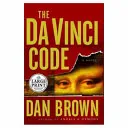
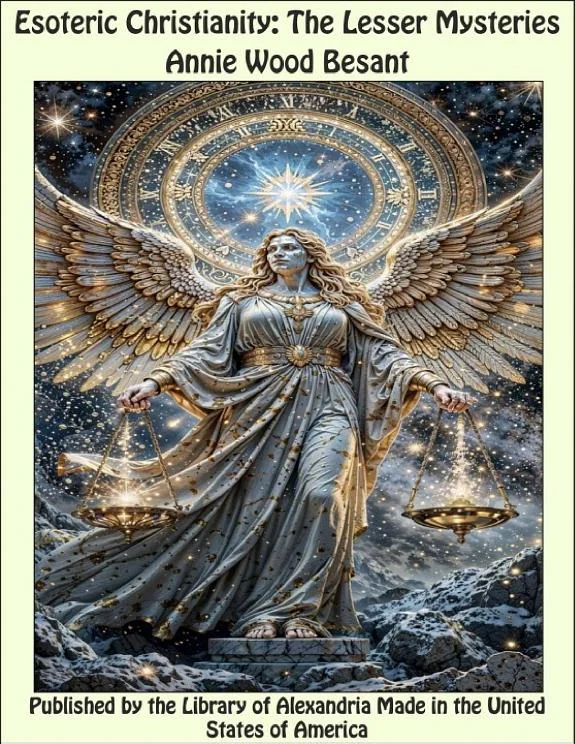
Esoteric Christianity: The Lesser Mysteries
 82
82

Esoteric Christianity: The Lesser Mysteries
Annie Wood Besant’s *Esoteric Christianity: The Lesser Mysteries* is not for the faint of heart, nor for those seeking simple dogma. Besant approaches the Gospels not as historical reportage but as allegories for profound spiritual processes. Her assertion that "The Mysteries of Jesus" were an authentic continuation of older pagan initiatory rites, rather than a break from them, is the book's central, and most contentious, thesis. She compellingly argues for a symbolic reading of the Christ narrative, detailing the "Lesser Mysteries" as stages of spiritual development. A strength lies in her meticulous attempt to link Christian symbolism to universal archetypes, drawing parallels with other ancient traditions. However, the work can become dense, particularly when detailing complex spiritual anatomy or numerological interpretations. A passage discussing the symbolic significance of the "Bread and Wine" ritual, for instance, requires careful attention but offers a rich alternative to standard theological views. Ultimately, this is an essential text for understanding the Theosophical interpretation of Christianity, though its dense prose may challenge casual readers.
📝 Description
82
Annie Wood Besant's 1914 book reinterprets Christian doctrine through an occult lens.
Esoteric Christianity: The Lesser Mysteries argues that core Christian teachings hold deeper, symbolic meanings. Besant posits that early Christianity absorbed mystical traditions from earlier mystery religions, with a hidden spiritual science underlying its narrative. This work is for individuals seeking to understand Christianity beyond its outward form. It appeals to students of comparative religion, those interested in mystical movements, and practitioners of Western esotericism who want to examine the philosophical and spiritual underpinnings of the Christian tradition. Readers should be open to symbolic interpretation and ancient wisdom.
The book engages with contemporary debates about religion, challenging purely materialistic or fundamentalist interpretations. It contrasts the exoteric presentation of Christianity with its hidden, inner teachings, suggesting continuity with ancient mystery schools and Gnostic traditions. Besant examines concepts like Christ consciousness, the symbolic meaning of biblical narratives, the role of initiation, and humanity's spiritual anatomy.
Published in 1914, this work emerged from the Theosophical Society, founded in 1875. The Theosophical movement aimed to synthesize global religious and philosophical traditions, often through an esoteric framework. Besant's book fits within this context by seeking a hidden spiritual science behind Christianity, connecting it to older mystery traditions and Gnosticism. It stood against the materialistic and fundamentalist interpretations of religion common in the late 19th and early 20th centuries.
💡 Why Read This Book?
• Learn how Annie Wood Besant connects Christian sacraments to ancient initiatory rites, offering a symbolic interpretation of the Eucharist beyond its common theological understanding, as explored in her discussions of "The Mysteries of Jesus." • Understand the Theosophical perspective on Christ consciousness and spiritual evolution, gaining insight into how this framework interprets biblical figures and events as allegories for inner development. • Discover the historical linkage Besant draws between early Christianity and pre-Christian "Mystery Religions," challenging conventional views on the origins of Christian ritual and doctrine.
⭐ Reader Reviews
Honest opinions from readers who have explored this book.
❓ Frequently Asked Questions
What is the primary argument of Annie Wood Besant's Esoteric Christianity?
Besant argues that Christianity, particularly its core narratives and rituals, contains hidden, symbolic meanings rooted in ancient mystery traditions. She posits that these "Lesser Mysteries" represent stages of spiritual development accessible through esoteric understanding, contrasting with literal, exoteric interpretations.
When was Esoteric Christianity: The Lesser Mysteries first published?
The first publication date for Annie Wood Besant's *Esoteric Christianity: The Lesser Mysteries* is January 1, 1966, though its ideas stem from earlier Theosophical writings.
What does 'Lesser Mysteries' refer to in the context of this book?
In Besant's work, the "Lesser Mysteries" refer to the initial stages of spiritual awakening and initiation within the Christian tradition. These are symbolic teachings that lead to a deeper, inner understanding of Christ and the spiritual path.
How does Besant relate Christianity to pagan religions?
Besant suggests that early Christianity adopted and transformed existing spiritual practices and symbolism from pagan mystery religions. She sees parallels in initiatory rites, symbolic narratives, and the concept of divine revelation, arguing for continuity rather than complete rupture.
Who was Annie Wood Besant?
Annie Wood Besant (1847-1933) was a prominent British writer, orator, and advocate for Indian self-rule. She was also a leading figure in the Theosophical Society, deeply involved in exploring and disseminating esoteric spiritual teachings.
What is the 'exoteric' meaning Besant contrasts with esoteric Christianity?
The exoteric meaning refers to the literal, outward, or commonly understood interpretation of religious texts and doctrines. Besant contrasts this with the esoteric, or inner, symbolic meaning that she believes holds the true spiritual wisdom of Christianity.
🔮 Key Themes & Symbolism
Symbolic Interpretation of Scripture
Besant argues that biblical narratives, such as the life of Jesus, are not mere historical accounts but profound allegories for the soul's journey. She deciphers events like the Nativity and Crucifixion as symbolic representations of spiritual birth and sacrifice, urging readers to look beyond literal interpretations to grasp the underlying esoteric truths. This approach aligns with Gnostic traditions that prioritized inner knowledge over external dogma.
The Christ as Universal Principle
This work presents the 'Christ' not solely as a historical figure but as an eternal, universal principle of divine consciousness. Besant explores the concept of Christos, the awakened spiritual nature within humanity, and the path of initiation that allows individuals to realize this inner divinity. It reframes the Christian narrative as a guide to achieving spiritual perfection, accessible to all seekers.
Continuity with Ancient Mysteries
A central theme is Besant's assertion that Christianity is a continuation of older pagan mystery traditions, not an entirely new religion. She details how rituals, symbols, and teachings found in ancient Greek, Egyptian, and Indian esoteric systems are echoed in Christian practices. This perspective seeks to unify disparate religious expressions under a common esoteric umbrella.
Spiritual Initiation and Evolution
The book elaborates on the concept of spiritual initiation as a process of inner transformation, mirroring the "Lesser Mysteries" of antiquity. Besant outlines stages of this evolutionary path, emphasizing the development of higher consciousness and the overcoming of lower, material nature. This aligns with the Theosophical view of humanity's ongoing spiritual progress.
💬 Memorable Quotes
Direct passages from the work, attributed to the author.
“The very name of 'The Mysteries of Jesus,' so familiar in the ears of the Christians of the first...”
— This phrase, taken from the original blurb, highlights Besant's core argument: that early Christianity itself possessed 'Mysteries,' implying secret or inner teachings, akin to pagan initiatory traditions, which she aims to reveal.
“The work explores the idea that the miracles of Jesus were not violations of natural law, but manifestations of higher spiritual laws.”
— This interpretation emphasizes Besant's view that the extraordinary events in the Gospels should be understood through an esoteric framework, representing the power of spiritual consciousness to operate beyond the mundane physical realm.
“Besant suggests the Christian sacraments, like Baptism and the Eucharist, have roots in ancient initiatory rituals.”
— This highlights the book's focus on comparative religious symbolism, arguing that core Christian practices are not unique inventions but evolved forms of much older, esoteric rites designed for spiritual transformation.
💡 Key Ideas
Editorial paraphrase of the work's core concepts — not direct quotes.
The author posits that the 'Christ-principle' is an archetypal divine consciousness accessible to all humanity.
This paraphrased concept clarifies Besant's theological stance, presenting Jesus as the exemplar of an inner divinity that every individual can awaken and embody through spiritual practice and understanding.
The book differentiates between the exoteric (outer) teachings of Christianity and its hidden, esoteric (inner) wisdom.
This quote defines the fundamental distinction Besant makes, asserting that the true spiritual essence of Christianity lies not in its literal interpretation but in its concealed symbolic language and initiatory path.
🌙 Esoteric Significance
Tradition
This work is a central to Theosophical literature, interpreting Christianity through the lens of universal ancient wisdom as understood by the Theosophical Society. It aligns with Gnostic and Neoplatonic traditions by emphasizing inner knowledge, symbolic interpretation, and the divine potential within humanity. Besant seeks to demonstrate a continuity of esoteric principles across different religious epochs, positioning Christianity not as a unique revelation but as a specific manifestation of a perennial spiritual science.
Symbolism
Key symbols explored include the Cross, often interpreted as a representation of the four elements or the union of spirit and matter; the figure of Jesus, seen as the embodiment of the awakened Christ-consciousness or the "higher self"; and the sacraments, such as the Eucharist, which Besant views as symbolic reenactments of cosmic and individual spiritual processes, tied to ancient mystery rites.
Modern Relevance
Besant's work continues to influence modern esoteric practitioners, New Age thought, and comparative religious studies. Thinkers and groups focused on the "perennial philosophy," Christ consciousness, and symbolic interpretations of religion often draw upon her interpretations. Contemporary discussions on embodied spirituality, the archetype of the divine human, and the critique of religious literalism echo themes present in *Esoteric Christianity*.
👥 Who Should Read This Book
• Students of Theosophy and Annie Wood Besant's work seeking a foundational text on her interpretation of Christian esotericism. • Practitioners of Western Esotericism interested in understanding how the Christian tradition has been interpreted through occult and mystical lenses. • Comparative religion scholars examining the historical development of esoteric interpretations of major world religions.
📜 Historical Context
Annie Wood Besant's *Esoteric Christianity: The Lesser Mysteries* emerged from the vibrant intellectual milieu of the late 19th and early 20th centuries, a period marked by intense spiritual seeking and a reaction against rigid materialism. As a leading figure in the Theosophical Society, founded in 1875 by Helena Blavatsky, Besant was deeply immersed in synthesizing Eastern and Western esoteric traditions. This era saw widespread interest in comparative religion, occultism, and alternative spiritualities, partly fueled by figures like Blavatsky herself with her monumental *The Secret Doctrine* (1888). Besant's work engaged directly with the prevailing Christian orthodoxy, offering an esoteric reinterpretation that challenged fundamentalist and purely historical readings. It stood in contrast to both orthodox theology and the more secularizing movements of the time, positioning itself within a broader Western Esoteric Tradition that included Hermeticism and Neoplatonism. The Theosophical Society's influence was significant, reaching a global audience and sparking numerous related movements and publications.
📔 Journal Prompts
The symbolic meaning of the "Lesser Mysteries" as stages of spiritual development.
Annie Wood Besant's interpretation of Christ consciousness as a universal principle.
The relationship between Christian sacraments and ancient pagan initiatory rites.
Reconciling the exoteric teachings of Christianity with its hidden esoteric wisdom.
The Christ-principle as an attainable inner divinity.
🗂️ Glossary
Exoteric
Pertaining to the outward, literal, or commonly understood teachings of a religion or philosophy, as opposed to its inner, hidden, or esoteric doctrines.
Esoteric
Intended for or likely to be understood by only a small number of people with specialized knowledge or interest; inner, secret, or mystical teachings.
Theosophy
A spiritual movement founded by Helena Blavatsky in 1875, seeking to understand the underlying unity of all religions and philosophies, often through the study of ancient wisdom traditions and occult principles.
Initiation
A ritual or process marking a person's transition to a new level of spiritual understanding, knowledge, or membership within a particular order or tradition, often involving symbolic death and rebirth.
Christ Consciousness
In esoteric thought, the divine awareness or spiritual enlightenment embodied by Jesus Christ, considered by some as an archetype or potential state of consciousness attainable by all individuals.
Mystery Religions
Ancient religious cults, particularly prevalent in the Greco-Roman world, characterized by secret rites, symbolic teachings, and initiations that promised spiritual benefits or salvation to their adherents.
Symbolism
The use of symbols, images, or allegorical narratives to represent deeper spiritual, psychological, or philosophical meanings beyond their literal appearance.
This book appears in 1 collection
🔮 Readers Also Liked
Browse all →








From the “Esoteric Christianity” Collection
View all →




More Free Occult Philosophy Books
View all →