The Taoist I ching
 75
75

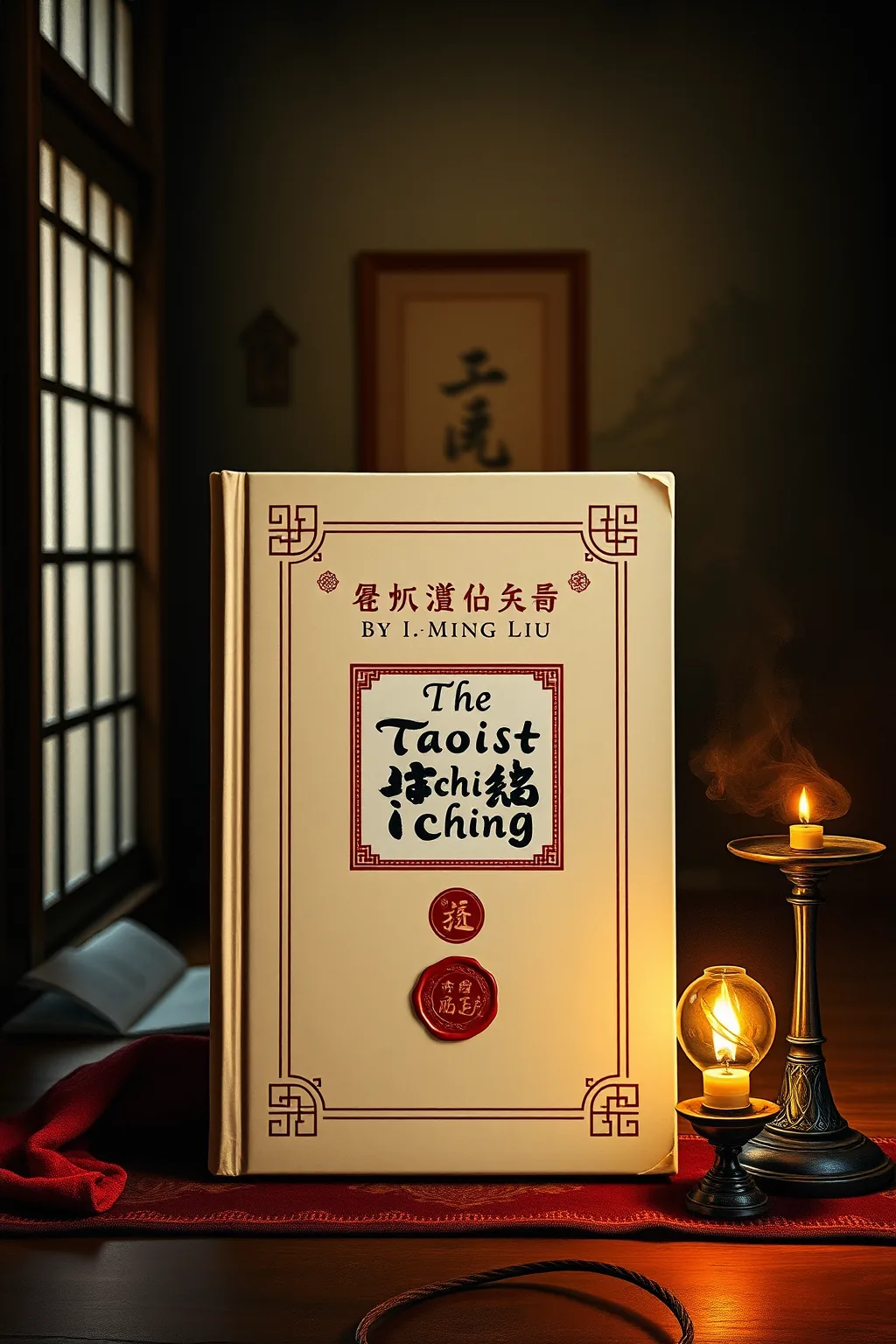
The Taoist I ching
I-ming Liu’s The Taoist I Ching offers a unique, if sometimes dense, pathway into the ancient oracle. The author’s insistence on framing the hexagrams through a specifically Taoist lens, rather than a purely Confucian or generalized spiritual one, provides a refreshing perspective. Liu’s examination of the trigrams as energetic flows, especially in the sections discussing the dynamic interplay of Yin and Yang, is particularly compelling. However, the book’s primary limitation lies in its accessibility; the prose can be quite technical, demanding a pre-existing familiarity with both Taoist terminology and the I Ching’s structural mechanics. A passage detailing the transformation of hexagram 1, Qian, into hexagram 11, Tai, exemplifies this, illustrating the energetic shifts with a precision that might alienate newcomers. Despite this, for the serious student of esoteric Chinese thought, Liu’s work provides a valuable, specialized interpretation.
📝 Description
75
I-ming Liu's 1986 book reinterprets the I Ching through a Taoist lens.
The Taoist I Ching, by I-ming Liu, published in 1986, offers a distinct perspective on the ancient Chinese divination text. Liu moves past purely philosophical or historical views to examine the I Ching using principles drawn from Taoism. This work is not simply a translation; it functions as an interpretive guide that aims to reveal the text's energetic and cosmological foundations.
Liu's method connects the hexagrams and their changing lines to the fundamental dynamics of the Tao. The book is intended for readers who seek a deeper, more esoteric understanding of the I Ching, particularly those already familiar with its basic structure. Those interested in combining Eastern and Western metaphysical ideas will find Liu's approach valuable. It is suitable for practitioners of Taoist arts, individuals studying comparative esotericism, and scholars of Chinese philosophy who are open to interpretations that differ from traditional ones.
Published in 1986, The Taoist I Ching appeared during a time of growing global interest in Eastern philosophies. Unlike many contemporary commentaries that filtered these texts through Western psychology or broad spiritual frameworks, Liu's work grounds its interpretation firmly within a specific Taoist cosmology. This approach offered an alternative to the more academic analyses or popular psychological readings that were prevalent, providing a distinct Taoist perspective on a classical text.
💡 Why Read This Book?
• Gain an understanding of the I Ching as a dynamic energetic system, as detailed in Liu’s exploration of hexagram transformations, which offers a departure from static symbolic readings. • Learn to view the trigrams and hexagrams through the specific framework of Taoist cosmology, including concepts like Ziran and the interplay of Tian, Di, and Ren, for a more focused esoteric interpretation. • Discover how the I Ching can be applied as a tool for aligning personal energy with natural cosmic cycles, a perspective emphasized in the book’s Taoist philosophical context.
⭐ Reader Reviews
Honest opinions from readers who have explored this book.
❓ Frequently Asked Questions
What distinguishes The Taoist I Ching from other I Ching translations?
The Taoist I Ching, published in 1986 by I-ming Liu, specifically interprets the classic text through the principles of Taoism, focusing on energetic flow and cosmological dynamics rather than solely philosophical or divinatory aspects.
Who is I-ming Liu?
I-ming Liu is the author of The Taoist I Ching, a work first published in 1986 that offers an esoteric interpretation of the ancient Chinese text.
What is the significance of the year 1986 for this book?
1986 marks the initial publication year of The Taoist I Ching, placing it within a period of growing Western interest in Eastern philosophies and esoteric studies.
Does the book explain how to perform an I Ching divination?
While The Taoist I Ching delves into the underlying principles and energetic meanings of the hexagrams, its primary focus is interpretive rather than providing a step-by-step guide to casting methods.
What are the main Taoist concepts discussed in relation to the I Ching?
The book explores concepts such as Yin and Yang, the Tao itself as a dynamic flow, Ziran (spontaneity), and the cosmic triad of Heaven, Earth, and Humanity within the I Ching's structure.
Is this book suitable for beginners to the I Ching?
It is best suited for those with some prior knowledge of the I Ching, as the text assumes familiarity with the hexagrams and offers a specialized, esoteric interpretation.
🔮 Key Themes & Symbolism
Hexagrams as Energetic Patterns
Liu reframes the sixty-four hexagrams not as static symbols but as dynamic manifestations of cosmic energy. Each hexagram and its changing lines represent a particular phase or energetic state within the continuous flux of the Tao. This perspective emphasizes the I Ching’s function as a map of universal forces, allowing practitioners to discern energetic patterns in both the cosmos and their personal lives, aligning with the Taoist principle of flowing with natural currents.
Taoist Cosmology and the I Ching
The work anchors its interpretation in core Taoist principles, particularly the concept of the Tao as the unnamable, underlying reality from which all phenomena arise. Liu connects the I Ching’s structure to the fundamental forces of Yin and Yang, the three powers (Heaven, Earth, Human), and the principle of Ziran (naturalness or spontaneity). This approach seeks to reveal the I Ching as an integral part of the Taoist worldview, reflecting the spontaneous order of the universe.
Alignment with Natural Cycles
A central theme is the I Ching’s utility in understanding and harmonizing with the natural cycles of the universe. Liu suggests that by grasping the energetic dynamics presented by the hexagrams, individuals can better attune themselves to the rhythms of nature and the cosmic order. This promotes a state of balance and efficacy, encouraging actions that are in accordance with the flow of events, a key tenet in Taoist practice for achieving harmony.
The I Ching as a Metaphysical Map
Beyond mere divination, Liu presents the I Ching as a sophisticated metaphysical map of reality. The text’s focus is on the underlying principles that govern change and transformation. By studying the hexagrams through this Taoist lens, readers are invited to perceive the interconnectedness of all things and the constant process of becoming, offering a framework for understanding existence itself.
💬 Memorable Quotes
Direct passages from the work, attributed to the author.
“The I Ching is a mirror reflecting the Tao.”
— This interpretation highlights the book's core thesis: that the I Ching's hexagrams and their transformations are not arbitrary signs but direct representations of the fundamental principles and dynamic processes of the Tao.
“Understanding Yin and Yang is key to the I Ching's dynamic.”
— This concept underscores the importance of duality and its interplay as presented in the book, framing the I Ching's complexity as rooted in the fundamental Taoist forces of Yin and Yang.
“Attunement with cosmic cycles brings harmony.”
— This interpretation reflects the practical application of Liu's esoteric approach, suggesting that by understanding the I Ching's cosmic map, one can achieve balance and alignment with universal rhythms.
💡 Key Ideas
Editorial paraphrase of the work's core concepts — not direct quotes.
Hexagrams are not static pronouncements but energetic flows.
This paraphrase emphasizes Liu's view of the I Ching as a living system, where each configuration represents a particular state of energetic flux within the cosmos, constantly interacting and transforming.
The text reveals the underlying order of spontaneous change.
This paraphrased idea points to the book's exploration of Ziran, suggesting that the I Ching, through its structure, illuminates the inherent, natural order governing apparent chaos and constant transformation.
🌙 Esoteric Significance
Tradition
This work fits within the broad spectrum of esoteric interpretations of ancient wisdom texts, particularly those engaging with Chinese metaphysics. While not strictly Hermetic or Kabbalistic, it shares with these traditions a focus on understanding universal principles through symbolic systems. Its lineage is primarily Taoist, reinterpreting the I Ching as a practical expression of Taoist cosmology, emphasizing its energetic and dynamic nature, a common thread in many esoteric schools that seek to map the underlying currents of reality.
Symbolism
Key symbols include the Yin (passive, dark, feminine) and Yang (active, light, masculine) forces, which Liu uses to explain the fundamental energetic polarities within each hexagram. The trigrams themselves, representing Heaven, Earth, Water, Fire, etc., are viewed not just as elements but as dynamic energetic configurations. The concept of the Tao itself acts as the ultimate symbolic ground, representing the unmanifest source and the continuous flow that the I Ching's patterns describe.
Modern Relevance
Contemporary practitioners of Taoist internal arts, Qigong, and Tai Chi may find Liu's energetic interpretation of the I Ching resonant, offering a metaphysical underpinning for their physical practices. Furthermore, scholars and practitioners of comparative esotericism who seek to integrate Eastern philosophical concepts into their understanding of universal patterns continue to draw upon such specialized commentaries. The focus on natural cycles and energetic alignment also connects with modern ecological and holistic health movements.
👥 Who Should Read This Book
• Students of Taoism seeking to understand the I Ching as an integral component of Taoist cosmology, moving beyond basic divination to explore its energetic and philosophical depths. • Esoteric practitioners interested in comparative metaphysics who wish to cross-reference symbolic systems and understand how different traditions interpret universal principles like Yin and Yang. • Advanced I Ching students looking for specialized interpretations that focus on the dynamic, energetic, and spontaneous aspects of the hexagrams, as outlined by I-ming Liu.
📜 Historical Context
The Taoist I Ching, published in 1986 by I-ming Liu, emerged in a landscape increasingly receptive to Eastern spiritual traditions, yet often through Westernized or syncretic interpretations. The late 20th century saw a proliferation of books on the I Ching, influenced by figures like Richard Wilhelm, whose popular translation was widely adopted, and Carl Jung, who explored its archetypal symbolism. Liu’s work distinguished itself by anchoring its interpretation firmly within the framework of Taoist philosophy, particularly its emphasis on energetic flow and spontaneous order (Ziran). This provided a counterpoint to more Confucian-centric or generalized New Age spiritual readings that were also prevalent. While academic scholarship continued to debate the I Ching's historical origins and textual evolution, Liu's contribution spoke to a growing esoteric community seeking deeper metaphysical connections within the text, moving beyond purely divinatory or philosophical applications towards a cosmology grounded in the Tao.
📔 Journal Prompts
The energetic flow of the Qian hexagram and its relation to the Tao.
How the principle of Ziran manifests in the changing lines of a chosen hexagram.
Reflecting on the interplay of Yin and Yang in a personal situation using the I Ching's energetic framework.
The symbolic meaning of the thirty-two trigrams as energetic configurations.
Harmonizing personal cycles with the cosmic cycles described by the I Ching's patterns.
🗂️ Glossary
Tao
The fundamental, unnamable principle and source of all existence in Taoist philosophy. It is often described as the natural order of the universe, characterized by spontaneity and ceaseless flow.
Yin
In Taoism, the passive, dark, feminine, and receptive principle. It is one of the two fundamental, complementary forces whose dynamic interplay generates all phenomena.
Yang
In Taoism, the active, light, masculine, and creative principle. It is the complementary force to Yin, and their interaction drives the processes of change and existence.
Hexagram
A figure composed of six stacked horizontal lines, where each line is either Yang (solid) or Yin (broken). There are sixty-four hexagrams in the I Ching, representing complex states and processes.
Trigram
A figure composed of three stacked horizontal lines, each being either Yin or Yang. There are eight basic trigrams, which are the building blocks of the sixty-four hexagrams.
Ziran
A key Taoist concept often translated as 'naturalness,' 'spontaneity,' or 'self-so.' It refers to things being in their own natural state, without artificiality or external compulsion.
Tian, Di, Ren
The Three Powers in Chinese cosmology: Tian (Heaven), Di (Earth), and Ren (Humanity). Their harmonious interaction is central to many Chinese philosophical and esoteric systems, including interpretations of the I Ching.
🔮 Readers Also Liked
Browse all →








More by I-ming Liu
All books →
More Free Occult Philosophy Books
View all →