The Da Vinci Code
 77
77

The Da Vinci Code
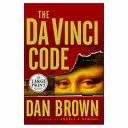
Dan Brown’s 2003 publication, *The Da Vinci Code*, hinges on a potent premise: that Leonardo da Vinci encoded a world-altering secret within his most famous works. The novel succeeds admirably in its execution of a high-stakes chase, with Robert Langdon and Sophie Neveu deciphering clues scattered across Parisian landmarks and Renaissance art. Brown’s strength lies in his ability to make complex historical and religious concepts accessible, transforming academic debates into pulse-pounding plot points. However, the relentless pace sometimes sacrifices character depth for plot expediency; Langdon, while knowledgeable, remains somewhat of a cypher himself. A particularly effective sequence involves the decoding of the cryptex, a tangible representation of the hidden knowledge Langdon and Neveu pursue. Ultimately, *The Da Vinci Code* is a masterclass in speculative historical fiction, offering an entertaining, if controversial, exploration of hidden narratives.
📝 Description
77
Dan Brown's 2003 novel *The Da Vinci Code* begins with a murder at the Louvre.
Published in 2003, Dan Brown's *The Da Vinci Code* follows symbologist Robert Langdon and cryptologist Sophie Neveu after a murder at the Louvre Museum. Their investigation uncovers a conspiracy linked to the Priory of Sion and art by Leonardo da Vinci. The story connects historical artifacts, religious symbols, and secret societies, guiding readers through a sequence of puzzles and codes. The narrative is set in contemporary Paris and London, but its core deals with historical enigmas stretching back centuries.
Readers who enjoy historical fiction mixed with suspense and complex plotting will find this book appealing. It is especially suited for those interested in art history, religious studies, cryptography, and conspiracy theories. Individuals who like a story that questions established historical interpretations and offers intricate puzzles will find it engaging. The novel invites readers to solve clues alongside the main characters. It references specific artworks such as Leonardo da Vinci's *Mona Lisa* and *The Last Supper*, and examines the historical context of the Knights Templar and the Catholic Church.
The novel draws upon a public interest in hidden histories and alternative interpretations of biblical accounts that emerged in the late 20th century. It re-examines the historical role of the Knights Templar through a fictional lens and presents the Priory of Sion as a secret society guarding a significant secret. These elements tap into traditions of esoteric societies and alternative religious histories that question mainstream historical and theological narratives.
💡 Why Read This Book?
• Gain an understanding of how Leonardo da Vinci's art, such as *The Last Supper*, might contain hidden symbolic messages, prompting a re-examination of familiar masterpieces. • Explore the historical context of secret societies like the Priory of Sion and their purported role in guarding controversial historical and religious secrets. • Engage with the concept of the Gnostic Gospels and the suppressed feminine divine, challenging conventional interpretations of early Christianity and its historical development.
⭐ Reader Reviews
Honest opinions from readers who have explored this book.
❓ Frequently Asked Questions
Is *The Da Vinci Code* based on real historical events?
While the novel is a work of fiction, it is inspired by historical theories and interpretations of religious and art history. Concepts like the Priory of Sion and interpretations of Leonardo da Vinci's art are drawn from existing, though often debated, historical and esoteric literature.
What is the significance of the Priory of Sion in *The Da Vinci Code*?
In the novel, the Priory of Sion is portrayed as an ancient secret society dedicated to protecting a profound truth related to the bloodline of Jesus Christ and Mary Magdalene, a secret supposedly hidden within sacred art and texts.
What are the Gnostic Gospels mentioned in the book?
The Gnostic Gospels are a collection of ancient texts from the early centuries of Christianity that offer a different perspective on Jesus's teachings compared to the canonical Gospels. *The Da Vinci Code* suggests these texts were suppressed due to their emphasis on the divine feminine.
Who is Robert Langdon?
Robert Langdon is a fictional character created by Dan Brown, serving as the protagonist in *The Da Vinci Code* and other novels. He is a professor of religious iconography and symbology at Harvard University, often drawn into mysteries involving art and secret societies.
What is the role of Leonardo da Vinci in the story?
Leonardo da Vinci is central to the plot as the alleged creator of a hidden code within his artworks, most notably the *Mona Lisa* and *The Last Supper*. This code supposedly reveals a secret about the nature of Christianity and the sacred feminine.
Was *The Da Vinci Code* controversial?
Yes, the book generated significant controversy upon its release. Many religious groups and historians criticized its historical and theological claims, particularly its portrayal of Jesus, Mary Magdalene, and the Catholic Church. The Vatican even urged its followers not to read it.
🔮 Key Themes & Symbolism
Sacred Feminine and Religious History
The novel posits that orthodox Christianity, particularly after the Council of Nicaea in 325 AD, deliberately suppressed the veneration of the divine feminine, represented by Mary Magdalene. It suggests that symbols of this feminine principle have been hidden in plain sight within art, particularly works by Leonardo da Vinci. This theme challenges traditional patriarchal interpretations of religious history and explores alternative, Gnostic perspectives that emphasize balance and the integration of masculine and feminine divine energies.
Art as a Vehicle for Hidden Knowledge
Brown presents art, especially Renaissance masterpieces, not merely as aesthetic objects but as complex codices containing profound secrets. Leonardo da Vinci's paintings, like the *Mona Lisa* and *The Last Supper*, are analyzed for their symbolic language, compositional anomalies, and potential cryptographic messages. The narrative suggests that artists throughout history have used their work to preserve forbidden knowledge, often acting as guardians of truths that dominant institutions sought to erase or control.
Secret Societies and Historical Conspiracy
The book places significant emphasis on secret societies, primarily the Priory of Sion and the Knights Templar, as custodians of ancient secrets. It combines a narrative of a centuries-long conspiracy to suppress knowledge about the true nature of Christianity and the lineage of Jesus. This theme taps into a popular fascination with hidden histories and the idea that powerful, clandestine organizations have shaped world events from behind the scenes.
Cryptography and Symbolism
Fundamentally, , *The Da Vinci Code* is a puzzle. Cryptography, symbology, and the interpretation of ancient texts and symbols are crucial plot devices. From deciphering the message left by the Louvre curator Jacques Saunière to understanding the meaning of symbols within artworks and architectural features, the protagonists must employ sharp intellect and knowledge of hidden languages to unravel the central mystery.
💬 Memorable Quotes
Direct passages from the work, attributed to the author.
“The cryptogram tells me that the answer lies within.”
— This represents the novel's core mechanic: the idea that the solution to profound mysteries is often encoded within the very subject of inquiry, whether it be a text, an artwork, or a historical event.
“The Holy Grail’s true identity is not a cup, but a woman.”
— Interpretation: This central thesis challenges traditional religious iconography, proposing that the 'Grail' symbolizes the divine feminine, specifically Mary Magdalene, and her role in a suppressed lineage.
“We are all part of a grand design.”
— This reflects the narrative's exploration of interconnectedness, fate, and the idea that historical events and individual lives are part of a larger, often divinely or historically orchestrated, plan.
💡 Key Ideas
Editorial paraphrase of the work's core concepts — not direct quotes.
The ancient Hebrews were the first to understand that the name of a thing is the thing itself.
This quote highlights the esoteric belief in the power of names and words, suggesting that true understanding comes from grasping the essence or origin of a concept, rather than just its superficial label.
Art is a lie that enables us to realize truth.
Paraphrased concept: The novel suggests that artistic representations, while not literal factual accounts, can serve as powerful vehicles for conveying deeper, hidden truths that might otherwise be inaccessible or suppressed.
🌙 Esoteric Significance
Tradition
The work draws heavily from Gnostic traditions and Western esoteric thought, particularly those focusing on the suppression of the divine feminine. It reinterprets biblical narratives through a lens that prioritizes Gnostic Gospels and esoteric interpretations of sacred geometry and symbolism, suggesting a hidden lineage and suppressed truths within mainstream Christianity. It aligns with Hermetic principles of hidden knowledge and the idea that truth is often veiled in allegory and symbol.
Symbolism
Key symbols include the Fleur-de-lis, representing the Fleur-de-lis of the Bourbon dynasty and the Priory of Sion's alleged emblem, often linked to sacred geometry and the divine feminine. The pentacle, representing the five points of man and the sacred feminine, and the cryptex, a portable vault used to conceal messages, symbolize the intricate layers of hidden knowledge and the difficulty in accessing profound truths.
Modern Relevance
Contemporary thinkers exploring the intersection of spirituality, art history, and conspiracy theories often cite *The Da Vinci Code* as a popular gateway to these subjects. It remains relevant in discussions about the historical Jesus, the role of women in early Christianity, and the ongoing debate surrounding suppressed knowledge. Modern esoteric practitioners may use it as a case study in how ancient symbols and narratives can be reinterpreted for contemporary audiences.
👥 Who Should Read This Book
• Students of comparative religion and early Christianity seeking to understand popular interpretations of Gnostic texts and alternative historical theories. • Art history enthusiasts interested in exploring how symbolic analysis can be applied to Renaissance masterpieces like those by Leonardo da Vinci. • Readers fascinated by cryptography, secret societies, and puzzle-solving narratives who enjoy intricate plot construction.
📜 Historical Context
Published in 2003, *The Da Vinci Code* arrived during a period of heightened public interest in alternative religious histories and conspiracy theories, fueled by works like *The Holy Blood and the Holy Grail*. Dan Brown masterfully tapped into this zeitgeist, presenting a fictionalized account that interrogated centuries of established religious doctrine and historical interpretation. The novel’s narrative, set in contemporary Paris and London, draws heavily on the legacy of the Knights Templar and the secretive Priory of Sion, figures often featured in esoteric literature. Its publication ignited widespread debate, with numerous scholars and religious figures challenging its historical accuracy. The Catholic Church itself reportedly discouraged its members from reading the book. This reception highlights a broader cultural tension between traditional narratives and more speculative, revisionist historical theories that were gaining traction in popular culture.
📔 Journal Prompts
The symbolism within Leonardo da Vinci's 'Mona Lisa' as a carrier of hidden truth.
The historical suppression of the divine feminine in religious traditions.
Robert Langdon's role as a modern-day guardian of esoteric knowledge.
The concept of the Holy Grail as representing Mary Magdalene.
The function of secret societies like the Priory of Sion in preserving hidden histories.
🗂️ Glossary
Priory of Sion
A purported ancient secret society, central to the novel's plot, alleged to have guarded the secret of the bloodline of Jesus Christ and Mary Magdalene for centuries.
Knights Templar
A medieval Catholic military order, historically known for its role in the Crusades. In the book, they are depicted as guardians of the Priory's secrets.
Gnostic Gospels
A collection of ancient texts that offer alternative theological perspectives from early Christianity, often emphasizing spiritual knowledge and the divine feminine, believed by some to have been suppressed.
Cryptex
A fictional portable vault invented by the author, designed to hold a secret message or object within a series of rotating discs inscribed with letters, requiring a specific code to open.
Symbologist
An expert in the study of symbols and symbolism. In the novel, Robert Langdon is a symbologist specializing in religious iconography.
Opus Dei
A personal prelature of the Catholic Church. In the novel, a militant faction within Opus Dei is portrayed as antagonists seeking to suppress the secrets.
Da 'Vinci' Code
The title refers to a supposed hidden code or secret message within the works of Leonardo da Vinci, which forms the central mystery of the novel.
This book appears in 1 collection
🔮 Readers Also Liked
Browse all →








From the “Secret Societies” Collection
View all →





More Free Occult Philosophy Books
View all →