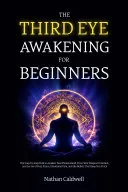
The Third Eye Awakening for Beginners
 74
74

The Third Eye Awakening for Beginners
Nathan Caldwell's 'The Third Eye Awakening for Beginners' sidesteps the usual spiritual platitudes by focusing on the pineal gland as a tangible biological entity. The book's strength lies in its straightforward explanation of how physical practices, like specific breathing exercises and meditation techniques, are intended to stimulate this gland. Caldwell’s interpretation of intuition as a measurable biological function, rather than purely mystical insight, is a refreshing perspective. However, the book occasionally oversimplifies complex neurological and energetic theories, sometimes presenting hypotheses as established facts. A notable passage discusses the pineal gland's calcification, offering practical dietary advice that, while sensible, may not fully address the multifaceted nature of this process. For those seeking a no-nonsense introduction to third eye concepts, this work provides a solid, if somewhat reductionist, starting point.
📝 Description
74
Nathan Caldwell's 2023 book demystifies the pineal gland's role in intuition.
This book offers a practical approach to understanding and activating the pineal gland, often called the 'third eye.' It moves past abstract spiritual ideas to explain the physiological and energetic aspects of this brain structure. The text aims to make intuitive abilities and heightened perception seem less like mystical gifts and more like accessible human potentials tied to specific biological functions. It focuses on techniques that can be part of daily life, without needing much prior knowledge or strict beliefs.
It is for people curious about intuition, psychic experiences, or the 'third eye' concept who find dense, jargon filled books off putting. It suits those who want scientific or physiological explanations alongside their spiritual exploration. Beginners looking for clear, step-by-step guidance on developing inner awareness and understanding their subtle perceptions will find this book helpful. It speaks to a modern viewpoint, favoring clarity and direct experience over obscure tradition.
The concept of a 'third eye' has roots in ancient traditions like Hinduism's Ajna chakra and various esoteric philosophies. Early 20th century figures such as Helena Blavatsky and the Theosophical Society brought ideas of inner sight and expanded consciousness to Western occultism. Modern scientific research into the pineal gland's function in circadian rhythms and its connection to melatonin and DMT has added new perspectives. Caldwell's work connects these ancient ideas with contemporary scientific understanding.
💡 Why Read This Book?
• You will learn specific, actionable exercises for stimulating the pineal gland, moving beyond vague 'energy work' as detailed in Chapter 3, 'Daily Practices for Activation'. • You will gain an understanding of the biological basis for intuitive perception, referencing the pineal gland's anatomical function as explained in the 'What It Is' section. • You will explore methods for interpreting subtle inner signals, such as the pre-cognitive 'knowing' mentioned in the original blurb, applying techniques from Chapter 5, 'Interpreting Inner Guidance'.
⭐ Reader Reviews
Honest opinions from readers who have explored this book.
❓ Frequently Asked Questions
What is the pineal gland and how does it relate to the third eye?
The pineal gland is a small endocrine gland in the brain, primarily known for producing melatonin. In esoteric traditions, it is often associated with the 'third eye,' a concept representing heightened intuition, spiritual insight, and perception beyond ordinary senses.
Is third eye awakening a religious concept?
While the concept has roots in religious and spiritual traditions, particularly Hinduism (Ajna chakra), this book approaches it from a more philosophical and physiological perspective, focusing on practical development of intuition and perception.
How long does it take to awaken the third eye?
The timeline varies greatly among individuals. Consistent practice, as outlined in the book, is key. Some may notice subtle shifts within weeks, while deeper integration can take months or years.
Are there any side effects to third eye awakening?
Potential effects can include heightened sensitivity, vivid dreams, and increased intuition. The book emphasizes a balanced approach to minimize potential disorientation, focusing on grounding techniques.
What is calcification of the pineal gland?
Pineal calcification refers to the accumulation of calcium phosphate crystals within the pineal gland. While a natural process, some believe it can hinder the gland's energetic functions, a topic discussed in the book's context.
Does this book require prior meditation experience?
No, the book is designed for beginners. It includes foundational explanations and step-by-step guidance for meditation and other practices, making it accessible even for those new to contemplative disciplines.
🔮 Key Themes & Symbolism
Pineal Gland Physiology
The work meticulously details the pineal gland not just as a spiritual center but as a biological organ. It discusses its location, its role in producing melatonin, and its connection to light cycles. Caldwell integrates scientific understanding with esoteric interpretations, suggesting that its energetic function is directly linked to its physical health and activity, moving the concept from pure metaphor to a tangible area of focus for personal development.
Intuitive Perception Development
This theme centers on clarifying psychic abilities and inner knowing. The book frames intuition as a form of perception that can be cultivated, much like any other skill. It provides practical exercises aimed at enhancing receptivity to subtle cues, premonitions, and inner guidance, suggesting these are not random occurrences but signals from a developed intuitive faculty linked to the third eye.
Practical Activation Techniques
A core focus is providing actionable steps for readers. This includes specific meditation postures, breathing exercises, visualization methods, and dietary suggestions intended to support pineal gland health and function. The emphasis is on integrating these practices into daily life, making the awakening process accessible and manageable for beginners without overwhelming them with complex theory.
Bridging Science and Esotericism
Caldwell attempts to bridge the gap between modern scientific understanding of the brain and ancient esoteric traditions concerning inner vision. By referencing the pineal gland's known biological functions and juxtaposing them with concepts of the Ajna chakra and spiritual sight, the book offers a contemporary perspective that appeals to a scientifically-minded audience interested in metaphysical exploration.
💬 Memorable Quotes
Direct passages from the work, attributed to the author.
“That quiet pull behind your forehead during a moment of deep silence.”
— This evocative phrase captures the subtle, often overlooked, intuitive nudges individuals experience. It suggests these aren't random thoughts but tangible signals from a developing inner faculty, encouraging readers to pay closer attention to their own subtle perceptions.
“Your pineal gland is a real structure in your brain.”
— This statement grounds the esoteric concept of the 'third eye' in verifiable anatomy. It asserts that the focus of awakening is a physical organ, making the pursuit of heightened perception a more tangible and scientifically approachable endeavor.
“Most books on this topic bury you in Sanskrit terminology and vague energy talk.”
— This critique highlights the book's intended contrast with existing literature. It signals a commitment to clarity, accessibility, and practical application, aiming to provide concrete steps rather than abstract spiritual doctrines that can leave beginners feeling lost.
“That wasn't random. That was your third eye trying to get your attention.”
— This interpretation reframes common experiences of intuition or 'gut feelings.' It encourages readers to view such moments as direct communication from their inner perceptive center, fostering a more conscious engagement with their intuitive abilities.
“This book is the opposite.”
— A bold claim directly addressing the perceived shortcomings of other works on the subject. It promises a direct, actionable, and perhaps less esoteric approach, setting reader expectations for a practical guide rather than a philosophical treatise.
🌙 Esoteric Significance
Tradition
This work primarily draws from the Western esoteric tradition, particularly its modern interpretations influenced by Theosophy and New Age thought, which often re-contextualize Eastern concepts for a Western audience. It fits within a lineage that seeks to integrate spiritual development with psychological and physiological understanding, moving beyond purely religious dogma towards practical self-cultivation.
Symbolism
The central symbol is the 'third eye' itself, representing expanded consciousness, intuition, and inner sight. Within the book's context, it is strongly linked to the pineal gland, symbolizing the bridge between the physical and the non-physical. Another motif is light, often discussed in relation to melatonin production and spiritual illumination, representing clarity, awareness, and the activation of higher perceptual faculties.
Modern Relevance
Caldwell's approach appeals to contemporary thinkers and practitioners interested in the intersection of neuroscience and spirituality. It finds echoes in modern mindfulness movements, biohacking communities seeking to optimize human potential, and contemporary esotericists who prioritize empirical evidence and practical application over purely theoretical or faith-based approaches to consciousness.
👥 Who Should Read This Book
• Aspiring practitioners of esoteric disciplines seeking a clear, step-by-step introduction to developing intuition, grounded in physiological concepts. • Individuals interested in comparative religion and philosophy who want to understand the 'third eye' concept beyond its traditional religious contexts. • Skeptics or scientifically-minded individuals curious about the potential for heightened perception and the biological underpinnings of consciousness.
📜 Historical Context
The concept of a 'third eye' has deep roots, appearing in ancient Egyptian beliefs (Eye of Horus) and prominently in Hinduism as the Ajna chakra, associated with spiritual insight. In the Western esoteric tradition, it gained traction in the late 19th and early 20th centuries, influenced by figures like Helena Blavatsky and the Theosophical Society, who explored concepts of psychic development and inner vision. More recently, scientific research into the pineal gland's functions, including its role in circadian rhythms and potential links to DMT, has spurred renewed interest. Caldwell's work, published in 2026, emerges in an era where popular interest in consciousness studies and neuroscience is high, seeking to synthesize ancient notions with contemporary scientific understanding. This contrasts with earlier, more purely mystical interpretations prevalent before the mid-20th century scientific engagement with the gland.
📔 Journal Prompts
Reflect on the 'quiet pull' mentioned in the blurb; when have you experienced similar subtle intuitions?
Consider the pineal gland's role as described; how might its physical state influence your daily perceptions?
Analyze the practical exercises in Chapter 3; which resonates most with your current lifestyle?
Explore the concept of 'knowing' before an event; how does Caldwell's explanation differ from your previous understanding?
Document your experience with one of the suggested meditation techniques for one week.
🗂️ Glossary
Third Eye
In esoteric traditions, a mystical inner eye representing heightened perception, intuition, and spiritual insight. This book links it to the physiological functions of the pineal gland.
Pineal Gland
A small endocrine gland in the vertebrate brain, known for producing melatonin. Esoterically associated with the 'third eye' and consciousness.
Ajna Chakra
The sixth primary chakra in Hindu Tantric traditions, located between the eyebrows. Often translated as the 'command center' and associated with intuition and inner wisdom.
Melatonin
A hormone primarily produced by the pineal gland that regulates sleep-wake cycles. Its production is influenced by light exposure.
Intuition
The ability to understand something immediately, without the need for conscious reasoning. This book frames it as a cultivable perceptive faculty.
Calcification
The process by which organic tissue becomes rigid and hard due to the deposition of calcium salts. Refers to the accumulation of calcium in the pineal gland.
Visualization
The practice of forming mental images or scenarios, often used in meditation and self-development techniques to influence outcomes or cultivate specific states of mind.