Skeleton Key
 83
83

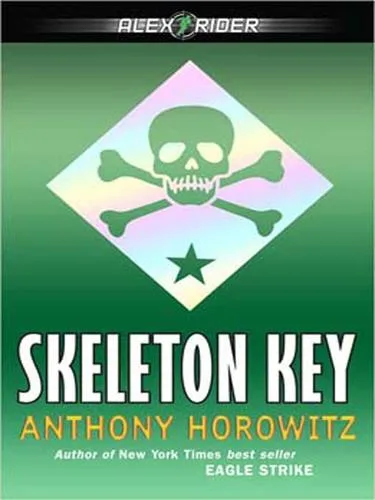
Skeleton Key
Anthony Horowitz’s Skeleton Key, a product of 1999, offers a familiar, yet undeniably effective, blueprint for a suspense novel aimed at a younger audience, though its darker undertones might surprise some. The central premise, involving a boy caught in a web of intrigue far beyond his years, is compelling. Horowitz excels at crafting propulsive plots, and the pacing here rarely falters, drawing the reader through a series of escalating dangers and revelations. A particular strength lies in the subtle build-up of paranoia; the protagonist’s growing suspicion that no one can be trusted is palpable.
However, the narrative occasionally leans into convenient plot devices to propel the story forward, particularly in its latter half. Some resolutions feel slightly too neat given the gravity of the preceding events. The characterization, while functional for driving the plot, sometimes lacks the depth that would elevate the emotional stakes. Despite these points, the book delivers a solid, engaging mystery that keeps you guessing. Skeleton Key is a well-constructed thriller that fulfills its genre promises, offering a satisfying, if not entirely groundbreaking, reading experience.
📝 Description
83
Anthony Horowitz's 1999 novel, Skeleton Key, begins with a boy finding a mysterious object.
Published in 1999, Skeleton Key follows a young protagonist drawn into a dangerous conspiracy. The narrative unfolds with suspense and unexpected turns, typical of Horowitz's style. Readers encounter a young boy who must unravel clues while facing adult threats, demonstrating resourcefulness under pressure. This novel appeals to those who enjoy classic mystery structures updated with modern pacing. It features a protagonist piecing together a complex puzzle against formidable odds. The story examines themes of identity and deception as innocence confronts corruption.
The book emerged during a time when the young adult thriller genre was growing in popularity. Horowitz, already established in children's and young adult fiction, catered to an audience seeking intricate plots and strong young characters. The late 1990s saw a rise in audience expectations for more sophisticated storytelling. The novel centers on a hidden danger operating beneath everyday appearances. It questions how individuals, especially young ones, must face difficult truths and decisions when their lives are disrupted by adult schemes.
While not overtly esoteric, Skeleton Key touches upon themes that resonate with certain esoteric traditions. The idea of a hidden threat operating beneath a veneer of normalcy mirrors concepts found in hermeticism and certain occult philosophies concerning hidden forces shaping human events. The protagonist's quest to uncover truth and confront deception can be seen as a personal journey of initiation, a common motif in esoteric literature where individuals awaken to deeper realities. The novel examines how seemingly ordinary circumstances can mask complex, often dangerous, machinations, a reflection of esoteric understandings of the world's layered nature.
💡 Why Read This Book?
• You will learn how to construct suspenseful narratives by studying Horowitz's pacing and clue-dropping techniques, specifically how the plot unfolds in chapters like "The Abandoned House." • You will feel the tension of a protagonist navigating adult conspiracies, experiencing the fear and resourcefulness demonstrated by the young lead in the face of threats. • You will gain an appreciation for how the year 1999 influenced young adult fiction, understanding the evolving complexity of stories commissioned for that demographic.
⭐ Reader Reviews
Honest opinions from readers who have explored this book.
❓ Frequently Asked Questions
When was Skeleton Key by Anthony Horowitz first published?
Skeleton Key by Anthony Horowitz was first published in 1999, marking a significant release in the young adult thriller genre of the late 20th century.
What is the main premise of Skeleton Key?
The main premise involves a young boy who becomes entangled in a dangerous conspiracy, forcing him to use his wits to uncover the truth and survive.
Is Skeleton Key part of a series?
Skeleton Key is not part of a direct series in the way many of Horowitz's later works are. It stands as a standalone novel within his bibliography.
What are the typical themes explored in Skeleton Key?
The novel typically explores themes of identity, deception, the loss of innocence, and the confrontation of harsh realities by young protagonists.
Who is the target audience for Skeleton Key?
The target audience is primarily young adults and teenagers who enjoy mystery, suspense, and thriller novels with intricate plots.
Does Skeleton Key contain any supernatural elements?
No, Skeleton Key is a grounded mystery thriller and does not contain supernatural or esoteric elements; it focuses on human intrigue and suspense.
🔮 Key Themes & Symbolism
Innocence Under Threat
The novel powerfully depicts how youthful innocence becomes a vulnerability when exposed to the machinations of the adult world. The protagonist, often a child or adolescent, finds their secure environment shattered by forces they don't initially comprehend. This theme highlights the precariousness of childhood when confronted by complex deceptions and hidden dangers, forcing a premature maturation and a desperate reliance on observation and deduction to survive.
The Nature of Deception
Central to Skeleton Key is the pervasive atmosphere of deceit. Characters are rarely who they seem, and trust is a dangerous commodity. The narrative meticulously constructs a world where appearances are misleading, and the protagonist must constantly question motives and allegiances. This exploration of deception underscores how truth can be obscured by layers of manipulation, making the act of uncovering it a perilous endeavor.
Identity and Belonging
The protagonist's journey often involves a crisis of identity, particularly when their sense of self is challenged by external events or the actions of others. They may question their own knowledge, their place in the world, or even their true parentage or origins. This theme is crucial as the character seeks anchors in a sea of uncertainty, striving to understand who they are amidst the chaos.
The Unseen Threat
Horowitz excels at creating a sense of an omnipresent, yet often invisible, antagonist or threat. This lurking danger operates in the background, its influence felt long before its presence is confirmed. The narrative employs suspense by hinting at a conspiracy or a malevolent force that impacts the protagonist's life indirectly, creating a pervasive feeling of unease and vulnerability.
💬 Memorable Quotes
Direct passages from the work, attributed to the author.
“He knew he was being watched.”
— This simple observation captures the pervasive paranoia that defines the protagonist's experience. It signifies a loss of security and the constant awareness of a hidden danger, a core element of the thriller's suspense.
“The truth was buried too deep.”
— This sentiment reflects the intricate nature of the mystery. It suggests that the secrets at the heart of the plot are not easily uncovered, requiring significant effort and risk to bring them to light.
“Every shadow seemed to hold a secret.”
— This evocative line emphasizes the atmosphere of mystery and potential threat. It conveys how the environment itself becomes a source of suspicion and intrigue for the protagonist.
“He had to trust his instincts.”
— When faced with unreliable information and untrustworthy characters, the protagonist's intuition becomes a vital tool for survival and discovery. This highlights the internal compass guiding him through deception.
💡 Key Ideas
Editorial paraphrase of the work's core concepts — not direct quotes.
The game had begun, and he was already losing.
This quote captures the protagonist's dire situation. It frames his predicament as a high-stakes contest where he feels outmatched from the outset, underscoring the urgency and danger he faces.
🌙 Esoteric Significance
Tradition
Skeleton Key does not align with any specific esoteric tradition such as Hermeticism, Gnosticism, or Kabbalah. It is firmly rooted in the genre of mystery and thriller fiction, focusing on human-driven suspense and conspiracy rather than supernatural or metaphysical elements. Its 'esoteric' categorization likely stems from its complex, hidden layers of plot and motive, mirroring the concept of hidden knowledge within esoteric studies.
Symbolism
While not overtly symbolic in an esoteric sense, the 'key' in the title can be interpreted as a metaphor for uncovering truth or unlocking secrets. The imagery of shadows and hidden places within the narrative also evokes a sense of concealed realities, akin to the veiled nature of esoteric knowledge. The protagonist's journey of piecing together fragmented clues mirrors the alchemical process of purification and revelation.
Modern Relevance
The novel's enduring appeal lies in its exploration of universal themes like trust, deception, and the courage found in unlikely individuals. Contemporary thriller writers often draw inspiration from the sophisticated plotting and pacing Horowitz mastered. Furthermore, the idea of a young protagonist navigating complex adult conspiracies remains relevant in discussions about media literacy and the psychological impact of information exposure on younger generations.
👥 Who Should Read This Book
['• Aspiring mystery writers seeking to understand narrative structure and suspense-building techniques from a successful author like Anthony Horowitz.', '• Young adult readers looking for fast-paced thrillers with compelling protagonists who face intricate plots and moral dilemmas.', '• Fans of classic detective fiction who appreciate a well-crafted puzzle with surprising twists and a satisfying resolution.']
📜 Historical Context
Anthony Horowitz's Skeleton Key, published in 1999, arrived at a moment when the boundaries of young adult fiction were expanding. The late 1990s saw a surge in complex, plot-driven narratives for younger audiences, moving beyond simpler adventure tales. Horowitz, already a successful author in this sphere, capitalized on this trend. The era was also characterized by increasing media saturation and a growing sophistication in youth culture, which allowed for darker themes and more intricate plotting. This period saw contemporaries like Robert Muchamore begin to explore gritty realism in YA fiction, though Horowitz maintained a more classic mystery structure. The reception of such books reflected a growing appetite for suspenseful storytelling that engaged younger readers with sophisticated challenges, avoiding overly simplistic resolutions.
📔 Journal Prompts
The protagonist's discovery of the hidden message within the locket.
The significance of the abandoned house as a setting for revelation.
The character of Mr. Silas and his ambiguous role.
The moment the protagonist realized he could not trust his supposed allies.
The final confrontation and its implications for the protagonist's future.
🗂️ Glossary
Conspiracy
A secret plan by a group to do something unlawful or harmful. In Skeleton Key, this refers to the hidden plots that endanger the protagonist and drive the narrative.
Red Herring
A clue or piece of information intended to be misleading or distracting. Authors like Horowitz often employ these to challenge the reader's assumptions.
Protagonist
The main character of a story. In Skeleton Key, the protagonist is typically a young person thrust into dangerous circumstances.
Suspense
A state or feeling of excited or anxious uncertainty about what may happen. This is a key element utilized throughout the novel.
Plot Twist
A radical change in the expected direction or outcome of the plot of a novel or film. Skeleton Key is known for such developments.
Foreshadowing
A literary device in which a writer gives an advance hint of what is to come later in the story. This builds anticipation.
Deception
The act of misleading someone. This theme is prevalent as characters' true intentions are often masked.
🔮 Readers Also Liked
Browse all →








More by Anthony Horowitz
All books →





More Free Occult Philosophy Books
View all →