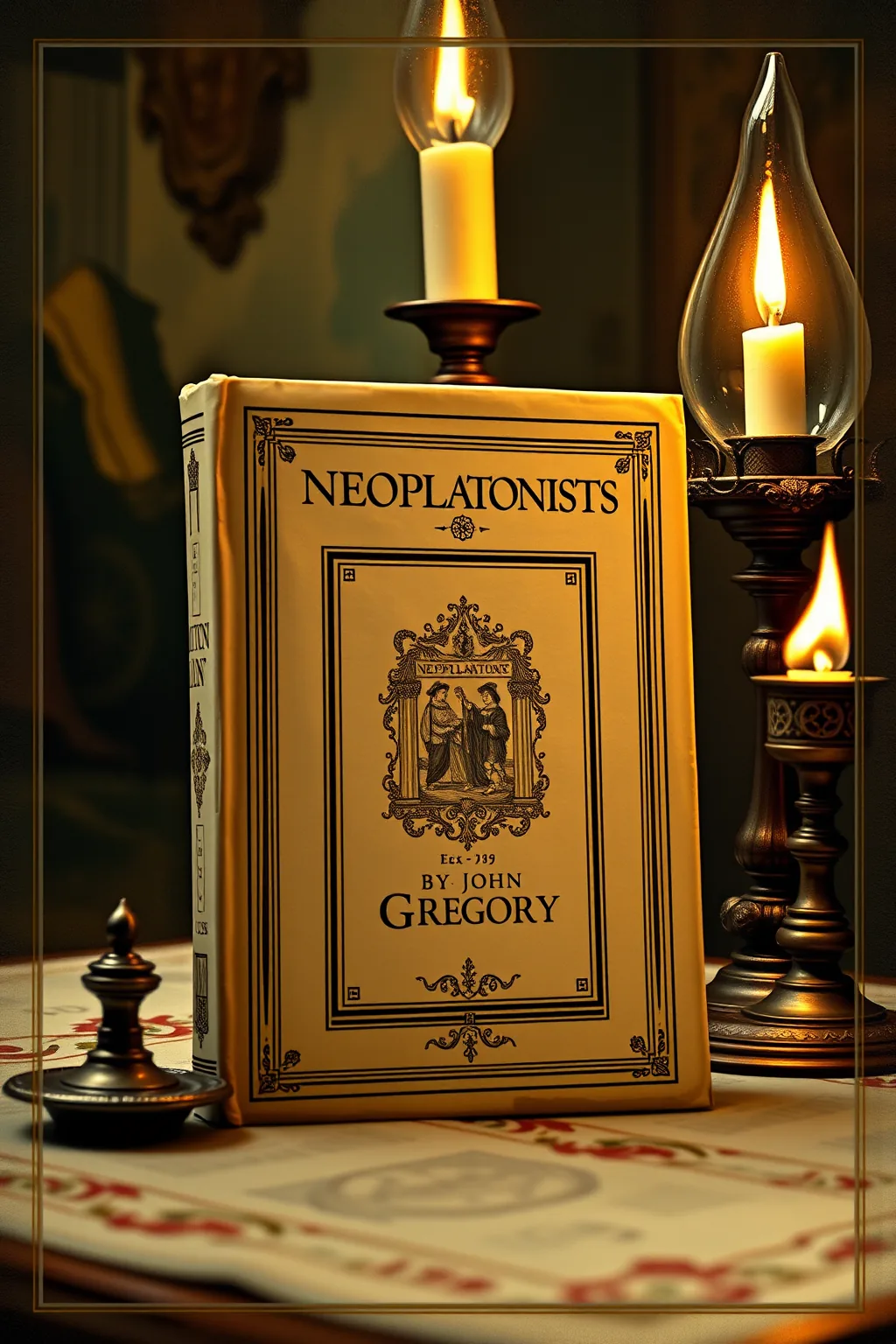
Neoplatonists
 83
83

Neoplatonists
Gregory's "Neoplatonists" provides a commendably clear exposition of a notoriously dense philosophical tradition. The author successfully demystifies concepts like emanation and the ascent of the soul, presenting them without undue jargon. A particular strength lies in tracing the lineage from Plotinus through later thinkers, demonstrating the movement's intellectual persistence. However, the book occasionally feels more like a textbook summary than a critical engagement. While it outlines the core doctrines, it could benefit from more explicit discussion of the philosophical criticisms leveled against Neoplatonism during its own time and later periods. The section on the practical application of Neoplatonic ideas, particularly concerning its influence on later mystical practices, feels somewhat brief. Gregory's work serves as a solid introduction, offering a well-structured overview of a pivotal philosophical school. Its value lies in its clarity and historical scope.
📝 Description
83
John Gregory's 1972 book examines the Neoplatonic philosophical movement.
John Gregory's "Neoplatonists" examines the philosophical movement that grew from Plato's teachings, notably shaped by Plotinus and Porphyry. The book traces Neoplatonism's development from its Hellenistic origins to its later Byzantine forms. It explains the central metaphysical ideas, ethical systems, and mystical aims that characterized this school of thought. This work acts as a straightforward introduction to a philosophy that significantly affected intellectual traditions in both the West and the East.
The volume is intended for students and academics of ancient philosophy, religious studies, and intellectual history. It will interest those who want a clear explanation of complex metaphysical concepts, especially the ideas of the One, emanation, and the soul's ascent. Readers interested in the historical progression of Western esotericism will find it especially useful, as Neoplatonism provides a base for many later mystical and occult traditions. It is also appropriate for general readers with a serious interest in the history of ideas.
Neoplatonism, which arose in the 3rd century CE, is a significant current in Western esotericism. Thinkers like Plotinus sought to synthesize Platonic ideas with other contemporary philosophical and religious streams. Their concepts of a transcendent divine principle and the soul's return to this source laid groundwork for much later mystical thought. This philosophy influenced figures within Christianity, Islamic philosophy, and various occult traditions that developed over centuries.
💡 Why Read This Book?
• Gain a precise understanding of the Neoplatonic concept of 'emanation', learning how multiplicity arises from the singular 'One' without diminishing it, a foundational idea for many later esoteric systems. • Grasp the Neoplatonic doctrine of the soul's 'ascent', exploring the intellectual and spiritual practices proposed for returning to the divine source, as detailed in the text. • Understand the historical positioning of Neoplatonism within the 3rd century CE Roman Empire, recognizing its interaction with contemporary Gnosticism and early Christianity, as discussed by Gregory.
⭐ Reader Reviews
Honest opinions from readers who have explored this book.
❓ Frequently Asked Questions
What is the primary goal of Neoplatonic philosophy as presented by John Gregory?
The primary goal, as explored in Gregory's work, is the soul's return to its ultimate source, the ineffable 'One,' through intellectual purification and spiritual ascent.
Who was Plotinus, and why is he central to Neoplatonism?
Plotinus (c. 204/5 – 270 CE) is considered the founder of Neoplatonism. His philosophical teachings, compiled by Porphyry in the 'Enneads,' form the core doctrines of the movement.
How does Neoplatonism differ from Platonism?
Neoplatonism builds upon Plato's ideas but introduces a more systematic, hierarchical cosmology centered on the absolute 'One' and the process of emanation, which is less developed in Plato's own dialogues.
What is the significance of the 'Nous' in Neoplatonic thought?
The 'Nous,' or Divine Intellect, is a key intermediary entity in Neoplatonic cosmology, emanating directly from the One and containing the Platonic Forms. It is a critical stage in the soul's ascent.
Did Neoplatonism influence later religious traditions?
Yes, Gregory's book likely touches on how Neoplatonic ideas profoundly influenced early Christian theology, Gnosticism, and later Islamic and Jewish mystical thought, providing metaphysical frameworks.
What does 'emanation' mean in the context of Neoplatonism?
Emanation describes the process by which all reality flows sequentially from the ultimate principle, the 'One,' without the 'One' being diminished or altered. It is a concept of divine outflowing.
🔮 Key Themes & Symbolism
The Transcendent One
Gregory's text elucidates the Neoplatonic concept of the 'One,' an absolute, ineffable, and singular source of all existence. This principle transcends being and thought, serving as the ultimate ground of reality. The book details how all subsequent levels of existence, from the Intellect (Nous) to the Soul (Psyche) and finally matter, emanate from this primordial unity. Understanding the One is presented as the crucial first step towards the soul's potential return to its divine origin, a central aspiration within the Neoplatonic framework.
Emanation and Hierarchy
A core doctrine examined is 'emanation,' the process by which the multiplicity of the cosmos unfolds from the simplicity of the One. Gregory explains this as a necessary outpouring, akin to light radiating from a source, without diminishing the source itself. The book charts the hierarchical structure that arises from this process, with Nous (Divine Intellect) and Psyche (Soul) acting as intermediaries. This hierarchical view structures reality and provides a map for the soul's journey, moving through progressively more complex levels of existence.
The Soul's Ascent and Return
The Neoplatonic journey is fundamentally one of the soul's 'ascent' or return to the One. Gregory details the Neoplatonic understanding of the soul's descent into materiality, often viewed as a state of forgetfulness or alienation. The work outlines the philosophical and ethical disciplines—contemplation, virtue, and intellectual purification—necessary for the soul to retrace its steps. This process aims at achieving ecstatic union or 'henosis' with the divine source, moving beyond the individual self towards ultimate reintegration.
Metaphysics and Ethics
Gregory connects Neoplatonic metaphysics directly to its ethical implications. The understanding of reality as emanating from and aspiring towards the One provides the basis for a moral life. Living virtuously and pursuing philosophical knowledge are not merely ethical duties but are essential steps in the soul's journey of recollection and return. The book highlights how the Neoplatonic worldview posits an intrinsic connection between the structure of reality and the path of human salvation or spiritual fulfillment.
💬 Memorable Quotes
Direct passages from the work, attributed to the author.
“The One is not a being, but is beyond being.”
— This statement captures the radical transcendence of the Neoplatonic 'One.' It signifies that this ultimate principle cannot be categorized within the framework of existence as we normally understand it, placing it in a realm entirely beyond conventional philosophical or linguistic grasp.
“Intellect (Nous) contains the Forms.”
— This refers to the Neoplatonic concept of the Divine Intellect as the repository of all Platonic Forms or Ideas. These archetypes serve as the blueprint for the reality that emanates subsequently, bridging the gap between the ineffable One and the sensible world.
“Matter is the furthest possible remove from the Good.”
— This expresses the Neoplatonic view of matter as the lowest rung in the hierarchy of existence, furthest from the divine source. It implies that material existence is characterized by privation and imperfection relative to the higher spiritual realms.
💡 Key Ideas
Editorial paraphrase of the work's core concepts — not direct quotes.
The soul, having descended, must ascend.
This paraphrased concept highlights the central drama of Neoplatonism: the soul's fall into the material world and its subsequent struggle to return to its divine origin. It implies a process of purification and recollection is necessary for spiritual liberation.
Henosis is the goal: union with the One.
This paraphrased concept defines the ultimate aim of the Neoplatonic path. Henosis, or ecstatic union, represents the soul's temporary or permanent reintegration with the ultimate divine principle, transcending individual consciousness.
🌙 Esoteric Significance
Tradition
Neoplatonism represents an important Hellenistic philosophical tradition that significantly informed Western esotericism. While originating as a revival and extension of Platonic philosophy, it developed distinct doctrines concerning divine unity, emanation, and the soul's ascent that became foundational for Hermeticism, Gnosticism, and later mystical branches of Kabbalah and Islamic philosophy. Its emphasis on direct, unmediated experience of the divine (henosis) aligns it with mystical paths across various traditions.
Symbolism
Key symbols within Neoplatonism include the 'One' itself, representing absolute unity and ineffability; the 'Intellect' (Nous), often symbolized by light or a divine mind containing archetypes; and the 'Soul' (Psyche), depicted as a charioteer guiding a team of horses, representing the soul's struggle to control its passions and ascend. The concept of 'emanation' is often visualized as light radiating from a source or water flowing from a spring.
Modern Relevance
Contemporary esoteric thinkers and practitioners frequently draw upon Neoplatonic concepts. Schools of modern occultism and spiritualism often incorporate ideas about hierarchical spiritual realms and the soul's evolution. Philosophers and theologians continue to study its influence on Western thought, while psychotherapists sometimes reference its ideas on the self and consciousness. Movements focused on spiritual ascent and the pursuit of mystical experience find resonance in the Neoplatonic emphasis on direct divine communion.
👥 Who Should Read This Book
• Students of ancient philosophy: Gain a structured overview of Neoplatonism, moving beyond Plato to understand its complex metaphysical system and key figures like Plotinus. • Seekers of esoteric knowledge: Discover the foundational philosophical underpinnings of many Western mystical traditions, particularly concepts like the One and emanation. • Comparative religion scholars: Understand the intellectual context of early Christianity and Gnosticism, recognizing Neoplatonism's role as both a competitor and an influencer.
📜 Historical Context
Emerging in the 3rd century CE, Neoplatonism developed within a Roman Empire saturated with diverse philosophical and religious currents. Thinkers like Plotinus, whose teachings were compiled by Porphyry, sought to synthesize Platonic thought with elements from Aristotle, Stoicism, and Gnosticism, creating a sophisticated metaphysical system. This intellectual milieu was also the crucible for early Christianity. Neoplatonism offered a powerful alternative worldview, often engaging critically with Gnostic systems, particularly regarding their views on the material world and the creator deity. The work of Plotinus and his successors provided a philosophical framework that profoundly influenced later Christian theologians, such as Augustine of Hippo, and continued to be studied and adapted through the Byzantine era and into the Islamic Golden Age, impacting figures like al-Farabi and Avicenna.
📔 Journal Prompts
The Neoplatonic concept of the 'One': What does absolute unity beyond being imply for individual existence?
Reflect on the 'ascent of the soul': What modern practices or beliefs mirror this journey of purification?
Consider the doctrine of 'emanation': How does this model of creation differ from other cosmologies you know?
The role of the 'Nous': How might a Divine Intellect structure reality and our perception of it?
Plotinus's emphasis on recollection: What does it mean for the soul to 'remember' its divine origin?
🗂️ Glossary
The One
The ultimate, ineffable, transcendent source of all reality in Neoplatonism. It is beyond being, thought, and all categories, representing absolute unity.
Emanation
The process by which reality flows sequentially from the One, creating successive levels of existence (Nous, Psyche, Matter) without diminishing the One's simplicity.
Nous
The Divine Intellect, the second hypostasis after the One. It contains the Platonic Forms and is the field of pure thought and being.
Psyche
The Soul, the third hypostasis. It bridges the gap between the intelligible realm (Nous) and the material world, possessing both rational and irrational aspects.
Ascent
The Neoplatonic path of spiritual and intellectual purification undertaken by the soul to return to its divine source, the One.
Henosis
Ecstatic union or communion with the One, the ultimate goal of the Neoplatonic spiritual journey.
Porphyry
A 3rd-century CE Neoplatonic philosopher and student of Plotinus, famous for compiling and publishing Plotinus's works as the 'Enneads'.
🔮 Readers Also Liked
Browse all →








More by John Gregory
All books →


More Free Occult Philosophy Books
View all →