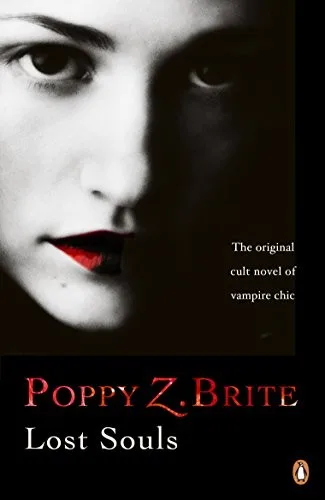
Lost Souls
 74
74

Lost Souls
Poppy Z. Brite’s "Lost Souls" presents a raw, unflinching look at characters adrift in a world where the spectral and the carnal bleed into one another. The novel’s strength lies in its visceral atmosphere and its unapologetic embrace of the grotesque as a pathway to spiritual inquiry. Brite’s prose, particularly when describing the desolate landscapes and the internal turmoil of the protagonists, is potent. A notable limitation, however, is the sometimes overwhelming bleakness, which can obscure the narrative’s more subtle philosophical underpinnings for readers not fully attuned to its particular wavelength. The depiction of the protagonist's journey through a series of intense, often violent encounters, aiming for some form of spiritual liberation, is both disturbing and compelling. The work ultimately stands as a challenging exploration of the soul's desperate search for meaning beyond the veil of ordinary perception.
📝 Description
74
Poppy Z. Brite's 1992 novel 'Lost Souls' examines identity and spirituality through a supernatural lens.
Published in 1992, Poppy Z. Brite's 'Lost Souls' is a novel that examines identity, spirituality, and the search for meaning. The narrative frequently blurs the lines between the mundane and the supernatural. Characters grapple with existential questions, finding solace or damnation in unconventional spiritual paths. The work challenges conventional notions of reality and the self.
This book is for readers who appreciate Gothic literature with a metaphysical bent, those interested in occult explorations, and individuals drawn to narratives that question societal norms and consciousness. It appeals to those unafraid of confronting disturbing imagery or complex psychological states in pursuit of deeper truths. Readers seeking a departure from mainstream narratives and an immersion in atmospheric, character-driven stories will find 'Lost Souls' engaging.
Released in 1992, 'Lost Souls' emerged during a period of renewed interest in the occult and alternative spiritualities. Brite's work positioned itself at the grittier end of this spectrum, distinct from more sanitized supernatural portrayals. The novel's frank depiction of taboo subjects reflects a subculture interested in the darker, more visceral aspects of existence, aligning with traditions that explore the shadow self and the liminal spaces between life and death.
💡 Why Read This Book?
• Gain insight into the concept of spiritual nomadism as depicted in "Lost Souls," understanding how characters seek transcendence outside conventional paths. • Experience the novel's unique atmosphere, which uses dark, often disturbing imagery to explore the liminal spaces between life and death. • Examine Brite's portrayal of the soul's fragmentation and search for connection, a theme central to the narrative's existential inquiry.
⭐ Reader Reviews
Honest opinions from readers who have explored this book.
❓ Frequently Asked Questions
What is the primary genre of Poppy Z. Brite's "Lost Souls"?
"Lost Souls" blends elements of Southern Gothic, horror, and metaphysical fiction. It's known for its dark atmosphere, visceral descriptions, and exploration of spiritual themes.
When was "Lost Souls" by Poppy Z. Brite first published?
The novel "Lost Souls" by Poppy Z. Brite was first published in 1992, marking its place within the literary landscape of the early 1990s.
Are there specific esoteric traditions referenced in "Lost Souls"?
While not explicitly tied to one tradition, the book engages with themes common in Gnosticism and other mystery traditions, focusing on the soul's journey and the search for hidden knowledge.
What is the general tone of "Lost Souls"?
The tone is generally bleak, intense, and often disturbing, though punctuated by moments of profound introspection and a search for connection.
Who are the main characters in "Lost Souls"?
Key characters include Liam, a young man drawn into a spiritual quest, and various individuals he encounters who embody different facets of existential searching and decay.
Does "Lost Souls" contain supernatural elements?
Yes, the novel incorporates supernatural and occult elements, often blurring the lines between the physical and the spiritual, and exploring themes of altered states and existential dread.
🔮 Key Themes & Symbolism
Spiritual Nomadism
The novel portrays characters who are spiritual nomads, actively seeking experiences and philosophies that offer transcendence, often outside established religious or societal frameworks. Liam, the protagonist, starts a journey driven by a desire for something beyond the mundane. This theme appeals to counter-cultural spiritual seeking, where individuals forge their own paths, driven by internal need rather than external dogma. The search for meaning is depicted as an active, often arduous, pilgrimage through liminal spaces and unconventional encounters.
The Fragmented Soul
A central concept is the fragmented nature of the soul and its subsequent search for wholeness or release. Characters grapple with internal divisions, existential angst, and a sense of being lost. Brite uses visceral imagery to represent this internal state, suggesting that the soul can be broken, scattered, or corrupted. The narrative explores how individuals attempt to mend or understand these fragments, often through intense, transformative, or even destructive experiences, seeking a connection that can make them feel whole again.
Liminal Spaces and Altered States
"Lost Souls" frequently utilizes liminal spaces—both physical locations and psychological states—where conventional rules and realities dissolve. These are environments where characters can confront deeper truths or succumb to darker impulses. Brite explores altered states of consciousness, induced by drugs, trauma, or spiritual seeking, as gateways to understanding the self and the universe. The novel suggests that profound revelation or dissolution can occur at the edges of normal experience, in places and states that are neither here nor there.
Existential Despair and Connection
The book confronts profound existential despair, depicting characters who feel profoundly isolated and disconnected from life. Yet, amidst this bleakness, there is a persistent search for genuine human connection. This connection is often found in shared suffering, unconventional spiritual experiences, or mutual understanding of their 'lost' state. Brite highlights how even in the darkest circumstances, the drive to connect and be understood can persist, offering a fragile hope or a shared path toward oblivion or transcendence.
💬 Memorable Quotes
Direct passages from the work, attributed to the author.
“Identifying with the lost and the damned.”
— This interpretation suggests a character's tendency to find kinship and identity among those marginalized or considered spiritually bankrupt. It reflects a rejection of conventional morality and an embrace of the outsider perspective.
“The blending of the sacred and the profane.”
— This concept points to the novel's characteristic blurring of boundaries. It suggests that spiritual or profound experiences can arise from or be intertwined with elements typically considered taboo or mundane.
“Finding solace in desolate landscapes.”
— This highlights the atmospheric aspect of the book, where characters might find a strange comfort or a sense of belonging in environments that appear barren or unforgiving, reflecting their internal states.
“The soul's journey through altered consciousness.”
— This interpretation emphasizes the novel's exploration of how altered states of mind serve as a vehicle for spiritual discovery or existential crisis, acting as a crucible for the soul.
💡 Key Ideas
Editorial paraphrase of the work's core concepts — not direct quotes.
The search for something more, even if it leads to darkness.
This paraphrased concept highlights the protagonist's relentless drive to find meaning or transcendence, regardless of the perilous path it entails. It speaks to a core theme of spiritual questing, even when the destination appears destructive.
🌙 Esoteric Significance
Tradition
While "Lost Souls" doesn't adhere strictly to a single esoteric lineage, it draws heavily on Gnostic themes concerning the soul's alienation in a corrupt material world and its search for gnosis or liberation. The narrative's emphasis on subjective experience, altered states, and the rejection of conventional societal/religious structures aligns with certain mystical traditions that prioritize direct, often challenging, encounters with the divine or the self. It departs from more structured Western esotericism by embracing a chaotic, visceral approach to spiritual awakening.
Symbolism
The novel employs symbols of desolation and decay, such as barren landscapes and decaying urban environments, to represent spiritual emptiness and the fallen state of the world. Characters themselves can become symbols of spiritual quests, embodying the 'lost soul' archetype searching for meaning. Blood, often depicted in visceral ways, can symbolize life force, sacrifice, and connection, sometimes in a transgressive or corrupted form, reflecting the intertwined nature of life, death, and spiritual transformation.
Modern Relevance
Contemporary readers interested in dark spirituality, occult themes in fiction, and explorations of identity outside normative structures find resonance in "Lost Souls." Thinkers and practitioners exploring the intersection of trauma, spirituality, and the uncanny may draw parallels to Brite's unflinching portrayal. The novel's influence can be seen in modern gothic and horror literature that explores psychological depth and existential dread, appealing to those who seek challenging narratives about the human condition.
👥 Who Should Read This Book
• Readers interested in the intersection of horror and metaphysics, particularly those drawn to the Southern Gothic tradition and its darker spiritual undercurrents. • Students of occult literature and alternative spiritualities who are examining how contemporary fiction engages with themes of soul, transcendence, and altered states of consciousness. • Fans of Poppy Z. Brite's work seeking to understand her early explorations of identity, isolation, and the search for meaning beyond societal norms.
📜 Historical Context
Poppy Z. Brite's "Lost Souls," published in 1992, emerged during a period when the boundaries of horror and literary fiction were being actively explored, and interest in counter-cultural spirituality was pronounced. The early 1990s saw a rise in what could be broadly termed 'Goth' and 'alternative' subcultures, which often engaged with themes of darkness, the supernatural, and existential philosophy. Brite’s work distinguished itself from more mainstream horror by its explicit engagement with occultism and a raw, often brutal, depiction of human desire and spiritual seeking. While authors like Anne Rice were popularizing supernatural romance, Brite’s approach was more abrasive and less concerned with romanticizing the monstrous. The novel found an audience among those disillusioned with conventional narratives and seeking explorations of the darker aspects of existence, positioning itself against the more overtly New Age spiritualities of the era with a grittier, more grounded (albeit surreal) perspective.
📔 Journal Prompts
Liam's spiritual nomadism and his encounters.
The symbolic weight of desolate landscapes in the narrative.
The concept of the fragmented soul and its manifestations.
Moments where liminal spaces become sites of revelation.
The nature of connection sought amidst existential despair.
🗂️ Glossary
Spiritual Nomadism
A state of actively seeking spiritual truth and experience outside of established religious or societal structures, often involving extensive travel and diverse encounters.
Liminal Space
A transitional or in-between state or place, often characterized by ambiguity, uncertainty, and the dissolution of conventional boundaries and rules.
Gnosis
In Gnostic traditions, direct experiential knowledge of spiritual truths, often considered the key to salvation or liberation from the material world.
Existential Despair
A profound sense of hopelessness and meaninglessness arising from the contemplation of human existence, freedom, and mortality.
Fragmented Soul
The concept of the self or soul being broken, divided, or incomplete, often due to trauma, internal conflict, or spiritual disconnection.
Altered States of Consciousness
Any mental state significantly different from a normal waking state, often achieved through meditation, drugs, trauma, or intense spiritual experiences.
Southern Gothic
A subgenre of American literature that uses the American South as its setting and explores themes of decay, the grotesque, and the monstrous, often with supernatural or psychological elements.
🔮 Readers Also Liked
Browse all →








More by Poppy Z. Brite
All books →
More Free Occult Philosophy Books
View all →