What were the Eleusinian Mysteries?
The Eleusinian Mysteries were a series of secret religious rites performed annually in ancient Greece. Celebrated at the Eleusis, they were dedicated to Demeter and Persephone and involved a procession from Athens, rituals at the sanctuary, and likely involved dramatic reenactments of the myth of Persephone's descent and return. Participation was restricted to initiates, and the specific details of the rites remained a closely guarded secret.
Best Books for Complete Beginners
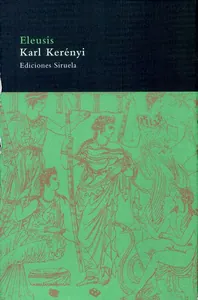
For those new to the Eleusinian Mysteries, Dudley Wright's 'The Eleusinian Mysteries & Rites' offers a comprehensive overview of the historical context and rituals. George Emmanuel Mylonas's 'Eleusis and the Eleusinian Mysteries' serves as an essential, detailed archaeological and historical account. Karl Kerényi's 'Eleusis' provides an insightful interpretation of the myth and its significance. Diether Lauenstein's 'Die Mysterien von Eleusis' offers another accessible introduction to the rituals and their meaning.
Intermediate Reading
Students ready for deeper engagement can turn to Fritz Graf's 'Eleusis und die orphische Dichtung Athens in vorhellenistischer Zeit' for a scholarly examination of the Mysteries' connection to Orphic poetry. María José García Blanco and María José Martín-Velasco's 'Greek Philosophy and Mystery Cults' places the Eleusinian rites within the broader context of ancient Greek intellectual and religious life. comte Eugène Goblet d'Alviella's 'The Mysteries of Eleusis' offers an older but still valuable comparative study. Martin Zichner's 'Auf der heiligen Strasse von Athen nach Eleusis' provides a focused exploration of the sacred way.
Classical / Advanced Texts
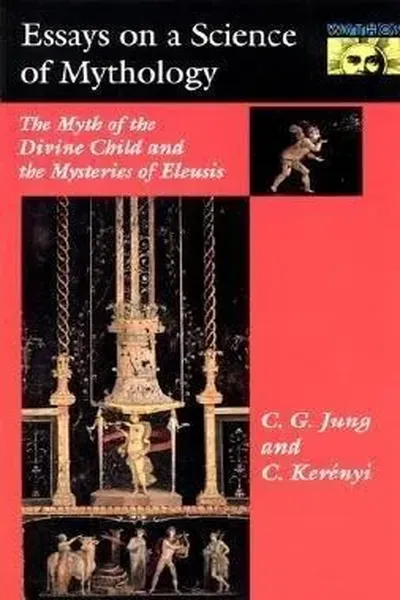
For advanced study, primary sources are crucial. Andocides' speech 'On the Mysteries' (על המיסטריות), translated by דבורה גילולה, provides a rare contemporary legal account touching on the rites. Paul François Foucart's 'Τ[alpha] Ελευσ[alpha] μυστήρι[alpha]' is a significant scholarly work on the subject. While not solely focused on Eleusis, Carl Gustav Jung's 'Einführung in das Wesen der Mythologie' offers profound psychological interpretations of mythological themes relevant to mystery cults.
Reading Order — Step by Step
Begin with an accessible overview like Dudley Wright's 'The Eleusinian Mysteries & Rites' (Week 1). Follow with George Emmanuel Mylonas's detailed study 'Eleusis and the Eleusinian Mysteries' (Weeks 2-3). In Month 2, examine Karl Kerényi's 'Eleusis' for interpretative depth and Fritz Graf's 'Eleusis und die orphische Dichtung Athens in vorhellenistischer Zeit' for scholarly context. Month 3 and beyond can explore primary sources like Andocides' 'On the Mysteries' and engage with advanced analyses such as García Blanco and Martín-Velasco's 'Greek Philosophy and Mystery Cults'.
Frequently Asked Questions
Which Eleusinian Mysteries book should I read first?
Start with Dudley Wright's 'The Eleusinian Mysteries & Rites' for a broad introduction, or George Emmanuel Mylonas's 'Eleusis and the Eleusinian Mysteries' for a detailed historical and archaeological perspective.
What is the main myth associated with the Eleusinian Mysteries?
The central myth is the abduction of Persephone by Hades, and Demeter's subsequent grief and search, which led to the establishment of the rites and explained the cycle of seasons.
Were the Eleusinian Mysteries the only mystery cult in ancient Greece?
No, the Eleusinian Mysteries were one of the most prominent, but other mystery cults existed, such as the Orphic, Samothracian, and Dionysian mysteries, each with unique rituals and beliefs.
What does 'initiation' mean in the context of the Eleusinian Mysteries?
Initiation was the process of being formally admitted into the cult, involving secret rites and the revelation of sacred knowledge, granting participants a unique spiritual experience.
What was the Telesterion?
The Telesterion was the vast hall at the sanctuary of Eleusis where the most sacred and secret rituals of the Mysteries were performed for the initiates.
Can we know exactly what happened during the Eleusinian Mysteries?
No, the details of the rituals were kept secret. While scholars have made educated guesses based on texts and archaeology, the precise ceremonies remain unknown.
What is the significance of the Eleusinian Mysteries today?
They represent a significant aspect of ancient Greek religious life, offering insights into concepts of death, rebirth, and the human relationship with the divine and natural cycles.














![Τ[alpha] Ελευσίν[alpha] μυστήρι[alpha]](/img/thumb/τalpha-ελευσίνalpha-μυστήριalpha-paul-françois-foucart-360580.webp)