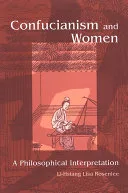
Confucianism and Women
 78
78

Confucianism and Women
Li-Hsiang Lisa Rosenlee’s *Confucianism and Women* is a necessary intervention, pushing back against the widely held perception of Confucianism as irrevocably sexist. Rosenlee meticulously unpacks key Confucian concepts, such as *ren* and *li*, demonstrating how they are not inherently antithetical to gender equality. Her argument that historical patriarchal practices, rather than the philosophy itself, corrupted its potential for parity is compelling. A particular strength lies in her detailed engagement with classical texts, moving beyond generalized critiques. However, the work might benefit from a more expansive discussion of how contemporary feminist movements within East Asia have already engaged with these texts, offering concrete examples of reinterpretation beyond the theoretical. The book ultimately succeeds in reframing a complex philosophical tradition, showing that its foundations can be excavated for egalitarian purposes. It is a vital contribution to the ongoing dialogue about tradition and liberation.
📝 Description
78
Published in 2012, Confucianism and Women argues that Confucian philosophy can support gender equality.
Li-Hsiang Lisa Rosenlee's 2012 book challenges the common assumption that Confucianism is inherently patriarchal. While acknowledging its historical association with restrictive social systems, Rosenlee demonstrates that the philosophy itself contains resources for advancing gender equality. She re-examines fundamental Confucian ideas, such as benevolence (*ren*) and propriety (*li*), not to dismiss the tradition but to find interpretations that promote egalitarianism.
The work engages with critiques of Confucianism that gained prominence during China's modern period, including the May Fourth Movement and the Cultural Revolution, as well as Western scholarship that often labels the tradition as oppressive. Rosenlee offers a philosophical counterpoint by analyzing the core tenets and their potential for egalitarian application, moving beyond superficial judgments to consider the underlying structures of thought.
This book situates Confucian thought within a broader tradition of philosophical inquiry that seeks to adapt ancient wisdom to contemporary ethical concerns. It operates within the esoteric practice of textual reinterpretation, wherein foundational texts are re-examined to reveal latent possibilities for social progress. By focusing on the philosophical underpinnings rather than solely on historical manifestations, Rosenlee engages in a form of philosophical archaeology, uncovering potentials for egalitarianism within a tradition often perceived as static or solely oppressive.
💡 Why Read This Book?
• Understand how core Confucian concepts like *ren* (benevolence) can be reinterpreted to support gender parity, a nuanced perspective absent in purely critical analyses of the May Fourth Movement era. • Discover the philosophical arguments that challenge the notion of Confucianism as inherently oppressive, offering a counterpoint to common criticisms prevalent since the 1960s. • Gain insight into the historical trajectory of feminist critiques of Confucianism, specifically how the Cultural Revolution’s ideological campaigns shaped perceptions of the tradition.
⭐ Reader Reviews
Honest opinions from readers who have explored this book.
❓ Frequently Asked Questions
Is Confucianism inherently sexist according to Rosenlee?
No, Rosenlee argues that Confucianism is not inherently sexist. While historical practices often led to patriarchal outcomes, the philosophy itself contains elements that can promote gender parity when interpreted through a modern lens.
When was Confucianism first criticized for its treatment of women?
Significant critiques intensified during China's modern period, notably beginning with the May Fourth Movement in 1919 and gaining prominence during the Cultural Revolution in the 1960s and 1970s.
What are some key Confucian concepts discussed in the book?
The book examines concepts such as *ren* (benevolence), *li* (rites/propriety), and the philosophical underpinnings of family structures and social harmony within Confucian thought.
Does the book offer solutions for gender equality within Confucianism?
The work explores the potential for egalitarian interpretation within Confucianism, suggesting that its foundational principles can be re-examined and adapted to promote gender parity, rather than being discarded.
Who is the author of Confucianism and Women?
The author is Li-Hsiang Lisa Rosenlee, whose work was first published on February 1, 2012.
What is the main argument of Confucianism and Women?
The central argument is that Confucian philosophy, despite its historical association with patriarchal practices, is not intrinsically sexist and contains resources that can foster an ethic of gender parity.
🔮 Key Themes & Symbolism
Reinterpreting Confucian Ethics
The work critically engages with foundational Confucian virtues like *ren* (benevolence) and *li* (rites/propriety), arguing that their historical application does not exhaust their interpretive possibilities. Rosenlee posits that these ethical principles, often seen as reinforcing rigid social hierarchies, can be understood in ways that actively support gender equality. This challenges the common perception that Confucianism, particularly as it evolved through dynasties and was later critiqued during movements like the May Fourth Movement (1919), is irredeemably patriarchal.
Patriarchy vs. Philosophy
A core theme is the distinction between Confucian philosophy and the patriarchal social structures within which it was embedded and practiced. Rosenlee contends that historical oppression, exemplified by practices prevalent during periods like the Cultural Revolution (1960s-70s), should not be conflated with the inherent potential of Confucian thought. The book seeks to disentangle the philosophical ideals from their often-problematic historical manifestations.
Gender Parity Potential
The book explores how Confucianism can contribute to an ethic of gender parity. It investigates interpretations of familial roles, social harmony, and moral cultivation that move beyond traditional gendered expectations. By analyzing texts and concepts, Rosenlee aims to reveal latent egalitarian dimensions within the tradition, offering a more complex and hopeful outlook than outright rejection.
Modern Critiques and Rebuttals
Rosenlee directly addresses prominent critiques of Confucianism, particularly those arising from modern Chinese intellectual history, such as the May Fourth Movement and the Cultural Revolution. The work functions as both a historical overview of these critiques and a philosophical rebuttal, demonstrating that the tradition's engagement with gender is more nuanced than often portrayed in Western and Eastern scholarship alike.
💬 Memorable Quotes
Direct passages from the work, attributed to the author.
“Confucianism contains much that can promote an ethic of gender parity.”
— This statement expresses the book's central thesis, suggesting that the philosophy's core tenets, when re-examined, offer resources for achieving gender equality rather than solely perpetuating oppression.
“Attacks on Confucianism for gender oppression have marked China's modern period.”
— This highlights the historical context of the book, pointing to significant intellectual and political movements like the May Fourth Movement (1919) that actively challenged Confucian traditions on grounds of gender inequality.
“The West has also readily characterized Confucianism as oppressive.”
— This acknowledges the international dimension of the critique, noting that perceptions of Confucianism's patriarchal nature are not confined to China but have been widely adopted in Western academic and public discourse.
“Confucianism is not inherently sexist.”
— This is the foundational claim of Rosenlee's argument, directly confronting the common assumption and setting the stage for a detailed philosophical defense of Confucianism's potential for egalitarianism.
💡 Key Ideas
Editorial paraphrase of the work's core concepts — not direct quotes.
Although historically bound up with oppressive practices, Confucianism contains much that can promote an ethic of gender parity.
This quote succinctly frames the book's approach: acknowledging historical realities of oppression while simultaneously excavating the philosophical potential for positive change regarding gender relations.
🌙 Esoteric Significance
Tradition
While Confucianism is primarily classified as a philosophical and ethical system rather than a mystical or esoteric tradition in the Western sense, its emphasis on self-cultivation, moral order, and the harmony of the cosmos aligns with certain Hermetic principles of interconnectedness and the pursuit of virtue. Rosenlee's work can be seen as applying a critical, almost alchemical, method to dissecting and potentially transforming a venerable tradition, seeking to transmute its perceived dross (patriarchy) into gold (egalitarian potential).
Symbolism
The book implicitly engages with the symbolism of familial roles and social hierarchy within Confucianism. Concepts like the Five Relationships, while often interpreted rigidly, can be viewed as symbolic representations of cosmic order and human interdependence. Rosenlee’s reinterpretation seeks to reveal how these structures, when divested of oppressive interpretations, symbolize balanced interaction and mutual respect, akin to the balanced interplay of opposing forces in Hermetic thought.
Modern Relevance
Contemporary scholars and activists in East Asian studies and feminist philosophy continue to grapple with the legacy of Confucianism. Rosenlee's work provides a crucial philosophical framework for thinkers seeking to reconcile traditional ethical systems with modern demands for gender equality. It informs ongoing discussions in comparative ethics, post-colonial theory, and the re-evaluation of classical philosophies for contemporary social justice movements, particularly in dialogues between East Asian thought and Western feminist discourse.
👥 Who Should Read This Book
• Scholars of East Asian Philosophy and Religious Studies: Gain a sophisticated argument that reframes traditional critiques of Confucianism, offering new avenues for textual analysis. • Gender Studies Researchers: Understand the historical and philosophical roots of patriarchal critiques and explore potential counter-arguments rooted in classical thought. • Comparative Ethics Practitioners: Examine how ethical traditions can be reinterpreted to meet contemporary social justice goals, moving beyond simplistic condemnations.
📜 Historical Context
Li-Hsiang Lisa Rosenlee’s *Confucianism and Women* engages directly with the intense intellectual scrutiny Confucianism faced throughout China's tumultuous 20th century. The philosophical tradition became a significant target during the May Fourth Movement of 1919, a period advocating for modernity and Westernization, which vehemently criticized Confucianism's perceived role in upholding traditional, patriarchal structures. This critique intensified dramatically during the Cultural Revolution (1960s-1970s), where Confucianism was often denounced as a primary obstacle to revolutionary progress and social equality. Western scholarship, too, frequently adopted and amplified these criticisms, characterizing Confucianism as intrinsically misogynistic. Rosenlee’s work emerged in 2012, offering a nuanced counter-argument within this long-standing debate, pushing back against the monolithic condemnation by analyzing the philosophical resources within Confucianism itself that could support gender parity, thereby challenging contemporaries like Hu Shih, a key figure of the May Fourth era.
📔 Journal Prompts
The potential for gender parity within *li* (rites/propriety).
Reconstructing the concept of *ren* (benevolence) for egalitarian ends.
The historical entanglement of Confucianism with oppressive practices.
Distinguishing philosophical ideals from historical social structures.
The May Fourth Movement's critique of Confucian gender roles.
🗂️ Glossary
Ren (仁)
A core Confucian virtue, often translated as benevolence, humaneness, or goodness. It signifies the ideal ethical quality of a person, emphasizing empathy, compassion, and proper human relationships.
Li (禮)
Refers to rites, rituals, propriety, and etiquette. It encompasses social norms, ceremonies, and the proper conduct expected in various social situations, serving as a mechanism for maintaining social order and harmony.
May Fourth Movement
An anti-imperialist, cultural, and political movement growing out of the student protests of May 4, 1919, in Beijing. It advocated for modernization, science, democracy, and a critique of traditional Chinese culture, including Confucianism.
Cultural Revolution
A socio-political movement in China from 1966 to 1976, initiated by Mao Zedong. It aimed to purge capitalist and traditional elements from Chinese society, often leading to the destruction of cultural artifacts and persecution of intellectuals.
Gender Parity
The state of equal ease of access between formal and informal choices for members of both sexes. It implies equal rights, responsibilities, and opportunities regardless of gender.
Patriarchal Practices
Social customs, beliefs, and structures that grant men a disproportionate share of power and privilege, often leading to the subordination of women.
Social Harmony
A central concept in Confucianism, referring to a state of balance and concord within society, achieved through adherence to ethical principles, proper social roles, and rituals.




![The Byrhtferth's Manuscript (MS 17) † Saint John’s College † Oxford † [1111]](/img/thumb/the-byrhtferth-s-manuscript-ms-17-saint-john-s-college-oxford-1111-the-monk-byrhtferth.webp)