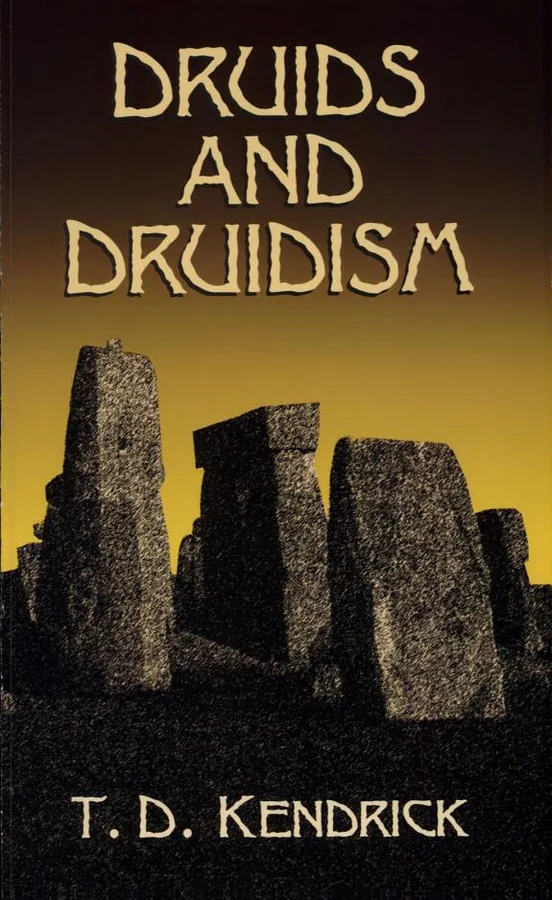
Druids and Druidism
 77
77

Druids and Druidism
Kendrick's "Druids and Druidism" presents a lucid, if somewhat dry, survey of a subject frequently obscured by romanticism. The work excels in its methodical presentation of historical evidence, particularly its engagement with classical sources like Strabo and Pliny the Elder, which are crucial for understanding early perceptions of the Druids. A notable strength is the detailed exploration of theories concerning Druidic origins, moving beyond speculation to analyze the supporting documentation. However, the book's academic tone, while precise, may alienate readers seeking a more experiential or spiritual connection to the subject. The limited discussion on the potential for later revivals or neo-Druidic interpretations feels like a missed opportunity for a more contemporary perspective. Despite this, Kendrick provides a solid, fact-based introduction to the historical Druids, making it a dependable, if not inspiring, read for serious students.
📝 Description
77
T. D. Kendrick's 2003 study examines the elusive figures who shaped early Gallic and British societies.
First published in 2003, T. D. Kendrick's "Druids and Druidism" offers a scholarly look at the priests who influenced early Gallic and British cultures. The book moves past myth to present a documented account of their history, prehistory, and social environment. Kendrick investigates many theories about the origins of Druidism, giving a full picture of the available evidence.
The text details the physical and spiritual aspects of Druidic culture, including the construction and use of their temples and their religious practices. Kendrick considers early reports from writers like Posidonius and Julius Caesar, who were among the first outsiders to observe these Celtic figures. The book systematically analyzes diverse hypotheses on Druidism's beginnings, from local sources to possible foreign connections, presenting a balanced view of academic discussions. It assesses how archaeology and ancient texts support or question these ideas. This work synthesizes historical records and archaeological interpretations, serving as a reference for understanding a civilization often obscured by legend.
This book places Druidism within the broader study of ancient European pagan traditions. It approaches the subject from a historical and archaeological perspective, seeking to reconstruct the beliefs and practices of a pre-Christian European priesthood. By examining early written sources and material evidence, Kendrick aims to provide a factual basis for understanding a spiritual system that has long been the subject of speculation and romanticism within esoteric circles.
💡 Why Read This Book?
• Understand the historical context of Druidism by examining early Gallic and British social structures, as discussed in Kendrick's analysis of their prehistory. • Gain insight into ancient religious practices by studying the book's detailed account of Druidic temples and rituals, referencing theories presented by Greek and Roman writers. • Appreciate the scholarly debate around Druidic origins through Kendrick's systematic review of various hypotheses and supporting evidence, offering a factual counterpoint to modern romantic notions.
⭐ Reader Reviews
Honest opinions from readers who have explored this book.
❓ Frequently Asked Questions
What is the primary focus of T. D. Kendrick's "Druids and Druidism"?
The book offers a well-documented summary of Druidic culture, focusing on their racial history, prehistory, social atmosphere, theories of origin, temples, religious practices, and early mentions by Greek and Roman writers.
When was "Druids and Druidism" first published?
The book was first published in 2003, though its research likely draws on earlier scholarship concerning ancient Celtic civilizations.
Does the book discuss modern Druidry or Neo-Druidism?
Kendrick's work primarily concentrates on the historical Druids of ancient Gaul and Britain. It does not extensively cover modern Druidic revivals or contemporary practices.
What kind of evidence does Kendrick use to support his analysis?
Kendrick relies on a combination of archaeological findings, historical texts from Greek and Roman authors (such as Posidonius and Caesar), and scholarly interpretations of pre-Christian Celtic civilization.
Is "Druids and Druidism" suitable for beginners interested in Celtic history?
Yes, it provides a foundational, factual overview that is accessible to beginners, while also offering depth for more advanced students of ancient history and religion.
Where can I find T. D. Kendrick's "Druids and Druidism"?
As a 2003 publication, it is available through major booksellers, libraries, and potentially used book markets. Esoteric Library does not currently offer it free online.
🔮 Key Themes & Symbolism
Historical Reconstruction
Kendrick's work meticulously reconstructs the historical reality of the Druids, moving beyond the romanticized image often perpetuated. By referencing early classical authors like Julius Caesar in his "Commentarii de Bello Gallico," the book grounds the reader in the available textual evidence. It systematically examines the racial history and prehistory of the Gallic and British peoples associated with Druidic traditions, offering a factual basis for understanding their societal roles and influence.
Druidic Religious Practices
The book offers a detailed exploration of the religious life of the Druids, examining their temples and ritualistic practices. Kendrick considers various theories regarding these sacred spaces and ceremonies, drawing upon archaeological findings and ancient accounts. The work aims to provide a clear, evidence-based understanding of their spiritual system, separating historical observation from later embellishment.
Theories of Origin
A significant portion of "Druids and Druidism" is dedicated to analyzing the diverse hypotheses concerning the origins of the Druidic order. Kendrick evaluates different scholarly perspectives, considering whether Druidism emerged organically from existing Celtic beliefs or was influenced by external cultural or religious currents. This critical examination provides a nuanced view of the scholarly debates surrounding the Druids' beginnings.
Classical Accounts of Druidism
Kendrick places considerable emphasis on the earliest mentions of Druids by Greek and Roman writers. By analyzing texts from figures such as Posidonius and Diodorus Siculus, the book critically assesses the value and potential biases within these accounts. This comparative approach helps to establish a foundational understanding of how the Druids were perceived by contemporary Mediterranean civilizations.
💬 Memorable Quotes
Direct passages from the work, attributed to the author.
“The work considers many theories of the origin of Druidism.”
— This highlights Kendrick's approach of presenting a balanced overview of scholarly debates, rather than advocating a single, definitive origin story for the Druidic priesthood.
“The amply illustrated text considers many theories of the origin of Druidism, its temples and religious practices.”
— This indicates the book's comprehensive scope, combining textual analysis with visual aids to explore key aspects of Druidic culture, from their sacred sites to their spiritual beliefs.
“Kendrick offers a well-documented summary of Druidic culture.”
— This points to the book's academic rigor, emphasizing its reliance on verifiable historical and archaeological evidence over speculative or folkloric accounts of the Druids.
“The text considers the social atmosphere of this early Gallic and British civilization.”
— This suggests the book provides context beyond religious or political structures, exploring the everyday life and societal norms within which the Druids operated.
“Early mention by Greek and Roman writers is examined.”
— This signifies the importance Kendrick places on primary source material from antiquity, using these classical perspectives as a crucial lens through which to view the historical Druids.
🌙 Esoteric Significance
Tradition
While Kendrick's work is primarily historical and archaeological, it serves as a critical foundation for modern esoteric traditions that draw inspiration from the ancient Celts. It operates within the broader lineage of Western esotericism's interest in pre-Christian European paganism, offering a corrective to purely mythopoetic interpretations. By grounding the study in historical fact, it allows for a more informed engagement with the *idea* of the Druid for those seeking ancestral or nature-based spiritual paths.
Symbolism
Though not explicitly focusing on esoteric symbolism, Kendrick's examination of Druidic temples indirectly touches upon motifs of sacred geometry and the alignment of structures with celestial events, common in ancient spiritual practices. His discussion of their religious practices might allude to symbols related to nature, the cycles of life and death, and the interconnectedness of the cosmos, central themes in many esoteric traditions seeking ancient wisdom.
Modern Relevance
Contemporary Neo-Druid orders and practitioners of Celtic Reconstructionism often reference historical scholarship like Kendrick's to inform their practices and beliefs. While they may diverge significantly from strict historical accuracy, the book provides essential source material for understanding the historical Druids. Thinkers and writers focusing on European indigenous traditions, shamanism, and ecological spirituality may also find value in its detailed account of an ancient nature-venerating priesthood.
👥 Who Should Read This Book
• Academic researchers and students of ancient European history, focusing on Celtic civilizations and pre-Christian religions. • Enthusiasts of comparative mythology and religious studies seeking factual accounts of historical spiritual leaders and practices. • Individuals interested in the historical context of Druidism, who wish to understand the evidence beyond romanticized notions.
📜 Historical Context
Published in 2003, T. D. Kendrick's "Druids and Druidism" emerged during a period of continued academic interest in Celtic studies and ancient European religions. It engaged with decades of archaeological discoveries and textual criticism concerning pre-Roman Britain and Gaul. The work stands in contrast to more romanticized or New Age interpretations that gained popularity in the late 20th century, such as those influenced by the writings of Gerald Gardner or contemporary paganism. While Kendrick's research predates much of the extensive archaeological work at sites like the Orkney Islands that shed further light on Iron Age belief systems, his synthesis of classical sources and earlier archaeological findings provided a solid, scholarly foundation. The book's reception was largely within academic and historical circles, valued for its systematic approach rather than its contribution to living esoteric traditions.
📔 Journal Prompts
The social atmosphere of early Gallic and British civilization as described by Kendrick.
Varied theories regarding the origin of Druidism.
The depiction of Druidic temples and their potential religious significance.
Kendrick's analysis of early mentions by Greek and Roman writers.
The racial history and prehistory of the peoples associated with Druidism.
🗂️ Glossary
Druidism
The religious, spiritual, and philosophical beliefs and practices of the ancient Celtic Druids, who were the priestly class in ancient Gaul, Britain, and Ireland.
Gallic
Relating to Gaul, the historical region of Western Europe inhabited by the Celts, roughly corresponding to modern-day France, Belgium, Luxembourg, and parts of Switzerland, the Netherlands, and Germany.
Prehistory
The period of human history before the advent of writing, often studied through archaeological evidence and oral traditions.
Classical writers
Ancient Greek and Roman authors whose works provide historical, philosophical, and literary records of their civilizations and contemporary societies.
Racial history
In the context of this book, refers to the historical study of the ethnic origins and development of the populations inhabiting ancient Gaul and Britain.
Social atmosphere
The prevailing mood, attitudes, and cultural conditions of a society during a specific historical period.
Temples
In the context of Druidism, refers to sacred sites, groves, or structures used for religious ceremonies and rituals, as described by ancient sources and interpreted through archaeology.
This book appears in 1 collection
🔮 Readers Also Liked
Browse all →







From the “Druidism” Collection
View all →






More Free Sacred Texts & Gnosticism Books
View all →