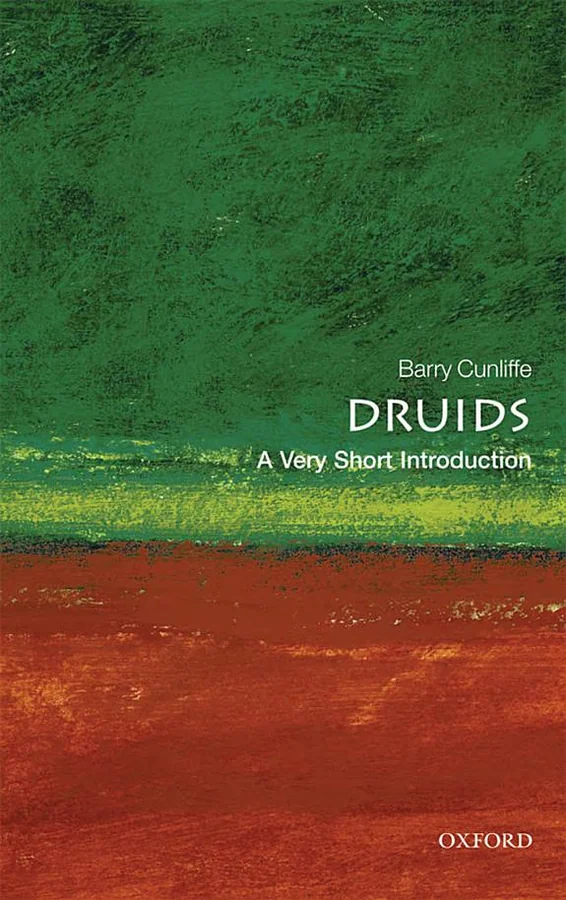
Druids: A Very Short Introduction
 74
74

Druids: A Very Short Introduction
Barry Cunliffe confronts the persistent enigma of the Druids, not with New Age romanticism, but with the rigorous scrutiny of an archaeologist. He methodically sifts through the limited textual evidence, primarily from Roman observers like Caesar, and correlates it with archaeological discoveries, particularly from Iron Age Britain and Gaul. The strength of "Druids: A Very Short Introduction" lies in its clear-eyed distinction between historical possibility and speculative fiction. For instance, Cunliffe carefully analyzes the Roman descriptions of Druidic sacrifices, noting the potential for exaggeration or misunderstanding. A limitation, inherent to the subject matter, is the sheer scarcity of direct Druidic voices; the book often relies on what others said about them, rather than what they said themselves. However, Cunliffe's analysis of their societal function as educated elites and adjudicators provides a compelling counterpoint to more mystical interpretations. This is a sober, academic assessment that grounds the popular fascination with Druids in a tangible, albeit incomplete, historical reality.
📝 Description
74
Barry Cunliffe's 2010 book cuts through Druid myths with archaeological evidence.
Barry Cunliffe's "Druids: A Very Short Introduction" examines the historical figures known as Druids. Published in 2010, the book addresses the mystery surrounding these ancient Celtic priests, their societal roles, and their eventual decline. Cunliffe moves beyond popular myth and folklore to present an evidence-based account drawn from archaeological findings and classical texts. The work clarifies what can be known with certainty and acknowledges where speculation is necessary.
This book is for general readers interested in ancient European history, Celtic cultures, and early religious or social structures. It offers an accessible, academically grounded overview of the Druids, distinct from sensationalized accounts. Students of archaeology, ancient history, and comparative religion will find it a useful starting point for understanding the scholarly debate surrounding these figures.
The Druids first appear in records from the 2nd century BC, documented by writers like Julius Caesar. These accounts, filtered through a Roman perspective, often portray Druids as an influential elite within Celtic tribes. The Roman conquest led to the suppression of Druidic practices, contributing to their elusiveness in later periods. Cunliffe addresses the challenges of reconstructing their history from fragmented evidence.
This book approaches the Druids not as a living tradition, but as a historical phenomenon. It engages with the study of ancient European religious practices and the reconstruction of belief systems from limited archaeological and textual evidence. While not a guide to modern Druidry, it provides essential historical context for understanding the origins and scholarly interpretations of these figures, separating historical fact from later romanticization.
💡 Why Read This Book?
• Gain a factual understanding of the Druids' emergence in Western Europe by the 2nd century BC, moving beyond popular myth. • Learn about the primary sources used to study Druids, such as the writings of Julius Caesar, and their limitations. • Understand the archaeological evidence that informs our knowledge of their societal roles, particularly in Iron Age Britain.
⭐ Reader Reviews
Honest opinions from readers who have explored this book.
❓ Frequently Asked Questions
When did Druids first appear in historical records?
The Druids first came into focus in Western Europe, particularly Gaul and Britain, around the second century BC, as documented by classical writers.
What kind of evidence do we have about the Druids?
Evidence comes from classical texts, notably Roman writers like Julius Caesar, and from archaeological findings from the Iron Age.
Were Druids only in Britain?
No, historical accounts and archaeological evidence suggest their presence and influence extended across Western Europe, including Gaul and Ireland.
Did Druids have their own writing system?
Classical sources suggest Druids primarily used an oral tradition for transmitting knowledge, with little to no evidence of a widespread written script for their doctrines.
What happened to the Druids?
Their influence waned with the Roman conquest of Celtic lands, and their practices were suppressed, leading to their gradual disappearance from historical records.
Is there a connection between ancient Druids and modern Neo-Druidism?
While modern Neo-Druidism draws inspiration from ancient Celtic traditions, the direct historical continuity with the original Druids is debated and largely unsubstantiated.
🔮 Key Themes & Symbolism
Historical Evidence vs. Myth
Cunliffe meticulously separates what can be inferred from archaeological finds and contemporary classical accounts (like Caesar's Gallic Wars) from later romanticized or speculative notions of Druidry. The focus is on presenting a grounded, scholarly perspective, acknowledging the limitations imposed by the lack of direct written testimony from the Druids themselves, thereby challenging popular misconceptions.
Druids as an Elite Class
The work examines the Druids not just as religious figures, but as a sophisticated intellectual and social elite within Celtic societies. Their roles as judges, educators, and keepers of tradition are explored, highlighting their significant influence over tribal politics and social order across regions like Gaul and Britain.
The Roman Perspective
A significant portion of the available information about Druids comes from Roman writers who encountered them during their expansion into Celtic territories. Cunliffe analyzes these accounts, discussing their potential biases and how Roman narratives shaped the historical perception of the Druids, particularly concerning their perceived power and practices.
Archaeological Corroboration
Beyond textual sources, the book integrates archaeological evidence, such as burial sites and artifacts, to shed light on the material culture and societal structures associated with Celtic peoples. This approach provides a tangible counterpoint to the often-abstract descriptions found in classical texts.
💬 Memorable Quotes
Direct passages from the work, attributed to the author.
“They are enigmatic and puzzling, partly because of the lack of knowledge about them has resulted in a wide spectrum of interpretations.”
— This highlights the core challenge of studying the Druids: their elusiveness in the historical record has invited broad speculation, making it difficult to ascertain concrete facts versus fanciful conjecture.
“The Druids first came into focus in Western Europe - Gaul, Britain, and Ireland - in the second century BC.”
— This establishes the temporal and geographical parameters for the historical emergence of the Druids, grounding their existence in specific regions and a defined period of antiquity.
“Barry Cunliffe takes the reader through the e...”
— This indicates the author's intention to guide the reader through the available evidence and scholarly debates, presenting a structured exploration of the Druidic subject.
“Few figures flit so elusively through history.”
— This emphasizes the fragmented and often indirect nature of the evidence concerning the Druids, contributing to their mysterious reputation throughout subsequent historical periods.
“They are a popular subject; they have been known and discussed for over 2,000 years.”
— This points to the enduring fascination with the Druids across millennia, underscoring their persistent presence in cultural discourse and historical inquiry.
🌙 Esoteric Significance
Tradition
While not directly aligned with a single esoteric lineage like Hermeticism or Theosophy, "Druids: A Very Short Introduction" engages with the historical underpinnings of Western esoteric traditions that often draw inspiration from ancient Celtic and Druidic lore. It provides a critical, historical foundation for understanding the 'Druidic revival' movements and Neo-Druidry that emerged in later centuries, acting as a necessary corrective to purely mystical or invented traditions.
Symbolism
The book touches upon the symbolic resonance of nature in Druidic understanding, though direct symbolism is scarce due to limited textual evidence. It implies that elements like sacred groves, trees (such as the oak), and natural landmarks likely held significant meaning, serving as focal points for ritual and spiritual connection. These natural elements later became adopted motifs in various esoteric practices seeking a connection to primal forces.
Modern Relevance
Contemporary thinkers and practitioners in fields like ecological spirituality, Neo-Druidry, and certain branches of comparative mythology draw upon historical understandings of the Druids, as presented by scholars like Cunliffe. The work provides a crucial historical baseline, enabling modern adherents to differentiate between historical conjecture and later spiritual interpretations, fostering a more informed engagement with ancient Celtic heritage.
👥 Who Should Read This Book
• Students of ancient European history seeking a factual overview of Celtic societies and their religious practices, moving beyond folklore. • Readers interested in the origins of Western esoteric thought who want to understand the historical context of figures often mythologized in later traditions. • Archaeologists and historians of religion looking for a concise, evidence-based summary of the current scholarly understanding of the Druids, particularly from the Iron Age.
📜 Historical Context
Barry Cunliffe's "Druids: A Very Short Introduction" was published in 2010, a period marked by continued academic interest in early European societies and the re-evaluation of classical sources. The work engages with a long scholarly tradition, tracing back to the 18th and 19th centuries when figures like Edward Gibbon commented on the Druids within the broader context of Roman-era European history. Cunliffe's approach contrasts with earlier, more romanticized interpretations prevalent in the Victorian era. He directly addresses the primary textual evidence from Roman authors like Julius Caesar and Tacitus, and critically examines how their accounts, written during the Roman expansion into Celtic lands (mid-1st century BC onwards), might have been influenced by Roman political agendas or cultural perceptions. The book situates itself within contemporary archaeological discourse, which increasingly utilizes scientific methods to understand Iron Age cultures, offering a more nuanced perspective than earlier historical narratives.
📔 Journal Prompts
The historical evidence for Druidic practices, particularly concerning their role as judges.
The elusiveness of Druidic figures through history and its impact on interpretation.
The significance of Gaul, Britain, and Ireland in the 2nd century BC context of Druidry.
The contrast between classical accounts and archaeological findings regarding the Druids.
The enduring popular fascination with Druids over 2,000 years.
🗂️ Glossary
Druids
An influential class of priests, scholars, and judges among the ancient Celtic peoples of Gaul, Britain, and Ireland, prominent from around the 2nd century BC.
Gaul
The region of Western Europe largely corresponding to modern-day France, Belgium, and parts of Switzerland and Germany, inhabited by Celtic tribes.
Iron Age
A prehistoric period characterized by the widespread use of iron tools and weapons, preceding the historical Roman period in much of Europe.
Classical Sources
Writings from ancient Greek and Roman authors, such as Julius Caesar and Tacitus, which provide some of the earliest (though often biased) accounts of the Druids.
Oral Tradition
The transmission of knowledge, beliefs, and culture through spoken language rather than written texts, believed to be the primary method for Druids.
Archaeological Evidence
Material remains from the past, such as artifacts, structures, and burial sites, used to reconstruct the lives and societies of ancient peoples like the Druids.
Celtic Societies
The various tribes and cultures across Europe that shared common linguistic, artistic, and religious characteristics during the Iron Age and early Roman period.
This book appears in 1 collection
🔮 Readers Also Liked
Browse all →









From the “Druidism” Collection
View all →




More Free Occult Philosophy Books
View all →