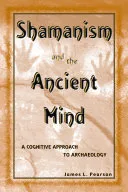
Shamanism and the Ancient Mind
 82
82

Shamanism and the Ancient Mind
Pearson constructs a compelling, if sometimes narrowly focused, argument that ancient art served a shamanistic purpose. His dismissal of alternative theories like totemism and hunting magic is thorough, leveraging cognitive archaeology and detailed analysis of global rock art. A particular strength lies in his synthesis of ethnographic data with neuropsychological findings, suggesting a biological basis for shamanistic states that manifest in art. However, the book's insistence on a singular interpretation occasionally feels overly prescriptive, potentially overlooking the multifaceted nature of early human expression. The examination of trance states and their visual correlates, as seen in numerous cave paintings, remains a powerful section. Ultimately, "Shamanism and the Ancient Mind" offers a robust, evidence-based framework for understanding prehistoric art as fundamentally tied to altered consciousness.
📝 Description
82
James L. Pearson argued in 2002 that prehistoric art stems from shamanistic practices.
Published in 2002, James L. Pearson's "Shamanism and the Ancient Mind" advances a central claim: much prehistoric visual art is best understood as the product of shamanistic activity. Pearson systematically addresses and refutes alternative explanations for this art, such as totemism, aesthetic motivations, structuralism, and theories centered on hunting magic. This work is intended for serious students of cognitive archaeology, comparative religion, and early human consciousness.
It will appeal to those interested in the origins of art and ritual, and the role altered states of consciousness may have played in shaping early human culture. Readers interested in the neuropsychological roots of spiritual experience will find particular value. Pearson situates his argument within established academic discourse, directly engaging with theories from figures like Lévi-Strauss.
This book engages with traditions that seek to understand the roots of human spirituality and symbolic expression. It connects archaeological evidence with anthropological studies of shamanism, a practice found across many cultures, often involving altered states of consciousness. By examining ancient art through this lens, Pearson relates it to enduring human quests for meaning and altered perception, touching on themes common in esoteric thought concerning the mind's capacity to perceive realities beyond the mundane.
💡 Why Read This Book?
• Understand how cognitive archaeology interprets prehistoric art by examining Pearson's detailed analysis of rock art worldwide, challenging older theories like totemism. • Gain insight into the neuropsychological evidence for altered states of consciousness in early humans, linking them to ritual practices described in the book. • Explore ethnographic parallels that support the shamanistic interpretation, providing concrete examples from diverse cultures to illustrate the concept of hallucinogenic substance use.
⭐ Reader Reviews
Honest opinions from readers who have explored this book.
❓ Frequently Asked Questions
What are the main theories Pearson dismisses regarding ancient art?
Pearson systematically refutes theories such as totemism, art-for-art's sake, structuralism, and hunting magic, arguing they fail to adequately explain the consistent patterns and symbolic language found in prehistoric art.
What evidence does Pearson use to support his shamanistic art theory?
He utilizes evidence from cognitive archaeology, careful examination of rock art globally, ethnographic parallels from existing shamanic cultures, and neuropsychological data concerning altered states of consciousness.
What role do hallucinogenic substances play in Pearson's argument?
Pearson suggests that hallucinogenic substances were often used in shamanistic rituals, and the resulting altered states of consciousness directly influenced the creation of much prehistoric art, providing its symbolic content.
When was 'Shamanism and the Ancient Mind' first published?
The book was first published on February 18, 2002.
How does Pearson connect ancient art to the human mind?
He posits that the art reflects the common cognitive and perceptual experiences of ancient peoples, particularly those arising from shamanistic trance states, offering a window into the 'ancient mind'.
What field of study is central to Pearson's methodology?
Cognitive archaeology is a primary theoretical and methodological foundation for Pearson's work, focusing on the mental processes and belief systems of past peoples.
🔮 Key Themes & Symbolism
Shamanism as Art's Origin
Pearson argues convincingly that the impulse to create much prehistoric art stemmed directly from shamanistic practices. He posits that altered states of consciousness, often induced by hallucinogens, provided the visions and symbolic language that found expression in cave paintings and carvings. This perspective reframes art not merely as decoration or narrative, but as a record of profound spiritual and psychological experiences central to early human societies. The book systematically dismantles alternative explanations, highlighting the consistent cross-cultural patterns that align with shamanic cosmology.
Cognitive Archaeology Framework
The work is grounded in the principles of cognitive archaeology, seeking to understand the mental processes and belief systems of past cultures. Pearson applies this lens to decipher the meaning behind ancient visual expressions. By examining the neurological and psychological underpinnings of shamanistic states, he builds a case for a shared human experience that predates many cultural divisions. This approach allows for a scientific yet deeply interpretive analysis of artifacts, moving beyond simple typologies to explore the cognitive landscapes of our ancestors.
Neuropsychology of Altered States
Pearson integrates findings from neuropsychology to explain the physiological basis of shamanistic experiences. He discusses how certain substances or sensory deprivation can induce specific patterns of brain activity, leading to characteristic visions and altered perceptions. This scientific grounding lends weight to his interpretation of abstract symbols and recurring motifs in ancient art as direct representations of these internally generated realities, connecting the subjective experience of the shaman to the objective artifact.
Critique of Art Theories
A significant portion of the book is dedicated to systematically critiquing established theories that attempt to explain prehistoric art. Pearson finds totemism, art-for-art's sake, structuralism, and hunting magic insufficient. He argues these models often impose later conceptual frameworks onto ancient practices or fail to account for the widespread evidence of ritualistic and altered-state-induced imagery. This critical engagement highlights the limitations of purely functional or aesthetic explanations for early human creativity.
💬 Memorable Quotes
Direct passages from the work, attributed to the author.
“Much prehistoric art can be understood as the visual record of shamanistic journeys.”
— This central tenet suggests that the enigmatic symbols and figures found in ancient sites are not random but are direct depictions of experiences within altered states of consciousness, a key to unlocking their meaning.
“The patterns observed in rock art worldwide suggest a common source in human neurology and ritual practice.”
— Pearson points to the universality of certain symbols and visual motifs as evidence that they arise from shared aspects of human brain function, particularly when engaged in trance states common to shamanistic traditions.
“Alternative explanations like totemism fail to account for the specific phenomenology of shamanic experience.”
— This interpretation highlights Pearson's critique of older theories, arguing they miss the crucial element of altered consciousness and the unique visions it produces, which are central to his shamanistic art thesis.
“Ethnographic data provides crucial parallels for understanding the function and meaning of ancient shamanic art.”
— By comparing ancient art with the practices of contemporary or recent shamanic cultures, Pearson finds corroborating evidence for his interpretations, showing how similar visual languages emerge from analogous ritual contexts.
“The study of prehistoric art must incorporate neuropsychological findings to grasp the nature of the ancient mind.”
— This concept underscores the book's interdisciplinary approach, emphasizing that understanding ancient consciousness requires not just archaeological evidence but also scientific knowledge of how the human brain experiences altered states.
🌙 Esoteric Significance
Tradition
While not strictly belonging to a single esoteric lineage like Hermeticism or Kabbalah, Pearson's work significantly intersects with traditions that explore altered states of consciousness and visionary experiences. It aligns with modern shamanic revival movements and anthropological studies of shamanism, which often carry esoteric undertones. The book provides a potential bridge between scientific inquiry into consciousness and the ancient roots of spiritual practices found across many cultures, validating the subjective reality of transpersonal experiences.
Symbolism
The book implicitly interprets symbols found in prehistoric art, such as anthropomorphic figures, geometric patterns, and animal representations, as direct manifestations of shamanic visions. These symbols, often recurring in global rock art, are presented not just as aesthetic elements but as potent signifiers of the spirit world, altered perceptions, and the journeying consciousness of the shaman. The 'hand-stencils' found in many caves, for instance, are re-contextualized within this shamanic framework.
Modern Relevance
Contemporary neo-shamanic practices, psychedelic research, and fields exploring consciousness studies often draw upon or find validation in the kind of synthesis Pearson offers. Thinkers and practitioners interested in the psychotropic origins of religion, the cross-cultural universality of certain visionary experiences, and the deep history of human spirituality can use this book as a foundational text. It supports the idea that altered states are not novel phenomena but are integral to the human experience since antiquity.
👥 Who Should Read This Book
• Students of cognitive archaeology and prehistoric art seeking evidence-based interpretations that move beyond simplistic functional theories. • Anthropologists and religious studies scholars interested in the cross-cultural origins of shamanism and altered states of consciousness. • Readers curious about the neuropsychological underpinnings of spiritual experiences and their potential connection to early human expression.
📜 Historical Context
Published in 2002, "Shamanism and the Ancient Mind" engaged with a long-standing academic debate regarding the interpretation of prehistoric art. For decades, scholars had proposed various theories, ranging from functional explanations like hunting magic (popularized in the early 20th century) to structuralist analyses championed by figures like Claude Lévi-Strauss. Pearson's work arrived as cognitive archaeology was gaining prominence, offering a framework that prioritized the mental processes and belief systems of ancient peoples. By focusing on shamanism, he directly challenged prevailing interpretations and offered a unified theory grounded in both ethnographic and neuropsychological evidence. While not a controversial work in terms of reception, its rigorous methodology and specific thesis placed it within the ongoing scholarly discourse on human origins and consciousness.
📔 Journal Prompts
The visual patterns Pearson identifies in prehistoric art, reflecting shamanistic journeys.
The role of neuropsychological evidence in understanding the 'ancient mind' and altered states.
Pearson's critique of theories like totemism and hunting magic for explaining ancient art.
Ethnographic parallels cited to support the shamanistic interpretation of visual symbols.
Connecting the specific hallucinogenic substance effects described to artistic motifs.
🗂️ Glossary
Cognitive Archaeology
A subfield of archaeology focused on reconstructing past belief systems, cognitive processes, and symbolic behaviors through the analysis of material remains.
Shamanism
A range of indigenous beliefs and practices that involve a practitioner who is believed to interact with a spirit world, often through altered states of consciousness.
Hallucinogenic Substances
Psychoactive drugs that cause hallucinations, perception distortions, and, in rare cases, delusions that resemble those occurring during psychotic episodes.
Totemism
A system of belief in which humans are said to have either a spiritual relationship with particular animals, plants, or other natural objects, or a direct ancestral link to them.
Structuralism (in Anthropology)
A theoretical approach, notably associated with Claude Lévi-Strauss, that analyzes cultural phenomena (like myths and kinship systems) in terms of underlying binary oppositions and universal structures of the human mind.
Phenomenology (of Experience)
The study of structures of consciousness as experienced from the first-person point of view, focusing on the subjective experience itself.
Ethnographic Parallels
Similarities observed between different cultures or societies, often used to infer characteristics or behaviors of past societies based on contemporary or historically documented ones.