Divination, Prediction and the End of the Roman Republic
 84
84

Divination, Prediction and the End of the Roman Republic
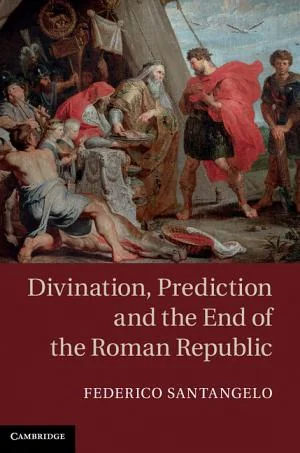
Federico Santangelo's rigorous study, *Divination, Prediction and the End of the Roman Republic*, moves beyond superficial treatments to offer a granular analysis of how omens and prophecy permeated the political machinations of Rome's final century. Santangelo meticulously reconstructs the evidence, demonstrating how religious pronouncements were not passive predictions but active tools in the arsenal of ambitious politicians. A particular strength lies in his integration of numismatic and iconographic evidence, such as the depiction of augural symbols on coinage, which visually corroborate the textual accounts of their significance. However, the sheer density of argumentation, while admirable for specialists, might present a steep learning curve for those less familiar with Roman political history. The detailed dissection of specific augural rituals, while crucial for academic rigor, occasionally risks obscuring the broader narrative for the general reader. The work’s examination of how figures like Cicero engaged with and sometimes critiqued these practices provides a particularly compelling insight into the intellectual currents of the time. Ultimately, Santangelo provides an indispensable resource for understanding the complex symbiosis of religion and power in a republic’s twilight.
📝 Description
84
Federico Santangelo's 2012 book examines divination's critical role in the Roman Republic's final decades.
This study scrutinizes how oracular pronouncements, omens, and religious interpretations shaped political decisions and public perception during the tumultuous final decades of the Roman Republic. Santangelo synthesizes literary accounts, visual evidence from coins and reliefs, and archaeological findings to present a holistic view of this intersection. The late Roman Republic, a period marked by intense civil strife and political upheaval, saw divinatory practices deeply embedded in public life. Figures like Julius Caesar and Pompey the Great consulted auspices and augurs, demonstrating the perceived authority of religious foresight.
The book investigates concepts such as *disciplina Etrusca*, the body of Etruscan divinatory lore adopted by the Romans, and the function of the *augures* in interpreting bird flight and thunder. It argues these practices were not merely superstitious rituals but integral components of the Republican political and social order, often manipulated for political ends. The analysis extends to the broader intellectual climate, considering philosophical attitudes towards fate and prophecy, and how perceived supernatural guidance influenced statecraft and societal anxieties.
This work situates Roman divination within a broader history of attempts to understand and influence fate, a tradition stretching from ancient Mesopotamia through Hellenistic Greece and into later Western esotericism. It highlights how the Romans, despite their pragmatic approach to governance, integrated complex divinatory systems into their statecraft. The book shows how these practices, far from being fringe beliefs, were central to the public and private lives of those in power, reflecting a deep societal engagement with the idea of divine will and prediction.
💡 Why Read This Book?
• Gain a concrete understanding of how divination, specifically the practice of *auspicium*, was actively used by Roman leaders like Pompey to legitimize or delay political actions, offering a unique lens on power dynamics. • Learn about the specific role of the *augures* and the *disciplina Etrusca* in interpreting omens, revealing the structured, professionalized nature of Roman religious prediction beyond mere superstition. • Explore the intellectual climate of the late Republic, understanding how figures such as Cicero navigated the tension between traditional beliefs in prophecy and emerging philosophical skepticism.
⭐ Reader Reviews
Honest opinions from readers who have explored this book.
❓ Frequently Asked Questions
What specific divinatory practices are examined in relation to Roman politics?
The book focuses on several key practices, including the interpretation of bird flight (*auspicium*), thunder and lightning (*fulgura*), and the examination of animal entrails (*haruspicy*), demonstrating their direct influence on senatorial decisions and military campaigns.
How did divination impact the actions of specific Roman figures like Julius Caesar?
Santangelo explores instances where figures like Caesar consulted diviners, examining whether these consultations were genuine beliefs or strategic political maneuvers to gain public favor or justify their actions, particularly around significant events like crossing the Rubicon.
What is the significance of the *disciplina Etrusca* in the context of Roman divination?
The *disciplina Etrusca* refers to the Etruscan religious traditions, including divination, that were adopted and adapted by the Romans. The book details how this Etruscan corpus formed the bedrock of Roman divinatory practice, influencing its rituals and interpretation.
Does the book discuss the role of omens during the civil wars?
Yes, the work thoroughly investigates how omens and prophecies were perceived and utilized during the intense civil wars of the late Republic, often serving to bolster morale, legitimize leaders, or explain perceived divine displeasure with political events.
What kind of evidence does Federico Santangelo use to support his arguments?
Santangelo draws upon a wide array of evidence, including literary sources (e.g., Cicero, Livy), epigraphic material, iconographic evidence from coins and reliefs, and archaeological findings to reconstruct the practices and beliefs surrounding Roman divination.
How does this book differ from general histories of Roman religion?
Unlike broader surveys, this book offers a focused, in-depth analysis of the direct intersection between divinatory practices and the political decision-making processes of the late Roman Republic, highlighting its functional role in statecraft.
🔮 Key Themes & Symbolism
Prophecy as Political Tool
The work meticulously details how divinatory pronouncements were not merely passive predictions but active instruments wielded by Roman politicians and generals. From the pronouncements of augurs before military campaigns to the interpretation of prodigies during civil unrest, Santangelo shows how these sacred signs were strategically employed to legitimize actions, rally support, or even sow doubt among rivals. The book examines specific instances where figures like Pompey or Caesar seemingly used divination to bolster their authority or influence public opinion, revealing a sophisticated manipulation of religious belief for political gain.
The Disciplina Etrusca
Central to understanding Roman divination is the *disciplina Etrusca*, the body of Etruscan religious law and practice that heavily influenced Roman traditions. Santangelo explores how the Romans adopted and adapted Etruscan methods for interpreting omens, particularly in areas like *haruspicy* (examination of entrails). This theme highlights the syncretic nature of Roman religion and underscores that divination was a structured, professionalized system, not simply a collection of superstitions, with established procedures and trained practitioners.
Religious Anxiety and Political Instability
The book connects the heightened use and perceived importance of divination to the extreme political instability and violence characterizing the end of the Republic. Periods of crisis, civil war, and existential threat naturally led to increased reliance on divine guidance or explanations. Santangelo analyzes how widespread anxieties about the state's future were channeled through the interpretation of prodigies and unfavorable omens, providing a lens into the collective psychology of a society facing collapse.
Intellectual Currents and Skepticism
While detailing the prevalence of divination, the study also acknowledges the intellectual range of the era, which included philosophical skepticism. Figures like Cicero, though participating in the state cult, also engaged critically with traditional beliefs. Santangelo examines this tension, showing how educated Romans grappled with the veracity of prophecy, balancing traditional religious obligations with emerging philosophical ideas about fate, reason, and the natural world.
💬 Memorable Quotes
Direct passages from the work, attributed to the author.
“The interpretation of omens could be as crucial as any military victory.”
— This concept highlights that in the Roman Republic, divine signs were not peripheral but central to political and military strategy, capable of influencing decisions as profoundly as battlefield outcomes.
“Augural pronouncements were often strategic interventions in political debate.”
— This suggests that the religious offices, like the augurs, were not merely passive observers but active participants in the political arena, using their authority to shape events and discourse.
“The *disciplina Etrusca* provided a formal framework for understanding the divine will.”
— This emphasizes that Roman divination was not arbitrary but relied on a codified system of knowledge, inherited from the Etruscans, which dictated how divine signs should be read and understood.
“Political actors navigated a complex relationship between genuine belief and perceived utility of divination.”
— This observation points to the ambiguity surrounding Roman engagement with prophecy, suggesting that leaders often weighed the practical political advantages of consulting or referencing divination alongside any personal conviction.
💡 Key Ideas
Editorial paraphrase of the work's core concepts — not direct quotes.
Prodigies were seen as direct divine commentary on Roman actions.
This paraphrase captures the belief that unusual natural events were not random but carried specific messages from the gods, directly responding to the conduct of the state and its leaders.
🌙 Esoteric Significance
Tradition
While not strictly an esoteric text in the modern sense, Santangelo's work engages with ancient forms of divination that predate and inform many Western esoteric traditions. Roman divination, particularly its Etruscan roots (*disciplina Etrusca*), represents a lineage of practical, predictive, and divinatory arts that influenced later Hermetic, Kabbalistic, and magical practices. The book's focus on the structured interpretation of natural phenomena as divine communication aligns with broader occult principles of correspondence and hidden meaning.
Symbolism
Key symbols explored include the *fulgur* (lightning strike) and *tonitrus* (thunder), which were meticulously interpreted by Roman augurs as divine messages, often dictating the postponement of public business. The *haruspex*'s examination of animal entrails, particularly the liver, served as another potent symbol of direct divine communication, believed to reveal the gods' will regarding specific actions or the state's fortune. These natural phenomena and biological elements were imbued with profound symbolic meaning, acting as a language between humanity and the divine.
Modern Relevance
Contemporary practitioners of Western Esotericism, particularly those interested in historical divination systems, find Santangelo's work invaluable. It informs modern approaches to augury, astrology, and other forms of omen interpretation by providing a rigorous, historically grounded understanding of how such practices functioned within a major ancient civilization. Thinkers in comparative religion and ritual studies also draw upon its analysis of how belief systems are intertwined with political power, offering models for understanding similar dynamics in other cultures and eras.
👥 Who Should Read This Book
• Scholars of Roman history and ancient religion seeking a detailed, evidence-based analysis of divination's political role. • Students of comparative religious studies interested in the intersection of belief, ritual, and state power in antiquity. • Readers of esoteric history curious about the origins and practical application of divinatory arts in classical civilization.
📜 Historical Context
The late Roman Republic (roughly 133-31 BCE) was an era of profound political instability, characterized by escalating civil wars, social unrest, and the breakdown of traditional Republican institutions. This period saw the rise of powerful individuals like Marius, Sulla, Pompey, and Caesar, whose ambitions frequently clashed, leading to endemic conflict. Intellectually, it was a time of significant engagement with Hellenistic philosophy, including Stoicism and Epicureanism, which offered alternative frameworks for understanding the cosmos and human destiny, sometimes challenging traditional Roman religious views. Cicero, a contemporary figure, exemplifies this intellectual milieu, being both a major participant in Roman politics and a writer deeply engaged with philosophy and rhetoric, often addressing the role of religion and divination. While there was no single event of censorship specifically targeting divination studies at this time, the intellectual currents fostered by figures like Lucretius, with his materialist Epicureanism, represented a competing worldview to the divinatory practices deeply ingrained in Roman state religion.
📔 Journal Prompts
The strategic use of *auspicium* by Roman generals.
The perceived function of prodigies during periods of civil war.
Cicero's perspective on the *disciplina Etrusca*.
The political implications of unfavorable lightning omens.
Interpreting the symbolic meaning of haruspicy for Roman leaders.
🗂️ Glossary
Augures
A college of priests in ancient Rome responsible for interpreting omens, particularly those derived from the flight of birds (*auspicium*) and celestial phenomena like thunder (*fulgur*).
Auspicium
The practice of observing the behavior of birds for purposes of divination. The flight, calls, and feeding habits of birds were interpreted as signs from the gods.
Disciplina Etrusca
The body of Etruscan religious doctrine and practice, particularly concerning divination (including haruspicy, interpreting lightning, and celestial phenomena), which was adopted and adapted by the Romans.
Fulgur / Fulgura
Omens derived from lightning and thunder. The direction, type, and circumstances of lightning strikes were meticulously recorded and interpreted by priests.
Haruspex / Haruspicy
A diviner, typically of Etruscan origin, who practiced haruspicy – the examination of the entrails of sacrificed animals, especially the liver, to discover the will of the gods.
Prodigy (Prodigium)
An unusual or alarming event in nature or the heavens (e.g., unusual births, eclipses, strange weather) believed to be an omen or sign from the gods, often portending disaster.
Republic (Roman)
The period of ancient Roman history from the overthrow of the monarchy (traditionally 509 BCE) to the establishment of the Empire (27 BCE), marked by a complex system of elected officials and representative assemblies.
This book appears in 1 collection
🔮 Readers Also Liked
Browse all →







From the “Divination” Collection
View all →









More Free Sacred Texts & Gnosticism Books
View all →