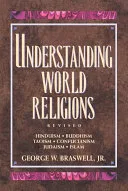
Understanding World Religions
 73
73

Understanding World Religions
George Braswell's "Understanding World Religions" attempts a comprehensive survey, and for its 1994 publication, it largely succeeds in presenting a digestible overview. The book’s strength lies in its methodical approach, breaking down complex faiths into understandable components. Braswell avoids overly academic language, making it approachable for general readers. However, its broad scope means that certain nuanced aspects of traditions, particularly their more esoteric or mystical dimensions, are necessarily simplified. The section on Buddhism, for instance, offers a solid introduction to the Four Noble Truths but perhaps undersells the rich philosophical and meditative depth found in traditions like Zen or Tibetan Buddhism. While its initial presentation of world religions is informative, it lacks the deeper critical engagement with the *experience* of faith that many contemporary readers might seek.
This volume serves as a competent, if somewhat dated, primer.
📝 Description
73
George Braswell's 1994 book surveys global spiritual traditions with clarity.
Published in 1994, George Braswell's "Understanding World Religions" presents a survey of global spiritual traditions. The work moves beyond academic discourse to make major and minor faiths accessible to a wider audience. It examines the core beliefs, historical growth, and varied practices of human belief systems.
This book is for anyone wanting a clear overview of world religions without dense theological arguments or specialized language. It suits students of comparative religion, those beginning to study esoteric philosophies, or anyone curious about humanity's diverse paths to faith. Readers seeking an informative, non-sectarian guide will find this volume useful.
In the early 1990s, this book appeared amidst growing globalization and interest in comparative spirituality. The period saw a rise in New Age thought and increased public awareness of non-Western traditions. Braswell's work offered a structured resource for understanding these spiritual shifts.
While categorized as esoteric, Braswell's "Understanding World Religions" functions as an introductory text that bridges academic study with broader public interest in spirituality. It addresses the era's growing engagement with non-Western traditions and New Age thought, offering a structured approach to beliefs often considered outside mainstream Western theology. The book grounds esoteric interests in comparative analysis, presenting diverse frameworks for understanding religious phenomena in a clear, systematic manner.
💡 Why Read This Book?
• Gain a clear understanding of foundational religious structures like monotheism and polytheism, as presented in Braswell's 1994 overview, enabling you to categorize and compare different belief systems. • Explore the historical development of major faiths, including the origins of Christianity and Islam, to appreciate their chronological influence and interconnectedness. • Grasp key concepts such as creation myths and ethical codes as discussed in the book, providing a framework for analyzing the moral and cosmological underpinnings of diverse spiritual paths.
⭐ Reader Reviews
Honest opinions from readers who have explored this book.
❓ Frequently Asked Questions
What is the publication year of George Braswell's 'Understanding World Religions'?
George Braswell's 'Understanding World Religions' was first published on January 12, 1994. This initial publication date is significant for understanding its context within the study of comparative religion during the early 1990s.
Does the book cover both major and minor world religions?
Yes, the original blurb indicates that Dr. Braswell's work provides an introduction to the major world religions as well as many of the minor ones, aiming for a comprehensive scope within its introductory format.
Is 'Understanding World Religions' suitable for academic study?
While intended to move beyond purely academic exercises, the book's structured approach and factual presentation make it a useful starting point for students of comparative religion or theology.
What is the primary goal of 'Understanding World Religions'?
The book's primary goal is to offer a clear and accessible introduction to the diverse landscape of global spiritual traditions, making the study of other religions understandable for a general audience.
How does Braswell approach the study of religion?
Braswell approaches the study of religion by systematically introducing core concepts, historical developments, and practices of various faiths, aiming for clarity and comprehensiveness without excessive academic jargon.
When was the book first published?
The book 'Understanding World Religions' by George Braswell was first published on January 12, 1994, positioning it within the late 20th-century discourse on global spiritualities.
🔮 Key Themes & Symbolism
Foundational Religious Structures
The work systematically categorizes spiritual expressions, moving from the concept of a singular deity in monotheism to the multiplicity of gods in polytheism, and even the absence of divine belief in atheism. It also introduces animism, exploring the spiritual significance attributed to the natural world. This structural approach provides readers with analytical tools to differentiate and compare the organizational principles underlying diverse faith systems, facilitating a more organized understanding of global religious phenomena.
Historical Trajectories of Faiths
Braswell traces the historical genesis and evolution of prominent religions, informative key moments and figures that shaped their doctrines and practices. Examining the development from early Abrahamic traditions to the spread of Buddhism, the book emphasizes how historical circumstances and cultural contexts influence religious growth and adaptation. This perspective is crucial for understanding not just *what* people believe, but *how* and *why* these beliefs have taken their current forms over centuries.
Core Tenets and Practices
Central to the book is the examination of universal religious elements: creation narratives, ethical frameworks, and ritualistic expressions. Whether exploring the concept of karma in Hinduism or the Five Pillars of Islam, Braswell distills the essential beliefs and observable actions that define a religious tradition. This focus on core tenets allows readers to identify common human questions about existence and morality addressed by different faiths.
The Spectrum of Belief
The book highlights the vast spectrum of human spiritual expression, encompassing not only the world's largest religions but also smaller, often overlooked traditions. By including these diverse perspectives, Braswell underscores the idea that religious understanding requires appreciating a wide range of beliefs, rituals, and cosmologies, challenging any singular notion of 'truth' or 'orthodoxy'.
💬 Memorable Quotes
Direct passages from the work, attributed to the author.
“Understanding other religions is no longer an academic, ivory tower exercise.”
— This statement, from the original blurb, sets the book's intent: to make the study of global faiths relevant and accessible to everyday life, not just scholars.
“Dr. Braswell provides an introduction to the major world religions, as well as many of the minor ones.”
— This highlights the book's ambition for breadth, aiming to cover a wide array of spiritual traditions beyond the most commonly discussed ones.
“Key figures, sacred texts, and foundational historical moments are highlighted.”
— This interpretation emphasizes the book's method of grounding abstract religious concepts in concrete historical facts and influential personalities or writings.
“The book aims to present major and minor faiths with clarity.”
— This emphasizes the author's commitment to accessible language and structured exposition, making complex subjects easier for the reader to grasp.
💡 Key Ideas
Editorial paraphrase of the work's core concepts — not direct quotes.
The work explores creation myths and ethical codes across various traditions.
This paraphrased concept points to the book's focus on fundamental elements that define a religion: its origin stories and its moral guidance systems.
🌙 Esoteric Significance
Tradition
While not strictly an esoteric text itself, "Understanding World Religions" functions as a crucial gateway for individuals exploring esoteric traditions. By providing a solid, factual grounding in the major world religions – from which many esoteric philosophies draw or react against – it equips readers with the necessary context. It departs from esoteric lineage by focusing on orthodox presentations rather than hidden meanings, yet its comprehensive survey implicitly acknowledges the diverse spiritual quests that often lead seekers toward more specialized, hidden knowledge.
Symbolism
The book's approach to symbolism is primarily descriptive rather than interpretive in an esoteric sense. For instance, when discussing Christianity, it might mention the cross as a central symbol, explaining its historical and theological significance. Similarly, it might describe the Dharmachakra (Wheel of Dharma) in Buddhism as representing the Buddha's teachings. The esoteric significance, however, lies in how these described symbols serve as entry points for deeper contemplation, prompting readers to investigate their potential for representing universal archetypes or cosmic principles.
Modern Relevance
In contemporary discussions surrounding interfaith dialogue and the popularization of spiritual practices, Braswell's work remains relevant as a foundational text. Thinkers and practitioners engaging with syncretic spiritualities or seeking to understand the roots of modern meditation techniques (often derived from Buddhism or Hinduism) can benefit from its clear exposition. It provides a necessary baseline for contemporary spiritual explorers, whether they are drawn to Neo-Paganism, modern Kabbalah, or other syncretic paths that often incorporate or reinterpret elements from the religions surveyed.
👥 Who Should Read This Book
• Beginning students of comparative religion or theology seeking a structured, factual overview of global faiths. • Individuals curious about the origins and core beliefs of major world religions like Christianity, Islam, Hinduism, and Buddhism. • Seekers interested in understanding the diverse spiritual landscapes from which various esoteric traditions have emerged or diverged.
📜 Historical Context
Published in 1994, George Braswell's "Understanding World Religions" emerged during a period of intensified globalization and increased intercultural exchange. The late 20th century saw a growing public appetite for comparative spirituality, fueled by movements like New Age thought and a greater awareness of non-Western philosophies. This era was also marked by significant academic developments in religious studies, with scholars like Karen Armstrong publishing influential works such as "A History of God" (1993), which explored the concept of God across Abrahamic traditions. Braswell's book offered a more structured, introductory approach compared to Armstrong's narrative style, aiming to explain diverse religious systems for a broad audience. It provided a valuable resource as these traditions moved from specialized academic inquiry into mainstream popular consciousness, helping to bridge the gap between scholarly analysis and public curiosity.
📔 Journal Prompts
The concept of creation myths across different traditions.
Ethical codes presented for Hinduism versus Buddhism.
The historical development of Abrahamic faiths.
Animism as a spiritual framework.
Key concepts like monotheism and polytheism.
🗂️ Glossary
Monotheism
The belief in the existence of only one God. This concept is central to understanding religions such as Judaism, Christianity, and Islam.
Polytheism
The belief in or worship of more than one god. This is a key characteristic of many ancient religions and some modern traditions like certain forms of Hinduism.
Atheism
Disbelief or lack of belief in the existence of God or gods. It represents a significant philosophical stance often contrasted with theistic beliefs.
Animism
The belief that objects, places, and creatures all possess a distinct spiritual essence. This is often found in indigenous and tribal religions.
Creation Myths
Traditional stories or narratives concerning the origins of the universe, the Earth, and life. These myths often reveal a culture's worldview and values.
Ethical Codes
Systems of moral principles that govern behavior within a religious or philosophical framework. They guide adherents on how to live a righteous or proper life.
Eschatology
The branch of theology concerned with the final destiny of the soul and of humankind. It often involves beliefs about the end of the world, judgment, and the afterlife.