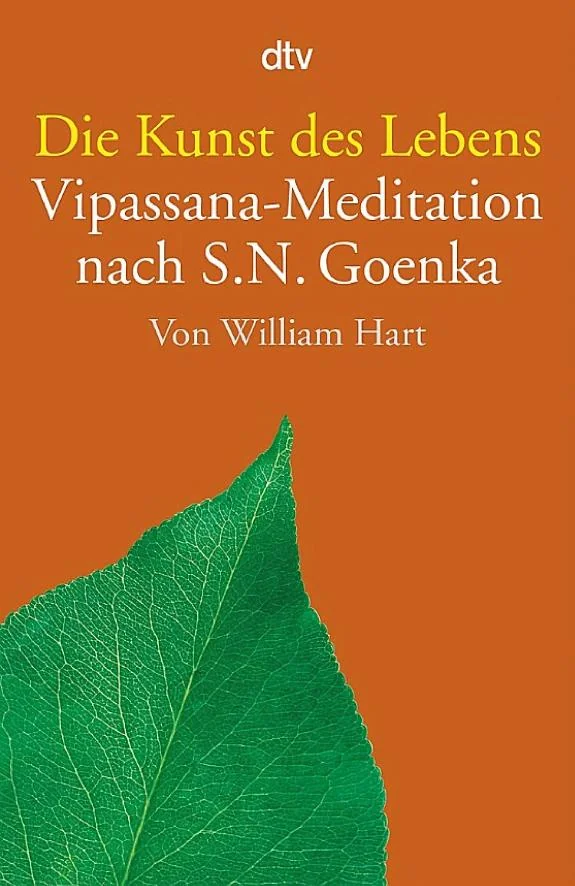
Die Kunst des Lebens
 75
75

Die Kunst des Lebens
William Hart’s "Die Kunst des Lebens" offers a direct conduit to Vipassana, an ancient practice often diluted in contemporary wellness discourse. Hart avoids platitudes, presenting Vipassana as a rigorous method for self-observation rather than a passive relaxation technique. The strength lies in its clarity and unwavering focus on the core principles of seeing reality as it is. A particular passage detailing the observation of breath as a primary anchor for present moment awareness is exceptionally lucid. However, the book's directness might feel stark to those expecting more gentle, introductory metaphors. It demands a commitment to sustained, honest self-inquiry. Ultimately, it provides a functional blueprint for cultivating inner peace through diligent practice, not through wishful thinking.
📝 Description
75
William Hart's Die Kunst des Lebens, published in 2015, is a practical guide to Vipassana meditation.
This book presents Vipassana meditation, a practice meaning 'to see things as they truly are,' as central to Buddhist teachings and an ancient Indian contemplative tradition. Hart's work aims to guide readers in applying this method to manage mental strain, overcome ingrained conditioning, and face daily challenges. The goal is to foster improved well-being, inner harmony, and the release of personal creative potential.
It is for individuals seeking direct experience of mental liberation, not just theoretical knowledge. The text is beneficial for those dealing with stress, anxiety, or recurring patterns of thought and behavior. Anyone interested in self-improvement, psychological health, and cultivating a more stable, peaceful existence will find value. It also serves those curious about applying Buddhist philosophy practically, outside of religious structures, offering a secular path to time-tested insights.
Vipassana meditation, with roots over 2,500 years old, is a core practice within Buddhism. Its introduction to the West accelerated in the late 20th century, making its methods more widely available. Hart's 2015 book enters a field with many mindfulness guides, but it specifically focuses on the Vipassana lineage and its particular methodology. This approach distinguishes it from broader mindfulness trends that sometimes separate the practice from its ethical and philosophical origins.
💡 Why Read This Book?
• You will learn a specific method for disengaging from mental conditioning by applying the Vipassana technique of observing phenomena as they arise and pass, a core teaching from the Buddha's original discourses. • You can expect to cultivate equanimity and reduce suffering by directly observing the impermanent nature of all experiences, a concept Hart emphasizes rooted in the understanding of 'anicca'. • You will gain practical tools for enhancing health and unlocking creative potential through sustained, non-judgmental awareness, as detailed in the book's guidance on problem-solving and inner harmony.
⭐ Reader Reviews
Honest opinions from readers who have explored this book.
❓ Frequently Asked Questions
What does Vipassana mean in the context of William Hart's book?
Vipassana, as presented in 'Die Kunst des Lebens,' translates to 'seeing things as they are.' It's an ancient Indian meditation technique central to Buddhist teachings, focused on direct observation of reality to achieve mental liberation and inner peace.
Is William Hart's book suitable for beginners in meditation?
Yes, the book acts as an introduction to Vipassana meditation. It guides readers on how to use the technique to alleviate mental tension, improve health, and find harmony, making it accessible for those new to the practice.
What are the main benefits of practicing Vipassana as described in the book?
The book outlines benefits such as freeing oneself from mental tensions and conditionings, solving problems effectively, improving health, achieving inner harmony and peace, and unlocking creative potential.
When was William Hart's book 'Die Kunst des Lebens' originally published?
'Die Kunst des Lebens' is the German title for a work originally published by William Hart on June 19, 2015. This edition brings the teachings to a German-speaking audience.
Does the book require adherence to Buddhist religious beliefs?
While Vipassana is a core teaching of the Buddha, Hart's book presents it as a practical technique for self-awareness and mental well-being, accessible to individuals regardless of their religious or spiritual background.
How does Vipassana differ from general mindfulness?
Vipassana, as detailed in the book, is a specific form of insight meditation focused on observing the impermanent, unsatisfactory, and selfless nature of reality. It emphasizes direct experiential understanding, often in contrast to broader mindfulness applications.
🔮 Key Themes & Symbolism
Direct Observation of Reality
The book champions Vipassana as the essential practice of 'seeing things as they are.' This involves a disciplined, non-reactive observation of sensory input, thoughts, and emotions. Hart guides readers to understand that reality is not fixed but a flux of arising and passing phenomena. By cultivating this direct perception, the illusion of a permanent self and the suffering it generates are gradually dissolved. This theme underscores the experiential nature of the practice, moving beyond intellectual assent to embodied understanding.
Liberation from Conditioning
A central promise of 'Die Kunst des Lebens' is freedom from mental and emotional conditioning. Hart explains how ingrained patterns, often unconscious, dictate our reactions and limit our potential. Vipassana provides the tool to observe these patterns without entanglement, thereby weakening their hold. By recognizing the impermanent and conditioned nature of mental states, individuals can break free from cycles of reactivity, fostering a more spontaneous and authentic way of being.
Inner Harmony and Well-being
The practice of Vipassana is presented not just as a path to insight but as a direct route to enhanced well-being. By reducing mental tension and fostering equanimity, the book suggests that practitioners can achieve a profound sense of inner peace. This state is not passive but arises from a clear understanding of how the mind works. Improved health, effective problem-solving, and the blossoming of creativity are presented as natural consequences of this cultivated inner balance.
Essence of Buddhist Teachings
Hart positions Vipassana as the distillation of the Buddha's core message, accessible and relevant beyond religious contexts. The book focuses on the practical application of principles like impermanence ('anicca') and non-self ('anatta') as observable truths. This theme highlights Vipassana's unique status as an ancient technique offering profound psychological and existential insights, grounded in millennia of contemplative tradition yet presented for contemporary application.
💬 Memorable Quotes
Direct passages from the work, attributed to the author.
“Vipassana means 'to see things as they are'.”
— This concise definition captures the book's central thesis. It emphasizes direct, unmediated perception as the key to understanding oneself and the nature of reality, forming the foundation of the practice taught.
“It is the essence of the Buddha's teaching.”
— This highlights the profound significance of Vipassana within the broader Buddhist philosophical framework. It positions the practice not as a peripheral element, but as the very heart of the path to liberation and enlightenment.
“Free yourself from mental tensions and conditionings.”
— This speaks to the therapeutic and liberating potential of Vipassana. It suggests that the practice offers a tangible method for dismantling psychological burdens and ingrained reactive patterns that hinder well-being.
“Find harmony and inner peace.”
— This points to the ultimate experiential outcome of consistent Vipassana practice. It describes a state of profound inner stability and contentment that arises from a clearer, more balanced perspective on life's challenges.
“Unfold your creative potential.”
— This suggests that mental clarity and freedom from constraint achieved through Vipassana can unlock latent abilities. It connects inner work directly to outward expression and innovation, indicating a holistic benefit.
🌙 Esoteric Significance
Tradition
While Vipassana originates from the Buddhist tradition, particularly Theravada, Hart's presentation often emphasizes its practical, psychological applications, aligning it with the broader esoteric interest in contemplative techniques for self-transformation. It departs from purely religious dogma, focusing on the experiential path to insight and liberation, a common thread in many esoteric systems that seek direct gnosis or realization beyond established doctrines.
Symbolism
The primary 'symbol' in Vipassana is the breath, representing the constant flow of life and the anchor to the present moment. The arising and passing of phenomena (thoughts, sensations) symbolize impermanence ('anicca') and the illusory nature of a fixed self ('anatta'). The practice itself symbolizes the journey from ignorance and suffering towards wisdom and liberation, a core symbolic narrative found across many mystical paths.
Modern Relevance
Hart's work appeals to contemporary mindfulness-based cognitive therapy (MBCT) and secular meditation movements, but also with esoteric practitioners seeking direct experiential methods. Thinkers and practitioners within Western esotericism, particularly those interested in consciousness studies and non-dual awareness, find in Vipassana a potent tool that complements or informs their own traditions, offering a structured path to insights often sought through other means.
👥 Who Should Read This Book
• Individuals seeking a practical, non-dogmatic method for stress reduction and mental clarity will find Hart's guide important for learning Vipassana's core techniques. • Students of comparative spirituality or philosophy interested in the experiential roots of Buddhist teachings will benefit from this direct exploration of a foundational contemplative practice. • Those experiencing persistent psychological unease or seeking deeper self-understanding can utilize this text to cultivate insight into the nature of their own minds and conditioning.
📜 Historical Context
William Hart's "Die Kunst des Lebens," published in 2015, arrives in an era saturated with mindfulness literature, yet it anchors itself firmly in the specific, ancient tradition of Vipassana meditation. This practice traces its roots to Siddhartha Gautama, the historical Buddha, over 2,500 years ago in ancient India. While Vipassana has been preserved within various Buddhist schools, its widespread introduction to Western audiences accelerated significantly in the latter half of the 20th century, notably through the efforts of teachers like S.N. Goenka. Hart's work engages with this lineage, offering a direct transmission of the technique. It emerged during a period where secular mindfulness, often derived from Vipassana but sometimes stripped of its ethical context, had become a mainstream phenomenon. By focusing on Vipassana's original intent—seeing reality as it is—Hart’s book provides a counterpoint to more generalized approaches, emphasizing the practice's capacity for deep psychological insight and liberation.
📔 Journal Prompts
The observation of breath as an anchor for present moment awareness.
Recognizing mental conditioning through mindful observation.
The arising and passing of thoughts without judgment.
Cultivating equanimity towards impermanent experiences.
Identifying personal patterns of craving and aversion.
🗂️ Glossary
Vipassana
A Pali term meaning 'insight' or 'clear seeing.' It refers to a specific meditation technique focused on observing reality as it is, to understand the impermanent nature of all phenomena.
Anicca
A fundamental concept in Buddhism, referring to the impermanence or transient nature of all conditioned things. Vipassana meditation aims to cultivate direct experiential understanding of anicca.
Dukkha
Often translated as 'suffering,' 'dissatisfaction,' or 'stress.' It denotes the inherent unsatisfactoriness of existence due to impermanence and attachment, which Vipassana seeks to alleviate.
Anatta
The doctrine of 'non-self' or 'no-soul.' It posits that there is no permanent, unchanging self or ego. Vipassana practice can lead to the direct realization of anatta.
Conditioning
In this context, refers to ingrained mental and behavioral patterns formed through past experiences, habits, and societal influences, which often operate unconsciously and dictate reactions.
Equanimity
A state of mental calmness and composure, especially in difficult situations. It is cultivated through Vipassana by observing experiences without reactivity or attachment.
Mindfulness
The practice of maintaining a non-judgmental awareness of one's thoughts, feelings, bodily sensations, and surrounding environment. Vipassana is a specific form of advanced mindfulness.
This book appears in 1 collection
🔮 Readers Also Liked
Browse all →






From the “Vipassana” Collection
View all →






More Free Occult Philosophy Books
View all →