Los guardianes del Santo Grial

 73
73

Los guardianes del Santo Grial
Mark Amaru Pinkham's 'Los guardianes del Santo Grial' presents a bold thesis, positing the Holy Grail not as a mere relic but as a guarded, living spiritual inheritance. The strength of the work lies in its ambitious synthesis of disparate historical threads and esoteric lore, attempting to trace a continuous lineage from ancient mystery cults to purportedly modern custodians. Pinkham's engagement with the Knights Templar and their alleged role is particularly detailed, though this also points to a limitation: a tendency to accept speculative connections as fact without sufficient critical distance. The discussion around the 'Grail Mystery' as a bloodline-based transmission of knowledge offers a unique perspective, moving beyond common interpretations. Ultimately, the book serves as a provocative, if sometimes overly assertive, contribution to Grail literature.
📝 Description
73
Mark Amaru Pinkham's 2006 book examines the Holy Grail's lineage through bloodlines and secret societies.
Published in 2006, 'Los guardianes del Santo Grial' by Mark Amaru Pinkham investigates the historical and mythical roots of the Holy Grail. Pinkham argues for a tangible, historical basis for the Grail's existence and its protectors, moving beyond simple legend. The work connects the Grail to various bloodlines, secret societies, and ancient spiritual traditions.
This book is for serious students of Western esotericism, comparative mythology, and the history of secret societies. Readers interested in the Grail legend beyond Arthurian romance, particularly those who appreciate speculative historical inquiry into spiritual lineages and hidden orders, will find it engaging. It appeals to those seeking to understand the Grail as a living tradition, not just a relic.
Pinkham's work emerged in the early 2000s, a period that saw renewed interest in esoteric traditions and alternative histories, influenced by earlier figures like Helena Blavatsky and Rudolf Steiner. His book contributes to a discourse that often questions mainstream historical accounts, engaging with the enduring popular and scholarly fascination surrounding the Knights Templar and their purported links to the Grail.
💡 Why Read This Book?
• Gain insight into the 'Grail Mystery' as a potential bloodline-based spiritual lineage, a concept explored in detail by Pinkham's research into historical secret societies. • Understand the proposed connections between the Holy Grail, Gnosticism, and ancient mystery traditions, offering a different lens than standard Arthurian scholarship. • Examine the role of specific groups, such as the Knights Templar, as potential custodians of Grail knowledge, a viewpoint discussed extensively within the book's historical analysis.
⭐ Reader Reviews
Honest opinions from readers who have explored this book.
❓ Frequently Asked Questions
What is the primary argument of 'Los guardianes del Santo Grial' regarding the Holy Grail?
The book argues that the Holy Grail is not merely a relic but represents a living spiritual lineage and sacred knowledge passed down through specific bloodlines and secret societies, with the Knights Templar being a key focus.
When was Mark Amaru Pinkham's 'Los guardianes del Santo Grial' first published?
The book was first published in 2006, positioning it within a period of renewed interest in esoteric subjects and alternative historical theories.
Does the book focus on the Arthurian legends of the Grail?
While acknowledging the Arthurian connection, the book primarily seeks to explore the historical and esoteric underpinnings of the Grail, focusing on its alleged custodians and spiritual transmission beyond the medieval romances.
What kind of esoteric traditions does Pinkham connect the Grail to?
Pinkham connects the Grail to various traditions, including Gnosticism, ancient mystery schools, and potentially esoteric Christian lineages, suggesting a continuous stream of sacred knowledge.
Who are considered the 'guardians' in the book's title?
The 'guardians' are understood to be secret societies and specific bloodlines that have allegedly preserved and transmitted the spiritual knowledge and essence of the Holy Grail throughout history.
Is this book suitable for beginners in esotericism?
The book delves into complex theories and historical speculation, making it more suitable for readers with some existing familiarity with esoteric subjects and comparative mythology.
🔮 Key Themes & Symbolism
The Grail as a Living Lineage
The central thesis posits the Holy Grail not as a static object but as a dynamic spiritual inheritance. Pinkham argues for its transmission through specific bloodlines and secret societies, tracing its potential presence from ancient times to the early 21st century. This concept challenges purely archaeological or romantic interpretations, focusing instead on the continuity of sacred knowledge and its custodians.
Secret Societies and Custodianship
The book extensively investigates the role of various historical and clandestine groups, most notably the Knights Templar, as alleged guardians of the Grail. Pinkham explores the idea that these orders possessed and protected esoteric wisdom connected to the Grail, maintaining its spiritual efficacy through centuries of historical upheaval and persecution.
Syncretic Esoteric Connections
Pinkham attempts to link the Grail mystery to a broader spectrum of esoteric traditions. This includes examining potential influences and parallels with Gnosticism, mystery cults of antiquity, and possibly heterodox Christian movements. The goal is to demonstrate how the Grail concept serves as a focal point for a persistent, underlying spiritual current within Western civilization.
Bloodline and Spiritual Descent
A significant theme is the importance of specific bloodlines in preserving the Grail's legacy. The work explores theories suggesting that certain families or lineages carry the spiritual and genetic keys to understanding and continuing the Grail tradition, positioning it as a form of sacred inheritance tied to physical descent.
💬 Memorable Quotes
Direct passages from the work, attributed to the author.
“The Grail is not a cup, but a lineage.”
— This concisely captures Pinkham's core argument: the Holy Grail's significance lies not in a physical chalice, but in the unbroken spiritual and potentially physical descent of knowledge and power through specific lines of succession.
“The custodianship of the Grail implies a secret society.”
— This highlights the book's focus on hidden orders and clandestine groups. It suggests that the preservation of such profound spiritual secrets necessitates an organized, yet concealed, structure to protect it from the uninitiated.
“The Templars held more than just wealth; they held the keys.”
— This interpretation underscores the book's assertion that the Knights Templar's historical importance extends beyond their financial and military power, pointing towards their alleged role as keepers of esoteric knowledge, specifically related to the Grail.
“The Mystery is passed from generation to generation.”
— This emphasizes the continuity and living nature of the Grail tradition as presented by Pinkham. It suggests a deliberate, generational transfer of sacred wisdom, ensuring its survival across historical epochs.
💡 Key Ideas
Editorial paraphrase of the work's core concepts — not direct quotes.
Gnosis is the essence the Grail seeks to reawaken.
This paraphrase suggests a connection between the Grail's purpose and Gnostic principles, implying that the true function of the Grail tradition is to facilitate spiritual awakening and direct knowledge of the divine.
🌙 Esoteric Significance
Tradition
This work situates itself within the broader Western Esoteric Tradition, drawing heavily from Grail legends, Gnostic concepts, and theories surrounding secret societies like the Knights Templar. It departs from purely religious interpretations by focusing on a hidden, lineage-based transmission of spiritual power and knowledge, aligning with a Hermetic and Rosicrucian inclination towards initiation and guarded wisdom.
Symbolism
The primary symbol is the Grail itself, interpreted not as a literal cup but as a conduit for spiritual energy and lineage. Other key symbols likely include bloodlines (representing continuity and inheritance), secret society emblems (signifying hidden knowledge and protection), and potentially Templar imagery, all pointing towards a hidden spiritual order preserving ancient wisdom.
Modern Relevance
Pinkham's work speaks to contemporary seekers interested in the evolution of spiritual lineages and the historical roots of esoteric orders. It finds relevance in circles exploring Gnostic revival, Templar lore, and the concept of sacred bloodlines, influencing discussions within alternative history and Western Mystery School communities.
👥 Who Should Read This Book
• Students of Western Esotericism seeking to understand alternative theories on the Holy Grail's historical and spiritual significance. • Comparative mythology enthusiasts interested in tracing the evolution of sacred legends and their potential real-world connections. • Researchers of secret societies and their purported roles in preserving esoteric knowledge across centuries.
📜 Historical Context
Mark Amaru Pinkham's 'Los guardianes del Santo Grial,' published in 2006, emerged during a period of significant public and academic interest in esoteric history and controversial theories. The early 21st century saw a continued fascination with the Knights Templar, building on earlier popularizations by authors like Gerard de Sède in the 1960s and the subsequent wave of speculative works. Pinkham's book contributed to this discourse, which often contrasted sharply with mainstream historical scholarship, particularly concerning the Templars' alleged survival and connection to the Grail. This era also witnessed the influence of the New Age movement and a growing openness to alternative spiritualities and hidden histories, providing fertile ground for works that challenged established narratives. While not facing direct censorship, such books often navigated a landscape where skepticism from traditional academia was a significant counterpoint.
📔 Journal Prompts
The concept of the Grail as a bloodline inheritance, as presented in the book.
Reflect on the symbolism of custodianship within secret societies like the Templars.
How might the Gnostic concept of 'Gnosis' relate to the spiritual transmission of the Grail?
Consider the implications of the Grail 'Mystery' being a continuous, living tradition.
Analyze the proposed links between ancient mystery cults and the Grail lineage.
🗂️ Glossary
Grail Lineage
The concept that the Holy Grail represents not just an object but a continuous spiritual inheritance passed down through specific family lines or secret societies.
Grail Mystery
The hidden spiritual knowledge, power, or tradition associated with the Holy Grail, believed by some to have been preserved by select groups throughout history.
Custodians
Individuals or groups, often secret societies like the Knights Templar, believed to be responsible for protecting and transmitting the secrets and spiritual legacy of the Grail.
Gnosticism
A diverse set of religious ideas and systems, originating in the early Christian era, emphasizing direct spiritual knowledge (gnosis) for salvation and often viewing the material world as flawed or evil.
Knights Templar
A medieval Catholic military order founded around 1119, known for its role in the Crusades and subsequent historical speculation regarding their potential possession of secret knowledge or relics like the Grail.
Esoteric Bloodline
A theory suggesting that certain families carry a unique spiritual or energetic inheritance, crucial for preserving or activating specific sacred traditions, such as the Grail.
Syncretism
The merging or blending of different religious, cultural, or philosophical beliefs and practices, often seen in esoteric traditions seeking universal truths.
🔮 Readers Also Liked
Browse all →![ERIC ED051965: The Remedial [Reading] Teacher: Special Training and Professional Responsibilities.](/img/thumb/eric-ed051965-the-remedial-reading-teacher-special-training-and-professional-responsibilities-eric.webp)








More by Mark Amaru Pinkham
All books →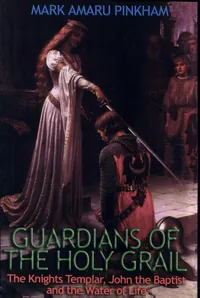

More Free Occult Philosophy Books
View all →