Ghost Ship
 75
75

Ghost Ship
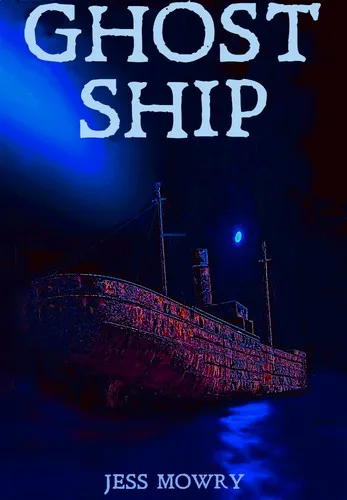
Jess Mowry’s Ghost Ship is a text that refuses easy categorization. The narrative’s deliberate opacity, particularly in its depiction of the unnamed protagonist’s internal landscape, serves as both its greatest strength and its most significant hurdle. Mowry excels at creating an atmosphere of disquieting familiarity, a sense that the reader is glimpsing truths just beyond the veil of ordinary perception. A particularly striking passage involves the description of the ship’s hull seemingly breathing, a visceral image that captures the organic, almost sentient, nature the author imbues into the vessel of consciousness. However, the book’s commitment to abstraction occasionally tips into a formlessness that can leave the reader adrift without sufficient anchor points. The lack of explicit resolution or clear character arcs, while perhaps intentional, might frustrate those seeking a more conventional literary experience. Despite this, Ghost Ship offers a unique meditation on subjective reality, making it a compelling, if challenging, read for those inclined toward the liminal.
📝 Description
75
Jess Mowry's 2016 book, Ghost Ship, challenges readers to construct meaning actively.
Ghost Ship, published in 2016, is a philosophical work that moves beyond conventional narrative structures. It engages with themes of consciousness, perception, and the uncertain spaces between what is known and unknown. The book is designed to provoke active engagement rather than passive reception, encouraging readers to participate in shaping the text's meaning. Its esoteric nature means it often points to concepts that are understood intuitively rather than explicitly defined.
This book is intended for those dedicated to esoteric knowledge and literature that acts as a catalyst for inner exploration. Readers interested in the nature of reality, philosophical inquiries, and the hidden dynamics of existence will find it rewarding. It suits individuals comfortable with ambiguity and texts that require significant personal interpretation and reflection. Those familiar with mystical traditions or psychological studies may find connections within its pages.
Published in 2016, Ghost Ship appeared during a time of growing interest in consciousness studies and alternative spiritualities. This period saw a revival of Jungian psychology, non-dualistic philosophies, and a general questioning of materialist worldviews, amplified by digital access to diverse texts. The work reflects this intellectual climate, where the lines between science, spirituality, and art were blurring. It contributes to a literary trend focused on subjective experience and the limitations of language.
💡 Why Read This Book?
• Gain insight into the concept of the 'vessel of consciousness' as presented in Chapter 3, understanding how Mowry uses nautical imagery to explore the fluidity of self. • Experience Mowry's unique approach to psychological symbolism, particularly the recurring motif of the 'ghost' as an exploration of ancestral or unresolved personal echoes. • Confront the idea of 'portals' as depicted in the narrative, challenging your perception of linear time and reality through evocative, non-linear storytelling.
⭐ Reader Reviews
Honest opinions from readers who have explored this book.
❓ Frequently Asked Questions
What is the primary allegorical meaning of the 'ghost ship' in Jess Mowry's novel?
The 'ghost ship' in Jess Mowry's work often functions as a metaphor for the subconscious mind or the collective unconscious, carrying the weight of past experiences and unresolved psychological states.
When was Ghost Ship first published and by whom?
Ghost Ship was first published in 2016. The author is Jess Mowry.
Does Ghost Ship follow a traditional plot structure?
No, Ghost Ship eschews traditional plot structures, focusing more on atmospheric immersion and the exploration of internal states and esoteric concepts rather than a linear narrative.
What kind of esoteric themes are explored in the book?
The book delves into themes of altered states of consciousness, the nature of reality, perception, and the interplay between the internal and external worlds.
Is Ghost Ship suitable for readers new to esoteric literature?
It can be challenging for absolute beginners due to its symbolic density and non-traditional narrative. However, for those with an open mind and a curiosity for deeper meaning, it offers a unique entry point.
How does the setting contribute to the book's atmosphere?
The setting, often described as a liminal or undefined space, enhances the book's atmosphere of mystery and introspection, mirroring the protagonist's internal journey and exploration of consciousness.
🔮 Key Themes & Symbolism
The Vessel of Consciousness
The 'ship' in Ghost Ship serves as a potent symbol for the human psyche, a vessel working through the turbulent seas of existence. Mowry portrays this vessel not as a static entity but as a living, breathing construct, susceptible to the currents of memory, trauma, and external influence. This exploration aligns with Gnostic ideas of the soul's journey through material realms, emphasizing the subjective experience of being. The condition of the ship directly reflects the state of the consciousness it represents, inviting contemplation on the maintenance and integrity of our inner worlds.
Echoes and Lingering Presences
The 'ghosts' that populate the narrative are more than spectral apparitions; they represent the persistent elements of past events, unresolved emotions, and archetypal forces. This theme speaks to concepts found in certain Western esoteric traditions that acknowledge the energetic residue of human experience. Mowry suggests these presences are not external but often arise from within, influencing perception and action. Understanding these 'ghosts' becomes a path towards self-awareness and integration, much like the alchemical process of confronting and transforming shadow aspects.
Liminality and Perceptual Shifts
Ghost Ship is steeped in the concept of liminality – the threshold state between what was and what will be, or between different dimensions of reality. Mowry masterfully creates an atmosphere where the boundaries of the ordinary dissolve, revealing glimpses of deeper, often unsettling, truths. This aligns with mystical experiences where normal sensory input is suspended, and a more profound, albeit ambiguous, understanding emerges. The narrative encourages readers to question the solidity of their perceived reality and to embrace the transformative potential of transitional states.
The Nature of 'Portals'
Central to the book's esoteric framework is the idea of 'portals' – moments or states of being that offer access to alternative realities or deeper layers of consciousness. These are not necessarily physical gateways but perceptual openings, often triggered by intense emotional states or specific junctures in the narrative. This concept echoes shamanic traditions where altered states of consciousness allow for travel to other realms. Mowry uses these 'portals' to illustrate the mind's capacity to transcend conventional limitations and to perceive realities beyond the scope of everyday awareness.
💬 Memorable Quotes
Direct passages from the work, attributed to the author.
“Shadows clung not to the corners, but to the very air, thick with unspoken things.”
— Here, Mowry transforms abstract emotional or psychological states into tangible atmospheric elements. The 'shadows' become a palpable presence, representing the weight of the unacknowledged or repressed that permeates existence.
“Was it the sea that shifted, or the perception of its edge?”
— This question directly challenges the reader's assumptions about objective reality. It highlights the book's central theme: the unreliability of sensory input and the profound influence of subjective consciousness on how we experience the world.
“A ghost is merely a memory that refuses to settle.”
— This concise statement offers a potent interpretation of the 'ghost' motif. It frames lingering presences not as external entities but as internal states of unresolved experience, echoing psychological and esoteric views on the persistence of the past.
“The map was the territory, and the territory was dissolving.”
— This paradoxical statement suggests a breakdown of perceived order and the collapse of conventional frameworks for understanding reality. It points to a state of dissolution where the symbolic representation becomes indistinguishable from the experience itself.
💡 Key Ideas
Editorial paraphrase of the work's core concepts — not direct quotes.
The hull seemed to sigh, a slow, deep exhalation of ancient wood and brine.
This line vividly personifies the ship, suggesting it is a living entity intimately connected to the consciousness it carries. It evokes a sense of organic life within the inanimate, mirroring the book's exploration of the psyche as a dynamic, breathing presence.
🌙 Esoteric Significance
Tradition
Ghost Ship aligns with a contemporary strand of esoteric literature that draws from Gnosticism and Jungian psychology, focusing on the inner journey and the subjective experience of reality. It departs from more structured traditions like Theosophy or Hermeticism by embracing ambiguity and eschewing definitive doctrines. Instead, it uses symbolic language to evoke states of being and perception, suggesting that ultimate truths are to be intuited rather than intellectually grasped. The work emphasizes the 'gnosis' – direct, experiential knowledge – over dogma.
Symbolism
The primary symbols are the 'ship' itself, representing the consciousness or soul navigating existence, and the 'ghosts,' which embody unresolved past traumas, ancestral echoes, or archetypal energies that influence the present. 'Portals' are another key motif, signifying liminal states or moments of heightened perception where the veil between realities thins, allowing for glimpses of deeper truths or other dimensions.
Modern Relevance
This work speaks to contemporary seekers interested in consciousness exploration, transpersonal psychology, and the philosophical implications of quantum physics. Thinkers exploring the nature of reality, non-duality, and the power of subjective experience find resonance in Mowry's symbolic language. Practices involving lucid dreaming, meditation, and shadow work can find metaphorical parallels and inspiration within the book's exploration of internal landscapes and psychic phenomena.
👥 Who Should Read This Book
• Students of consciousness studies and transpersonal psychology interested in symbolic representations of the psyche's journey. • Readers of philosophical fiction and experimental literature seeking narratives that challenge conventional perceptions of reality and self. • Individuals drawn to esoteric themes, particularly those exploring archetypes, liminal states, and the exploration of the subconscious mind.
📜 Historical Context
Published in 2016, Jess Mowry's Ghost Ship emerged during a period marked by a global resurgence of interest in esoteric thought and consciousness studies, amplified by digital connectivity. This era saw thinkers like Graham Hancock challenging established historical narratives, and a growing audience engaging with Jungian archetypes and non-dual philosophies. The literary landscape itself was experiencing a trend towards fragmented narratives and explorations of subjective reality, influenced perhaps by earlier works that questioned empirical certainty. While not directly engaging with a specific contemporary author in a public debate, Mowry's work participates in a broader cultural conversation that questioned strict materialism, a counterpoint to the dominant scientific rationalism of the late 20th century. The book’s reception, while not marked by major awards or controversy, found its audience among those seeking literature that mirrored the burgeoning spiritual and philosophical inquiries of the early 21st century.
📔 Journal Prompts
The spectral presence of the 'ghost' as a persistent memory.
The 'ship' as a metaphor for your own evolving consciousness.
Moments of perceived 'portals' in your waking life.
The atmosphere of the dissolving 'territory'.
Reflecting on the 'unspoken things' that inhabit your inner world.
🗂️ Glossary
Vessel of Consciousness
A metaphorical representation of the individual psyche or self, conceived as a vehicle that navigates the experiences and challenges of existence.
Ghost
In the context of the book, a 'ghost' is interpreted not merely as a supernatural entity but as a lingering psychic imprint, an unresolved memory, or an archetypal force that influences present perception and experience.
Portal
A symbolic threshold or transitional state that allows for a shift in perception, offering glimpses into alternative realities, deeper levels of consciousness, or a more profound understanding of existence.
Liminality
The quality of being on a threshold or in an in-between state, often characterized by ambiguity, transition, and a suspension of ordinary rules or perceptions.
Territory
Refers to the perceived external world or the framework of reality. The book plays with the idea that the 'map' (representation) and the 'territory' (reality) can become indistinguishable or subject to dissolution.
Unspoken Things
Represents the hidden aspects of the psyche, unacknowledged emotions, repressed memories, or unspoken truths that nonetheless exert a powerful influence on an individual's experience.
Brine
The saltwater of the sea, used metaphorically to evoke the deep, often melancholic, and vast nature of the subconscious or the collective unconscious.
🔮 Readers Also Liked
Browse all →








More by Jess Mowry
All books →


More Free Occult Philosophy Books
View all →