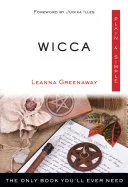
Wicca Plain & Simple
 73
73

Wicca Plain & Simple
Leanna Greenaway’s "Wicca Plain & Simple" succeeds admirably in its stated goal of demystifying witchcraft for a contemporary audience. The author’s strength lies in her accessible prose and the way she frames Wicca as a life-affirming practice. Her chapter on herbal correspondences, for instance, offers concrete, actionable advice, moving beyond mere theoretical discussion. However, the book occasionally leans towards an oversimplification of complex spiritual concepts. While aiming for clarity, some nuanced historical or theological aspects of Wicca might feel somewhat glossed over. The section detailing spellcasting for specific desires, while practical, could benefit from a deeper exploration of the energetic principles at play, rather than presenting them as straightforward recipes. Despite this, Greenaway provides a solid, unintimidating entry point for those drawn to earth-based spirituality.
📝 Description
73
Leanna Greenaway's 2017 book, Wicca Plain & Simple, demystifies modern witchcraft.
Wicca Plain & Simple presents the practice of Wicca not as an arcane mystery but as a practical system for personal growth. The book guides readers through the fundamental elements of Wiccan belief and ritual, emphasizing its potential as a healing force.
This volume is designed for individuals curious about modern paganism and earth-centered spirituality. It specifically addresses those seeking a straightforward introduction to Wicca, without overwhelming jargon or complex historical digressions. Readers interested in practical application, such as spellcasting for everyday concerns and understanding natural correspondences, will find it particularly useful.
Published in 2017, Greenaway's work emerged during a period of increased public engagement with pagan traditions. Wicca, which gained wider recognition in the mid-20th century, has continued to evolve. Greenaway's approach reflects a modern interpretation, making accessible practices that were once more obscure. This aligns with a broader trend of demystifying esoteric subjects for a wider audience.
💡 Why Read This Book?
• Learn practical spellcasting techniques for love, health, and prosperity, directly referencing the book's guidance on using tools like tarot cards and pendulums for manifestation. • Understand the seasonal significance of the Wheel of the Year, a core Wiccan concept, and how to align personal rituals with its natural cycles as explained by Greenaway. • Discover the energetic properties of specific herbs for magical work, gaining practical knowledge for spellcraft and ritual preparation as detailed in the book.
⭐ Reader Reviews
Honest opinions from readers who have explored this book.
❓ Frequently Asked Questions
What is Wicca presented as in Leanna Greenaway's book?
Greenaway presents Wicca as a contemporary, accessible, and life-affirming spiritual path, emphasizing its use as a positive force for healing and personal growth, rather than an arcane or obscure practice.
What magical tools are discussed in Wicca Plain & Simple?
The book covers the use of practical tools for magic, including tarot cards, pendulums, and various herbs, explaining how they can be employed in spells and rituals.
Does the book focus on spells for specific outcomes?
Yes, it guides readers on casting spells for common life concerns such as love, health, wealth, family happiness, and career advancement.
What is the historical period of Wicca's emergence mentioned in the context of this book?
Wicca gained wider public recognition in the mid-20th century, a period that saw the foundational work of figures like Gerald Gardner, influencing its subsequent evolution.
What ethical principles are associated with Wicca in this text?
The book touches upon the ethical framework of the Wiccan Rede, a guiding principle for practitioners, alongside concepts like divine principles and seasonal cycles.
Is this book suitable for absolute beginners to witchcraft?
Yes, the book is specifically designed for individuals seeking a straightforward introduction to Wicca, avoiding complex jargon and focusing on practical application.
🔮 Key Themes & Symbolism
Practical Spellcraft
The book emphasizes the tangible application of Wiccan principles through spellcasting. It moves beyond theoretical discussions to offer concrete methods for influencing life outcomes. Readers are shown how to channel energies using tools like tarot cards and pendulums, and how to select appropriate herbs based on their energetic properties for spells aimed at love, health, prosperity, and career success. This focus makes the ancient art of magic accessible for everyday concerns.
The Wheel of the Year
Central to Wiccan practice is the cyclical understanding of time, represented by the Wheel of the Year. Greenaway explains this concept, highlighting the eight major sabbats (festivals) that mark the turning of the seasons. This theme connects the individual to the natural world, encouraging rituals and meditations that honor the Earth's rhythms and the ongoing cycles of life, death, and rebirth. It provides a framework for spiritual grounding and seasonal awareness.
Herbal Magics
Greenaway details the traditional use of herbs within Wicca, not just for culinary or medicinal purposes, but for their inherent magical and energetic qualities. The book provides a guide to specific herbs and their correspondences, explaining how they can be incorporated into spells, rituals, and personal practice to enhance intention and amplify desired effects. This section grounds the esoteric practice in the tangible bounty of nature.
Positive Force for Healing
A recurring theme is Wicca's potential as a benevolent force for personal and communal well-being. The book frames witchcraft not as a path of harm, but as a system for self-improvement, healing, and fostering happiness. It encourages ethical practice and the application of magical energies towards constructive goals, promoting a holistic approach to life that integrates spiritual practice with everyday existence.
💬 Memorable Quotes
Direct passages from the work, attributed to the author.
“Practice magic with tarot cards, agents, and pendulums; cast love, health, wealth, family happiness, and career spells.”
— This directive highlights the book's focus on tangible, actionable magic. It assures the reader that Wicca provides tools and methods for addressing practical life concerns, moving beyond abstract spirituality into applied energetic work.
“Discover which herbs are beneficial when conducting spells and rituals.”
— This points to the book's practical guidance on natural correspondences. It suggests that understanding the energetic properties of plants is a key component of effective Wiccan practice, linking the craft to the natural world.
“Greenaway makes these life-affirming, ancient Wiccan traditions meaningful and accessible to us today.”
— This interpretation underscores the author's aim: to bridge the gap between ancient traditions and modern life. It suggests the book translates complex esoteric concepts into understandable and relevant practices for contemporary individuals.
“Shows you how to use it [Wicca] as a healing and positive force.”
— This emphasizes the ethical and benevolent application of Wiccan principles. The book frames witchcraft as a tool for well-being and constructive change, countering potential negative stereotypes and promoting a healthy approach to spiritual practice.
“Offers a contemporary approach to Wicca, also known as witchcraft.”
— This highlights the book's modern perspective. It positions Wicca not as a relic of the past, but as a living, evolving spiritual path adaptable to the challenges and opportunities of the 21st century.
🌙 Esoteric Significance
Tradition
This work aligns with the contemporary Neo-Pagan and Wiccan traditions, which themselves draw heavily from earlier esoteric currents like ceremonial magic, folk magic, and nature worship. It represents a modern, accessible interpretation of the Wiccan path, emphasizing its earth-centered cosmology and ethical framework, diverging from more rigidly structured or historically focused interpretations.
Symbolism
Key symbols include the pentacle, representing the five elements (earth, air, fire, water, spirit) and protective energies, often worn as a symbol of faith. The Wheel of the Year is a crucial motif, symbolizing the cyclical nature of life, death, and rebirth, and the celebration of seasonal changes. These symbols ground the practice in natural cycles and elemental forces.
Modern Relevance
Greenaway's approach appeals to contemporary practitioners seeking practical spirituality. It informs modern covens and solitary practitioners interested in accessible ritual, ethical magic, and connecting with nature. The book's emphasis on positive manifestation and personal empowerment aligns with current trends in self-help and spiritual wellness movements.
👥 Who Should Read This Book
• Aspiring Wiccans and witches seeking a clear, non-intimidating introduction to core beliefs and practices. • Individuals interested in earth-centered spirituality and seasonal celebrations, wanting to understand the Wheel of the Year. • Those curious about practical magic, including spellcasting with herbs, tarot, and pendulums for personal development.
📜 Historical Context
Leanna Greenaway's "Wicca Plain & Simple," published in 2017, arrived in an era where neopaganism had moved from fringe curiosity to a more visible spiritual landscape. Wicca itself, largely popularized in the mid-20th century by figures like Gerald Gardner and Doreen Valiente, had undergone decades of evolution and diversification. Greenaway's work fits within a broader trend of accessible introductions to earth-centered spirituality, aiming to clarify practices that had previously been more guarded. It emerged in a cultural climate where interest in alternative spiritualities was growing, partly fueled by the internet, making information more readily available than during the time of early Wiccan pioneers who faced greater societal skepticism and occasional media misrepresentation. While not engaging directly with academic debates, the book implicitly responded to a public desire for practical, positive spiritual paths.
📔 Journal Prompts
The Wheel of the Year's cyclical nature and its reflection in your personal life.
Your personal understanding of the Wiccan Rede and its ethical implications.
How the energetic properties of specific herbs might align with your current intentions.
The role of divine feminine and masculine principles in your spiritual journey.
Practical applications of magic using tools like pendulums in your daily life.
🗂️ Glossary
Wicca
A contemporary pagan religion that emphasizes reverence for nature, a duotheistic or polytheistic theology, and the practice of magic, often associated with witchcraft.
Witchcraft
Often used interchangeably with Wicca, but can also refer to a broader range of magical practices and traditions, not necessarily tied to a specific religion.
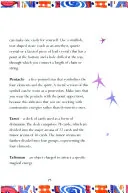
Pentacle
A five-pointed star, typically enclosed in a circle, used as a symbol in Wicca and other pagan traditions, often representing the elements and protection.
Wheel of the Year
The cycle of eight seasonal festivals (sabbats) celebrated in Wicca and other neopagan traditions, marking the progression of the year.
Wiccan Rede
A set of ethical guidelines and principles for Wiccans, famously summarized by the phrase 'An it harm none, do what ye will.'
Sabbats
The eight major festivals celebrated in Wicca, corresponding to the solstices, equinoxes, and the cross-quarter days between them.
Pendulum
A weighted object suspended from a cord or chain, used as a divination tool or to detect energy.
This book appears in 1 collection
🔮 Readers Also Liked
Browse all →







From the “Spellcraft” Collection
View all →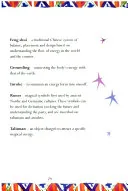



More Free Sacred Texts & Gnosticism Books
View all →