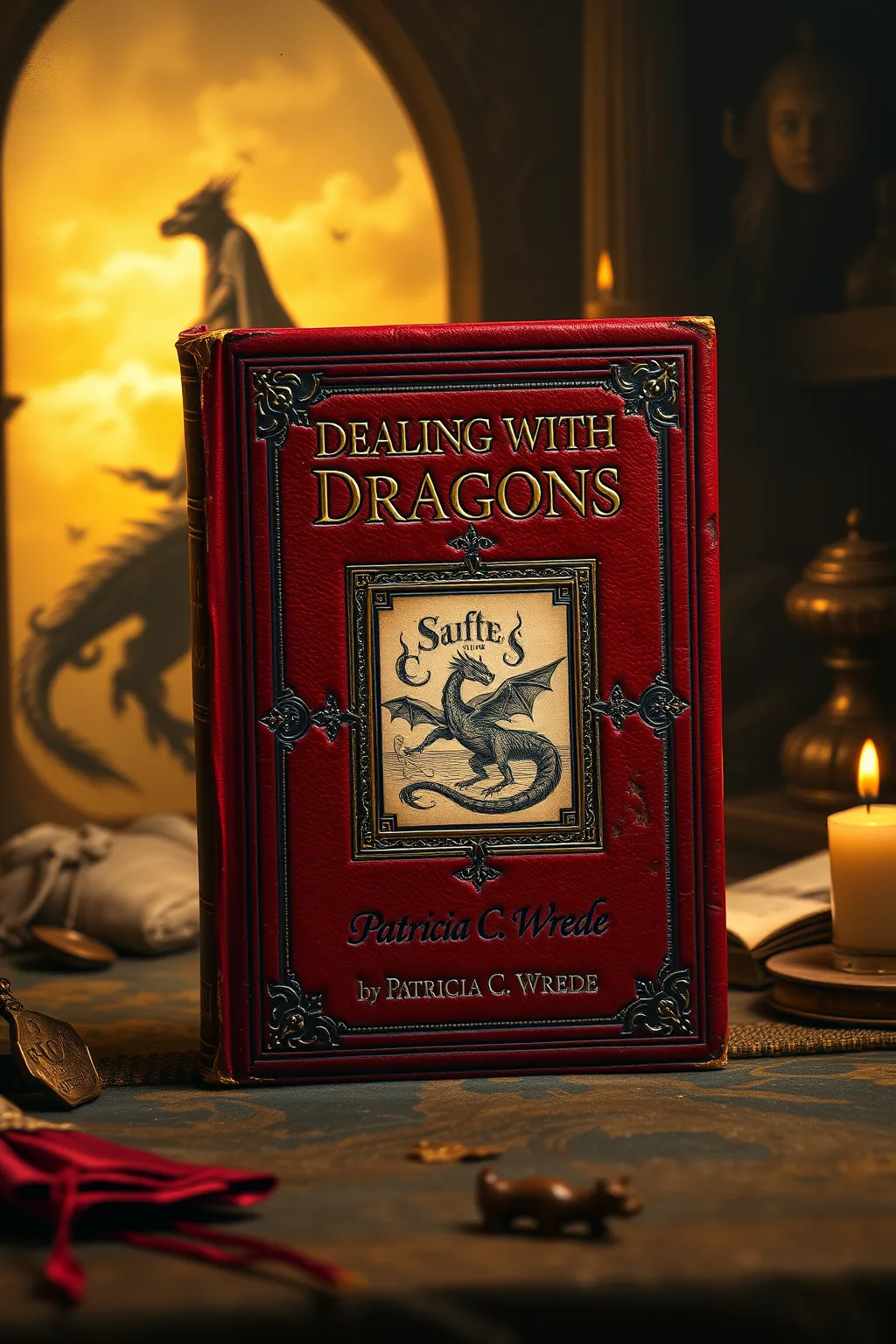
Dealing with Dragons

 73
73

Dealing with Dragons


Review by Marcus Thorne (Esoteric Sciences Reviewer) — 'Dealing with Dragons' by Patricia C. Wrede is a masterful blend of juvenile fiction and esoteric wisdom. Wrede's work shines as a beacon for those seeking deeper meanings within fairy tales. The narrative is infused with alchemical symbolism, where dragons represent the raw, untamed energy that must be harnessed and transformed. The story's philosophical significance lies in its exploration of personal growth and the journey towards self-mastery. Wrede's writing is accessible yet profound, making it an excellent choice for both beginners and seasoned practitioners of the occult.
📝 Description
73
Patricia C. Wrede's 1990 novel places dragons in a world governed by philosophers and the number five.
Patricia C. Wrede's novel, "Dealing with Dragons," is set in the land of Linderwall, a place where philosophers hold significant influence and the number five is a central, recurring element. The story follows Princess Cimorene, who, tired of traditional princess duties, runs away to live as a dragon's princess. This choice allows her to engage with dragons on her own terms, challenging the typical fairy tale narrative. The book uses these fantasy elements to examine ideas about personal agency and the interpretation of ancient symbols.
Within its narrative, the novel touches on alchemical concepts and the nature of hidden knowledge, presenting them through Cimorene's interactions with various dragons and her unconventional life. The dragons themselves are depicted not merely as monsters but as complex beings representing natural forces and ancient power. The quest for self-mastery and understanding is a quiet undercurrent throughout Cimorene's adventures, encouraging readers to consider different perspectives on power and identity.
The novel engages with esoteric traditions by reinterpreting archetypal figures and symbols common in Western esotericism. The dragons can be seen as a modern take on primal forces or chthonic deities, figures often discussed in occult philosophy. The emphasis on hidden knowledge and the transformative journey of the protagonist aligns with themes found in hermeticism and various mystical paths, where self-discovery is paramount. The structured, almost ritualistic, presence of the number five also hints at numerological significance, a practice deeply embedded in esoteric thought.
💡 Why Read This Book?
Read 'Dealing with Dragons' to embark on a journey that combines the enchantment of fairy tales with the depth of esoteric knowledge. Ideal for seekers of hidden truths, scholars of alchemy, and practitioners of the mystical arts, this book offers a unique perspective on personal transformation and the mastery of inner energies. Discover the symbolic significance of dragons and the transformative power of myth in a narrative that is both engaging and enlightening.
⭐ Reader Reviews
Honest opinions from readers who have explored this book.
❓ Frequently Asked Questions
Is 'Dealing with Dragons' suitable for young readers?
Yes, it is a juvenile fiction that introduces young minds to esoteric themes in a engaging way.
What makes this book different from other fairy tales?
This book blends traditional fairy tale elements with deep esoteric symbolism, making it a unique read.
How does the book explore alchemical principles?
The narrative uses dragons as symbols of primal energy that must be transformed, reflecting alchemical processes.
What is the significance of the number five in the story?
The number five is a recurring motif that represents balance and harmony in the mystical realm of Linderwall.
Who will benefit most from reading this book?
Seekers of hidden knowledge, scholars of the occult, and anyone interested in personal transformation.
🔮 Key Themes & Symbolism
Alchemical Transformation
The narrative explores the alchemical process of transforming raw, primal energy into a higher state of being. Dragons, as symbols of this energy, represent the challenges and rewards of personal growth and self-mastery.
Hidden Knowledge
Wrede's story is rich with esoteric symbolism and hidden meanings, inviting readers to delve deeper into the mysteries of the occult. The kingdom of Linderwall, with its reverence for philosophers and the number five, serves as a backdrop for this exploration.
Symbolism of Dragons
Dragons in the story are more than mythical creatures; they embody the primal forces of nature and the inner struggles of the self. Their interactions with the protagonists symbolize the journey towards enlightenment and the mastery of inner energies.
💬 Memorable Quotes
Direct passages from the work, attributed to the author.
“Philosophers are highly respected in Linderwall.”
— This statement underscores the value of wisdom and esoteric knowledge in the mystical kingdom, setting the stage for deeper exploration.
💡 Key Ideas
Editorial paraphrase of the work's core concepts — not direct quotes.
Dragons are not pets, they are wild and free.
This line underscores the untamed nature of dragons, symbolizing the raw energy that must be respected and harnessed.
The number five holds a special significance in Linderwall.
This quote highlights the mystical importance of the number five, representing balance and harmony in the esoteric realm.
Princesses choose their own paths, not the ones laid out for them.
This line emphasizes the theme of personal choice and the quest for self-determination, a key aspect of alchemical transformation.
The Mountains of Morning hold many secrets.
This quote suggests the hidden knowledge and mysteries that lie within the natural world, inviting readers to seek deeper truths.
🌙 Esoteric Significance
Tradition
This book belongs to the Hermetic tradition, which emphasizes the transformation of the self through the mastery of inner energies and the pursuit of hidden knowledge. The narrative's focus on dragons and alchemical processes aligns with Hermetic principles of personal growth and enlightenment.
Symbolism
Key symbols in the book include dragons, representing primal energy, and the number five, symbolizing balance and harmony. The kingdom of Linderwall itself serves as a symbol of a mystical realm where esoteric wisdom is highly valued.
Modern Relevance
Today, , 'Dealing with Dragons' remains relevant for modern practitioners of the occult who seek to understand the deeper meanings behind fairy tales and myths. Its exploration of alchemical transformation and hidden knowledge continues to inspire seekers and scholars alike.
👥 Who Should Read This Book
Beginners in the mystical arts will find 'Dealing with Dragons' an accessible introduction to esoteric themes. Scholars of alchemy and Hermeticism will appreciate the depth of symbolism and philosophical insights. Spiritual seekers will be drawn to the narrative's exploration of personal transformation and the quest for enlightenment. Practitioners of the occult will find valuable insights into the transformative power of myth and the mastery of inner energies.
📜 Historical Context
Published in a time when fairy tales were being reimagined with deeper meanings, 'Dealing with Dragons' stands out for its esoteric insights. Written by Patricia C. Wrede, the book reflects the growing interest in occult studies and alchemical symbolism during the late 20th century. Its influence can be seen in modern works that blend fantasy with esoteric themes, inspiring a new generation of seekers and scholars to explore the mystical arts.
📔 Journal Prompts
How does the symbolism of dragons reflect the primal energies within us?
What is the significance of the number five in the context of the story?
In what ways does the narrative explore the theme of personal choice and transformation?
How does the kingdom of Linderwall embody the values of esoteric wisdom?
What can we learn from the interactions between the protagonists and the dragons?
🗂️ Glossary
Alchemy
The mystical art of transforming base substances into gold, symbolizing the transformation of the self.
Hermeticism
An esoteric tradition that emphasizes the pursuit of hidden knowledge and the mastery of inner energies.
Esoteric
Relating to knowledge that is known only to a few and is often hidden from the general public.
Symbolism
The use of symbols to represent ideas or qualities, often in a literary or mystical context.
Mystical
Relating to experiences that are difficult to explain using reason or the physical senses.
This book appears in 3 collections
🔮 Readers Also Liked
Browse all →







More by Patricia C. Wrede
All books →



From the “Hermeticism” Collection
View all →






More Free Alchemy & Hermeticism Books
View all →