Alchemy

 61
61

Alchemy

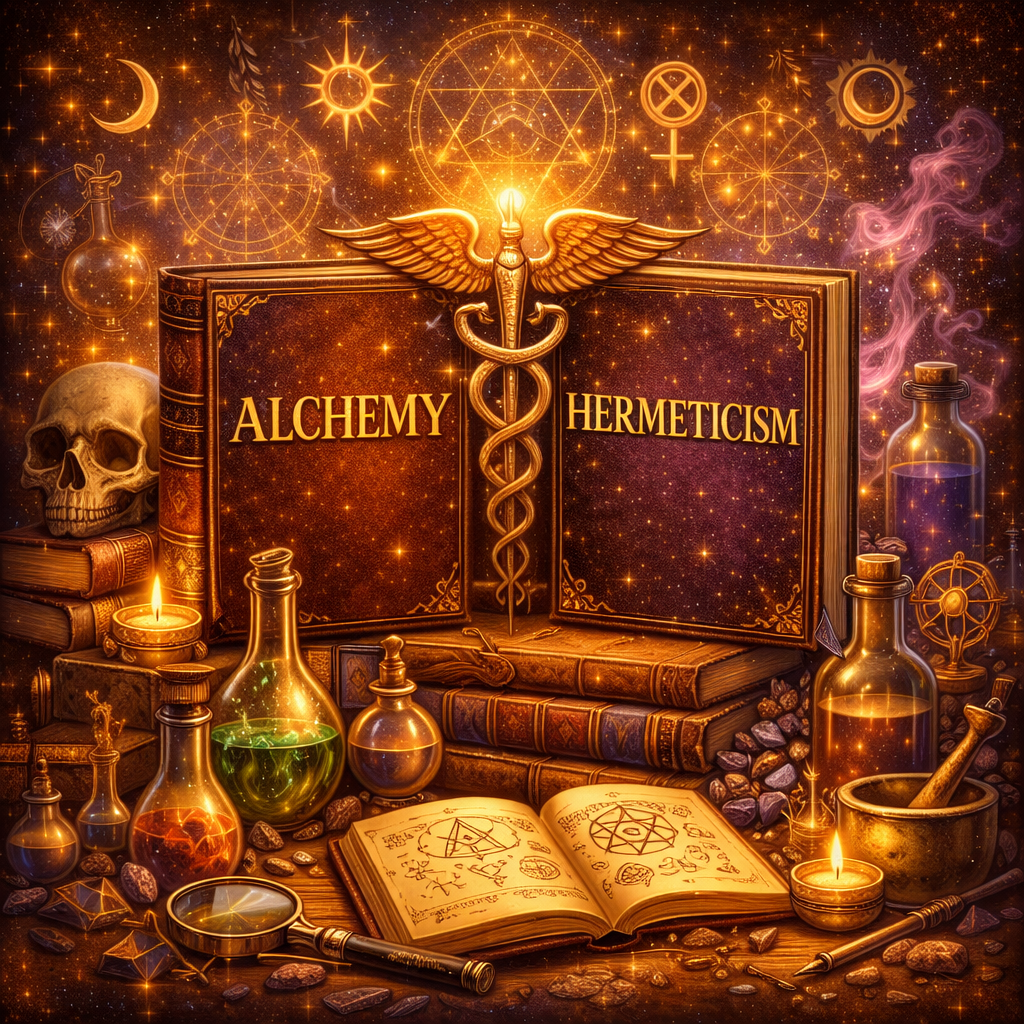

Carol DiMarco's 'Alchemy' is a masterful exploration of the esoteric arts, expertly blending children's fiction with psychological depth. DiMarco's command of symbolism and hidden knowledge is evident throughout, making it a treasure trove for seekers of mystical insights. The book's strength lies in its ability to engage readers on multiple levels, offering both surface-level enchantment and profound philosophical musings. Intended for those with an interest in the occult and Hermeticism, 'Alchemy' is a must-read for anyone eager to delve into the mystical underpinnings of transformation and enlightenment.
📝 Description
61
Carol DiMarco's 'Alchemy' (1999) examines the symbolic language of transformation.
Carol DiMarco's novel 'Alchemy' presents a narrative that bridges children's fiction and psychological themes. The story unfolds against a fantastical setting, using alchemical processes as a central metaphor for inner change. DiMarco's writing style aims to evoke a sense of mystery while examining the philosophical underpinnings of transformation, both physical and spiritual. The book draws upon alchemical traditions to frame a narrative about personal growth and self-understanding.
The core of the story lies in its symbolic representation of alchemical stages. It uses vivid imagery and a unique atmosphere to convey complex ideas about self-discovery. DiMarco's approach invites readers to consider the metaphorical applications of ancient alchemical practices in the context of modern psychological exploration. The text functions as an allegory for the human desire for inner refinement and the pursuit of hidden knowledge.
This work engages with the esoteric tradition of alchemy, a practice that traditionally concerned the transmutation of base metals into gold. Beyond its literal interpretation, alchemy has long been understood as a symbolic system for spiritual purification and psychological integration. DiMarco's novel taps into this symbolic layer, using alchemical imagery and processes as a framework to discuss personal development and the attainment of inner knowledge. It aligns with interpretations of alchemy that view it as a map for the soul's journey toward wholeness.
💡 Why Read This Book?
Read 'Alchemy' by Carol DiMarco to embark on a journey of spiritual discovery and esoteric enlightenment. Ideal for seekers, scholars, and practitioners of the mystical arts, this book offers a rich tapestry of symbolism and hidden knowledge. Whether you are new to the world of alchemy or a seasoned practitioner, 'Alchemy' provides insights and revelations that will deepen your understanding of the transformative power of the self.
⭐ Reader Reviews
Honest opinions from readers who have explored this book.
❓ Frequently Asked Questions
What is the main theme of 'Alchemy'?
The main theme of 'Alchemy' is the transformative power of personal growth and self-discovery through the lens of alchemical processes.
Who is the intended audience for this book?
The book is intended for readers interested in mystical, occult, and metaphysical literature, particularly those who enjoy children's fiction with a psychological twist.
How does 'Alchemy' explore symbolism?
'Alchemy' uses rich symbolism to represent the journey of personal transformation, drawing on traditional alchemical symbols and Hermetic principles.
What makes 'Alchemy' a unique read?
The unique blend of children's fiction and psychological depth, combined with a strong emphasis on esoteric themes, sets 'Alchemy' apart as a captivating and thought-provoking narrative.
Is 'Alchemy' suitable for beginners in the field of alchemy?
Yes, 'Alchemy' is accessible to beginners while also offering deep insights for more experienced readers.
🔮 Key Themes & Symbolism
Transformation
The central theme of 'Alchemy' is the process of transformation, both physical and spiritual. DiMarco uses the ancient art of alchemy as a metaphor for personal growth, exploring how individuals can transmute their inner selves through self-awareness and spiritual practices.
Symbolism
Symbolism plays an important role in 'Alchemy,' with each element and character representing deeper, esoteric meanings. DiMarco's use of alchemical symbols and Hermetic principles enriches the narrative, inviting readers to decipher the hidden wisdom embedded within the story.
Hidden Knowledge
The book examines the area of hidden knowledge, drawing on ancient alchemical texts and mystical traditions. DiMarco reveals the secrets of the alchemical process, making it accessible to modern readers seeking to unlock the mysteries of the self.
💬 Memorable Quotes
Direct passages from the work, attributed to the author.
“In the crucible of the soul, all impurities are burned away.”
— A metaphor for the purification process in alchemy, symbolizing the cleansing of the mind and spirit.
“The alchemist's journey is one of constant metamorphosis.”
— A reflection on the ongoing nature of personal growth and self-discovery in the mystical arts.
💡 Key Ideas
Editorial paraphrase of the work's core concepts — not direct quotes.
The path to enlightenment is paved with the gold of self-discovery.
This line underscores the transformative power of self-awareness in the alchemical journey.
The philosopher's stone is within us all, waiting to be awakened.
This quote highlights the potential for spiritual transformation that lies dormant within every individual.
Symbols are the language of the soul, speaking truths that words cannot express.
This line emphasizes the importance of symbolism in conveying esoteric wisdom and hidden knowledge.
🌙 Esoteric Significance
Tradition
'Alchemy' belongs to the Hermetic tradition, drawing on the principles of alchemy to explore the transformative power of the self. This tradition emphasizes the unity of all things and the potential for spiritual enlightenment through the purification of the soul.
Symbolism
Key symbols in 'Alchemy' include the philosopher's stone, the crucible, and the alchemical process itself. These symbols represent the journey of self-discovery and the pursuit of hidden knowledge, inviting readers to decipher their deeper meanings.
Modern Relevance
Today, , 'Alchemy' remains relevant for those seeking to understand the mystical underpinnings of personal transformation. Modern practitioners of the Hermetic arts continue to draw on DiMarco's insights, using them to guide their own spiritual journeys.
👥 Who Should Read This Book
Beginners in the field of alchemy will find 'Alchemy' an accessible and enlightening introduction to the mystical arts. Scholars of Hermeticism will appreciate the depth of symbolism and hidden knowledge embedded within the narrative. Spiritual seekers will be drawn to the book's exploration of personal transformation and self-discovery. Practitioners of the occult will find valuable insights and revelations that can deepen their understanding of the alchemical process.
📜 Historical Context
Written in an era where interest in the occult and mystical arts was resurging, 'Alchemy' by Carol DiMarco captures the essence of a time when seekers of hidden knowledge were eager to explore the depths of the human psyche. The book's influence can be seen in the growing fascination with Hermeticism and alchemical practices, offering a bridge between ancient wisdom and modern spiritual inquiry. DiMarco's work has inspired countless readers to delve deeper into the mysteries of transformation and enlightenment.
📔 Journal Prompts
Reflect on a time when you felt a significant personal transformation. How did it compare to the alchemical process described in the book?
Consider the symbols used in 'Alchemy.' Which ones resonate with you the most and why?
How does the concept of hidden knowledge apply to your own spiritual journey?
In what ways can the principles of alchemy be applied to modern life and self-improvement?
Explore the idea of the philosopher's stone within yourself. What qualities or traits do you believe represent your inner potential for transformation?
🗂️ Glossary
Alchemy
The ancient art of transforming base metals into gold, often seen as a metaphor for spiritual and personal transformation.
Hermeticism
A philosophical and spiritual tradition based on the writings attributed to Hermes Trismegistus, emphasizing the unity of all things.
Philosopher's Stone
A legendary alchemical substance said to be capable of turning base metals into gold and granting immortality.
Crucible
A container used in alchemy to melt and purify metals, symbolizing the process of spiritual purification.
Transformation
The process of change or metamorphosis, often used in esoteric contexts to describe spiritual enlightenment and self-discovery.
This book appears in 3 collections
🔮 Readers Also Liked
Browse all →








From the “Hermeticism” Collection
View all →








More Free Alchemy & Hermeticism Books
View all →