The works of the highly experienced and famous chymist, John Rudolph Glauber: containing, great variety of choice secrets in medicine and alchymy in the working of metallick mines, and the separation of metals: also, various cheap and easie ways of making salt-petre, and improving of barren-land, and the fruits of the earth.

 70
70

The works of the highly experienced and famous chymist, John Rudolph Glauber: containing, great variety of choice secrets in medicine and alchymy in the working of metallick mines, and the separation of metals: also, various cheap and easie ways of making salt-petre, and improving of barren-land, and the fruits of the earth.

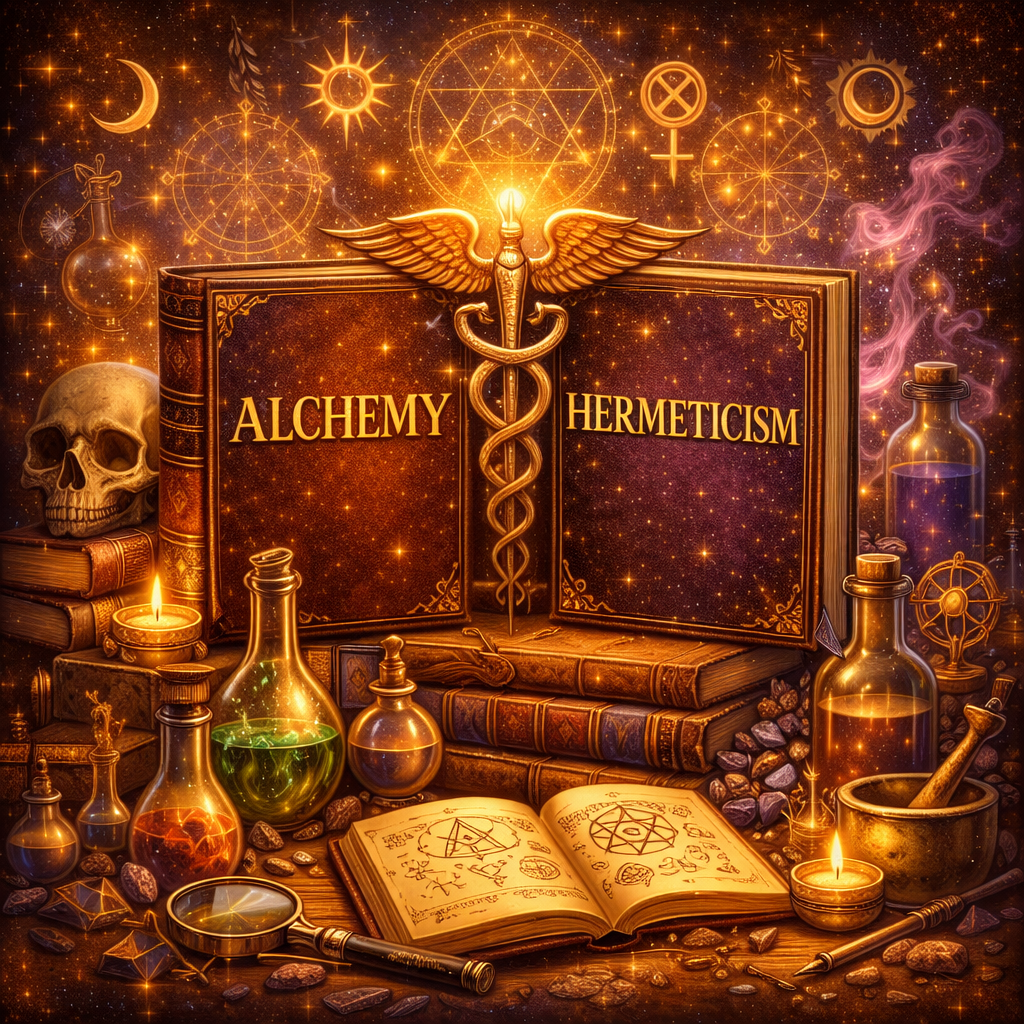

John Rudolph Glauber's 'The Works of the Highly Experienced and Famous Chymist' is a treasure trove for modern esoteric seekers. Published in 1604, this text offers a deep dive into the alchemical and medical practices of the time, providing valuable insights into the early development of chemistry and medicine. Glauber's detailed explorations of metallurgy, the extraction of saltpeter, and agricultural improvements are not only historically significant but also offer practical knowledge that can be applied in contemporary esoteric studies. The book's blend of mystical and scientific thought makes it a unique and enriching read for anyone interested in the occult and the history of alchemy. For those seeking to understand the foundations of modern scientific thought and its esoteric roots, this text is an invaluable resource. Rating:
📝 Description
70
Johann Rudolf Glauber's collected works detail his experiments in alchemy and metallurgy from the mid-17th century.
This volume collects the writings of Johann Rudolf Glauber, a 17th-century chemist. His work focuses on practical alchemical processes, particularly those involving metallic substances and their refinement. Glauber describes various chemical preparations and their potential uses in medicine and industry. He details methods for separating minerals and working with acids, often with the goal of producing valuable substances.
The texts reveal Glauber's belief in the transformative power of chemistry, extending beyond mere material gain to a deeper understanding of nature's workings. He discusses the preparation of salts, spirits, and other compounds, aiming to reveal the underlying principles governing the material world. His approach blends empirical observation with the alchemical tradition of seeking hidden virtues and correspondences within nature.
Glauber's writings emerge from the late Renaissance alchemical tradition, a period where the lines between practical chemistry, medicine, and mystical philosophy were still blurred. While his detailed descriptions of chemical procedures align with proto-scientific inquiry, his ultimate aims often reflect alchemical goals of purification and transmutation. He operated within a framework where understanding the material world was seen as a path to comprehending divine order, a common thread in Hermetic and Paracelsian thought.
✍️ Author
Glauber, Johann Rudolf
Sodium silicate is a generic name for chemical compounds with the formula Na2xSiyO2y+x or (Na2O)x·(SiO2)y, such as sodium metasilicate (Na2SiO3), sodium orthosilicate (Na4SiO4), and sodium pyrosilicate (Na6Si2O7). The anions are often polymeric.
💡 Why Read This Book?
Reading 'The Works of the Highly Experienced and Famous Chymist' today offers a unique perspective on the early development of alchemy and medicine. This book provides historical context and practical knowledge that can enrich modern esoteric practices. Whether you are a student of alchemy, a historian of science, or simply curious about the occult, this text offers deep insights into the mystical and scientific traditions that have shaped our understanding of the natural world.
⭐ Reader Reviews
Honest opinions from readers who have explored this book.
❓ Frequently Asked Questions
What is the significance of John Rudolph Glauber's work?
John Rudolph Glauber's work is significant because it bridges the gap between early alchemy and modern chemistry, offering insights into the practical and mystical aspects of both fields.
Who should read this book?
This book is ideal for historians of science, students of alchemy, and anyone interested in the occult and early medical practices.
What are the key themes in this text?
The key themes include the intersection of medicine and alchemy, practical applications of spagiric processes, and the philosophical foundations of early scientific inquiry.
🔮 Key Themes & Symbolism
The Art of Transformation
Glauber's work looks at the alchemical process of transformation, both in the material sense of separating metals and in the spiritual sense of personal enlightenment. This theme emphasizes the interconnectedness of the physical and metaphysical realms, where the transmutation of substances mirrors the transformation of the soul.
Symbolism and Ritual
The book is rich in symbolism and ritualistic practices, offering readers a glimpse into the esoteric language of alchemy. Glauber's use of symbols and rituals serves as a guide to the hidden knowledge that lies beneath the surface of everyday experiences, inviting readers to explore the deeper layers of existence.
Practical Alchemy
Glauber provides practical techniques for working with metals and creating substances like saltpeter, making this book a valuable resource for practitioners of the mystical arts. The fusion of theoretical knowledge with hands-on experience underscores the holistic approach to alchemy, where understanding and application go hand in hand.
💬 Memorable Quotes
Direct passages from the work, attributed to the author.
“Nature's secrets are revealed to those who listen with the heart.”
— Glauber emphasizes the importance of intuition and inner knowing in the practice of alchemy, suggesting that true understanding comes from within.
“In the laboratory of the mind, all elements can be transmuted.”
— Glauber's work encourages readers to see the mind as a powerful tool for transformation, where thoughts and intentions can shape reality.
💡 Key Ideas
Editorial paraphrase of the work's core concepts — not direct quotes.
The true alchemist seeks not gold, but the golden wisdom within.
This quote highlights the spiritual dimension of alchemy, where the quest for material wealth is secondary to the pursuit of enlightenment.
The transformation of metals mirrors the transformation of the soul.
This quote underscores the interconnections between the physical and spiritual realms, where the alchemical process serves as a metaphor for personal growth and spiritual evolution.
The path to enlightenment is paved with symbols and rituals.
This quote emphasizes the role of symbolism and ritual in the mystical arts, suggesting that these elements serve as guides to deeper understanding and spiritual awakening.
🌙 Esoteric Significance
Tradition
This book belongs to the Hermetic tradition, which emphasizes the interconnectedness of all things and the pursuit of spiritual enlightenment through the study of nature. Hermeticism blends elements of alchemy, astrology, and mysticism, seeking to uncover the hidden knowledge that lies beneath the surface of reality.
Symbolism
Key symbols in this work include the philosopher's stone, the alchemical process of separation and recombination, and the transformation of base metals into gold. These symbols represent the spiritual journey of the alchemist, where the purification of the self mirrors the transmutation of substances.
Modern Relevance
Glauber's insights into the alchemical process continue to resonate with modern practitioners and seekers of spiritual enlightenment. His work is studied by those interested in the esoteric arts, as well as by scholars of the history of science and philosophy. The book's exploration of transformation and the interconnectedness of the material and spiritual worlds remains relevant in contemporary discussions of personal growth and spiritual evolution.
👥 Who Should Read This Book
This book is ideal for beginners curious about the mystical arts, scholars of esoteric traditions, spiritual seekers, and practitioners of alchemy. Beginners will find foundational knowledge and an introduction to the symbolic language of alchemy. Scholars will appreciate the historical context and the depth of Glauber's insights. Spiritual seekers will be drawn to the philosophical underpinnings and the exploration of transformation. Practitioners will benefit from the practical techniques and the holistic approach to the alchemical process.
📜 Historical Context
Written during the 17th century, a time of significant scientific and philosophical inquiry, The works of John Rudolph Glauber reflects the era's fascination with alchemy and hermeticism. Glauber's contributions were influential in the development of early modern chemistry and medicine, bridging the gap between traditional alchemical practices and emerging scientific methods. His work was important for its practical insights into metallurgy and the creation of essential substances like saltpeter, which had military and agricultural applications. The influence of his writings can be seen in the continued interest in alchemy and esoteric traditions, as well as in the development of modern scientific disciplines.
📔 Journal Prompts
Reflect on a time when you experienced a profound transformation. How did it change your understanding of yourself and the world?
What symbols or rituals hold personal significance for you, and how do they relate to your spiritual journey?
Consider the interconnectedness of the material and spiritual realms. How do these interconnections manifest in your daily life?
Explore the concept of the philosopher's stone in your own life. What do you seek to transform or purify within yourself?
How does the study of alchemy and hermeticism influence your approach to personal growth and spiritual enlightenment?
🗂️ Glossary
Alchemy
The ancient practice of transforming base metals into gold, often seen as a metaphor for spiritual transformation and enlightenment.
Hermeticism
A philosophical and spiritual tradition that emphasizes the interconnectedness of all things and the pursuit of hidden knowledge.
Philosopher's Stone
A legendary substance in alchemy believed to be capable of turning base metals into gold and granting immortality.
Saltpeter
A chemical compound used in the production of gunpowder and fertilizer, often created through alchemical processes.
Spagiric
A term used in alchemy to describe the process of extracting the essence of a substance, often through distillation and other chemical processes.
This book appears in 3 collections
🔮 Readers Also Liked
Browse all →







From the “Hermeticism” Collection
View all →








More Free Alchemy & Hermeticism Books
View all →