Talking to dragons
 81
81

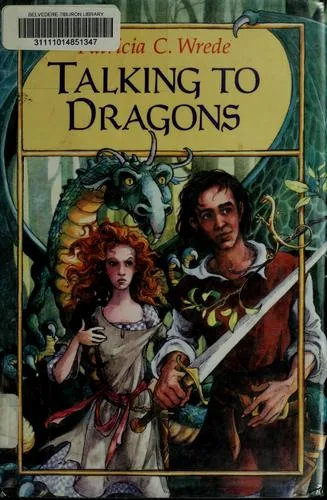
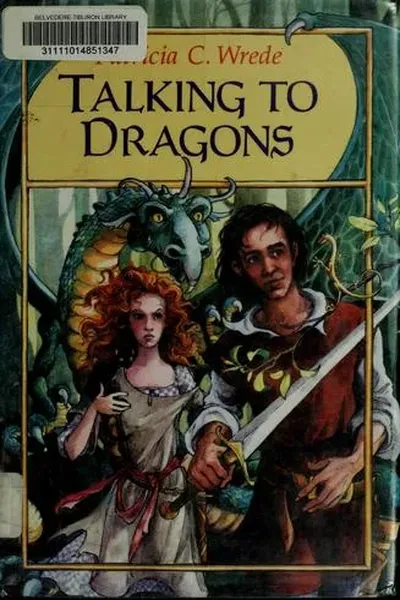
Talking to dragons
Patricia C. Wrede’s "Talking to Dragons" offers a refreshing perspective on the princess archetype, a welcome departure from damsels in distress. Cimorene’s decision to run away from home and become a dragon’s princess, complete with cooking and fencing lessons, is a stroke of narrative brilliance. The world-building, while perhaps less intricate than some epic fantasies, is perfectly suited to its story, grounding the magical elements with a pragmatic sensibility. A notable strength is the novel's consistent characterization of Cimorene as an active agent in her own destiny. However, the pacing occasionally falters in the middle sections, with some plot developments feeling slightly less urgent than Cimorene's initial motivations. The portrayal of the dragons as complex beings, rather than mere monsters, is a significant achievement. Ultimately, "Talking to Dragons" stands as a charming and intelligently written fantasy that continues to engage readers with its clever subversion of fairy tale conventions.
📝 Description
81
Published in 1985, Talking to Dragons follows a princess who prefers dragons to royal life.
Talking to Dragons, the third book in Patricia C. Wrede's Enchanted Forest Chronicles, introduces Cimorene, a princess tired of traditional royal expectations. She abandons her duties to seek adventure, magic, and a life among dragons and wizards. This novel stands apart from many fairy tales by featuring a protagonist who is capable, independent, and proactively seeks out her own challenges instead of awaiting rescue. The story moves forward with clear, engaging prose, focusing on Cimorene's growth and the unfolding plot.
This book appeals to readers who enjoy classic fantasy elements reimagined with a contemporary feel. It is especially suitable for young adults and adults who appreciate stories about finding oneself, unconventional heroines, and well-constructed fantasy settings. Readers who prefer characters who drive their own futures, rather than simply accepting fate, will find Cimorene's experiences relatable. It also serves as a good introduction to Wrede's other works.
Published in 1985, Talking to Dragons arrived as the fantasy genre gained wider recognition. Authors like Ursula K. Le Guin and Robin McKinley were already crafting more complex female characters. While often seen as children's or young adult literature, Wrede's work connects with these authors through its portrayal of empowered female characters challenging societal norms and patriarchal structures within fantasy settings. The novel explores themes of self-determination and questions traditional notions of heroism.
💡 Why Read This Book?
• You will learn about the narrative power of subverting traditional fairy tale roles, exemplified by Cimorene's active pursuit of adventure rather than waiting for a prince. • You will gain an appreciation for how fantasy can reframe archetypal creatures, as seen in the portrayal of dragons as intelligent beings with distinct societies, challenging simplistic good vs. evil narratives. • You will feel the satisfaction of a protagonist who takes control of her own destiny, learning from the specific choices Cimorene makes when she leaves the castle to seek her own path.
⭐ Reader Reviews
Honest opinions from readers who have explored this book.
❓ Frequently Asked Questions
Is "Talking to Dragons" suitable for young readers unfamiliar with fantasy tropes?
Yes, "Talking to Dragons" is highly accessible. Its clear prose and relatable protagonist, Cimorene, make it an excellent entry point into the fantasy genre for younger readers, even those new to concepts like dragons or princesses.
What makes the dragons in "Talking to Dragons" different from typical fantasy dragons?
Unlike the hoard-guarding beasts of many tales, the dragons in "Talking to Dragons" are depicted as sentient beings with complex social structures and individual personalities. They engage in conversations and have their own motivations, challenging the reader's preconceptions.
What is the primary theme explored in "Talking to Dragons"?
A central theme is female agency and self-determination. Princess Cimorene actively rejects the restrictive expectations placed upon her and seeks out a life of her own choosing, demonstrating that heroism can come from making one's own path.
When was "Talking to Dragons" originally published?
Patricia C. Wrede's "Talking to Dragons" was first published in 1985, concluding the initial Enchanted Forest Chronicles series.
Does "Talking to Dragons" require reading the previous books in the Enchanted Forest Chronicles?
While "Talking to Dragons" concludes the series, it functions well as a standalone novel. Readers can enjoy Cimorene's story without having read "Dealing with Dragons" or "The Knight and the Squires," though prior knowledge enriches the experience.
What kind of "esoteric" elements are present in "Talking to Dragons"?
The "esoteric" aspect lies in its nuanced exploration of magical beings, societal structures beyond the mundane, and the inherent power of choice and self-actualization, presented through a fantasy lens rather than direct occult doctrine.
🔮 Key Themes & Symbolism
Subverting Archetypes
The novel actively dismantles traditional fantasy archetypes, most notably the princess. Cimorene is not a passive maiden awaiting rescue but an active protagonist who seeks out adventure, learning swordsmanship and dragon-speak. This subversion extends to the dragons themselves, who are presented as intelligent, complex beings rather than mere monsters to be slain. This challenges the simplistic binary of good and evil often found in earlier works, inviting readers to consider multiple perspectives and the nuances of character.
Agency and Self-Determination
Central to the narrative is the theme of agency. Cimorene's decision to leave her stifling royal life and seek out a more fulfilling existence among dragons is a powerful statement of self-determination. She actively pursues her own goals, whether it's learning to cook for a dragon or mastering fencing. The story emphasizes that true fulfillment comes not from adhering to societal expectations but from making conscious choices about one's own life path and embracing the consequences.
The Nature of Magic and Monsters
Wrede explores a world where magic is a tangible force and creatures often deemed 'monsters' possess their own societies and intelligences. The dragons of Kazir are not inherently evil; they have laws, customs, and political considerations. This nuanced portrayal suggests that 'monstrousness' is often a matter of perspective or misunderstanding. The novel encourages a more open-minded approach to the unknown and the fantastical, suggesting that even the most fearsome creatures can be understood and interacted with.
The Rejection of Convention
The entire premise of "Talking to Dragons" is built on a rejection of conventional roles and expectations, particularly those assigned to royalty and gender. Cimorene finds the typical life of a princess—embroidering, attending balls, marrying a prince—utterly unappealing. Her pursuit of a life that includes fencing, fighting wizards, and managing dragon households is a direct defiance of these norms. This theme speaks to readers who have ever felt out of step with societal pressures.
💬 Memorable Quotes
Direct passages from the work, attributed to the author.
“She didn't want to be a princess. She wanted to be a dragon.”
— This concise statement expresses Cimorene's core desire and the novel's central theme of rejecting prescribed roles. It highlights her yearning for a life of action, independence, and a connection with beings perceived as 'other' by conventional society.
“It is easier to fight a wizard than to have tea with him.”
— This pragmatic observation underscores Cimorene's direct approach to problems and her preference for action over social niceties. It also hints at the inherent dangers and complexities of the magical world she inhabits.
“The dragons of Kazir had a great many rules.”
— This seemingly simple statement reveals the sophisticated social structure of the dragons. It challenges the perception of dragons as wild beasts and introduces the idea that even mythical creatures operate within established systems and laws.
“I am a princess, and I am going to do what I want.”
— This declaration is a powerful assertion of Cimorene's agency. It signifies her commitment to self-determination and her refusal to be constrained by her title or the expectations that come with it.
💡 Key Ideas
Editorial paraphrase of the work's core concepts — not direct quotes.
Princesses are supposed to be good at sewing and singing. I am not.
This quote directly addresses the subversion of the princess archetype. Cimorene acknowledges the expected feminine skills but asserts her own lack of aptitude and preference for more unconventional pursuits, setting the stage for her departure.
🌙 Esoteric Significance
Tradition
While not directly aligned with a specific historical esoteric lineage like Hermeticism or Kabbalah, "Talking to Dragons" engages with a broader, more accessible form of 'esotericism' rooted in folklore and mythology. It taps into the archetypal power of dragons and princesses, reimagining them through a modern lens. The work draws from the tradition of fairy tale analysis, which often explores hidden psychological and societal meanings within seemingly simple narratives. It offers a secularized approach to magical thinking, focusing on personal empowerment and the exploration of inner potential through external adventure.
Symbolism
The dragon serves as a primary symbol, representing primal power, ancient wisdom, and the 'other' that can be both feared and understood. In this work, the dragon transcends its monstrous image to become a symbol of complex intelligence and a potential ally or teacher, challenging simplistic views of good and evil. Princess Cimorene herself symbolizes the rejection of societal conditioning and the embrace of authentic selfhood. Her desire to learn fencing and magic over needlepoint signifies a quest for personal power and knowledge beyond prescribed roles.
Modern Relevance
Contemporary fantasy authors and creators continue to draw inspiration from Wrede's approach to character and world-building. The novel's emphasis on agency and the deconstruction of stereotypes aligns with modern discussions around representation in media. Thinkers and writers in the field of Jungian psychology, who analyze archetypes in literature, might find Cimorene's journey a compelling case study in individuation. Furthermore, its accessible exploration of magic and mythical beings makes it a touchstone for those interested in modern myth-making and the reinterpretation of ancient narratives for contemporary audiences.
👥 Who Should Read This Book
• Aspiring writers and storytellers seeking examples of how to subvert classic fantasy tropes and create compelling, unconventional heroines. • Young adult readers looking for engaging fantasy narratives with strong female leads who drive their own plots. • Adult readers nostalgic for classic fairy tales but who appreciate a modern, feminist reinterpretation that challenges traditional gender roles and expectations.
📜 Historical Context
When "Talking to Dragons" was published in 1985, the fantasy genre was experiencing significant growth, moving beyond simple heroic quests. Authors like Ursula K. Le Guin had already paved the way for more complex, character-driven narratives with "A Wizard of Earthsea" (1968), and Robin McKinley's "The Blue Sword" (1979) featured strong female protagonists. Wrede's work emerged in this fertile ground, offering a distinctly accessible yet subversive take on fairy tales. While not explicitly tied to a specific esoteric movement, the era saw a broader cultural interest in mythology and folklore, often reinterpreted through a modern, feminist lens. "Talking to Dragons" contributed to this trend by presenting a princess who actively shapes her own destiny, a theme that resonated with a growing readership seeking alternatives to traditional narrative structures. Its reception was largely positive, celebrated for its humor and its intelligent reimagining of familiar tropes.
📔 Journal Prompts
Cimorene's decision to leave the castle and her chosen path.
The dragons' societal rules and their implications.
The contrast between expected princessly duties and Cimorene's desires.
Wizards as characters, beyond their magical abilities.
The meaning of 'home' for an adventurous spirit like Cimorene.
🗂️ Glossary
Kazir
The kingdom where Princess Cimorene resides before she runs away to live among dragons. It represents the conventional, somewhat restrictive, royal life she seeks to escape.
Dragon Princess
A role adopted by Cimorene, involving cooking, sewing, and generally keeping house for a dragon, which she finds far more fulfilling than traditional princess duties.
Wizard
Magical practitioners in the world of the book, often depicted as antagonists or sources of conflict that Cimorene must contend with.
Fencing
A martial art involving swordsmanship that Cimorene learns and actively practices, highlighting her desire for self-defense and action.
Enchanted Forest Chronicles
The series to which "Talking to Dragons" belongs, known for its humorous and intelligent subversion of fairy tale conventions.
King
Cimorene's father, who represents the traditional authority and expectations she rebels against by leaving home.
Queen
Cimorene's mother, also embodying the traditional role that Cimorene finds unappealing.
🔮 Readers Also Liked
Browse all →









More by Patricia C. Wrede
All books →



More Free Occult Philosophy Books
View all →