Dark Night of the Soul

 76
76

Dark Night of the Soul
Herrington concludes the Brigid O'Meara Trilogy with a narrative that, while earnest, occasionally struggles under the weight of its historical canvas. The portrayal of Brigid's life post-imprisonment, particularly her marriage to Willie Gray, offers a quiet counterpoint to the preceding volumes' action. One particularly effective passage describes the quiet domesticity Brigid seeks, a stark contrast to the gun-running and war she endured.
However, the pacing in this final installment can feel uneven. The transition from wartime intrigue to the aftermath of the Anglo-Boer War sometimes lacks the dramatic urgency established earlier. While the historical detail is commendable, certain character motivations, especially Brigid's seemingly swift adjustment, might benefit from further exploration. The novel ultimately delivers a sense of closure, but the resolution feels more dictated by historical timeline than organic character development.
Read more ↓
Dark Night of the Soul provides a somber, if somewhat understated, conclusion to Brigid O'Meara's compelling story.
📝 Description
76
Dark Night of the Soul concludes Neville John Herrington's Brigid O'Meara Trilogy, picking up after the 1895 Jameson Raid.
This novel closes Neville John Herrington's Brigid O'Meara Trilogy. The story continues after Brigid O'Meara, an Irish music hall performer, becomes involved in gun smuggling and sides with the Boer Republic against British forces. Her actions lead to her imprisonment in a British concentration camp. The narrative then follows her life after the Anglo-Boer War, depicting her marriage to Willie Gray, a British Uitlander and fellow revolutionary she met before the conflict.
The book is aimed at readers who have followed Brigid's story through the earlier volumes. It will interest those drawn to historical fiction set in late 19th-century South Africa, especially the political climate before and during the Anglo-Boer War. Readers who appreciate character-focused stories about resilience during times of political turmoil will find this installment satisfying. It also provides resolution for Brigid's arc, showing her shift from espionage and conflict toward a domestic life.
While not explicitly occult, the title 'Dark Night of the Soul' evokes spiritual or psychological trials. This aligns with traditions that examine periods of intense personal struggle and transformation, often seen as necessary for deeper understanding or spiritual growth. The narrative's focus on Brigid's journey through hardship, imprisonment, and eventual domesticity can be interpreted through an esoteric lens as a process of purification and reorientation, moving from external conflict to an internal state of being.
💡 Why Read This Book?
• Understand the personal repercussions of the Anglo-Boer War through Brigid O'Meara's journey from conflict to domesticity, learning how historical events shape individual lives. • Gain insight into the complexities of the Uitlander experience and revolutionary movements in late 19th-century South Africa, as depicted through Willie Gray's character. • Witness the narrative arc's resolution following the 1899-1902 conflict, exploring themes of reconciliation and personal peace after periods of intense political strife.
⭐ Reader Reviews
Honest opinions from readers who have explored this book.
❓ Frequently Asked Questions
What historical events frame the narrative of Dark Night of the Soul?
The novel is set in the aftermath of the Jameson Raid of 1895 and the Anglo-Boer War (1899-1902), exploring the personal lives of characters affected by these conflicts.
Who is Brigid O'Meara and what was her role?
Brigid O'Meara is the protagonist, an Irish music hall dancer/singer who became involved in gun smuggling and supported the Boer Republic during the Anglo-Boer War.
What is the significance of the 'Uitlander' status in the book?
The term 'Uitlander' refers to foreign settlers in the Boer Republics, like Willie Gray, whose presence and political leanings were central to the tensions leading up to the Anglo-Boer War.
Is Dark Night of the Soul a standalone novel?
No, Dark Night of the Soul is the final volume of the Brigid O'Meara Trilogy, continuing the story from previous books.
What themes does the book explore beyond the historical events?
The book delves into themes of reconciliation, the personal cost of war, and the search for peace and stability after periods of intense conflict and political upheaval.
When was Dark Night of the Soul first published?
The novel was first published on June 12, 2017.
🔮 Key Themes & Symbolism
Post-War Reconciliation
The narrative navigates Brigid O'Meara's transition from a life embroiled in the conflict of the Anglo-Boer War to seeking personal peace and domesticity. It examines how individuals rebuild their lives and relationships in the wake of widespread upheaval, focusing on the emotional and psychological aftermath of war rather than its battles. This theme is particularly evident in Brigid's marriage to Willie Gray, a British subject, highlighting a personal reconciliation that mirrors the broader societal challenges of the era.
Individual Agency in Historical Turmoil
Brigid's story underscores the capacity for individual choice and action even within massive historical events like the Jameson Raid and the Anglo-Boer War. Her decision to side with the Boers, leading to her imprisonment, demonstrates agency, while her subsequent choices in marriage and personal life show a different kind of self-determination. The book explores how personal conviction can lead individuals into extraordinary circumstances and how they work through the consequences.
The Uitlander Question
The concept of the 'Uitlander' – foreign settlers in the Boer Republics – is central to understanding the political tensions and the character of Willie Gray. His background as a British subject involved in revolutionary activities within the Transvaal highlights the complex socio-political field of the time. The narrative uses this to explore themes of divided loyalties, identity, and the human cost of colonial expansion and resource competition.
💬 Memorable Quotes
Direct passages from the work, attributed to the author.
“Willie's revolutionary spirit tempered by the war's harsh lessons.”
— This captures the essence of Willie Gray's character arc, suggesting that his involvement in the political turmoil leading up to and during the Anglo-Boer War matured his revolutionary ideals. It implies a shift from zealous action to a more considered approach shaped by real-world consequences.
“The concentration camp’s shadow lingered, a constant reminder of betrayal.”
— This highlights the lasting trauma Brigid endured. The 'British concentration camp' was a brutal reality of the Anglo-Boer War, and this sentiment points to the psychological scars and the feeling of having been wronged or abandoned, even as she moves into a new phase of life.
“The Jameson Raid ignited a conflict that reshaped lives.”
— This statement underscores the central role of the 1895 Jameson Raid as a catalyst for the larger Anglo-Boer War. It suggests that this specific event had far-reaching consequences, not just politically but also on the personal destinies of characters like Brigid and Willie.
💡 Key Ideas
Editorial paraphrase of the work's core concepts — not direct quotes.
Brigid found a quietness in her new life that war had stolen.
This paraphrased concept reflects Brigid's search for peace after her harrowing experiences during the Anglo-Boer War. It emphasizes the profound psychological impact of conflict and the deep human need for stability and emotional respite.
Irish dancer's journey from music halls to Boer sympathizer.
This summarizes Brigid O'Meara's extraordinary transformation, moving from a performer's life to actively engaging with the political and military conflict of the era. It emphasizes the unexpected paths individuals can take when caught in historical currents.
🌙 Esoteric Significance
Tradition
While not explicitly tied to a single esoteric lineage, Dark Night of the Soul touches upon themes resonant with Gnostic and Hermetic thought. Brigid's journey through suffering, confinement (the concentration camp), and eventual seeking of inner peace can be interpreted as a modern allegory for the Gnostic soul's descent into the material world and its struggle for liberation. The 'dark night' itself is a concept found in Christian mysticism, suggesting a period of spiritual trial and purification, which aligns with esoteric paths of spiritual development and transformation.
Symbolism
The 'dark night' itself serves as a primary symbol, representing a period of spiritual or psychological trial, loss, and purification before a potential dawn or awakening. Brigid's journey through the Anglo-Boer War and her subsequent imprisonment can be seen as her personal descent into such a 'night.' The concentration camp, a place of profound suffering and loss, symbolizes a confrontation with the shadow self and the material world's harsh realities. Her eventual marriage and pursuit of domesticity represent a form of 're-emergence' or finding light after darkness.
Modern Relevance
Contemporary discussions on historical trauma, post-conflict reconciliation, and individual resilience echo the themes explored in Dark Night of the Soul. Thinkers and practitioners focusing on the psychological impact of war and colonialism, as well as those interested in narrative therapy and understanding personal growth through adversity, may find Brigid's story illustrative. The novel’s exploration of finding personal peace amidst broader societal chaos offers a relatable framework for navigating modern anxieties and crises.
👥 Who Should Read This Book
• Readers interested in the socio-political field of late 19th-century South Africa, particularly the Jameson Raid and the Anglo-Boer War, seeking a character-focused narrative. • Fans of historical fiction who appreciate stories exploring personal resilience, reconciliation, and the aftermath of conflict, specifically Brigid O'Meara's completed arc. • Those drawn to narratives that examine how major historical events impact individual lives and relationships, offering a grounded perspective on historical turmoil.
📜 Historical Context
Neville John Herrington's Dark Night of the Soul is firmly embedded in the volatile period of late 19th-century South Africa, specifically the years surrounding the 1895 Jameson Raid and the subsequent Anglo-Boer War (1899-1902). This era was defined by escalating tensions between the British Empire, seeking to expand its control over the mineral-rich Boer republics (Transvaal and Orange Free State), and the independent Boer populations. The narrative's focus on Brigid O'Meara, an Irish woman drawn into gun smuggling and conflict, reflects the diverse array of individuals caught in this geopolitical struggle. The novel's exploration of Brigid's incarceration in a British concentration camp is a critical nod to one of the war's most devastating aspects. These camps, established by the British, held tens of thousands of Boer civilians, primarily women and children, and were rife with disease and starvation. The period also saw figures like Willie Gray, a British 'Uitlander' (foreign settler) who sided with the Boers, embodying the complex allegiances of the time. In intellectual circles, this period was also marked by burgeoning imperialist theories and nationalist sentiments across Europe, contrasting with early critiques of colonial expansion. Herrington's work places Brigid's personal story within this grand, often brutal, historical sweep, offering a fictional lens through which to understand the human cost of colonial ambitions and the complexities of war.
📔 Journal Prompts
Brigid O'Meara's transition from espionage to domestic life.
Willie Gray's dual identity as Uitlander and revolutionary.
The symbolism of the 'dark night' in Brigid's post-war experience.
The historical impact of the British concentration camps.
Reconciliation between Brigid and Willie, given their backgrounds.
🗂️ Glossary
Brigid O'Meara
The central protagonist of the trilogy, an Irish music hall performer whose life becomes entangled with historical conflicts in South Africa.
Jameson Raid
A failed raid by British South Africa Company forces against the Boer Republic of the Transvaal in late 1895, a key event contributing to the tensions leading to the Anglo-Boer War.
Anglo-Boer War
A conflict fought between the British Empire and the two Boer states (the South African Republic and the Orange Free State) from 1899 to 1902, primarily over British imperial ambitions.
Uitlander
Afrikaans for 'foreigner,' used to refer to non-Boer settlers, particularly British subjects, in the Boer republics, whose political rights were a major point of contention.
British concentration camp
Camps established by the British military during the Anglo-Boer War to intern Boer civilians, particularly women and children, which became sites of extreme hardship and mortality.
Brigid O'Meara Trilogy
A series of novels by Neville John Herrington that follows the life and experiences of the character Brigid O'Meara through significant historical events.
Willie Gray
A British Uitlander and revolutionary who becomes Brigid O'Meara's love interest and eventual husband in the narrative.
This book appears in 1 collection
🔮 Readers Also Liked
Browse all →







From the “Dark Night of the Soul” Collection
View all →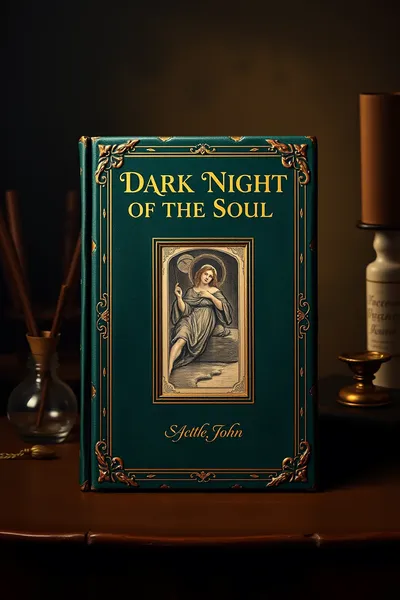






More Free Occult Philosophy Books
View all →