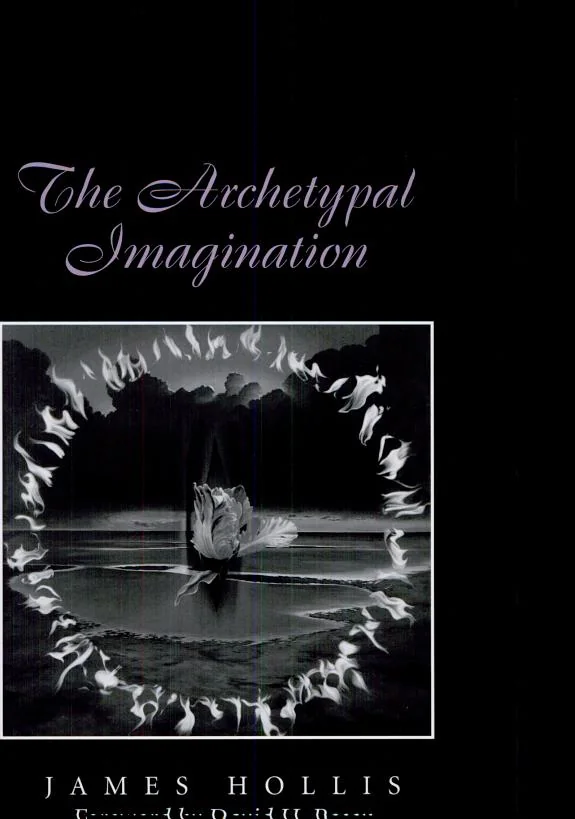
The Archetypal Imagination
 84
84

The Archetypal Imagination
James Hollis, in "The Archetypal Imagination," presents a compelling argument for the persistent power of archetypal patterns in shaping human consciousness and our quest for meaning. He articulates the Jungian perspective with a clarity and poetic sensibility that draws the reader into a deeper consideration of their own inner life. A notable strength lies in his ability to connect abstract psychological concepts to lived experience, making the vastness of the archetypal realm feel accessible. However, the book occasionally leans towards a philosophical exposition that might leave readers unfamiliar with Jungian terminology wanting more direct, practical applications. The exploration of how the 'anima' or 'animus' archetypes manifest in the search for connection, for instance, is particularly insightful, offering a framework for understanding relationship dynamics beyond the superficial. Ultimately, Hollis delivers a sophisticated reflection on the enduring human need to find significance, positioning the archetypal imagination as a vital, often overlooked, guide.
📝 Description
84
James Hollis's 2002 book examines the Jungian archetype's role in shaping human experience.
In "The Archetypal Imagination," James Hollis looks at how Jung's concept of the archetype influences our lives and search for meaning. He argues that these deep, often unconscious patterns affect our desires, how we see the world, and the stories we tell ourselves. The book suggests a hidden part of our minds connects us to universal human concerns, guiding our need for significance.
Hollis's writing speaks to those who want to understand the unconscious forces driving their personal lives and the broader human condition. It is especially relevant for people interested in Jungian psychology, mythology, and the philosophical basis of psychological growth. Readers grappling with questions about purpose and connection will find his thoughtful prose and psychological observations useful. The book is for anyone who senses that true understanding often lies beyond the obvious or measurable.
Published in 2002, "The Archetypal Imagination" arrived during a time of renewed interest in depth psychology. Hollis revisits Carl Jung's theories on archetypes and the collective unconscious, offering a modern perspective. His work engages with the ongoing dialogue among Jungian analysts who continue to develop these ideas, connecting them to contemporary spiritual and psychological quests. The book follows a tradition of exploring the psyche's deeper layers to understand the human drive for meaning.
💡 Why Read This Book?
• Gain a deeper understanding of the Jungian concept of archetypes and how they actively shape your perception of reality, as discussed in relation to the 2002 publication of the book. • Discover how the innate human drive for meaning is intrinsically linked to these universal patterns, offering a framework for personal growth and psychological integration. • Explore the limitations of purely rational or materialistic worldviews, learning to engage with the symbolic language of your unconscious to foster a richer inner life.
⭐ Reader Reviews
Honest opinions from readers who have explored this book.
❓ Frequently Asked Questions
What is the central argument of James Hollis's "The Archetypal Imagination"?
The book argues that the archetypal imagination is a fundamental human capacity that shapes our need for meaning and connection, offering a pathway to understanding ourselves beyond superficial limitations. It posits that these primordial patterns are active forces in our lives.
When was "The Archetypal Imagination" by James Hollis first published?
"The Archetypal Imagination" by James Hollis was first published on November 25, 2002.
Is "The Archetypal Imagination" a purely academic text, or does it have practical applications?
While rooted in Jungian psychology and philosophical inquiry, the book aims to illuminate personal experience, offering readers a framework to understand their own inner lives and the search for meaning, thus having practical implications for self-awareness.
What esoteric tradition does "The Archetypal Imagination" primarily draw from?
The book primarily draws from the tradition of analytical psychology, specifically the theories of Carl Jung, which itself incorporates elements from mythology, philosophy, and comparative religion to understand the unconscious mind.
Can "The Archetypal Imagination" help someone understand their personal relationships better?
Yes, by exploring how archetypal patterns, such as the anima and animus, influence our perceptions and desires, the book provides insights into the deeper dynamics that shape interpersonal connections beyond surface-level interactions.
What does Hollis suggest is the primary human need explored in the book?
Hollis suggests that a primary human need explored is the profound and persistent desire for meaning in life and for a connection to a reality that transcends the limitations of our immediate, empirical world.
🔮 Key Themes & Symbolism
The Drive for Meaning
Hollis posits that the human psyche possesses an innate, powerful drive for meaning, a quest that extends beyond material concerns and rational understanding. This drive is intrinsically linked to our engagement with the archetypal realm. The book suggests that this need is not a pathology but a fundamental aspect of consciousness, urging readers to look beyond the superficial for answers. It highlights how archetypes, as universal patterns, provide the symbolic language through which this deep-seated yearning for significance is expressed and, potentially, fulfilled.
Archetypal Influence
The core of Hollis's work lies in demonstrating how archetypes, the inherited structures of the human psyche described by Carl Jung, actively shape our perceptions, emotions, and behaviors. These primordial images and patterns are not static but dynamic forces that influence our desires, fears, and the narratives we construct about our lives. The book explores how recognizing these influences can lead to greater self-awareness and a more authentic engagement with the world, moving beyond personal history to connect with universal human experiences.
The Limits of Rationality
Hollis critiques worldviews that rely solely on empirical evidence and rational thought, arguing they often neglect the vast and potent influence of the unconscious. He suggests that an overemphasis on the rational can lead to a spiritual and psychological impoverishment, disconnecting individuals from deeper sources of wisdom and vitality. The book advocates for a balance, encouraging readers to acknowledge and integrate the symbolic language of dreams, myths, and imagination as essential components of a whole psyche.
Individuation and Wholeness
Central to the book's exploration is the Jungian concept of individuation – the lifelong process of becoming a distinct, integrated individual. Hollis frames this journey as one of conscious engagement with the archetypal imagination, integrating unconscious contents into the conscious personality. Achieving wholeness, he implies, requires confronting and understanding the powerful forces that lie beneath the surface of everyday awareness, leading to a more complete and authentic self.
💬 Memorable Quotes
Direct passages from the work, attributed to the author.
“What we wish to know, and most desire, remains unknowable and lies beyond our grasp.”
— This opening statement by Hollis frames the central tension of the book: the human yearning for understanding and fulfillment often points towards realms that transcend our immediate comprehension, suggesting the importance of exploring the unconscious and archetypal dimensions of life.
“The archetypal imagination is not merely a repository of images, but a dynamic force that shapes our reality.”
— This emphasizes Hollis's view of archetypes as active agents in our lives, not just passive symbols. They actively influence how we perceive the world, make choices, and construct our personal narratives, underscoring their a central role in psychological and spiritual development.
“The human need for meaning is rooted in our connection to a world less limiting than our own.”
— This highlights the core motivation explored in the book: our inherent search for purpose and significance is driven by a desire to connect with something larger and more profound than the mundane, immediate circumstances of life.
“Our relationship to the unconscious is the central fact of our lives.”
— This interpretation underscores the foundational importance of the unconscious psyche in Hollis's framework. He suggests that understanding and engaging with our unconscious processes is paramount to living a full and authentic life.
💡 Key Ideas
Editorial paraphrase of the work's core concepts — not direct quotes.
We are drawn to what we are meant to become.
This quote speaks to the concept of individuation and the inherent potential within each individual. It suggests that our deepest desires and life paths are guided by an inner imperative towards self-realization and wholeness.
🌙 Esoteric Significance
Tradition
The work is firmly rooted in the tradition of Analytical Psychology founded by Carl Jung. While Jung himself drew from a vast array of esoteric, mythological, and philosophical sources (including Hermeticism, Gnosticism, and Eastern philosophies), Hollis's primary lineage is psychological. He uses Jung's framework of archetypes, the collective unconscious, and individuation as the lens through which to explore spiritual and existential questions, making the esoteric concepts accessible through psychological interpretation.
Symbolism
Key symbols explored include the archetype of the Self, representing wholeness and the central organizing principle of the psyche, and the anima/animus, representing the contrasexual aspects of the psyche that influence our projections in relationships. The book also implicitly engages with the symbolism of the quest or journey, inherent in the process of individuation, where the individual navigates the inner landscape to achieve greater consciousness and integration.
Modern Relevance
Contemporary thinkers and practitioners in fields ranging from depth psychology and mythology to integral theory and transpersonal studies continue to draw upon Hollis's work. His clear articulation of archetypal dynamics provides a valuable resource for understanding modern cultural narratives, personal development, and the persistent human search for meaning in an increasingly complex world. His accessible approach makes Jungian concepts relevant for a broad audience interested in psychological and spiritual growth.
👥 Who Should Read This Book
• Individuals interested in Jungian psychology: Those seeking to deepen their understanding of Carl Jung's concepts like archetypes, the collective unconscious, and individuation will find Hollis's work an insightful guide. • Seekers of personal meaning: Readers grappling with existential questions about purpose, connection, and their place in the world will benefit from Hollis's exploration of the innate human drive for significance. • Students of mythology and comparative religion: Those who study myths and spiritual traditions will find valuable connections between these narratives and the underlying psychological structures that shape human consciousness.
📜 Historical Context
Published in 2002, "The Archetypal Imagination" emerged during a period where depth psychology, particularly Jungian analysis, was experiencing a renewed interest among a public seeking meaning beyond prevailing secular and materialistic paradigms. The late 20th century had seen critiques of grand narratives, but the turn of the millennium brought a resurgence of interest in spirituality and the inner life. Hollis's work can be seen as contributing to this trend, offering a sophisticated, yet accessible, articulation of Jung's theories on archetypes and the collective unconscious. He engaged with the ongoing development of Jungian thought, building upon the work of figures like Marie-Louise von Franz and James Hillman, who were also exploring the symbolic life and the imaginal realm. While not a subject of major public controversy or censorship, the book's focus on the unconscious and archetypal psychology placed it within a tradition that often stands in contrast to more behaviorist or cognitive approaches to psychology.
📔 Journal Prompts
The archetypal imagination's influence on perceived limitations.
Reflecting on the human need for meaning beyond the empirical.
Identifying personal manifestations of key archetypes.
The role of the unconscious in shaping life's narrative.
Connecting the drive for meaning to the process of individuation.
🗂️ Glossary
Archetype
Universal, inherited patterns of thought or imagery present in the collective unconscious, influencing human behavior and perception. Examples include the Mother, the Hero, and the Shadow.
Collective Unconscious
A concept introduced by Carl Jung, referring to a shared reservoir of instincts, images, and memories common to all humankind, distinct from the personal unconscious.
Individuation
The psychological process of integrating the conscious and unconscious aspects of the self to become a whole, distinct individual, a central goal in Jungian psychology.
Anima/Animus
In Jungian psychology, the anima is the unconscious feminine aspect in a man's psyche, and the animus is the unconscious masculine aspect in a woman's psyche, influencing projections and relationships.
Self
In Jungian psychology, the archetype of wholeness and the central organizing principle of the psyche, representing the totality of conscious and unconscious elements.
Imagination
The faculty of forming new ideas, images, or concepts not present to the senses. In Hollis's context, specifically the 'archetypal imagination' which taps into universal patterns.
Meaning
The significance or purpose attributed to life, experiences, and existence, which Hollis argues is a fundamental human drive often fulfilled through engagement with the archetypal realm.
This book appears in 1 collection
🔮 Readers Also Liked
Browse all →









From the “Jungian Psychology” Collection
View all →









More Free Occult Philosophy Books
View all →