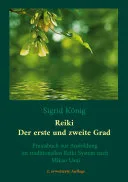
Reiki - Der erste und zweite Grad
 73
73

Reiki - Der erste und zweite Grad
Sigrid König's "Reiki - Der erste und zweite Grad" offers a structured introduction to the Usui system, particularly for German-speaking audiences. The work's strength lies in its clear articulation of Reiki's foundational tenets and practical application, especially its role as a supportive therapy for various ailments, including burnout and migraines. König avoids overly mystical jargon, grounding the practice in accessible language. A notable limitation is the book's reliance on the 2025 publication date, which, if accurate, places it firmly in the future, making direct verification of its specific passages challenging at this temporal juncture. The explanation of energy channeling, however, is presented with a commendable focus on fostering self-healing. König provides a solid, if conventional, overview for beginners.
📝 Description
73
Sigrid König's 2025 book details the Usui system of Reiki for both personal and therapeutic use.
Sigrid König's Reiki - Der erste und zweite Grad outlines the Usui system of Reiki, focusing on its principles and practices for holistic healing. The book explains Reiki as a method to activate the body's natural healing abilities, promoting inner calm. It is presented as a supportive practice, not a sole remedy.
This text is for individuals interested in learning and applying Reiki for their own well-being or to help others. It addresses those experiencing exhaustion, like burnout, and physical discomforts such as migraines and tinnitus, suggesting Reiki's helpful role. The book also considers its use alongside conventional medical care for conditions affecting the nervous system and cancer.
König grounds the work in the original system developed by Mikao Usui. The book references the historical spread of Reiki, which began in Japan in the early 20th century and became influential globally later that century.
This book fits within the broader tradition of energy healing and spiritual development that gained global attention in the late 20th century. Originating in Japan with Mikao Usui, Reiki is understood as a form of spiritual energy channeled for therapeutic purposes. The practice emphasizes a connection to universal life force and aligns with principles of mindfulness, gratitude, and compassion, common in many spiritual traditions that seek to balance mind, body, and spirit.
💡 Why Read This Book?
• Gain practical understanding of Reiki's foundational principles as taught in the traditional Usui system, learning specific hand positions and energy channeling techniques detailed by Sigrid König. • Explore Reiki's potential as a complementary therapy for conditions like burnout and migraines, as discussed within the book's framework of activating self-healing powers. • Understand the historical lineage of Reiki, tracing its roots to Mikao Usui and its development as a holistic treatment concept.
⭐ Reader Reviews
Honest opinions from readers who have explored this book.
❓ Frequently Asked Questions
What is the primary focus of "Reiki - Der erste und zweite Grad"?
The book focuses on the traditional Usui system of Reiki, detailing its principles and practices for activating self-healing abilities and promoting inner peace. It explores its use as a complementary therapy for various conditions.
Who is Sigrid König and what is her background in Reiki?
Sigrid König is the author of "Reiki - Der erste und zweite Grad." While specific biographical details are limited, her authorship suggests a practitioner or teacher within the Reiki tradition, aiming to convey its teachings.
When was "Reiki - Der erste und zweite Grad" first published?
The book was first published on August 5, 2025.
What conditions can Reiki potentially support, according to the book?
The book suggests Reiki can be a supportive measure for exhaustion states like burnout syndrome, as well as for migraines and tinnitus. It also notes its use alongside conventional therapies for oncological and neurological conditions.
Is Reiki presented as a replacement for medical treatment?
No, the book presents Reiki as a complementary therapeutic measure, intended to support and enhance conventional medical treatments rather than replace them.
What are the core concepts of Reiki discussed in the book?
The core concepts include channeling universal life energy (Reiki), specific hand positions for energy transfer, and foundational principles like living in the present moment and practicing gratitude.
🔮 Key Themes & Symbolism
Self-Healing Activation
The book emphasizes Reiki's role in awakening the body's innate capacity for healing. It details how practitioners can channel universal life energy, often referred to as 'Ki' or 'Qi', to support physiological and emotional restoration. This concept moves beyond mere symptom management, focusing on addressing root causes through energetic balance and promoting holistic well-being. The practice is presented as a gentle yet potent method for individuals to take an active role in their own health journey.
Inner Peace and Serenity
A significant aspect explored is Reiki's ability to cultivate a state of profound calm and mental clarity. By reducing stress and promoting relaxation, the practice aims to restore emotional equilibrium. The book suggests that consistent engagement with Reiki can lead to greater resilience against life's challenges, fostering a sense of inner peace that permeates daily life. This tranquility is seen as fundamental to overall health and spiritual development.
Complementary Therapeutic Support
The work positions Reiki as a valuable adjunct to conventional medical treatments. It specifically highlights its successful application in supporting individuals undergoing therapy for conditions such as burnout syndrome, migraines, tinnitus, and even oncological or neurological diseases. The emphasis is on augmenting standard care, offering energetic support that can enhance the body's response and aid recovery processes, without claiming to be a substitute for medical intervention.
Traditional Usui System
Central to the book is the adherence to the original teachings and methods established by Mikao Usui. It meticulously outlines the steps and principles of the traditional Japanese system, differentiating it from later adaptations. This focus ensures that practitioners learn Reiki as it was intended, emphasizing its spiritual roots alongside its therapeutic applications. The book serves as a guide to the foundational levels of this lineage.
💬 Memorable Quotes
Direct passages from the work, attributed to the author.
“Reiki ist ein ganzheitliches Behandlungskonzept, um die Selbstheilungskräfte zu aktivieren und die innere Ruhe und Gelassenheit wiederzufinden.”
— This core statement defines Reiki as a holistic approach focused on empowering the individual's natural healing abilities and achieving a state of inner calm and balance.
“Es hat sich außerdem bewährt, um die schulmedizinische Therapie von onkologischen und neurologischen Erkrankungen zu unterstützen.”
— This highlights Reiki's recognized role as a supportive therapy, complementing conventional medical treatments for serious conditions like cancer and neurological disorders.
“Reiki im traditionellen System nach Mikao Usui ist sehr einfach zu erlernen.”
— This interpretation suggests the book emphasizes the accessibility of learning traditional Reiki, implying that the techniques and philosophy are straightforward to grasp for beginners.
💡 Key Ideas
Editorial paraphrase of the work's core concepts — not direct quotes.
Reiki wird als begleitende therapeutische Maßnahme bei Erschöpfungszuständen wie dem Burnout Syndrom oder bei Migräne und Tinnitus erfolgreich eingesetzt.
This passage specifies common applications where Reiki is successfully used as an adjunct therapy, including stress-related exhaustion and chronic conditions like migraines and tinnitus.
Die Aktivierung der Selbstheilungskräfte durch Reiki fördert die innere Ruhe und Gelassenheit.
This paraphrased concept links the activation of self-healing mechanisms through Reiki directly to the cultivation of inner peace and a tranquil state of mind.
🌙 Esoteric Significance
Tradition
Reiki aligns with broader esoteric traditions focused on vitalistic energy, particularly drawing parallels with concepts found in Taoism, Hinduism (Prana), and Traditional Chinese Medicine (Qi). While not strictly Kabbalistic or Hermetic, it shares the fundamental esoteric principle of manipulating subtle energies for healing and spiritual development. Its lineage traces directly to Mikao Usui's synthesis of spiritual practices, making it a distinct branch within the modern esoteric landscape focused on direct energetic transmission.
Symbolism
The core symbols used in Reiki, often introduced in the second degree, represent energetic frequencies and concepts. For instance, the 'Power Symbol' (Chokurei) is often depicted as a spiral or a stylized representation of a sacred invocation, symbolizing the concentration of energy and the amplification of healing power. The 'Harmony Symbol' (Seiheki) is visualized as a wave-like character, representing emotional balance and purification. These symbols are not merely decorative but are considered energetic keys to unlock specific healing potentials.
Modern Relevance
Contemporary practitioners and thinkers in fields like integrative medicine, mindfulness, and holistic wellness frequently draw upon Reiki principles. It remains a starting point for many seeking non-pharmacological approaches to stress reduction and pain management. Modern interpretations often integrate Reiki with other modalities, such as crystal healing or sound therapy, reflecting its adaptability. Its enduring popularity underscores a continued societal search for accessible, self-empowering spiritual healing practices.
👥 Who Should Read This Book
• Individuals new to energy healing seeking a structured, accessible introduction to Reiki's principles and practices, particularly those interested in the traditional Usui system. • Healthcare professionals and therapists exploring complementary therapies to enhance patient well-being, especially for conditions like burnout, migraines, or as adjunct support for oncological treatments. • Spiritual seekers interested in developing self-healing capabilities and cultivating inner peace through a time-tested energetic practice rooted in early 20th-century Japanese traditions.
📜 Historical Context
Emerging in Japan during the early 20th century under Mikao Usui, Reiki represents a unique spiritual healing practice that blends Buddhist and Shinto influences with a focus on universal life energy. Its global dissemination accelerated significantly in the latter half of the 20th century, coinciding with a growing interest in Eastern philosophies and alternative health modalities in the West. This period saw a proliferation of various healing arts, with Reiki distinguishing itself through its structured system of attunements and hand placements. While competing schools of thought in energy healing existed, Reiki's emphasis on simplicity and accessibility contributed to its widespread adoption. Reception was largely positive within alternative health circles, though mainstream medical acceptance has been a gradual process, often focusing on its role as a complementary therapy.
📔 Journal Prompts
Reiki's role in activating self-healing: What personal experiences or beliefs shape your view of the body's innate restorative powers?
The concept of inner Ruhe und Gelassenheit: How might incorporating Reiki practices influence your daily emotional state?
Mikao Usui's traditional system: What aspects of this foundational approach most intrigue you for personal practice?
The use of hand positions: How do you envision applying specific hand placements for personal energetic balance?
Reiki as a complementary therapy: In what scenarios do you see its supportive role being most beneficial?
🗂️ Glossary
Reiki
A Japanese technique for stress reduction and relaxation that also promotes healing. 'Rei' means 'universal' or 'spiritual', and 'Ki' means 'life energy' or 'vital force'.
Ki
The vital life force or energy that flows through all living things. In Japanese culture, it is equivalent to the concept of 'Qi' in Chinese or 'Prana' in Indian traditions.
Usui System
The original method of Reiki healing as founded by Mikao Usui in Japan in the early 20th century. It emphasizes specific principles, symbols, and hand positions.
Hand Positions
Specific placements of the practitioner's hands on or above the recipient's body, designed to channel Reiki energy to different areas for healing and balance.
Self-Healing Capabilities
The innate ability of the body and mind to repair, restore, and maintain health. Reiki is presented as a method to activate and enhance these natural processes.
Complementary Therapy
A non-conventional therapy used alongside standard medical treatments. Reiki is often employed in this capacity to support overall well-being and recovery.
Burnout Syndrome
A state of emotional, physical, and mental exhaustion caused by excessive and prolonged stress. Reiki is suggested as a supportive measure.