Ernst Benz
Ernst Jünger was a German author and soldier known for his WWI memoir, philosophical writings on war and modernity, and complex relationship with political ideologies.
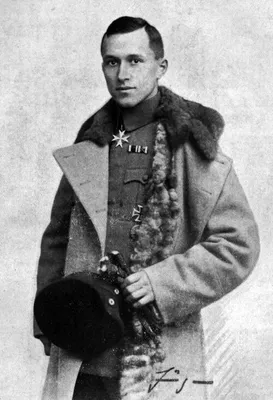
Ernst Jünger was a German writer, soldier, and intellectual whose life spanned much of the tumultuous 20th century. He gained initial fame for his World War I memoir, "Storm of Steel," which depicted combat as a profound, almost mystical experience. Despite his affluent upbringing, Jünger sought adventure, briefly joining the French Foreign Legion before serving with distinction in the German army during WWI, where he was severely wounded multiple times and received the Pour le Mérite.
Jünger's writings often challenged liberal values and democratic institutions, and he maintained a complex stance towards the rising Nazi regime, rejecting their overtures while serving in occupied Paris during WWII. His later work, particularly "The Peace," marked a turn against totalitarianism. After the war, he faced some suspicion but eventually became a respected literary figure, though critics continued to debate his early glorification of war.
Early Life and Military Service
Born in Heidelberg, Ernst Jünger was the eldest of six children. He developed an early interest in adventure and entomology, even spending time in the French Foreign Legion before enlisting in the Imperial German Army at the outbreak of World War I. He served as an officer and was wounded seven times during the conflict, earning the Pour le Mérite, the highest military decoration of the German Empire, and gaining a reputation for his combat exploits and resilience. His war experiences, meticulously documented in his diary, formed the basis of his seminal work, "Storm of Steel."
Philosophical and Literary Evolution
Following WWI, Jünger served in the Weimar Republic's army and studied natural sciences and philosophy, becoming a notable entomologist. His literary fame grew with "Storm of Steel," which presented war as a powerful, existential experience. He was critical of liberal democracy, viewing it as weak. In works like "The Worker" and "On Pain," he explored themes of total mobilization, the essence of modernity, and the human capacity to endure hardship, advocating for a society shaped by warrior-scholars and rejecting comfort in favor of resilience.
Political Ambiguity and Post-War Recognition
During the interwar period and World War II, Jünger maintained a complex relationship with prevailing political movements. He rejected the Nazis, despite serving as an army captain in occupied Paris. By 1943, his opposition to Nazi totalitarianism was evident in works like "The Peace." He was dismissed from the army in 1944, indirectly linked to a plot against Hitler. Post-war, Jünger was initially viewed with suspicion but eventually gained recognition for his writings on materialism and modern society, which were seen as conservative. He died as an honored literary figure, though his early works' portrayal of war remained a point of contention.
Key Ideas
- War as a transcendental or mystical experience
- Critique of liberal values and democracy
- The essence of modernity found in total mobilization
- Emphasis on human resilience and the capacity to endure pain
- The figure of the 'worker' as a new societal archetype
Notable Quotes
“As the storm raged around us, I walked up and down my sector. The men had fixed bayonets. They stood stony and motionless, rifle in hand, on the front edge of the dip, gazing into the field. Now and then, by the light of a flare, I saw steel helmet by steel helmet, blade by glinting blade, and I was overcome by a feeling of invulnerability. We might be crushed, but surely we could not be conquered.”
“hated democracy like the plague.”
Books by Ernst Benz
3 free public domain books · Read online or download