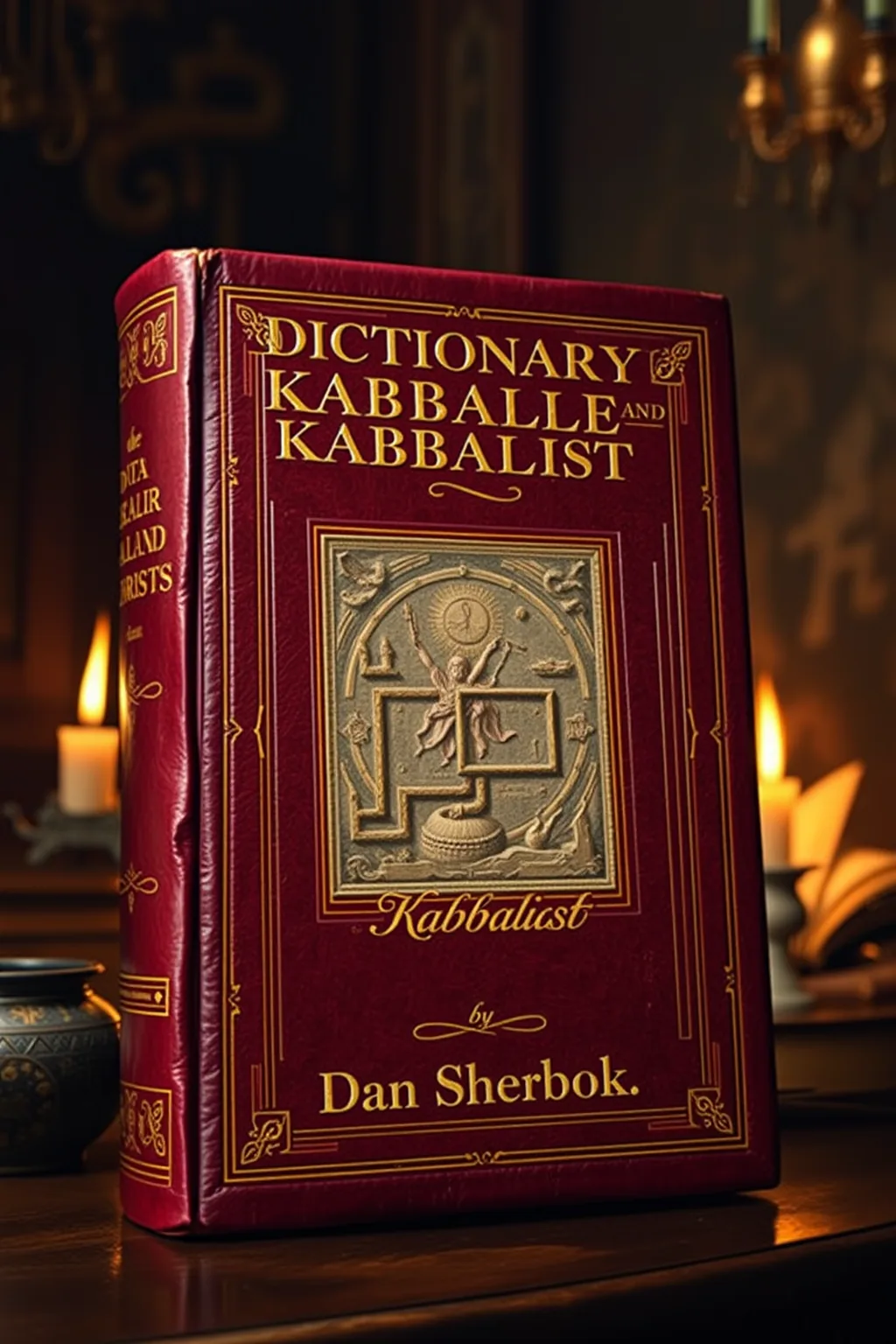
Dictionary of Kabbalah and Kabbalists
 61
61

Dictionary of Kabbalah and Kabbalists



Cassian Rothmann (Senior Critic, Ancient Wisdom) — Dan Sherbok's "Dictionary of Kabbalah and Kabbalists" is an indispensable compendium for anyone serious about plumbing the esoteric currents of Jewish mysticism. Sherbok's erudition shines through, offering authoritative yet accessible explanations of complex Kabbalistic terminology and the biographies of pivotal figures. He skillfully navigates the labyrinthine doctrines, illuminating the symbolic language and mystical pathways with remarkable clarity. This dictionary is not merely a reference; it’s an invitation to engage deeply with a tradition rich in hidden knowledge. It stands as a testament to Sherbok's commitment to making the profound insights of Kabbalah available to a wider audience, from dedicated students to curious minds seeking spiritual understanding.
📝 Description
61
Dan Sherbok's Dictionary of Kabbalah and Kabbalists (2015) defines over 500 terms and figures.
Dan Sherbok's dictionary offers definitions for more than 500 terms and figures central to Kabbalah and its practitioners. The book explains esoteric principles, symbolism, and the biographies of key Kabbalists. Readers will find explanations for concepts such as the Tree of Life, the Sephirot, and gematria, written in clear language. Sherbok aims to make complex Kabbalistic ideas understandable for both newcomers and experienced students.
The text presents Kabbalah as a spiritual tradition. It seeks to connect readers with its philosophical foundations and practical aspects. This work acts as a resource for understanding how Kabbalistic thought has influenced esoteric traditions over centuries.
Kabbalah is a system of Jewish mysticism that seeks to understand the nature of God and the creation of the universe. Its origins are debated, but prominent texts like the Zohar emerged in the medieval period. Kabbalistic thought involves complex symbolic interpretations of the Torah, meditative practices, and a cosmology that includes divine emanations known as the Sephirot. It has influenced various streams of Jewish thought and also found adherents in broader esoteric and occult circles.
💡 Why Read This Book?
Unravel the profound mysteries of Jewish mysticism and its foundational texts. This dictionary provides clear, concise explanations of esoteric Kabbalistic concepts, key figures, and their teachings. Ideal for spiritual seekers, students of comparative religion, and practitioners of contemplative traditions eager to explore the Tree of Life, divine emanations, and the soul's journey.
⭐ Reader Reviews
Honest opinions from readers who have explored this book.
❓ Frequently Asked Questions
What is Kabbalah?
Kabbalah is a mystical tradition within Judaism that seeks to understand the nature of God and the universe through esoteric interpretations of scripture and divine revelation. It explores the hidden dimensions of reality and the path to spiritual illumination.
Who are the Kabbalists?
Kabbalists are practitioners and scholars of Kabbalah, individuals who dedicate themselves to studying its teachings and applying its principles to their spiritual lives. They often engage in meditation, contemplation, and the study of sacred texts.
What is the Tree of Life in Kabbalah?
The Tree of Life (Etz Chaim) is a central symbolic diagram in Kabbalah, representing the divine emanations and the structure of the cosmos. It consists of ten interconnected spheres (Sephirot) and twenty-two paths, illustrating the flow of divine energy.
Is Kabbalah only for Jewish people?
While rooted in Jewish tradition, the study of Kabbalah has attracted interest from individuals of diverse backgrounds seeking spiritual wisdom. Its universal themes of creation, consciousness, and divine connection resonate widely.
How can this dictionary help me understand Kabbalah?
This dictionary provides accessible definitions and explanations of complex Kabbalistic terms, concepts, and historical figures. It serves as a crucial starting point for anyone wanting to grasp the foundational elements of this rich mystical tradition.
🔮 Key Themes & Symbolism
The Tree of Life and Sephirot
The central symbolic framework of Kabbalah, the Tree of Life, is meticulously detailed. This section explores the ten Sephirot—divine emanations or attributes—that represent the stages of creation and the path of divine consciousness. Understanding these interconnected spheres and the twenty-two paths connecting them is crucial for comprehending the Kabbalistic cosmology, the nature of God, and the human soul's relationship with the divine. This theme illuminates the structured yet dynamic pathways through which spiritual energy flows, offering insights into the architecture of existence.
Mystical Interpretations and Esoteric Practices
This theme studies the core of Kabbalistic practice, focusing on the methods used to access hidden spiritual truths. It examines techniques such as gematria (numerical interpretation of Hebrew letters), notarikon (acrostic interpretation), and temurah (letter permutation), which are employed to uncover deeper meanings within sacred texts. The exploration extends to meditative practices, contemplative states, and the understanding of divine names, all aimed at fostering a direct experience of the divine and facilitating the soul's ascent towards higher domains of consciousness.
Biographies of Key Kabbalists
The heart of this theme lies in the illuminated lives of the most influential figures in Kabbalistic history. From the ancient sage Simeon bar Yochai, traditionally credited with writing the Zohar, to later luminaries like Isaac Luria and Abraham Abulafia, these biographies offer a human dimension to the abstract mystical teachings. Understanding their lives, their spiritual quests, and their contributions provides context and inspiration, demonstrating how the profound theories of Kabbalah were lived and transmitted through generations of dedicated seekers and masters.
💬 Memorable Quotes
Direct passages from the work, attributed to the author.
“The Kabbalah is a mystical interpretation of the Torah.”
— This highlights Kabbalah's foundational role as a method of understanding the divine will and cosmic order embedded within Jewish scripture, revealing deeper, hidden layers of meaning.
“The Sephirot are divine emanations, not separate gods.”
— This clarifies a common misconception, emphasizing that the Sephirot are facets of a single, unified Godhead, not independent deities, crucial for understanding Kabbalistic monotheism.
“The goal of Kabbalah is to draw closer to God.”
— This succinctly states the ultimate aim of Kabbalistic practice: spiritual union and an intensified connection with the Divine Presence through esoteric knowledge and disciplined effort.
“Gematria reveals the interconnectedness of all things.”
— This points to the symbolic power of numerical interpretation in Kabbalah, suggesting that shared numerical values in Hebrew words signify underlying spiritual connections and universal patterns.
“The Zohar is the foundational text of Kabbalistic literature.”
— This emphasizes the paramount importance of the Zohar, an important work of Kabbalah, as the primary source and interpretive guide for understanding its complex mystical doctrines and narratives.
🌙 Esoteric Significance
Tradition
Kabbalah represents a profound esoteric tradition within Judaism, deeply rooted in the mystical interpretation of the Torah and seeking to understand the divine nature, creation, and the human soul's journey. It offers a symbolic language and a practical methodology for spiritual ascent, aiming to bridge the gap between the material and the divine. Its esoteric core lies in unveiling hidden meanings and spiritual realities that are not apparent through literal exegesis, providing a blueprint for cosmic order and personal transformation.
Symbolism
At the heart of Kabbalah's esoteric significance lies its rich and intricate symbolism. The Tree of Life, with its ten Sephirot and twenty-two paths, serves as a universal map of consciousness and creation. Divine names, letters of the Hebrew alphabet, and numerical values (gematria) are not merely linguistic tools but potent keys to unlocking hidden spiritual truths. These symbols act as vessels for divine energy, guiding the practitioner through a process of deconstruction and reconstruction of their understanding of reality, fostering a deeper, intuitive grasp of the divine.
Modern Relevance
Despite its ancient origins, Kabbalah's esoteric wisdom remains remarkably relevant today. In an era often characterized by spiritual seeking and a desire for deeper meaning, its teachings on consciousness, interconnectedness, and the nature of reality offer useful insights. Kabbalistic principles can guide individuals in their personal growth, helping to navigate life's challenges with a greater sense of purpose and understanding. Its emphasis on inner transformation and the potential for divine connection continues to resonate with those exploring contemplative practices and seeking a more profound engagement with existence.
👥 Who Should Read This Book
This comprehensive dictionary is an invaluable resource for a diverse audience. **Beginners** seeking an accessible entry point into the complex world of Kabbalah will find clear definitions and foundational explanations. **Students of religion and philosophy** will appreciate the scholarly depth and historical context provided. **Spiritual seekers and practitioners** interested in contemplative traditions and esoteric wisdom will discover a wealth of insights into the Tree of Life, divine emanations, and mystical practices. **Scholars of Jewish mysticism** will find it a meticulously researched and authoritative reference, enriching their understanding of key concepts and figures.
📜 Historical Context
The origins of Kabbalah are shrouded in antiquity, with its formative period flourishing in the medieval era, particularly in the mystical circles of Provence and Spain. The "Dictionary of Kabbalah and Kabbalists" situates these developments against a backdrop of intellectual ferment and spiritual longing within Jewish communities, often seeking solace and deeper meaning amidst periods of persecution and exile. The 13th-century emergence of the Zohar, the foundational text of Kabbalah, marks a key moment, profoundly influencing subsequent generations and shaping the field of Jewish mysticism. The work also traces the Lurianic Kabbalah of the 16th century, a crucial theological reformulation that introduced concepts like Tzimtzum (divine contraction) and Tikkun (rectification), deeply impacting Hasidism and esoteric thought thereafter. This historical arc reveals Kabbalah not as a static doctrine, but as a living, evolving tradition responding to the spiritual needs and philosophical inquiries of its time.
📔 Journal Prompts
Reflect on the concept of divine emanations (Sephirot) and how they might manifest in your own life.
Consider a Kabbalistic concept that speaks to you and explore its potential implications for your personal spiritual journey.
Write about a key Kabbalist mentioned in the dictionary and what lessons their life and teachings offer for contemporary seekers.
How can the principles of gematria or symbolic interpretation enhance your understanding of everyday experiences or sacred texts?
Imagine you are on the path of spiritual ascent; what 'paths' or connections on the Tree of Life would you focus on cultivating and why?
🗂️ Glossary
Sephirot
The ten divine emanations or attributes through which God creates and sustains the universe in Kabbalistic cosmology. They form the structure of the Tree of Life.
Gematria
A method of Kabbalistic interpretation that assigns numerical values to Hebrew letters and words to reveal hidden connections and meanings within sacred texts.
Ein Sof
The Kabbalistic term for the 'Infinite' or 'Limitless' divine essence, representing God in His absolute, unknowable state before creation.
Tzimtzum
The concept of divine contraction or withdrawal, theorized by Isaac Luria, as a necessary step for creation to occur, creating a 'vacated space' for existence.
Zohar
The foundational work of Kabbalistic literature, a mystical commentary on the Torah, attributed to Simeon bar Yochai, believed to contain profound esoteric teachings.
This book appears in 1 collection
🔮 Readers Also Liked
Browse all →








From the “Kabbalah” Collection
View all →









More Free Kabbalah & Jewish Mysticism Books
View all →