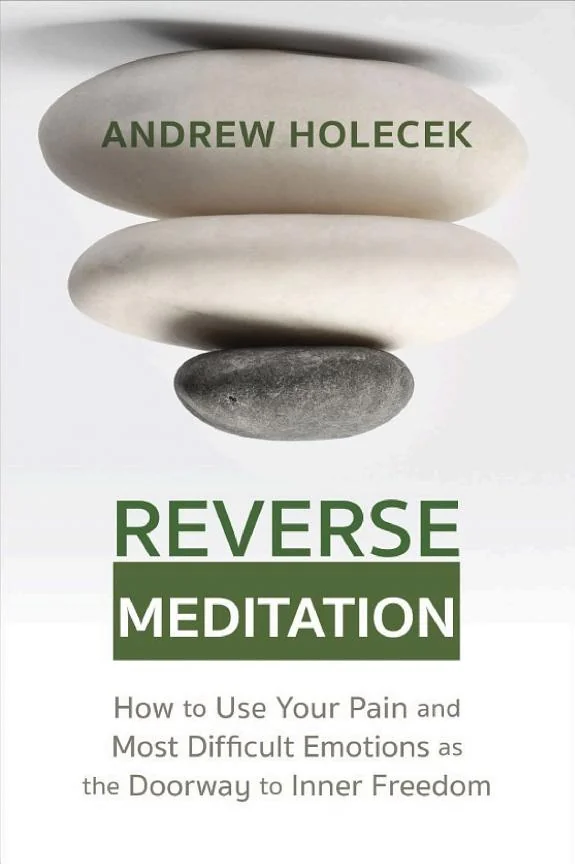
Reverse Meditation
 71
71

Reverse Meditation
Andrew Holecek’s "Reverse Meditation" is a bracing antidote to the wellness-infantilized meditation industry. He rightly questions the efficacy of practices that crumble at the first sign of adversity, asking pointedly, "But where does your meditation go when things go bad?" This is the book’s core strength: its unflinching honesty and demand for genuine spiritual grit. Holecek’s critique of modern meditation as a mere anxiety-reduction tool is sharp and necessary. However, the book occasionally leans into a somewhat didactic tone, which, while serving its purpose, can feel less like an invitation and more like a decree. The exploration of "reverse meditation" itself, the practice of meeting difficulty, is where the work truly shines, offering a compelling alternative to escapist contemplation. It's a vital corrective for anyone serious about their spiritual path.
📝 Description
71
Andrew Holecek's 2023 book argues meditation's true power lies in confronting adversity, not just seeking comfort.
Andrew Holecek's "Reverse Meditation" challenges the common view of meditation as solely a comfort-seeking practice. Published in 2023, the book proposes that a more substantial spiritual development comes from facing life's difficulties, not avoiding them. Holecek contends that genuine spiritual strength is built through challenging experiences, not just in moments of peace. The work suggests a counter-intuitive method where meditation's real benefit appears when confronting situations of "rock meets bone," a Tibetan phrase for extreme hardship.
This book is for meditators who feel their practice has stalled or whose spiritual progress falters during life's inevitable trials. It speaks to those wanting to connect their contemplative practice to the full range of human experience, including pain, fear, and confusion. It is particularly suited for individuals interested in advanced contemplative methods, those with an established meditation habit, and practitioners aiming to understand consciousness beyond simple relaxation.
Emerging from a modern Western Buddhist context that often prioritizes mindfulness for well-being, Holecek's work responds to critiques within Buddhism itself concerning the domestication of spiritual practice. It echoes the 1970s calls for "crazy wisdom" and ego confrontation, but Holecek provides concrete techniques for applying these principles to meditation in the 21st century, moving beyond general statements about authenticity.
💡 Why Read This Book?
• You will learn a method to strengthen your spiritual resilience by confronting adversity directly, a technique explored through Holecek's "reverse meditation" practice, rather than solely seeking comfort. • You will gain an understanding of how difficult experiences, termed "rock meets bone" in Tibetan idiom, can serve as potent catalysts for spiritual development, a concept detailed in the book's core arguments. • You will discover how to integrate contemplative practice with the full spectrum of human emotion, moving beyond basic stress reduction to a more robust engagement with life, as advocated throughout the 2023 publication.
⭐ Reader Reviews
Honest opinions from readers who have explored this book.
❓ Frequently Asked Questions
What is the core difference between 'reverse meditation' and traditional meditation?
Traditional meditation often aims to pacify the mind and reduce discomfort. 'Reverse meditation,' as presented by Andrew Holecek, intentionally engages with difficult emotions and challenging circumstances, viewing them as opportunities for spiritual growth rather than obstacles to be avoided.
Who is Andrew Holecek and what is his background?
Andrew Holecek is an author and meditation teacher with a background in both Western psychology and Eastern contemplative traditions, particularly Tibetan Buddhism. His work often bridges these fields, as seen in his 2023 book 'Reverse Meditation'.
What does the phrase 'rock meets bone' signify in this context?
The Tibetan idiom 'rock meets bone' is used in 'Reverse Meditation' to represent moments of profound hardship, crisis, or intense suffering. It signifies the point where one’s spiritual practice is truly tested, moving beyond superficial ease.
Is 'Reverse Meditation' suitable for beginners?
While the book challenges conventional approaches, it is best suited for individuals who have some existing meditation experience and are looking to deepen their practice beyond basic stress reduction. Beginners might find the concepts demanding.
What is the publication year of 'Reverse Meditation'?
Andrew Holecek's 'Reverse Meditation' was first published on July 11, 2023, making it a contemporary exploration of contemplative practices.
How does this book differ from other mindfulness or meditation guides?
Unlike many guides focused on relaxation and stress relief, 'Reverse Meditation' advocates for engaging directly with life's difficulties as integral to spiritual development, offering a counter-intuitive but potentially more profound path.
🔮 Key Themes & Symbolism
Confronting Adversity
The central thesis argues that true spiritual development occurs not in avoiding hardship, but in actively engaging with it. Holecek uses the concept of 'reverse meditation' to illustrate how moments of crisis, referred to by the Tibetan idiom 'rock meets bone,' can become fertile ground for awakening. This challenges the popular notion of meditation as solely a tool for achieving peace and tranquility, instead presenting it as a method for cultivating resilience and deeper insight when life is at its most difficult.
Beyond Stress Reduction
This work critiques the modern tendency to reduce meditation to a wellness technique for managing anxiety and improving sleep. Holecek contends that such a limited view misses the profound potential of contemplative practice. The book encourages practitioners to question where their spiritual gains go when faced with genuine suffering, advocating for a more robust engagement with consciousness that embraces the full spectrum of human experience, not just its pleasant aspects.
Integrated Spirituality
Reverse Meditation proposes an integrated approach to spirituality where contemplative practice is not separate from daily life, especially its challenging dimensions. It suggests that by facing difficult emotions and situations directly through specific techniques, practitioners can achieve a more authentic and integrated sense of self. This perspective pushes beyond detached observation towards a dynamic interaction with reality, fostering a spirituality that is robust, adaptable, and deeply rooted in lived experience.
The Nature of Spiritual Practice
The book re-examines the fundamental purpose and methodology of spiritual practice. It posits that the ultimate aim is not perpetual bliss but the capacity to meet reality as it is, including its painful aspects. By reversing the common trajectory of seeking ease, practitioners can unlock deeper levels of wisdom and compassion. This redefinition encourages a more courageous and honest engagement with the spiritual path, moving away from escapism towards profound self-understanding.
💬 Memorable Quotes
Direct passages from the work, attributed to the author.
“Where is your spirituality when 'rock meets bone,' as they say in Tibet—when the crap hits the fan?”
— This rhetorical question challenges the superficiality of spiritual practices that only function during comfortable times. It highlights the critical test of one's spiritual development when faced with severe adversity, pushing for a more resilient and authentic application of practice.
“The main reason most modern people start meditating is because it helps us feel better—reducing anxiety, improving sleep, decluttering the mind, and so forth.”
— This observation frames the common motivation for meditation in contemporary society, setting the stage for Holecek's critique. It points to a prevalent trend of using meditation primarily for stress relief and personal comfort, which the book aims to expand upon.
“But where does your meditation go when things go bad?”
— This is a direct challenge to the practitioner, questioning the depth and efficacy of their practice when confronted with life's difficulties. It serves as a central inquiry driving the exploration of 'reverse meditation' techniques.
“Disruptive practices to revolutionize your relationship with meditation and fully engage with the full breadth of your experience.”
— This describes the book's core offering: unconventional methods designed to fundamentally alter how one approaches meditation and interacts with all aspects of their life, including the challenging ones.
“Why do we meditate?”
— This fundamental question opens the book, immediately prompting readers to examine their own motivations and the common assumptions surrounding meditation practice, thereby preparing them for Holecek's alternative perspective.
🌙 Esoteric Significance
Tradition
While rooted in the practical application of Buddhist contemplative methods, "Reverse Meditation" engages with a lineage that values confronting illusion and ego. It aligns with esoteric traditions that emphasize direct experience and the integration of shadow aspects of the self, rather than mere intellectual understanding or detached observation. The work draws implicitly from Vajrayana Buddhism's emphasis on working with intense emotions and challenging states of mind as pathways to awakening.
Symbolism
The core symbolic concept is "rock meets bone," representing the point of ultimate testing and confrontation with reality. This signifies the raw, unvarnished nature of existence, devoid of pleasantries. Another implicit symbol is the contrast between "forward" (conventional, comfort-seeking) and "reverse" (adversity-engaging) meditation, illustrating a fundamental shift in approach from avoidance to direct engagement with the spiritual path.
Modern Relevance
Holecek's work speaks directly to contemporary practitioners disillusioned with superficial meditation techniques. It speaks to thinkers and groups exploring the intersection of psychology, neuroscience, and spirituality who seek methods for cultivating genuine resilience. Modern esoteric practitioners, particularly those interested in depth psychology and the integration of challenging experiences, find in "Reverse Meditation" a valuable tool for deepening their practice beyond conventional wellness applications.
👥 Who Should Read This Book
• Experienced meditators seeking to deepen their practice beyond stress reduction and explore the challenging aspects of spiritual growth. • Practitioners interested in Buddhist philosophy and contemplative traditions who wish to understand how to apply these principles during difficult life circumstances. • Individuals exploring esoteric thought who are looking for concrete techniques to integrate shadow aspects and cultivate resilience in the face of adversity.
📜 Historical Context
Andrew Holecek’s "Reverse Meditation" (2023) arrives in an era saturated with mindfulness apps and wellness-focused contemplative guides. Its core argument serves as a counterpoint to this trend, echoing a long-standing critique within Buddhist traditions themselves regarding the potential for practice to become overly therapeutic or escapist. While the 1970s saw figures like Chögyam Trungpa Rinpoche advocating for a more rigorous, even "crazy," approach to confronting ego and illusion, Holecek provides a contemporary, structured framework for applying similar principles to meditation. This work emerges amidst a broader resurgence of interest in the more challenging aspects of esoteric philosophy and contemplative science, distinguishing itself from the dominant, often secularized, mindfulness movement.
📔 Journal Prompts
Reflect on the "rock meets bone" moments in your life and how your practice responded.
Consider the "full breadth of your experience" and identify areas where you tend to avoid difficult emotions.
How does the concept of "reverse meditation" challenge your current understanding of spiritual progress?
Identify one "disruptive practice" from the book you might experiment with during a moment of discomfort.
Evaluate the effectiveness of your current meditation approach when faced with challenges, as suggested by the author's critique.
🗂️ Glossary
Reverse Meditation
A contemplative practice advocated by Andrew Holecek that intentionally engages with difficult emotions, challenging circumstances, and moments of crisis, viewing them as opportunities for spiritual growth and insight.
Rock Meets Bone
A Tibetan idiom used by Holecek to signify profound hardship, intense suffering, or critical life challenges – the point where one's spiritual resilience is truly tested.
Forward Meditation
The conventional approach to meditation that primarily aims for tranquility, stress reduction, and the avoidance of discomfort, as contrasted with 'reverse meditation'.
Spiritual Resilience
The capacity to maintain and deepen one's spiritual practice and well-being when confronted with adversity, pain, and life's difficulties.
Integrated Spirituality
A form of spiritual practice that embraces the full spectrum of human experience, including negative emotions and challenging situations, rather than separating spirituality from the difficulties of life.
Disruptive Practices
Techniques or methods in meditation that intentionally challenge conventional approaches and comfort zones, aiming to revolutionize one's relationship with practice and experience.
Full Breadth of Experience
Encompassing all aspects of human consciousness and life, including joy, suffering, fear, confusion, and peace, advocating for their integration within spiritual practice.
This book appears in 1 collection
🔮 Readers Also Liked
Browse all →









From the “Dream Yoga” Collection
View all →







More Free Occult Philosophy Books
View all →