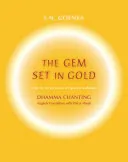
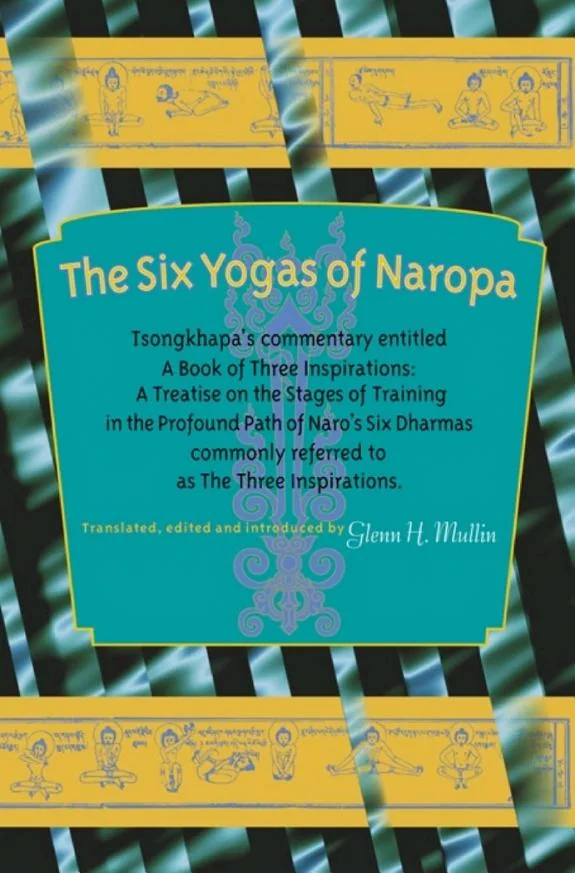
The Six Yogas of Naropa
 79
79

The Six Yogas of Naropa
Glenn H. Mullin's rendering of Tsongkhapa's "The Three Inspirations," concerning Naropa's Six Yogas, offers a disciplined pathway into advanced Tibetan yogic technology. Mullin’s scholarly approach, evident in his careful translation and contextualization, provides a solid foundation for engaging with these intricate practices. The strength of this edition lies in its detailed explanation of each yoga, particularly the internal heat (Tummo) and illusory body practices, which are presented with a clarity often missing in other texts. However, the sheer technicality of the subject matter means this book demands significant prior engagement with Buddhist philosophy and meditation; it is not a casual read. A particularly striking aspect is the meticulous breakdown of the stages involved in realizing the 'clear light' state, which Mullin elucidates with precision, though it remains an abstract concept for those not deeply immersed in the practice. Ultimately, for the serious student of Vajrayana, Mullin's work is an indispensable, if demanding, resource.
📝 Description
79
Glenn H. Mullin translated Tsongkhapa's "A Book of Three Inspirations" in 2004, detailing the Six Yogas of Naropa.
This book presents the Six Yogas of Naropa, a system of advanced yogic practices within Tibetan Buddhism. Glenn H. Mullin translates and annotates Tsongkhapa's "A Book of Three Inspirations," a key text that synthesizes these methods. The work is not simply a historical overview but a practical guide for dedicated practitioners aiming for profound realization.
Mullin's translation makes these complex teachings accessible to an English-speaking audience. The system involves six interconnected practices, including Tummo (inner heat) and the Illusory Body, which transform perception and purify the subtle body. This text is intended for those with a solid background in Vajrayana Buddhism and meditation, rather than for those new to Buddhist philosophy.
The Six Yogas of Naropa are an advanced yogic system from the Kagyu school of Tibetan Buddhism, associated with the mahasiddha Naropa. Tsongkhapa, founder of the Gelug school, synthesized these practices in his "Three Inspirations." This tradition emerged from Tibet's vibrant intellectual environment, characterized by extensive translation and philosophical discourse, distinguishing it from yogic systems elsewhere. Mullin's work provides a direct link to this specific lineage and its sophisticated methods for consciousness transformation.
💡 Why Read This Book?
• Gain a structured understanding of the six advanced yogic practices of Naropa, as synthesized by Tsongkhapa, to achieve higher states of consciousness. • Learn the specific techniques of Tummo (inner heat) and the Illusory Body, crucial elements for purifying the subtle body and transforming perception. • Explore the concept of Clear Light yoga, a core practice for directly experiencing the fundamental nature of mind, as detailed in Tsongkhapa's commentary.
⭐ Reader Reviews
Honest opinions from readers who have explored this book.
❓ Frequently Asked Questions
What is the primary text that Glenn H. Mullin translates in 'The Six Yogas of Naropa'?
Glenn H. Mullin's work is primarily a translation and commentary on Tsongkhapa's "A Book of Three Inspirations: A Treatise on the Stages of Training in the Profound Path of Naro's Six Dharmas."
Who was Naropa, and what is his significance to these yogas?
Naropa (c. 1016–1096 CE) was an Indian mahasiddha and scholar whose teachings and practices formed the basis of the Six Yogas, a key system within the Kagyu school of Tibetan Buddhism.
What are the six practices detailed in the book?
The six practices are inner heat (Tummo), illusory body, clear light, consciousness transference (Phowa), forceful projection, and bardo yoga, each targeting different aspects of consciousness and subtle energy.
Is this book suitable for beginners in Buddhism?
No, 'The Six Yogas of Naropa' is intended for practitioners with a foundational understanding of Buddhist philosophy and meditation, not for absolute beginners.
What is the relationship between Tsongkhapa and the Six Yogas of Naropa?
Tsongkhapa (1357–1419 CE), founder of the Gelug school, wrote "A Book of Three Inspirations," a seminal commentary that synthesized and explained the Six Yogas of Naropa.
What does 'Tummo' refer to in the context of these yogas?
Tummo, or inner heat yoga, is the first of the Six Yogas and involves generating internal warmth to purify the subtle body and mind.
🔮 Key Themes & Symbolism
Subtle Body and Energy Channels
The text meticulously details the manipulation of subtle energies (prana) through the body's energetic channels (nadis) and drops (bindus). Practices like Tummo are central to this, aiming to generate internal heat by concentrating prana in the central channel. This process is depicted as essential for dissolving mental obscurations and achieving higher states of awareness. The understanding of these channels and energies is fundamental to unlocking the system's potential for transformation, moving beyond gross physical experience to a refined energetic state.
Consciousness Transformation and Realization
Fundamentally, the Six Yogas offer a technological framework for transforming ordinary consciousness into enlightened awareness. The illusory body practice, for instance, teaches the practitioner to perceive reality as dream-like, undermining dualistic perception. The Clear Light yoga aims at direct realization of the mind's fundamental nature, unconditioned and luminous. These practices are not merely meditative states but transformative processes designed to dismantle habitual patterns of thought and perception, leading to liberation.
Integration of Practices
The Six Yogas are presented as an integrated system, where each practice builds upon the preceding ones, culminating in profound realization. The mastery of inner heat (Tummo) prepares the practitioner for the subtler practices of the illusory body and clear light. Consciousness transference (Phowa) is often taught as a means to ensure rebirth in a favorable environment for continued practice. This systematic progression underscores the yogic technology's design for gradual but powerful inner development.
Tibetan Buddhist Esotericism
This work is a prime example of the esoteric teachings within Tibetan Buddhism, specifically the Vajrayana tradition. It represents a lineage of practice passed down through generations, focusing on tantric methods to achieve Buddhahood in a single lifetime. The text looks at the advanced yogic techniques that require initiation and dedicated guidance, offering a glimpse into a sophisticated spiritual science developed over centuries in the Himalayan region.
💬 Memorable Quotes
Direct passages from the work, attributed to the author.
“The six practices... gradually came to pervade Tibetan Buddhism.”
— This statement highlights the widespread influence and importance of Naropa's Six Yogas within the Tibetan Buddhist tradition, indicating their foundational role in advanced contemplative practice across various schools.
“Inner heat, illusory body, clear light, consciousness transference, forceful projection, and bardo yoga.”
— This lists the six core practices of Naropa's system, representing a sophisticated yogic technology designed to achieve mastery over physical and mental phenomena, ultimately leading to spiritual liberation.
“Tsongkhapa's commentary entitled A Book of Three Inspirations.”
— This identifies the specific textual source that Mullin translates, emphasizing Tsongkhapa's a central role in preserving, organizing, and transmitting these advanced yogic teachings.
“A preeminent yogic technology system.”
— This phrase underscores the practical and systematic nature of the Six Yogas, presenting them not as mere philosophy but as a structured methodology for profound personal transformation and spiritual attainment.
“Anyone who has read more than a few books on Tibetan Buddhism will have encountered references to the Six Yogas of Naropa.”
— This suggests the widespread recognition and significance of this yogic system within the broader literature and study of Tibetan Buddhism, positioning it as a key topic for serious students.
🌙 Esoteric Significance
Tradition
The Six Yogas of Naropa belong to the Vajrayana or Tantric Buddhist tradition, a branch of Mahayana Buddhism prominent in Tibet. They represent an esoteric system focused on utilizing the subtle body and mind to achieve enlightenment rapidly. This lineage emphasizes direct experience and the transformation of negative emotions and energies into wisdom. The practices diverge from simpler meditative paths by employing complex visualizations, breathwork, and energy manipulation, often requiring specific initiations and guidance from a qualified guru.
Symbolism
Key symbols include the central channel, the 'wind-horse' (lung-ta) representing vital energy, and the transformation of basic elements. The 'inner heat' (Tummo) symbolizes the awakening of primal energy, often visualized as a fire. The 'illusory body' symbolizes the dissolution of solid reality into a dream-like state, highlighting the impermanence and non-inherent existence of phenomena. The 'clear light' symbolizes the fundamental, unconditioned nature of mind, pure awareness itself.
Modern Relevance
Contemporary practitioners and scholars of Tibetan Buddhism, particularly within the Vajrayana and Dzogchen traditions, continue to study and practice these yogas. Thinkers like the Dalai Lama frequently reference these practices in discussions on meditation and consciousness. Modern mindfulness and contemplative science researchers also explore the physiological and psychological effects of these advanced techniques, seeking to understand their impact on well-being and cognitive function, though often in secularized forms.
👥 Who Should Read This Book
• Advanced practitioners of Tibetan Buddhism seeking to deepen their understanding and practice of Vajrayana yogic techniques. • Scholars of comparative religion and esoteric traditions interested in the specific methodologies of Tibetan Buddhist attainment. • Meditators looking for rigorous, systematic approaches to exploring consciousness beyond basic mindfulness, with a strong theoretical foundation.
📜 Historical Context
The Six Yogas of Naropa represent a significant development within the Kagyu school of Tibetan Buddhism, tracing their lineage back to the Indian mahasiddha Naropa (c. 1016–1096 CE). By the time Tsongkhapa (1357–1419 CE), founder of the Gelug school, composed "A Book of Three Inspirations," these practices had become a subject of intense study and synthesis. Tsongkhapa's commentary was crucial in integrating these advanced tantric methods into a coherent philosophical framework, making them accessible to a broader monastic audience. This occurred during a period of vibrant intellectual exchange in Tibet, where the translation and reinterpretation of Indian Buddhist texts were paramount. The Gelug school, while establishing its own distinct philosophical emphasis, often engaged with and synthesized practices from other lineages, including the Kagyu. Tsongkhapa's work served to codify these potent yogic techniques within a sophisticated doctrinal structure, influencing generations of practitioners and scholars.
📔 Journal Prompts
The concept of the illusory body as a method for perceiving reality.
Stages of training in the profound path of Naropa's Six Dharmas.
The practice of inner heat (Tummo) and its energetic effects.
Clear Light yoga and the nature of mind.
Consciousness transference (Phowa) and its implications for death and rebirth.
🗂️ Glossary
Tummo
The yogic practice of generating inner heat, often considered the foundational practice within the Six Yogas of Naropa. It involves manipulating subtle energies to purify the body and mind.
Illusory Body
A practice within the Six Yogas that transforms the perception of the physical body and external reality, realizing them as dream-like or illusory. This helps overcome attachment to inherent existence.
Clear Light
The fundamental, luminous nature of mind, unconditioned and pure. Realizing Clear Light is a primary goal of advanced yogic practice, involving direct experience of ultimate reality.
Phowa
Consciousness transference, a practice often taught to allow the practitioner to transfer their consciousness at the time of death, typically to a pure land or to assist in rebirth.
Bardo Yoga
Practices related to the intermediate states between death and rebirth (bardo), aiming to maintain awareness and skillful navigation through these transitional periods.
Nadis
Subtle energy channels within the body through which vital energy (prana) flows. Their purification is central to many yogic practices, including Tummo.
Tsongkhapa
A highly influential Tibetan Buddhist scholar and meditator (1357–1419 CE), founder of the Gelug school, whose commentary 'A Book of Three Inspirations' is central to the study of Naropa's Six Yogas.
This book appears in 1 collection
🔮 Readers Also Liked
Browse all →








From the “Dream Yoga” Collection
View all →






More Free Sacred Texts & Gnosticism Books
View all →