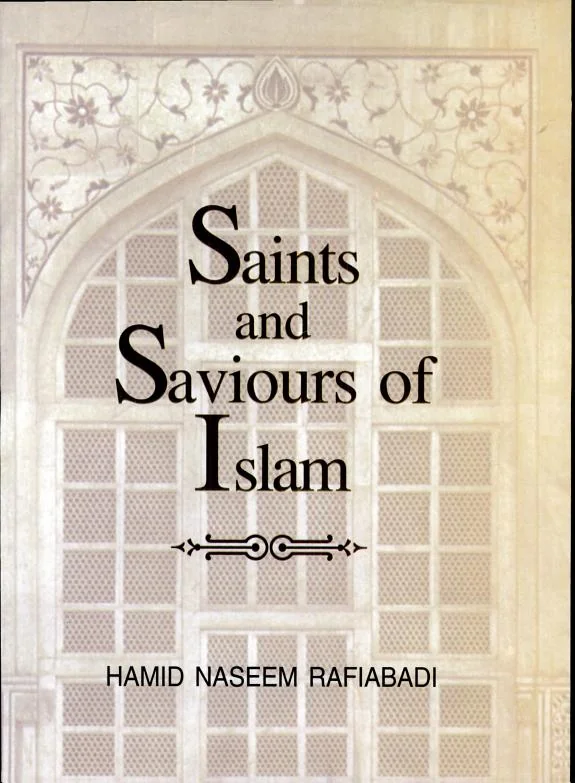
Saints and Saviours of Islam
 76
76

Saints and Saviours of Islam
Rafiabadi’s compilation offers a necessary corrective to simplified views of Islamic intellectual history, bringing to light figures whose work has often been relegated to specialized circles. The examination of Ibn Taymiyyah's critique of Greek logic, for instance, is particularly sharp, demonstrating a sophisticated engagement with medieval philosophical debates. However, the book’s structure, presenting distinct essays on individual figures, can feel somewhat disjointed, lacking a strong narrative through-line connecting each scholar’s impact. The section on Al-Ghazali and the revival of Islamic sciences is a solid starting point, but one wishes for a more synthesized conclusion across all chapters. It serves as a valuable reference for specific scholarly debates.
📝 Description
76
Hamid Naseem Rafiabadi's 2005 book examines reformist and academic contributions within Islam.
Published in 2005, Saints and Saviours of Islam by Hamid Naseem Rafiabadi moves beyond standard historical accounts to detail the reformative, academic, and social impact of specific Muslim figures. The book uncovers less visible intellectual movements and efforts that shaped Islamic thought. It focuses on key individuals and their specific achievements, providing a close look at intellectual history. The volume is written for scholars of Islamic studies, comparative religion, and intellectual history. It will also interest readers concerned with reformist and revivalist movements in Islam, especially those wanting to understand key figures and their work with philosophy, logic, and social change. The book places its subjects within the larger intellectual context of Islamic scholarship. It discusses early 21st-century academic attention to figures like Al-Ghazali and Ibn Taymiyyah, noting a time of renewed interest in classical Islamic sciences and philosophy. The work addresses current academic discussion on interpreting figures such as Shah Wali Allah of Dehalawi and Shaikh Ahmad Sarhindi, whose ideas affected reformist thinking.
This work engages with the tradition of Islamic intellectual history that seeks to understand the dynamics of renewal and reform within the faith. It examines how scholars grappled with external philosophical ideas, particularly Greek logic, and developed theological frameworks like Ilm Al-Kalam. The integration of Sufi thought into broader Islamic scholarship is also a point of focus, reflecting a long-standing interest in the spiritual and intellectual dimensions of Islamic practice.
💡 Why Read This Book?
• Gain specific insights into the intellectual methodologies of figures like Al-Ghazali and Ibn Taymiyyah, understanding their approach to reviving Islamic sciences and critiquing philosophy. • Explore the specific theological debates surrounding *Ilm Al-Kalam* through the lens of Shah Wali Allah of Dehalawi, understanding its development in 18th-century India. • Understand the historical background and intellectual currents that shaped the *Maktubat* of Shaikh Ahmad Sarhindi, a crucial figure in the revival of Islamic thought.
⭐ Reader Reviews
Honest opinions from readers who have explored this book.
❓ Frequently Asked Questions
What period does "Saints and Saviours of Islam" primarily cover?
The book examines key figures and movements primarily from the medieval Islamic period through to the early modern era, focusing on their lasting intellectual and reformist impact up to the early 21st century when the book was written.
Which Islamic scholars are discussed in detail?
Key scholars featured include Al-Ghazali, Ibn Taymiyyah, Shah Wali Allah of Dehalawi, and Shaikh Ahmad Sarhindi, alongside discussions of their specific contributions to Islamic sciences, theology, and philosophy.
What is "Ilm Al-Kalam" as discussed in the book?
Ilm Al-Kalam, explored through the work of Shah Wali Allah of Dehalawi, refers to Islamic dialectical theology, a discipline focused on theological reasoning and argumentation within an Islamic framework.
Does the book focus on the 'saints' aspect literally?
The title 'Saints and Saviours' refers more to the profound, often overlooked, reformative and salvific intellectual contributions of these scholars to Islamic tradition, rather than a literal hagiographical account.
Who is Hamid Naseem Rafiabadi?
Hamid Naseem Rafiabadi is the author of 'Saints and Saviours of Islam', first published in 2005. He is an academic who focuses on Islamic intellectual history and reformist movements.
What is the significance of Ibn Taymiyyah's critique of Greek logic?
The book details Ibn Taymiyyah's engagement with and critique of Aristotelian logic, as seen in his work 'Ar-Raddo `Alal-Mantiqiyin', examining his efforts to purify Islamic intellectual discourse.
🔮 Key Themes & Symbolism
Revival of Islamic Sciences
The work scrutinizes the efforts of scholars like Al-Ghazali to revitalize Islamic intellectual traditions, emphasizing the importance of integrating traditional sciences with contemporary scholarly needs. This theme explores how these 'saviours' sought to purify and re-energize fields such as jurisprudence, theology, and philosophy, ensuring their relevance and integrity against external influences or internal stagnation.
Critique of Philosophy and Logic
A significant thread involves the critical engagement with external philosophical systems, particularly Greek logic, as exemplified by Ibn Taymiyyah's work. This theme dissects the intellectual strategies employed to discern which aspects of foreign thought could be harmonized with Islamic principles and which required rejection, aiming to safeguard the distinctiveness of Islamic epistemology.
Reformist Thought and Action
The book highlights the reformative impulses of key figures like Shaikh Ahmad Sarhindi and Shah Wali Allah of Dehalawi. It examines their contributions towards reasserting orthodox interpretations, addressing social and political challenges of their times, and shaping movements aimed at spiritual and intellectual renewal within the Muslim community.
Academic and Social Contributions
Beyond purely theological or philosophical discourse, this theme focuses on the often 'clandestine' academic and social service contributions made by Muslims. It uncovers the less visible but impactful work in education, community building, and intellectual discourse that sustained and advanced Islamic civilization through dedicated individuals.
💬 Memorable Quotes
Direct passages from the work, attributed to the author.
“Ghazzali And Revival Of Islamic Sciences”
— This chapter title signifies a focus on Al-Ghazali's important role in re-establishing the importance and rigor of Islamic scholarly disciplines during a critical historical juncture.
“The Attitude Of Ibn-Taimiyah To Philosophy And Ilm Al Kalam”
— This points to an examination of Ibn Taymiyyah's specific stance on philosophical inquiry and theological discourse, highlighting his critical approach to established schools of thought.
“Ibn Taimiyah`S Critique Of Greek Logic”
— This refers to a detailed analysis of Ibn Taymiyyah's arguments against the foundational principles of Greek logic, exploring his reasons for finding it incompatible with Islamic reasoning.
“Ilmul-Al-Kalam Of Shah Wali Allah Of Dehalawi”
— This indicates a study of Shah Wali Allah's contributions to Kalam (Islamic theology), exploring his unique perspectives and methodologies within this field.
“The Background Of The Maktubat Of Shaikh Ahmad Sarhindi”
— This suggests an exploration into the historical, social, and intellectual context that led to the creation of Shaikh Ahmad Sarhindi's influential epistles (Maktubat).
🌙 Esoteric Significance
Tradition
While not strictly adhering to a single Western esoteric lineage, the book looks at figures whose work touches upon the inner dimensions of Islamic practice and knowledge. It explores the intellectual foundations that underpin many Sufi traditions, which themselves represent an esoteric dimension of Islam. The focus on revival and reform also aligns with esoteric concepts of cyclical renewal and the emergence of enlightened figures to guide humanity.
Symbolism
The figures discussed, such as Al-Ghazali, are often seen as spiritual guides or 'saviours' within Islamic tradition, embodying the ideal of the learned mystic. Their intellectual output, including critiques of logic and theology, can be interpreted as symbolic efforts to purify the path of knowledge and spiritual attainment, clearing away intellectual detritus that obscures divine truth.
Modern Relevance
Contemporary thinkers engaged in comparative theology and the study of Islamic reform movements often draw upon the intellectual legacy of the scholars presented. Movements seeking to reconcile Islamic tradition with modernity, or to reassert a distinct Islamic intellectual identity, find foundational arguments and methodologies within the works of figures like Ibn Taymiyyah and Shah Wali Allah.
👥 Who Should Read This Book
• Scholars of Islamic intellectual history seeking detailed analyses of important reformist figures and their engagement with philosophy. • Students of comparative religion interested in the diversity of thought within Islam, particularly the theological and philosophical schools. • Researchers focused on the historical development of Islamic sciences, logic, and theology, including the debates surrounding external influences.
📜 Historical Context
Published in 2005, Hamid Naseem Rafiabadi's work emerges from a period of renewed academic interest in Islamic intellectual history, particularly concerning reformist and revivalist movements. The early 21st century saw scholars re-examining classical figures whose ideas had wide implications for modern Islamic thought. Rafiabadi engages with existing scholarship on figures like Al-Ghazali and Ibn Taymiyyah, whose methodologies and theological stances were often debated. The book addresses the intellectual currents of the medieval period through to the early modern era, including the theological discourse of *Ilm Al-Kalam* and the Sufi-influenced reformism of Shaikh Ahmad Sarhindi. It implicitly responds to ongoing academic discussions about the relationship between Islamic thought and external philosophical traditions, such as Greek logic, a subject intensely debated by scholars and theologians throughout Islamic history, with figures like Fakhr al-Din al-Razi offering earlier critiques.
📔 Journal Prompts
Reflect on Al-Ghazali's approach to reviving Islamic sciences.
Consider Ibn Taymiyyah's critique of Greek logic.
Analyze the significance of Shah Wali Allah's contributions to Ilm Al-Kalam.
Explore the intellectual background of Shaikh Ahmad Sarhindi's Maktubat.
Compare the reformist strategies of the scholars discussed.
🗂️ Glossary
Ilm Al-Kalam
Islamic dialectical theology, a discipline concerned with reasoned argumentation and defense of Islamic creed and doctrines.
Maktubat
Literally 'writings' or 'letters', referring to collections of epistles, most famously those of Shaikh Ahmad Sarhindi, which contain his theological, spiritual, and reformist ideas.
Tajdid
The concept of renewal or revival within Islam, referring to efforts to reform and revitalize the faith and its intellectual traditions.
Islaah
Reform or rectification, often referring to efforts to correct perceived deviations in religious practice or belief.
Greek Logic
Refers primarily to Aristotelian logic, a system of reasoning and argumentation that was studied and debated within Islamic intellectual circles.
Ar-Raddo `Alal-Mantiqiyin
A specific work by Ibn Taymiyyah titled 'A Refutation Against the Logicians', detailing his critique of Greek logic.
Saviours
In the context of the book's title, refers to scholars whose intellectual and reformist contributions are seen as vital for the preservation and advancement of Islamic tradition.
This book appears in 1 collection
🔮 Readers Also Liked
Browse all →






From the “Sufism” Collection
View all →





More Free Sacred Texts & Gnosticism Books
View all →