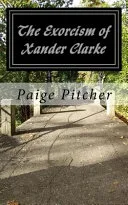
The Exorcism of Xander Clarke
 80
80

The Exorcism of Xander Clarke
Paige Pitcher’s "The Exorcism of Xander Clarke" immediately plunges the reader into a storm-lashed night, a setting as volatile as the entity Xander Clarke himself is investigating. The strength of this short work lies in its potent atmosphere and the palpable sense of dread it cultivates. Pitcher avoids lengthy exposition, opting instead for a direct, visceral confrontation with the unknown. One particularly effective passage details the investigator's growing unease as familiar objects in the room begin to subtly shift, hinting at a presence that warps reality itself. However, the narrative’s brevity, while effective for impact, leaves some of the deeper lore surrounding the entity and Clarke’s past feeling underdeveloped. The abrupt conclusion, while fitting for a single story, leaves a desire for more context. Ultimately, "The Exorcism of Xander Clarke" delivers a sharp, chilling encounter that hints at a larger, darker universe.
📝 Description
80
Published in 2018, The Exorcism of Xander Clarke details a solitary, intense paranormal investigation.
This 2018 novel follows a seasoned investigator confronting a singular, harrowing paranormal event. The narrative cultivates a palpable sense of dread, immersing the reader in a confined, atmospheric setting. Xander Clarke's story is the first in a series, establishing the protagonist and the atmosphere for future installments.
The book appeals to those who prefer focused, character-driven supernatural tales. Readers familiar with classic ghost stories and contemporary paranormal thrillers will recognize elements, but Pitcher adds a notably darker tone. The focus is on the psychological impact of facing malevolent forces, steering clear of gratuitous gore. It offers a self-contained, impactful experience suitable for reading in one sitting.
The plot centers on the concept of 'imprint,' described as residual psychic energy from intense emotional events or malevolent entities. This imprint is shown as an active force influencing both surroundings and the investigator. The story also touches on spiritual 'doors,' suggesting that specific conditions or places can act as entry points for darker influences. The investigator uses specific tools and techniques to manage these phenomena.
The Exorcism of Xander Clarke taps into enduring themes of spiritual warfare and the human psyche's fragility when facing the unknown. Its structure, concentrating on a single, intense event, recalls earlier ghost stories and localized hauntings prevalent in 19th and early 20th-century literature. The narrative's depiction of 'imprint' as a tangible force and the idea of spiritual 'doors' connect to concepts of psychic residue and energetic gateways found in various occult traditions.
💡 Why Read This Book?
• You will experience a masterclass in atmospheric tension, learning how Pitcher uses a confined setting and a brewing storm, reminiscent of classic gothic tales like 'The Turn of the Screw', to amplify psychological dread. • You will gain insight into the concept of psychic 'imprints' as a tangible force, a unique take on residual hauntings that moves beyond simple ghostly apparitions. • You will feel the immediate impact of a focused paranormal investigation, understanding how a single, high-stakes encounter in a story published in 2018 can be as potent as a multi-volume epic.
⭐ Reader Reviews
Honest opinions from readers who have explored this book.
❓ Frequently Asked Questions
What is the primary focus of The Exorcism of Xander Clarke?
The book focuses on a single, intense paranormal investigation undertaken by world-renowned investigator Xander Clarke on a stormy night, where he encounters more than he bargained for.
Who is the author of The Exorcism of Xander Clarke?
The author is Paige Pitcher. The book was first published on May 3, 2018.
Is The Exorcism of Xander Clarke part of a series?
Yes, it is designated as 'Story 1 of 13', indicating it is the first installment in a planned series exploring Xander Clarke's investigations.
What genre does The Exorcism of Xander Clarke belong to?
It falls under the Esoteric category, specifically within supernatural and paranormal fiction, with a focus on investigation and potential spiritual conflict.
What kind of tone can I expect from this book?
The tone is atmospheric and suspenseful, emphasizing psychological dread and the unsettling nature of paranormal encounters rather than gratuitous violence.
What is 'imprint' as mentioned in the book's context?
In the context of The Exorcism of Xander Clarke, 'imprint' refers to a residual psychic energy left by intense events or entities, capable of affecting surroundings and individuals.
🔮 Key Themes & Symbolism
Psychic Imprints and Residual Energy
The narrative explores the concept of 'imprint,' a powerful psychic residue left by intense emotional experiences or malevolent presences. This isn't merely a haunting; it's a tangible force that can distort reality and affect the investigator. The story suggests these imprints are not static but can actively influence their surroundings, creating an oppressive atmosphere. This idea pushes beyond typical ghost lore, framing hauntings as energetic scars on the fabric of a location, demanding a specific kind of investigative approach to unravel.
Vulnerability and Spiritual Doors
A central theme is the idea that certain conditions or environments can create 'doors' or weaknesses, allowing darker forces to manifest. This suggests a permeable boundary between the mundane and the supernatural, influenced by factors like intense weather or emotional states. The investigator's challenge lies in identifying and potentially closing these vulnerabilities. The narrative implies that spiritual integrity and focused intent are crucial defenses against such intrusions, highlighting the psychological aspect of confronting the paranormal.
The Investigator's Burden
The story studies the personal cost of paranormal investigation. Xander Clarke, presented as a seasoned professional, faces an ordeal that clearly pushes his limits. The narrative hints at the psychological toll such encounters take, suggesting that confronting malevolent forces requires not just skill and tools, but immense mental fortitude. This theme underscores the human element within the supernatural, focusing on the investigator’s resilience and the potential for burnout when dealing with persistent, dark energies.
Atmospheric Dread
More than just plot, the book uses its setting—a stormy night—to build a pervasive sense of dread. The environment acts as a character, mirroring and amplifying the internal and external conflicts. This deliberate cultivation of atmosphere serves to immerse the reader, making the paranormal encounter feel immediate and intensely personal. The focus is on creating a palpable feeling of unease and suspense, characteristic of classic ghost stories but updated with modern narrative pacing.
💬 Memorable Quotes
Direct passages from the work, attributed to the author.
“Every object seemed to hold its breath, waiting for the next shift in the unseen currents.”
— This highlights the concept of 'imprint,' where inanimate objects become imbued with a sense of awareness or tension due to the paranormal activity.
“He knew the signs: a place saturated with sorrow, a door left carelessly ajar.”
— This refers to the idea of spiritual vulnerabilities or 'doors' being created by intense negative emotions like sorrow, making a location susceptible to darker influences.
“The storm outside was a mirror to the chaos gathering within the room.”
— This emphasizes the connection between the external environment and the internal, supernatural events, suggesting the weather is amplifying or reflecting the paranormal disturbance.
“This wasn't just a haunting; it was a deliberate, malevolent presence testing his resolve.”
— This distinguishes the encounter from a simple residual haunting, framing it as an active, intelligent, and hostile entity focused on the investigator himself.
💡 Key Ideas
Editorial paraphrase of the work's core concepts — not direct quotes.
The air grew thick, not just with the storm, but with something ancient and watchful.
This quote captures the essence of the book's atmosphere, suggesting the paranormal presence is not merely a fleeting phenomenon but a deep-seated, ancient force observing the investigator.
🌙 Esoteric Significance
Tradition
While not explicitly adhering to a single esoteric lineage, "The Exorcism of Xander Clarke" draws upon broader themes found in demonology and Western occult traditions concerning spiritual warfare and the nature of malevolent entities. It touches upon concepts of psychic residue and environmental influence that resonate with certain interpretations within parapsychology and esoteric psychology. The narrative's focus on an investigator employing techniques, however implied, suggests a structured approach to confronting supernatural phenomena, aligning with traditions that emphasize ritual and systematic engagement with the unseen.
Symbolism
The raging storm serves as a primary symbol, representing both the external chaos of the paranormal event and the internal turmoil experienced by the investigator. Objects within the haunted space, subtly shifting or appearing 'watchful,' symbolize the pervasive nature of the 'imprint,' illustrating how a location can become saturated with psychic energy. The concept of 'doors' or vulnerabilities symbolizes points of weakness, either environmental or psychological, that allow malevolent forces entry into the human sphere, acting as symbolic thresholds.
Modern Relevance
Contemporary practices in paranormal investigation, often blending scientific methodology with esoteric beliefs, find a narrative echo in Xander Clarke's depicted approach. Thinkers and practitioners exploring the psychological effects of trauma and environment on perceived hauntings can draw parallels. Furthermore, the book’s engagement with the idea of psychic imprints aligns with modern discussions in consciousness studies and fields exploring the energetic nature of reality, making its 2018 publication relevant to ongoing conversations about the intersection of mind, matter, and the paranormal.
👥 Who Should Read This Book
• Readers fascinated by the mechanics of paranormal investigation, seeking a narrative that portrays a professional's approach to confronting a specific supernatural threat. • Enthusiasts of atmospheric horror and gothic tales, who appreciate a strong sense of place and psychological suspense amplified by environmental factors like storms. • Fans of concise, impactful short fiction within the esoteric and supernatural genres, looking for a single, intense story that explores themes of spiritual vulnerability and psychic residue.
📜 Historical Context
Published in 2018, Paige Pitcher's "The Exorcism of Xander Clarke" emerged in a literary landscape where supernatural thrillers and esoteric narratives continued to hold significant appeal. While not directly aligned with the 19th-century Spiritualism movement or the occult revival spurred by figures like Aleister Crowley, it taps into enduring themes of spiritual warfare and the human confrontation with the unknown. The work's focus on a singular, intense paranormal investigation with a professional investigator echoes modern trends in the genre, differentiating it from earlier, more ambiguous ghost stories. It arrived after decades of exploration in paranormal investigation fiction, building on tropes established in works like Shirley Jackson's 'The Haunting of Hill House' (1959) but delivering a more contained, incident-specific narrative arc. The reception for such works in 2018 often focused on their ability to generate suspense and explore the psychological impact of the supernatural, rather than solely on theological or philosophical underpinnings.
📔 Journal Prompts
Xander Clarke's encounter with the 'imprint' on that stormy night.
The symbolic meaning of the 'door' left ajar in the haunted space.
Reflecting on the investigator's resolve when facing a deliberate, malevolent presence.
The atmosphere of the room as described in the text.
How the external storm mirrored the internal tension experienced by Clarke.
🗂️ Glossary
Imprint
A concept in the book referring to residual psychic energy left behind by intense emotional events or powerful entities, which can affect a location and its inhabitants.
Spiritual Doors
Metaphorical or literal points of vulnerability within a location or psyche that allow malevolent forces or paranormal influences to manifest or enter.
Paranormal Investigator
A professional, like Xander Clarke, who studies and confronts supernatural phenomena using specialized knowledge and techniques.
Psychic Residue
Similar to 'imprint,' this refers to the lingering energetic or emotional traces left in an environment after significant events.
Atmospheric Dread
A narrative technique using setting, weather, and sensory details to create a pervasive feeling of unease and suspense.
Malevolent Presence
An actively harmful and hostile supernatural entity or force, distinct from passive residual energy.
Esoteric
Relating to or concerned with the inner workings of a subject; intended for or likely to be understood by only a small number of people with a specialized knowledge or interest.