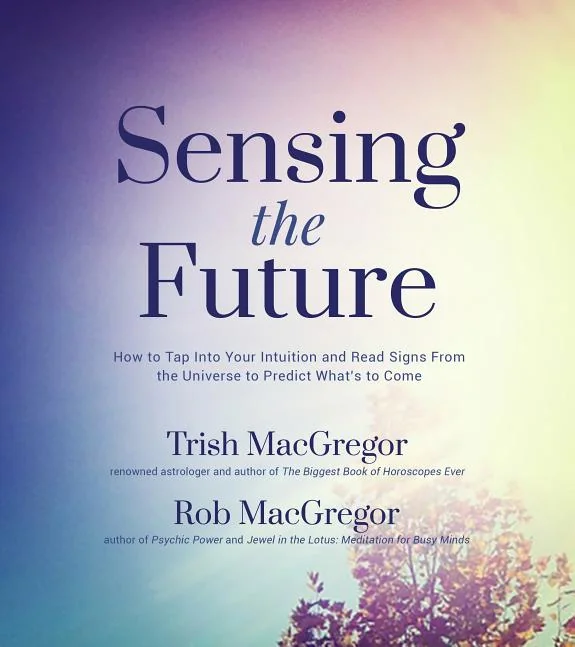
Sensing the Future
 71
71

Sensing the Future
Trish and Rob MacGregor’s Sensing the Future offers a grounded perspective on precognition, a topic often shrouded in sensationalism. The strength of this book lies in its practical, step-by-step approach to developing psychic sensitivity. The authors avoid overly mystical jargon, presenting techniques that feel accessible even to newcomers. A particularly compelling section discusses how to differentiate between genuine precognitive signals and subconscious pattern recognition or anxiety-driven predictions. However, the book could benefit from a deeper engagement with the philosophical implications of precognition; while it explains how to sense the future, it less frequently explores what it might mean for free will or determinism. The MacGregors' assertion that "Precognition is one of the least understood but most commonly occurring psychic experiences" accurately sets the stage for their methodical exploration. Ultimately, Sensing the Future serves as a useful primer for those wishing to explore their intuitive faculties with a structured methodology.
📝 Description
71
Trish and Rob MacGregor's 2017 book examines precognition, moving beyond anecdotes to practical skill development.
Sensing the Future by Trish and Rob MacGregor investigates the nature and development of precognition. The authors seek to clarify this common but often confusing psychic ability. They move past mere stories to give practical advice for readers wanting to understand and improve their own precognitive skills. Drawing on their extensive paranormal research, the MacGregors present a method for interpreting psychic insights and incorporating them into everyday life.
This book is for people curious about what lies ahead, especially those who have had unexplained premonitions or intuitive feelings. It speaks to both skeptics looking for logical explanations for psychic events and practitioners aiming to sharpen their intuition. Anyone interested in parapsychology, psychic growth, or the connection between consciousness and time will find this work relevant. The book covers intuitive perception, how the subconscious processes information, and the mind's ability to access future occurrences. It describes various precognitive experiences, from brief premonitions to detailed prophetic dreams.
Published in 2017, Sensing the Future emerged during a time of renewed interest in consciousness studies. The MacGregors' work continues a tradition of investigating psychic phenomena. This lineage includes researchers like J.B. Rhine, who sought to validate such abilities through systematic study at Duke University. The book addresses a field often met with skepticism from mainstream science but which maintains a dedicated following among researchers and practitioners.
💡 Why Read This Book?
• Learn practical techniques for enhancing your precognitive abilities, such as guided imagery and dream analysis, as detailed in chapters focusing on psychic development. • Understand the difference between genuine precognition and other mental phenomena by examining the MacGregors' classification of psychic experiences. • Gain insight into the historical context of precognitive research, referencing figures and institutions that have studied psychic phenomena since the mid-20th century.
⭐ Reader Reviews
Honest opinions from readers who have explored this book.
❓ Frequently Asked Questions
What is precognition according to Trish and Rob MacGregor?
Precognition, as explored in Sensing the Future, is defined by the MacGregors as the psychic ability to gain information about events before they occur. They present it as a commonly experienced but poorly understood facet of human consciousness.
How can I develop my precognitive abilities based on Sensing the Future?
The book suggests methods like focused meditation, dream journaling, and developing an awareness of subtle intuitive signals. It emphasizes practice and careful observation to hone these abilities.
When was Sensing the Future first published?
Sensing the Future by Trish MacGregor and Rob MacGregor was first published on January 10, 2017.
Who are Trish and Rob MacGregor?
Trish and Rob MacGregor are described as well-known paranormal experts and authors. They have collaborated on multiple works exploring psychic phenomena and consciousness.
Does Sensing the Future discuss different types of psychic experiences?
Yes, the book addresses various forms of precognitive experiences, aiming to help readers identify and interpret them accurately, distinguishing them from other mental states.
Is this book suitable for beginners in psychic development?
The MacGregors' clear explanations and practical exercises make Sensing the Future accessible for beginners interested in exploring their psychic potential.
🔮 Key Themes & Symbolism
Understanding Precognitive Signals
The book meticulously breaks down the nature of precognition, distinguishing it from mere coincidence or anxiety-driven thoughts. It guides readers to recognize the subtle nuances of future-oriented intuition, whether it manifests as a dream, a feeling, or a sudden insight. The MacGregors provide frameworks for filtering these signals, encouraging a disciplined approach to psychic perception. This theme is crucial for anyone seeking to validate their own intuitive experiences and differentiate them from everyday mental noise.
Practical Development Techniques
Sensing the Future is less about theory and more about actionable steps. It offers concrete exercises designed to cultivate and enhance precognitive abilities. Techniques discussed include focused visualization, systematic dream analysis, and the creation of a personal symbolic lexicon for interpreting intuitive messages. The emphasis is on consistent practice and mindful observation, empowering readers to actively engage with their psychic potential rather than passively waiting for phenomena to occur.
The Psychology of Intuition
Beyond the purely psychic, the MacGregors touch upon the psychological underpinnings of intuition and precognition. They explore how the subconscious mind might process information beyond the limitations of linear time and rational thought. This involves understanding how past experiences and present awareness can coalesce to form impressions of future events. The book bridges the gap between esoteric concepts and psychological frameworks, offering a more integrated view of consciousness.
Skepticism and Validation
Addressing the inherent skepticism surrounding psychic phenomena, Sensing the Future provides readers with tools to evaluate their experiences critically. The authors encourage a balanced perspective, acknowledging the potential for self-deception while validating the reality of genuine precognition for many. This theme encourages readers to approach their intuitive development with both openness and discernment, fostering a robust and reliable practice.
💬 Memorable Quotes
Direct passages from the work, attributed to the author.
“Precognition is one of the least understood but most commonly occurring psychic experiences.”
— This statement from the book's original blurb highlights the central paradox the MacGregors aim to resolve: why something so frequently experienced remains so enigmatic.
“Distinguishing between genuine foresight and wishful thinking is paramount.”
— This interpretation underscores the MacGregors' commitment to helping readers achieve reliable results by differentiating true precognition from subconscious desires or fears.
“Dreams often serve as a conduit for precognitive impressions.”
— This concept highlights the importance the authors place on analyzing dream content as a primary method for accessing potential future information.
💡 Key Ideas
Editorial paraphrase of the work's core concepts — not direct quotes.
The goal is to develop a clear channel for receiving future information.
This paraphrase emphasizes the book's focus on practical skill-building, positioning precognition not as a mystical gift, but as a trainable faculty.
Developing psychic abilities requires consistent practice and self-awareness.
This interpretation summarizes the MacGregors' core philosophy: that psychic development is an active process, not a passive reception of phenomena.
🌙 Esoteric Significance
Tradition
While not strictly aligned with a single esoteric lineage, Sensing the Future draws implicitly from traditions that acknowledge non-linear time and intuitive perception. It echoes themes found in Hermeticism's emphasis on correspondence between macrocosm and microcosm, and Gnostic ideas of inner knowing. The book departs from rigid dogma, focusing instead on empirical observation and personal development, making it accessible to a wide range of spiritual seekers rather than solely adherents of a specific school.
Symbolism
The book frequently touches upon the symbolic language of dreams and intuition. Symbols are presented not as fixed archetypes, but as personal keys to unlocking precognitive insights. For instance, recurring dream imagery might represent a specific future event or emotional state, requiring careful personal interpretation. The MacGregors encourage the development of a personal symbolic dictionary, treating each symbol as a unique identifier within the reader's subconscious landscape.
Modern Relevance
The work remains relevant for contemporary practitioners of intuition development and remote viewing, fields that have gained traction through online communities and workshops. Thinkers in transpersonal psychology and consciousness studies might find the MacGregors' practical approach a useful complement to theoretical frameworks. Its emphasis on cultivating psychic skills aligns with modern self-help and mindfulness movements that seek to integrate inner experiences with daily life.
👥 Who Should Read This Book
• Individuals interested in developing their intuition and psychic abilities, who are seeking practical, structured guidance beyond anecdotal accounts. • Researchers and students of parapsychology and consciousness studies, looking for accessible explanations of precognition and methods for its study. • Skeptics open to exploring psychic phenomena, who appreciate a grounded, step-by-step approach that emphasizes critical evaluation of experiences.
📜 Historical Context
Sensing the Future, published in 2017, arrived during a period where parapsychology and consciousness studies were experiencing intermittent resurgence in public interest, often fueled by online communities and accessible media. The MacGregors’ work follows in the tradition of researchers like J.B. Rhine, who pioneered systematic study of psychic phenomena at Duke University beginning in the 1930s. Their approach, emphasizing practical development, contrasts with more academic or theoretical explorations of precognition. While the field has historically contended with significant skepticism from mainstream science, figures like Dean Radin continued to publish research throughout the early 21st century, attempting to provide empirical evidence for psychic abilities. The MacGregors' book contributes to this ongoing discourse by offering accessible techniques for a broader audience, aiming to clarify concepts previously confined to specialized literature.
📔 Journal Prompts
Reflections on precognitive impressions experienced before reading this book.
Analysis of recurring symbols from dreams, as discussed in the 'Key Concepts'.
Documentation of subtle intuitive signals encountered during daily activities.
Comparison of personal precognitive experiences with the types outlined by the MacGregors.
Exploration of the connection between emotional states and the clarity of psychic reception.
🗂️ Glossary
Precognition
The psychic ability to gain knowledge of future events before they happen. It is distinct from logical deduction or probability assessment.
Intuition
The capacity to understand or know something instinctively, without conscious reasoning. Often considered a form of subconscious psychic perception.
Psychic Abilities
The range of perceived mental capacities that operate outside the known laws of physics and psychology, such as telepathy, clairvoyance, and precognition.
Symbolic Language
A system of communication using symbols, particularly relevant in dream analysis and interpreting intuitive messages from the subconscious.
Dream Journaling
The practice of recording dreams immediately upon waking to improve recall and analyze their content for deeper meaning or psychic impressions.
Wishful Thinking
The formation of beliefs based on what one wishes to be true, rather than on the basis of evidence or reason. Often confused with genuine precognition.
Parapsychology
The study of alleged psychic phenomena and other paranormal claims, including precognition, telepathy, and psychokinesis.
This book appears in 1 collection
🔮 Readers Also Liked
Browse all →








From the “Precognition” Collection
View all →






![EBOOK COLLECTION ( PART 8) [ CSI][h 33t]](/img/thumb/ebook-collection-part-8-csi-h-33t.webp)
More Free Occult Philosophy Books
View all →