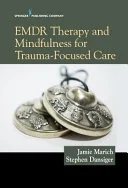
Emdr Therapy and Mindfulness for Trauma-Focused Care
 74
74

Emdr Therapy and Mindfulness for Trauma-Focused Care
The integration of EMDR with mindfulness, as presented by Marich and Dansiger, offers a compelling framework for trauma work. Their meticulous detailing of how present-moment awareness can augment EMDR's processing capabilities is a significant contribution. A particular strength lies in the practical, step-by-step guidelines that demystify the application of these combined techniques for clinicians. The book provides clear conceptualizations for both mental health and addiction treatment settings, drawing on current research. However, the sheer volume of detailed protocols might initially feel overwhelming for novice EMDR therapists. The strength of the practical application does, at times, overshadow a deeper theoretical exploration of the underlying mechanisms connecting EMDR and mindfulness beyond their functional synergy. It is a valuable, if dense, resource for experienced practitioners seeking to deepen their trauma-focused care.
📝 Description
74
Published in 2017, this book merges EMDR therapy with mindfulness for trauma treatment.
Jamie Marich and Stephen Dansiger's 2017 book details how to combine Eye Movement Desensitization and Reprocessing (EMDR) with mindfulness practices for trauma care. The authors structured the text to guide clinicians, especially those in mental health and addiction fields, in applying these integrated methods. Their main idea is that a mindful state can make EMDR more effective.
The book is for therapists and counselors who work with trauma survivors. It offers practical advice for practitioners looking for methods that can improve client results. The authors focus on how to blend EMDR's bilateral stimulation and cognitive work with the present-moment focus of mindfulness. They suggest that mindful awareness can help clients access traumatic memories and improve the reprocessing steps within EMDR.
This work appeared as trauma-informed care and mindfulness in therapy were gaining traction. EMDR, developed in the late 1980s, was already a recognized treatment for PTSD. The authors aimed to connect EMDR with current mindfulness research, showing a phased approach to their integration.
This book fits within the broader spiritual development tradition that seeks to understand the mind's capacity for healing. While EMDR itself is a psychological modality, its mechanism of reprocessing trauma through focused attention and bilateral stimulation can be seen as a structured approach to altered states of consciousness. Mindfulness, deeply rooted in contemplative traditions, also aims to cultivate awareness and insight. The integration presented here bridges these psychological techniques with the contemplative aim of present-moment awareness, suggesting that an inner shift in attention can facilitate deep psychological release.
💡 Why Read This Book?
• Learn how to apply specific EMDR protocols alongside mindfulness techniques, as detailed in the chapter "Integrating Mindfulness into EMDR Phases," to foster deeper client processing. • Understand the evidence-based research from 2017 that supports the combined efficacy of EMDR and mindfulness for trauma survivors, offering a unique clinical rationale. • Gain practical, step-by-step guidance for adapting these integrated approaches to both mental health and addiction treatment settings, as outlined in the book's clinical application sections.
⭐ Reader Reviews
Honest opinions from readers who have explored this book.
❓ Frequently Asked Questions
What is the core belief behind integrating EMDR therapy and mindfulness?
The fundamental belief is that mindfulness is a critical component in the effective delivery of EMDR therapy. By cultivating present-moment awareness, clients may better access and process traumatic memories during EMDR sessions, enhancing therapeutic outcomes.
Who are the authors of Emdr Therapy and Mindfulness for Trauma-Focused Care?
The book was authored by Jamie Marich and Stephen Dansiger. It was first published on November 23, 2017.
What specific types of treatment does this book address?
The book provides guidelines for trauma-focused care in both general mental health treatment and specialized addiction treatment settings, demonstrating the adaptability of the integrated EMDR and mindfulness approach.
What kind of practical guidance does the book offer clinicians?
It offers clear, step-by-step guidelines for conceptualizing and delivering trauma-focused care using the integrated approach. The text is infused with practical applications for immediate clinical use.
What evidence base does the book rely on?
The authors base their integrated approach on current evidence-based research, demonstrating the efficacy and theoretical underpinnings of combining EMDR therapy with mindfulness-informed practices.
Can this book be used by therapists new to EMDR?
While the book offers detailed guidance, its comprehensive nature and integration of advanced concepts might be best suited for therapists with some foundational knowledge of EMDR therapy, though it aims to be accessible.
🔮 Key Themes & Symbolism
Mindful EMDR Integration
This work posits that mindfulness practices are not merely adjunctive but essential to the effective application of EMDR therapy. It details how cultivating present-moment awareness can enhance a client's capacity to engage with and process traumatic memories during EMDR's bilateral stimulation. The integration aims to create a more contained and accessible experience for individuals processing deeply disturbing material, leveraging the synergistic power of focused attention and somatic release.
Trauma-Focused Care
The book centers on providing specialized care for trauma survivors. It addresses the unique challenges presented by Post-Traumatic Stress Disorder (PTSD) and related conditions, offering a structured, evidence-based methodology. The authors emphasize the importance of a phased approach in trauma treatment, ensuring that clients are adequately resourced and stabilized before deep processing begins, which is a hallmark of contemporary trauma-informed practice.
Addiction Treatment Applications
Beyond general mental health, a significant focus is placed on the application of integrated EMDR and mindfulness for individuals struggling with addiction. The text explores how underlying trauma often fuels addictive behaviors and how this combined therapeutic approach can address both the trauma and the substance use or behavioral dependencies, offering a comprehensive path to recovery.
Evidence-Based Practice
The authors are committed to grounding their integrated methodology in current scientific research. The book cites and discusses relevant studies that support the efficacy of both EMDR therapy and mindfulness-based interventions. This commitment to an evidence-based approach ensures that clinicians are utilizing techniques with demonstrated effectiveness in trauma resolution and recovery.
💬 Memorable Quotes
Direct passages from the work, attributed to the author.
“Mindfulness is a critical component in the delivery of EMDR.”
— This statement captures the book's central thesis: that mindful awareness is not an optional add-on but a fundamental element that enhances EMDR's effectiveness in processing trauma.
“Clinicians can conceptualize and deliver trauma-focused care in both mental health and addiction treatment.”
— This highlights the book's practical utility, offering adaptable frameworks for therapists working across different clinical populations and settings, emphasizing the broad applicability of the integrated approach.
“Based on current evidence-based research.”
— This phrase underscores the authors' commitment to scientific validity, indicating that the presented techniques are supported by empirical data rather than solely theoretical constructs.
“Offers clearly art”
— This snippet suggests the book provides lucid and well-defined strategies for practitioners, implying that the information is presented in an accessible and easily understandable manner for clinical application.
“Infused with practical applications.”
— This indicates that the theoretical concepts are consistently linked to real-world clinical scenarios, providing therapists with actionable tools and techniques they can immediately implement in their practice.
🌙 Esoteric Significance
Tradition
While not overtly esoteric in the traditional sense of Hermeticism or Kabbalah, this work aligns with the broader metaphysical current of mind-body integration that has roots in ancient contemplative practices. Its emphasis on focused awareness, present moment experience, and the relationship between internal states and external reality echoes Gnostic concerns with consciousness and liberation from suffering. The therapeutic goal of healing trauma through internal awareness can be seen as a modern psychological manifestation of alchemical transformation, where the 'lead' of suffering is transmuted into the 'gold' of integrated well-being.
Symbolism
The core 'symbol' explored is the present moment itself, elevated from a fleeting experience to a therapeutic tool. Within the EMDR framework, the bilateral stimulation can be seen as a symbolic representation of cyclical movement or the flow of energy, facilitating the movement of stuck traumatic material. The act of mindful observation, without judgment, symbolizes a form of inner witnessing or detached awareness, akin to the Stoic ideal or the contemplative gaze found in many spiritual traditions, allowing for the dispassionate examination of internal phenomena.
Modern Relevance
Contemporary somatic therapies, trauma-informed yoga, and advanced EMDR adaptations continue to draw on the principles of mindful awareness for processing difficult experiences. Thinkers and practitioners in fields like Sensorimotor Psychotherapy and Internal Family Systems (IFS) often incorporate elements of present-moment awareness and self-compassion, echoing the integrative approach pioneered in works like this. The ongoing research into the neuroscience of trauma and mindfulness further validates and expands upon the foundational concepts presented here, making it relevant for current therapeutic research and practice.
👥 Who Should Read This Book
• Mental health professionals and therapists seeking to enhance their trauma treatment toolkit with evidence-based, integrated techniques that combine EMDR and mindfulness. • Addiction counselors and specialists looking for specialized approaches to address the underlying trauma that often fuels substance use and behavioral dependencies. • Graduate students and trainees in psychology, counseling, and social work interested in contemporary, research-supported methods for trauma-focused care and therapeutic intervention.
📜 Historical Context
The publication of "EMDR Therapy and Mindfulness for Trauma-Focused Care" in 2017 occurred within a burgeoning range of therapeutic innovation. By this time, EMDR therapy, pioneered by Francine Shapiro in the late 1980s, had gained considerable traction as an effective treatment for PTSD, validated by numerous studies and clinical trials. Simultaneously, mindfulness-based interventions, popularized by figures like Jon Kabat-Zinn with Mindfulness-Based Stress Reduction (MBSR) in the 1970s, were experiencing widespread adoption in mainstream psychology and medicine. This book emerged as a response to the growing body of research highlighting the benefits of integrating these two powerful modalities. It sought to bridge the gap between EMDR's structured processing and mindfulness's capacity for present-moment awareness, offering a cohesive approach for clinicians. At the time, while many therapists were exploring mindfulness, its systematic integration into established protocols like EMDR was still a developing area, making this text a timely contribution. It arrived amidst a broader discourse on trauma-informed care, a movement gaining momentum throughout the 2010s.
📔 Journal Prompts
The integration of EMDR bilateral stimulation and mindful awareness.
Your personal conceptualization of trauma-focused care.
The role of present-moment awareness in processing difficult memories.
Adapting therapeutic techniques for addiction treatment settings.
Evidence-based research supporting integrated therapeutic modalities.
🗂️ Glossary
EMDR Therapy
Eye Movement Desensitization and Reprocessing. A psychotherapy technique developed by Francine Shapiro, used primarily to treat trauma and PTSD by helping individuals process distressing memories through specific eye movements or other forms of bilateral stimulation.
Mindfulness
A mental state achieved by focusing one's awareness on the present moment, while calmly acknowledging and accepting one's feelings, thoughts, and bodily sensations. It is often cultivated through meditation and breathing exercises.
Trauma-Focused Care
A therapeutic approach specifically designed to address the psychological impact of traumatic experiences, focusing on helping individuals process traumatic memories and develop coping mechanisms.
Bilateral Stimulation (BLS)
The core mechanism in EMDR therapy involving alternating sensory input, typically eye movements, but can also include auditory tones or tactile pulses, designed to facilitate the brain's natural processing of distressing memories.
Addiction Treatment
Professional interventions aimed at helping individuals overcome problematic patterns of substance use or behavioral dependencies, often addressing underlying psychological issues such as trauma.
Evidence-Based Practice
An approach to clinical decision-making that integrates the best available research evidence with clinical expertise and client values, ensuring that treatments are effective and scientifically supported.
Conceptualization
In a therapeutic context, this refers to the process by which a clinician develops a framework or model for understanding a client's problems, including their origins, maintaining factors, and potential treatment pathways.
This book appears in 1 collection
🔮 Readers Also Liked
Browse all →









From the “Mindfulness” Collection
View all →








More Free Occult Philosophy Books
View all →